July 24, 2026
The Invisible Discount: Why Africa's Biggest Industrial Fortunes Go Unrecognised by Global Markets
There is a structural anomaly embedded in how global wealth platforms and institutional indices value large African conglomerates. When the majority of a company's operating assets sit outside publicly traded markets, mainstream valuation frameworks systematically undercount their worth. This is not a flaw unique to Africa, but it is particularly pronounced there, where deep-pocketed industrial groups have historically relied on domestic exchanges with limited international reach.
Aliko Dangote, the founder and chairman of Dangote Industries, has publicly acknowledged this gap, noting that widely cited net worth estimates published by outlets like Forbes fall short of capturing the full picture because significant portions of the group's asset base remain privately held and unlisted. The implication is straightforward: every time a major Dangote asset steps onto a public exchange, a valuation unlock occurs, one that benefits both the company's capital-raising capacity and the measurable transparency of its enterprise value.
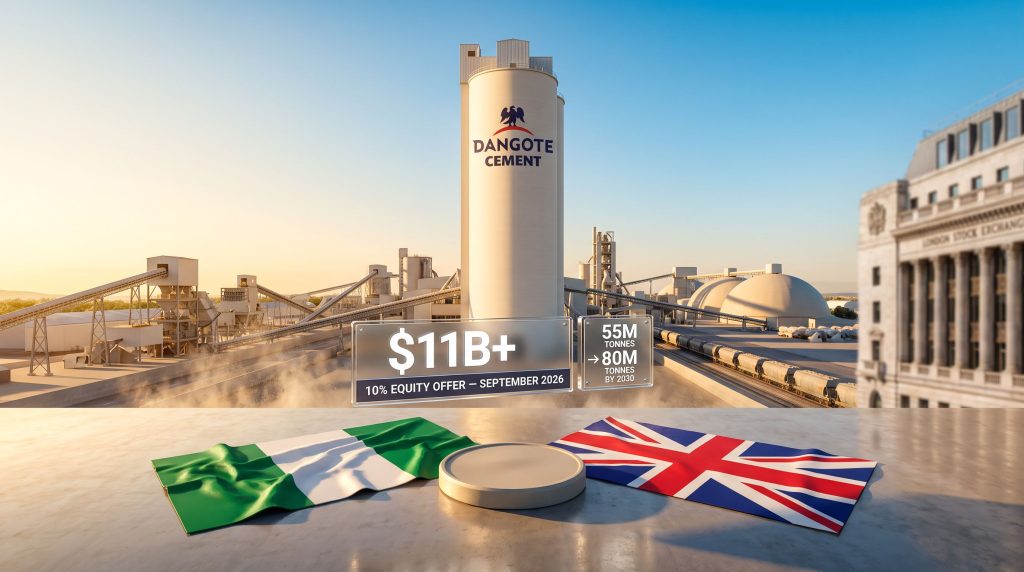
The Dangote Cement London listing, targeting the London Stock Exchange by September 2026, is the first and most consequential of these unlocking events.
When big ASX news breaks, our subscribers know first
Understanding the Secondary Listing Mechanism
How Dual Listings Work and Why They Matter
A secondary listing is not a replacement for a company's home exchange. In Dangote Cement's case, the Nigerian Exchange Group (NGX) in Lagos remains the primary listing venue, where the company's main regulatory obligations, governance disclosures, and shareholder record are anchored. Understanding the distinction between primary vs secondary markets is essential here, as the London Stock Exchange adds an additional trading window that allows international investors to buy and sell shares directly in major global currencies.
This structure removes the need to navigate Nigeria's local market infrastructure or manage naira settlement risk. Large European and North American funds, particularly those with ESG mandates, often require investments to be made through exchange-regulated, liquid instruments denominated in currencies they can efficiently settle. The naira's volatility over recent years has, furthermore, been a meaningful deterrent for foreign funds that would otherwise find Dangote Cement's fundamentals attractive.
Key benefits of the secondary listing structure include:
- Direct access to Dangote Cement shares for international institutional funds without requiring NGX account setup
- Settlement in GBP, USD, or EUR, removing naira conversion friction and associated exchange-rate risk
- Eligibility for potential inclusion in FTSE indices, which would trigger passive fund inflows
- Improved price discovery as a globally traded instrument rather than a purely domestically traded one
- Enhanced governance signalling through submission to dual regulatory oversight
The Scale of What Is Being Listed
Understanding why a London listing is worth the complexity and cost requires an appreciation of Dangote Cement's operational scale. This is not a mid-cap emerging market company seeking a prestige listing. It is Africa's largest building materials producer by installed capacity, operating across 11 African nations with 55 million tonnes per annum of installed production capacity. Its market capitalisation exceeds $11 billion USD, making it one of the continent's most substantial publicly traded industrial entities.
The company's stated expansion target of over 80 million tonnes per annum by 2030 represents a capacity increase of more than 45% from current levels. Executing that growth plan requires capital at a scale that Nigerian domestic markets alone cannot efficiently supply. International institutional pools, particularly in London and through it, North American allocators, represent the logical funding source.
Investors should note that forecasts and expansion targets are subject to a range of operational, regulatory, and macroeconomic risks. Past performance and stated targets do not guarantee future outcomes.
Why London Beat Dubai in the Exchange Selection Process
The Regulatory Overhaul That Shifted the Balance
For years, London had a reputation among emerging market corporates as a prestige but procedurally demanding listing destination. Minimum free-float requirements, eligibility thresholds, and disclosure obligations created friction that made other venues, including Dubai's Nasdaq Dubai and Dubai Financial Market (DFM), comparatively accessible.
That calculus changed materially in 2024 when the UK's Financial Conduct Authority (FCA) completed a significant overhaul of its listing rules. The reforms reduced minimum free-float requirements and simplified eligibility conditions for dual-listed issuers from emerging markets, directly addressing the structural barriers that had previously disadvantaged African corporates. This was part of a broader effort to restore London's competitiveness as a global listings hub following a period of declining IPO volumes on the LSE.
The practical effect for a company like Dangote Cement was a material reduction in the administrative complexity and capital cost of pursuing a London secondary listing compared with earlier years. For broader context on how such decisions play out, stock market trading insights from comparable international markets illustrate how regulatory environments shape listing preferences globally.
Head-to-Head: London Versus Dubai
| Factor | London Stock Exchange | Dubai (Nasdaq Dubai / DFM) |
|---|---|---|
| Regulatory reform momentum | Significant (FCA 2024 overhaul) | Incremental |
| Execution speed for listing | Faster post-reform | Slower for non-GCC issuers |
| Institutional investor base | Deep (Europe + North America) | Primarily GCC and regional |
| Currency settlement | GBP / USD / EUR | USD / AED |
| Liquidity depth | High | Moderate |
| African dual-listing precedent | Strong (Airtel Africa, MTN) | Limited for African industrials |
Speed-to-Market as the Deciding Variable
According to reporting by Bloomberg, Mariya Dangote, a board member of Dangote Cement Plc, indicated that the London exchange offered faster execution for placing and trading shares compared to competing international venues. In capital markets, speed-to-market is not a trivial consideration. Institutional appetite fluctuates with broader macroeconomic sentiment, and missing a favourable market window can mean higher cost of capital or a delayed raise altogether.
The September 2026 target is not arbitrary. It aligns with the post-summer re-engagement period in European institutional markets, when major funds return from August drawdowns and allocate capital ahead of year-end portfolio positioning.
London's Established Track Record With African Issuers
London's preference among African corporates is reinforced by precedent. Airtel Africa has selected the LSE for the planned listing of its Airtel Money fintech unit, a decision that further consolidates London's position as the primary international gateway for African corporate capital raises. Resource companies, telecoms operators, and banking groups from across Sub-Saharan Africa have historically used the LSE as their international listing venue of choice, partly because of its time zone, which overlaps simultaneously with Lagos business hours and New York institutional trading windows, a logistical advantage that Dubai cannot replicate.
The Deal Structure: What Has Been Confirmed and What Remains Conditional
Equity on Offer and Who Can Access It
The proposed offering targets approximately 10% of Dangote Cement's equity for international institutional investors across Europe and North America. At the company's current market valuation of over $11 billion, this implies a float value of more than $1.1 billion, making it a significant liquidity event by any measure.
Shareholder approval was granted at the Annual General Meeting held on July 2, 2026, authorising the board to proceed with the listing subject to corporate, regulatory, and market conditions being satisfied. Shareholders approved the secondary listing on the London Stock Exchange, marking a pivotal step in the company's international capital markets strategy.
Milestone Tracker: Confirmed vs. Pending
| Milestone | Status | Date |
|---|---|---|
| AGM shareholder approval | Confirmed | July 2, 2026 |
| Exchange preference declared (London over Dubai) | Confirmed | July 2026 |
| Target listing window | Indicative | September 2026 |
| FCA regulatory approval (UK) | Pending | TBC |
| Nigerian SEC approval | Pending | TBC |
| Final pricing and allocation | Pending | TBC |
| Listing certainty | Not guaranteed | Subject to conditions |
The company has explicitly stated there is no certainty on timing or completion. Investors should treat September 2026 as an indicative target, not a guaranteed outcome. This article does not constitute financial advice.
A History of Delays and Why 2026 Is Different
This is not the first time Dangote Cement has explored a London listing. The concept was reportedly evaluated as early as 2018, with further discussions taking place around 2020, neither of which resulted in execution. The difference between those earlier attempts and the current one lies primarily in the external regulatory environment rather than internal company readiness.
The FCA's 2024 reforms removed the eligibility and free-float barriers that made London impractical in earlier cycles. Combined with the company's expanded operational footprint, a stronger institutional familiarity with pan-African industrial equities, and a demonstrated investor appetite evidenced by the completion of a $2.5 billion private capital placement described as Africa's largest of its kind, the conditions for execution are materially more favourable in 2026 than at any prior point.
Dangote Industries' Broader Capital Markets Sequencing Strategy
Cement First, Then Energy and Fertilizers
The Dangote Cement London listing is best understood not as an isolated transaction but as the opening move in a multi-phase public market entry plan for Dangote Industries as a whole. The cement business is the logical first mover because it has the most established revenue history, the broadest pan-African operational footprint, and the greatest institutional familiarity among global investors who cover emerging market industrials.
Following the cement listing, Dangote Industries has identified two substantially larger assets as future IPO candidates:
- The Dangote Petroleum Refinery, valued at approximately $20 billion, which has already demonstrated its international commercial reach, with the German Foreign Minister confirming during an Africa tour that Europe imports refined fuel from the facility
- The Dangote fertilizer division, which serves agricultural supply chains across multiple African markets and represents a structurally growing business given Sub-Saharan Africa's food security imperatives
The Valuation Unlock Thesis
Wealth valuation models used by Forbes and comparable platforms are inherently dependent on publicly available market data. When major assets sit in unlisted entities, their contribution to a founder's net worth is either excluded entirely or estimated conservatively using private comparable valuations.
Aliko Dangote has noted publicly that mainstream estimates of his wealth fail to capture the full value of the group because most of its businesses have not yet entered public markets. Each listing event converts a privately held asset into a transparently priced, market-validated instrument. For global institutional investors, this transition from opaque to transparent is not merely cosmetic; it is the prerequisite for meaningful capital allocation.
The $2.5 billion private placement that preceded the London listing announcement demonstrated that institutional appetite for Dangote-linked assets is both real and substantial. The LSE listing converts that private institutional access into publicly traded liquidity, broadening the potential investor base significantly. This approach reflects a sophisticated institutional allocation strategy that mirrors how the world's largest funds stage their entry into emerging market assets.
What Investors Need to Understand About the Risk Landscape
Structural and Operational Risks
Even with a London-listed share class, Dangote Cement's operational revenues are generated primarily in Nigerian naira and other African local currencies. Foreign-currency-denominated shares do not eliminate underlying naira exposure; they simply restructure how that exposure is accessed. Investors should, however, factor currency risk at the operational level into any assessment of the investment.
Additional risks specific to this listing include:
- Dual-jurisdiction regulatory risk: Approval is required from both the FCA in the UK and the Nigerian Securities and Exchange Commission, either of which could impose conditions or delays
- Market timing risk: A September 2026 listing window competes with other major emerging market capital raises and is subject to broader global risk appetite
- Historical execution risk: Two prior exploration cycles in 2018 and 2020 did not result in a listing, and there is no structural guarantee that the 2026 attempt will be different
- Concentration risk: With approximately 80% of African cement demand concentrated in markets with significant infrastructure deficits, volume growth is structurally sound but operationally complex to execute at scale
The broader geopolitical investment landscape also warrants careful consideration, as shifting trade dynamics and regional tensions across Africa can materially affect cross-border industrial operations of this scale.
Comparison: Dangote Cement vs. African Dual-Listed Industrials
| Company | Primary Exchange | Secondary Exchange | Sector | Market Cap (approx.) |
|---|---|---|---|---|
| Dangote Cement | NGX | London (planned, 2026) | Building Materials | $11B+ |
| Airtel Africa | LSE | NGX | Telecoms | ~$3B |
| MTN Group | JSE | None | Telecoms | ~$8B |
| Naspers / Prosus | JSE | Euronext Amsterdam | Tech / Investment | ~$70B+ |
The next major ASX story will hit our subscribers first
Frequently Asked Questions: Dangote Cement London Listing
What is the difference between Dangote Cement's primary and secondary listings?
The Nigerian Exchange Group remains the primary listing venue, where the company's governance and regulatory obligations are anchored. The London Stock Exchange secondary listing allows international investors to trade shares directly in global currencies without accessing Nigerian market infrastructure.
When is the London listing expected?
The indicative target window is September 2026. Shareholder approval was granted at the July 2, 2026 AGM. No definitive completion date has been confirmed, and the listing remains subject to regulatory and market conditions.
How much equity is being offered internationally?
Approximately 10% of the company's equity is targeted for international institutional investors, implying a float value of over $1.1 billion based on the company's current market capitalisation.
What happens to existing Nigerian Exchange shareholders?
Their holdings are unaffected. The secondary listing creates additional global liquidity and may support a valuation re-rating as international institutional ownership expands.
Has the company attempted a London listing before?
Yes. London was explored in 2018 and again around 2020 without reaching execution. The FCA's 2024 regulatory reforms and the company's strengthened institutional profile are the primary factors making the 2026 attempt more viable.
London as Africa's Capital Gateway: The Bigger Signal
If the Dangote Cement London listing completes successfully, its significance extends well beyond a single transaction. It would validate the dual-listing model for other large Nigerian Exchange-listed blue chips and potentially accelerate similar moves by African industrials seeking international capital. In addition, it would reinforce a growing recognition among global fund managers that Sub-Saharan Africa's industrial sector, anchored in urbanisation-driven cement demand, population growth, and chronic infrastructure deficits, represents a structurally compelling and now more accessible investment category.
The evolving African mining finance trends provide a useful parallel here, demonstrating how African industrial capital is increasingly finding its way onto global exchanges. London's FCA reforms, combined with the LSE's established track record with African issuers and its unique time zone positioning, suggest the city is consolidating its role as the preferred international capital gateway for the continent's largest corporates. Whether the September 2026 window holds will depend on regulatory timelines, market conditions, and the appetite of international institutional investors who are increasingly being given fewer reasons to look elsewhere.
Further reading on the Dangote Cement London listing and related Dangote Industries capital markets developments is available via Business Insider Africa at africa.businessinsider.com. This article is intended for informational purposes only and does not constitute financial advice. All investment decisions should be made in consultation with a qualified financial adviser.
Want to Catch the Next Major Resource Discovery Before the Broader Market Does?
Discovery Alert's proprietary Discovery IQ model delivers real-time alerts on significant ASX mineral discoveries, instantly translating complex data into actionable investment insights — explore historic discoveries and the returns they generated, then begin your 14-day free trial to position yourself ahead of the market.