August 10, 2026
Africa's Downstream Energy Deficit: Why the Continent Still Imports What It Can Refine Itself
Across sub-Saharan Africa, a paradox has persisted for decades. The continent sits atop vast hydrocarbon reserves, yet its economies routinely pay a premium to import the refined petroleum products derived from their own crude. East Africa illustrates this contradiction most sharply. Kenya, Uganda, South Sudan, and the Democratic Republic of the Congo collectively spend billions of dollars annually on imported fuel, absorbing oil price volatility generated by markets thousands of kilometres away. The absence of large-scale domestic refining infrastructure functions, in economic terms, as a structural surcharge on everything from agricultural logistics to manufacturing competitiveness.
That structural deficit is now facing its most credible challenge in a generation. The planned Dangote Kenya refinery groundbreaking, targeted for October 2026, represents a genuine inflection point for East African energy economics — not merely a construction milestone, but a potential reordering of how an entire region sources, prices, and distributes its primary energy inputs.
When big ASX news breaks, our subscribers know first
The Scale of East Africa's Petroleum Import Dependency
Understanding why the Lamu refinery project carries such significance requires first appreciating the depth of the regional supply problem it is designed to address.
East Africa's refining capacity is negligible relative to its consumption requirements. The region lacks any facility capable of processing crude at meaningful scale, leaving it structurally exposed to three distinct sources of economic pain:
- Global price volatility transmitted directly through import pricing, with no domestic buffer
- Freight cost premiums layered onto the landed cost of every litre of refined product
- Supply chain fragility concentrated around port infrastructure at Mombasa, creating single-point-of-failure risk for landlocked nations including Uganda and South Sudan
For landlocked markets, the economics are even more punishing. South Sudan and Uganda absorb not only the import cost of refined fuel but also the overland transport premium from coastal terminals, compounding the competitive disadvantage for their manufacturers and agricultural exporters.
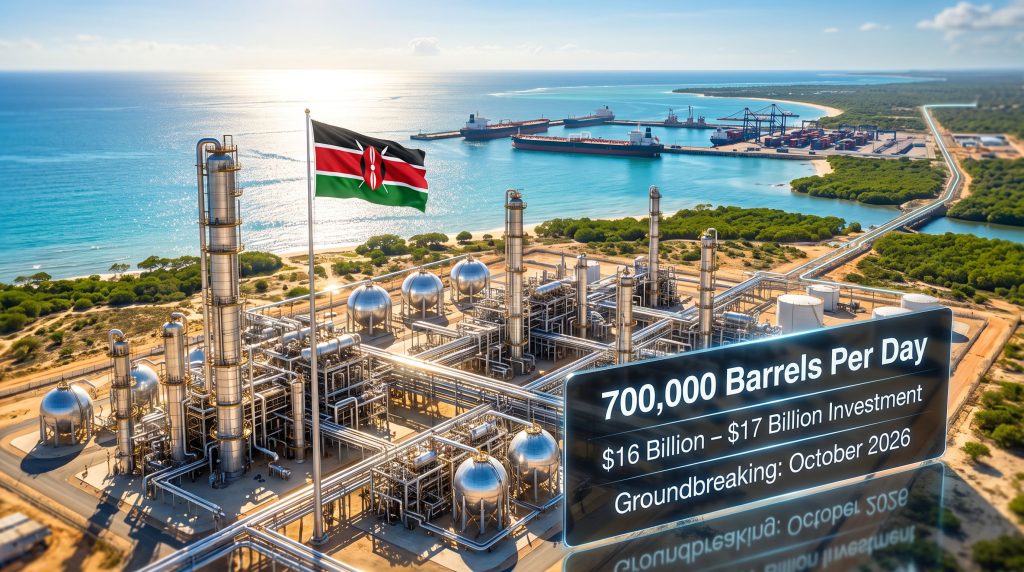
A refinery processing 700,000 barrels per day at Lamu would generate refined product volumes sufficient to fundamentally alter this calculus. To contextualise that figure: the entire current refining output of sub-Saharan Africa outside Nigeria amounts to a fraction of what the Lamu facility would process daily at full capacity.
Furthermore, the energy export challenges experienced by resource-rich nations elsewhere demonstrate just how damaging structural refining gaps can be to long-term economic competitiveness.
Key Investment Metric: The Dangote Kenya refinery carries a total project investment valuation of between $16 billion and $17 billion, placing it among the largest single private infrastructure commitments ever directed at East Africa.
From Tanzania to Kenya: How the Refinery Found Its Home at Lamu
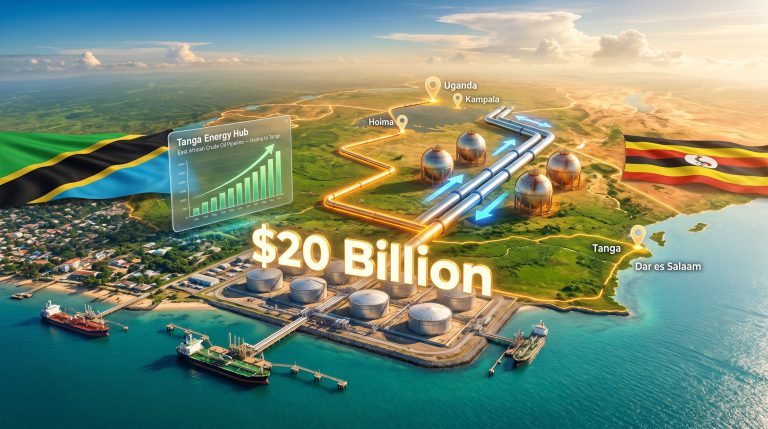
The project's current configuration is the product of an extended and geographically fluid negotiation process that began earlier in 2026. Kenyan President William Ruto confirmed in April 2026 that five nations, including Kenya, Tanzania, Uganda, South Sudan, and the DRC, were actively evaluating the possibility of a shared regional refinery. The original discussions did not position Kenya as the primary host.
The site selection journey unfolded across several distinct phases:
| Candidate Location | Country | Status | Primary Consideration |
|---|---|---|---|
| Tanga | Tanzania | Rejected | Initial frontrunner; insufficient partner-nation commitment |
| Mombasa | Kenya | Superseded | Deepwater port access; strong regional market connectivity |
| Lamu | Kenya | Confirmed | LAPSSET corridor alignment; superior regional distribution access |
Tanga in Tanzania was the first serious candidate, with early reporting suggesting Aliko Dangote was prepared to lead the project provided partner nations offered concrete backing. That commitment did not materialise at the scale required. By May 2026, Kenya had emerged as Dangote's preferred host nation, with Mombasa initially selected for its established deepwater port infrastructure and access to existing distribution networks.
The final shift to Lamu was confirmed in July 2026 by Edwin Devakumar, a senior Dangote Group executive. Simultaneously, the planned processing capacity was revised upward from 650,000 to 700,000 barrels per day, a revision that reflects both the project's growing commercial ambition and the expanded regional energy supply market it is now designed to serve.
Why Lamu Changes the Commercial Logic of the Entire Project
The Lamu Port-South Sudan-Ethiopia Transport corridor, universally referenced by its acronym LAPSSET, is a multi-decade infrastructure programme connecting Kenya's northern coastline with landlocked markets across South Sudan, Ethiopia, and broader East Africa. Positioning the refinery within this corridor transforms its function from a national energy facility into a regional petroleum distribution platform.
This distinction matters considerably for the project's commercial architecture. A refinery supplying only the Kenyan domestic market would face meaningful demand constraints. A facility integrated into LAPSSET infrastructure, capable of distributing refined products northward into South Sudan and westward toward Uganda and the DRC, operates against a dramatically larger addressable market. The LAPSSET alignment effectively multiplies the revenue-generating potential of every barrel processed.
Confirmed Timeline and What the October 2026 Groundbreaking Actually Represents
Aliko Dangote confirmed in a BBC interview that negotiations with the Kenyan government had progressed to an advanced stage, with a groundbreaking ceremony targeted for October 2026. He indicated that construction would commence immediately following the ceremony. Kenyan President William Ruto separately confirmed that a groundbreaking date had been agreed upon, though the precise day has not been disclosed publicly. President Ruto also directed Deputy President Kithure Kindiki to coordinate directly with investors and project stakeholders to facilitate the transition from planning to active construction.
Featured Answer: When is the Dangote Kenya refinery groundbreaking?
Aliko Dangote has publicly confirmed the ceremony is targeted for October 2026, with construction commencing directly afterward. Kenya's President Ruto has confirmed a date is set. Completion is expected within approximately three to five years of construction commencement, placing potential commissioning between 2029 and 2031.
In large-scale petrochemical infrastructure development, a groundbreaking ceremony carries specific technical and legal significance that goes beyond symbolic gesture. It typically signals that the following pre-construction requirements have reached sufficient maturity:
- Land tenure resolution – formal legal rights over the construction site secured
- Environmental impact assessment clearance – regulatory sign-off on construction and operational footprint
- Financing close or near-close – sufficient capital commitments in place to commence physical works
- Government agreement execution – binding frameworks between the project developer and host nation authorities
- Engineering and procurement contracts – key contractor relationships formalised
The fact that a groundbreaking date is being publicly confirmed by both the investor and the head of state suggests these pre-conditions are approaching completion, though the precise status of each element has not been publicly disclosed.
Dangote's Continental Downstream Strategy: The Lagos Blueprint Applied at Scale
The Kenya project cannot be fully understood in isolation. It is more accurately read as the second chapter of a deliberate continental downstream expansion that began with the Dangote Refinery in Lagos.
The Lagos facility, currently operating at approximately 650,000 barrels per day against a long-term nameplate target of 1.4 million barrels per day, established a proof of concept of profound importance: privately financed, African-led refining infrastructure can be built at world-scale capacity, operate competitively against imported refined products, and serve both domestic and export markets simultaneously.
The Kenya project represents a strategic escalation of this model across several dimensions:
- It is Dangote Industries' first major cross-border replication, transitioning the organisation from domestic operator to cross-continental downstream platform
- At 700,000 barrels per day, the Lamu facility would immediately rank as Africa's second-largest refinery by nameplate capacity if completed as planned
- The multi-nation supply mandate embedded in the project's design reflects a deliberate ambition to dominate East African petroleum distribution, not merely serve a single market
Financing the $16-17 Billion Project: A Blended Capital Structure With Execution Risks
Dangote Industries has outlined a three-component financing model for the Kenya refinery:
- Internally generated cash flows from existing operations, principally the Lagos refinery
- Bond financing structured against the project's long-term revenue profile and offtake assumptions
- IPO equity raising external capital through a public listing of the project vehicle
The IPO component deserves particular analytical attention. Equity raises of this scale for African infrastructure projects are relatively uncommon, and their execution depends significantly on capital market conditions, institutional investor appetite, and the prevailing risk premium applied to African downstream assets in global debt markets.
Financing Risk Watch: The sequential dependency between bond issuance, IPO execution, and construction mobilisation creates a vulnerability chain. If capital market conditions in late 2026 or 2027 tighten, or if African infrastructure debt is priced at elevated spreads, the equity raise timeline could slip, compressing the overall funding runway and potentially deferring the construction schedule beyond October 2026.
A successful IPO would also create a publicly traded East African energy equity vehicle, an asset class that is almost entirely absent from regional capital markets today. Institutional investors including regional pension funds and sovereign wealth vehicles with mandates to hold African infrastructure assets could find this a compelling addition to their portfolios. In addition, the commodity price impacts on project financing costs are worth monitoring closely, as crude price swings can materially alter refinery revenue projections.
Comparative Scale: Where the Lamu Refinery Sits in the African Energy Landscape
| Refinery | Location | Planned/Current Capacity (bpd) | Status |
|---|---|---|---|
| Dangote Refinery (full build-out target) | Lagos, Nigeria | 1,400,000 | Scaling toward target |
| Dangote Kenya Refinery | Lamu, Kenya | 700,000 | Pre-construction / Oct 2026 groundbreaking |
| Dangote Refinery (current operational) | Lagos, Nigeria | ~650,000 | Operational |
This table underscores a striking reality: the two largest refineries on the African continent by planned capacity would both be Dangote projects. The implications for Dangote Industries' leverage over African petroleum pricing, distribution economics, and downstream market structure are considerable, and deserve scrutiny from both a competition policy and an energy security perspective.
The next major ASX story will hit our subscribers first
Regional Economic Implications: Modelling the Impact of 700,000 Barrels Per Day
Import Substitution and Foreign Exchange Relief
At full operational capacity, the Lamu refinery would generate refined product volumes capable of displacing a substantial portion of East Africa's current import dependence. The foreign exchange implications alone are significant. Kenya, Uganda, and South Sudan collectively spend considerable proportions of their foreign currency reserves on petroleum imports, reserves that could be redirected toward debt service, capital investment, or social expenditure if domestic refining reduces the import bill. The project's favourable import-tax structures negotiated with the host government could further enhance its competitive positioning against imported refined products.
Industrial Cluster Development Along the LAPSSET Corridor
Large refinery complexes rarely operate in isolation. Their presence typically catalyses the development of complementary industrial activity:
- Petrochemical processing facilities utilising refinery byproducts
- Bulk liquid storage and terminal infrastructure
- Specialised logistics and shipping services
- Engineering and maintenance service providers
- Downstream blending and packaging operations
The Lamu site, if it develops into a full refinery-anchored industrial cluster, could attract investment volumes that dwarf the refinery itself over a decade-long development horizon.
Scenario Projection: East Africa's Energy Position by 2031
Assume the Lamu refinery reaches operational capacity by 2030 to 2031. Under a base-case scenario:
- Kenya's fuel import expenditure could decline materially, with estimates in comparable refinery development cases suggesting reductions of 40% to 60% depending on domestic consumption growth
- Landlocked LAPSSET-connected markets gain access to competitively priced refined products, reducing overland import freight premiums
- The refinery's IPO creates a publicly traded East African energy equity, potentially becoming a benchmark asset for regional institutional capital
- Lamu's port and industrial infrastructure receives sustained investment, accelerating its development into a significant East African maritime hub
Disclaimer: The above scenario projections are illustrative and speculative in nature. Actual outcomes will depend on construction timelines, operational performance, commodity prices, regulatory frameworks, and macroeconomic conditions. This content does not constitute financial or investment advice.
Key Risks That Could Affect the Groundbreaking and Construction Timeline
Land Tenure and Coastal Regulatory Complexity
Lamu County presents a specific set of regulatory challenges that distinguish it from more industrially developed coastal sites. Kenya's National Land Commission oversees coastal land acquisition, and any project of this scale must navigate community consultation requirements, environmental impact assessment processes under Kenya's Environmental Management and Co-ordination Act, and sensitivity around coastal ecosystem protections.
Lamu has historically been a complex operating environment for large infrastructure projects. Community displacement concerns and the presence of conservation-sensitive coastal areas add procedural layers that could extend pre-construction timelines if not managed proactively.
Multi-Country Offtake and Commercial Coordination
The refinery's commercial viability is partly contingent on securing binding supply and offtake agreements with Uganda, South Sudan, the DRC, and Ethiopia. Political instability in any of these partner markets, or failure to translate high-level governmental interest into enforceable commercial frameworks, could undermine the revenue assumptions embedded in the project's financing model.
Summary Risk Assessment
| Risk Category | Probability | Potential Impact | Key Mitigation |
|---|---|---|---|
| Land and regulatory delays | Moderate | High | Early NLC engagement, proactive community consultation |
| Financing close delays | Moderate | High | Phased bond issuance, IPO contingency structuring |
| Partner-nation commercial risks | Low to Moderate | Medium to High | Binding bilateral offtake agreements |
| Construction cost overruns | Moderate | Medium | Fixed-price EPC contracting, phased construction |
| Political risk in host nation | Low | High | Bilateral investment treaty protections |
Frequently Asked Questions About the Dangote Kenya Refinery Groundbreaking
What is the planned capacity of the Dangote Kenya refinery?
The facility is designed to process 700,000 barrels of crude oil per day, revised upward from an initial target of 650,000 barrels per day. At this throughput, it would rank as Africa's second-largest refinery by nameplate capacity.
Where will the refinery be located?
The confirmed site is near Lamu on Kenya's northern coast, chosen for its strategic alignment with the LAPSSET regional infrastructure corridor.
How much will the project cost?
Investment estimates place the total project cost between $16 billion and $17 billion, making it one of the largest private industrial commitments in East African history.
How long will construction take?
Construction is expected to span three to five years from groundbreaking, with some reporting suggesting a more compressed target, placing potential operational commissioning between approximately 2029 and 2031.
How will the refinery be financed?
Dangote Industries has outlined a blended capital structure combining internally generated cash flows, bond financing, and equity raised through a planned IPO of the project entity.
Which markets will the refinery serve beyond Kenya?
The LAPSSET corridor positioning means the refinery's output is designed to supply Uganda, South Sudan, Ethiopia, and the Democratic Republic of the Congo, all markets currently reliant on costly imported petroleum products.
October 2026 and Beyond: Why This Groundbreaking Is More Than a Ceremony
The Dangote Kenya refinery groundbreaking, if it proceeds on its October 2026 schedule, would mark the most consequential single downstream energy investment decision directed at East Africa in at least a generation. Its significance extends across multiple analytical dimensions simultaneously.
For Kenya, securing the Lamu refinery consolidates its position as East Africa's dominant economic hub and provides the LAPSSET corridor with the anchor industrial tenant capable of attracting complementary investment at scale. For East African energy markets broadly, the project represents a genuine structural shift away from import dependency toward regional supply sovereignty. For Dangote Industries, the Kenya project signals the transition from Nigeria's largest private enterprise to a pan-African industrial platform with cross-border downstream energy reach.
Perhaps most significantly for observers of African industrial development, Africa's richest man is testing a thesis that carries implications far beyond petroleum: that privately financed, African-led megaprojects can be conceived, structured, financed, and built at a scale previously considered the exclusive domain of multilateral institutions or sovereign-backed developers.
The Broader Thesis: If the Lamu refinery follows the developmental trajectory of its Lagos predecessor, East Africa's structural petroleum import dependency could be materially reduced within a decade. The October 2026 groundbreaking is the opening move in what may prove to be the most consequential reshaping of African downstream energy economics since the post-colonial era.
This article is intended for informational purposes only and does not constitute financial, investment, or legal advice. Forecasts, timelines, and scenario projections referenced herein involve inherent uncertainty and should not be relied upon as predictions of actual outcomes. Readers should conduct independent research before making any investment or commercial decisions.
Want to Capitalise on the Next Major Resource Discovery Before the Broader Market?
Discovery Alert's proprietary Discovery IQ model delivers real-time alerts the moment significant ASX mineral discoveries are announced, transforming complex resource data into actionable investment insights for traders and long-term investors alike — explore Discovery Alert's discoveries page to understand how major resource finds have historically generated substantial returns, and begin your 14-day free trial today to position yourself ahead of the market.