August 24, 2026
The Dangote refinery jet fuel export strategy represents a significant milestone in Africa's petroleum refining evolution, demonstrating how substantial capital investment can transform continental energy infrastructure. Furthermore, this development establishes Nigeria as a major player in global refined product markets while reducing historical import dependencies that have constrained economic growth across the region.
The Technical Foundation Behind Africa's Refining Renaissance
Engineering Scale and Single-Train Design Advantages
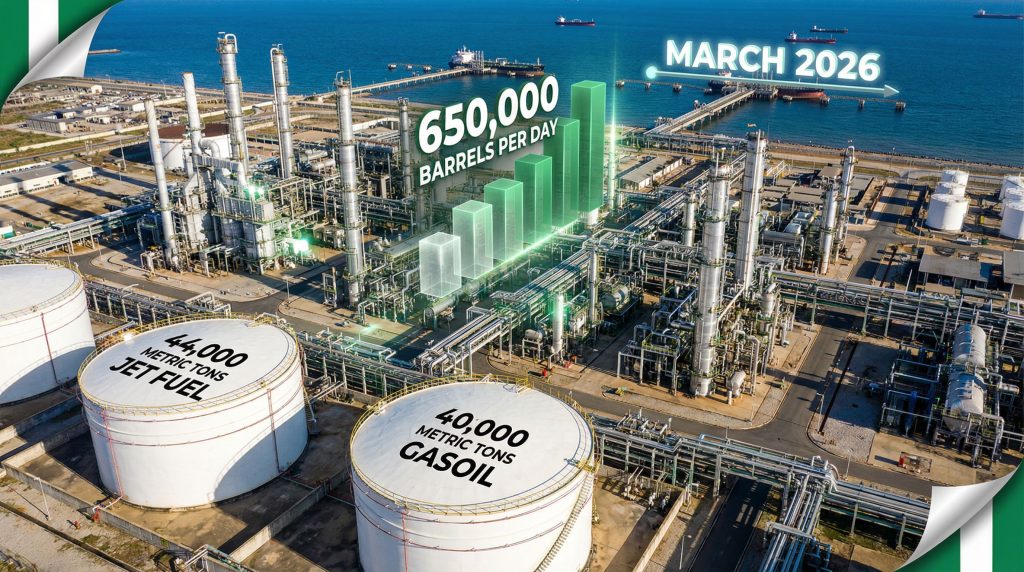
The Dangote Refinery operates with a 650,000 barrels per day processing capacity through a single-train configuration, representing the world's largest facility of this design type. This engineering approach concentrates all processing units within one integrated system rather than multiple parallel trains, enabling superior operational efficiency and reduced complexity in maintenance scheduling.
Single-train refineries offer several technical advantages over multi-train designs:
• Streamlined control systems that reduce operational complexity
• Lower maintenance overhead through consolidated equipment networks
• Enhanced process integration enabling better heat and material recovery
• Reduced capital expenditure per barrel of daily processing capacity
The facility's $20+ billion investment translates to approximately $30,769 per barrel of daily capacity, positioning it competitively within global refinery construction cost benchmarks. Located in Lagos' Ibeju-Lekki industrial zone, the refinery benefits from proximity to Nigeria's primary port infrastructure and crude oil supply networks.
Product Specification Excellence for International Markets
The refinery produces gasoil with maximum sulfur content of 50 parts per million, meeting ultra-low sulfur diesel specifications required for international export markets. This technical specification aligns with European EN 590 standards and US EPA Tier 3 requirements, enabling global market access without quality restrictions.
Jet fuel production adheres to international aviation standards, though specific technical parameters require verification through ASTM D1655 or DEF STAN 91-91 compliance documentation. The facility's ability to simultaneously produce aviation fuel and automotive diesel demonstrates sophisticated fractional distillation and hydrotreating capabilities.
Key product specifications include:
• Diesel sulfur content: Maximum 50 ppm
• Aviation fuel compliance: International civil aviation requirements
• Distillation range optimization for multiple refined products
• Quality control systems ensuring consistent specification achievement
When big ASX news breaks, our subscribers know first
March 2026 Export Strategy: Timing and Market Positioning
Tender Volume Analysis and Commercial Structure
The March 2026 export tender encompasses 44,000 metric tons of jet fuel scheduled for loading between March 20-22, alongside 40,000 metric tons of gasoil with a March 15-30 loading window. Combined, these volumes represent 84,000 metric tons of refined products within a single calendar month.
Converting these volumes to barrel equivalents reveals the export magnitude:
| Product Type | Metric Tons | Estimated Barrels | Loading Window |
|---|---|---|---|
| Jet Fuel | 44,000 | ~346,000 | March 20-22 |
| Gasoil/Diesel | 40,000 | ~296,000 | March 15-30 |
| Combined Total | 84,000 | ~642,000 | March 15-30 |
At this export pace, annualised volumes would reach approximately 1.008 million tons or 7.7 million barrels, representing roughly 3.0% of the facility's total annual production capacity.
Open Tender Strategy and Market Access
The refinery employs open tender mechanisms that invite competitive bidding from international traders rather than exclusive distribution agreements. This commercial approach provides several strategic advantages:
• Price discovery through competitive bidding processes
• Market diversification across multiple trading counterparties
• Volume flexibility enabling demand-responsive allocation
• Geographic reach expansion through trader distribution networks
Trade sources indicate these tenders represent export-focused volumes while domestic supply continues through separate distribution channels, demonstrating operational flexibility between local and international market service.
Nigeria's Energy Independence Transformation
Import Substitution Economics and Foreign Exchange Impact
Nigeria historically imported substantial volumes of refined petroleum products despite being a major crude oil producer. The Dangote refinery jet fuel export capability directly addresses this structural imbalance through domestic refining capability that reduces import dependency.
Economic transmission mechanisms include:
- Import displacement reducing foreign exchange outflows for refined product purchases
- Export revenue generation creating new foreign currency inflows
- Employment creation across refining operations and supporting industries
- Industrial cluster development within Lagos' manufacturing zone
Estimating the March 2026 export value at current petroleum product pricing (approximately $1.10-1.30 per gallon for jet fuel and $1.00-1.25 per gallon for diesel), the 84,000-ton monthly export generates approximately $40-55 million in monthly export revenue.
"Economic Impact Assessment": Annualising this export pace suggests $480-660 million in potential annual export earnings, representing significant but measured contribution to Nigeria's total merchandise export performance.
Domestic Market Supply Chain Integration
The refinery simultaneously serves domestic Nigerian fuel demand through distribution networks separate from export tenders. This dual-channel approach optimises revenue generation by:
• Domestic pricing potentially offering premium margins during supply constraints
• Export pricing providing market-rate revenue through competitive tenders
• Volume allocation flexibility responding to relative price incentives between markets
• Supply security enhancement for Nigerian transportation and industrial sectors
Global Market Dynamics Influencing Export Strategy
Atlantic Basin Competitive Positioning
The refinery's geographic location provides strategic access to Atlantic Basin markets, competing with European refiners, Caribbean facilities, and Middle Eastern producers. Lagos' port infrastructure enables efficient product tanker loading for delivery to US Gulf Coast terminals and European destinations.
US jet fuel imports from Nigeria have surged as the facility demonstrates successful market entry and buyer qualification. However, the global fuel trade transformation requires additional market documentation for comprehensive analysis of the facility's expanding influence.
The oil price movements significantly affect competitive positioning, as refined product pricing directly correlates with crude oil market volatility and regional supply dynamics.
Seasonal Demand Patterns and Maintenance Windows
March timing for these tenders may reflect several market considerations:
• Spring aviation demand recovery following winter seasonal patterns
• Industrial diesel consumption increases with construction activity resumption
• Refinery maintenance scheduling optimisation during favourable weather conditions
• Atlantic shipping routes benefiting from improved maritime conditions
The tender timing suggests strategic market positioning to capture seasonal demand increases whilst optimising operational scheduling around maintenance requirements. Additionally, oil price stagnation during certain periods creates opportunities for strategic inventory management.
Technical Infrastructure Supporting Export Operations
Port Capacity and Loading Infrastructure
Lagos' Ibeju-Lekki port infrastructure supports the refinery's export operations through dedicated terminal facilities capable of accommodating product tankers. The March 15-30 loading window indicates sufficient berth capacity and storage tank inventory to support concurrent vessel operations.
Critical infrastructure elements include:
• Berth specifications accommodating various product tanker sizes
• Loading rate capabilities optimising vessel turnaround times
• Storage tank capacity enabling inventory management for tender fulfillment
• Pipeline infrastructure connecting refinery output to terminal facilities
Quality Control and Product Certification
International export success requires consistent quality assurance and product certification meeting destination market specifications. The refinery's ability to produce ULSD and aviation-grade jet fuel indicates sophisticated quality control systems.
Certification requirements for global markets include:
• Third-party quality verification through independent testing laboratories
• Specification compliance documentation for each product batch
• Chain of custody protocols maintaining product integrity during transport
• International standards alignment with ASTM, EN, or destination-specific requirements
Capacity Expansion Plans and Long-Term Market Impact
Production Scaling Roadmap
Plans exist to expand processing capacity beyond the current 650,000 bpd to over 1 million barrels per day, representing a more than 50% capacity increase. This expansion would position the facility among the world's largest refineries by absolute throughput.
Expansion implications include:
• Increased export potential supporting larger tender volumes
• Enhanced market share in Atlantic Basin refined product trade
• Greater economic impact through expanded employment and industrial activity
• Improved continental energy security through increased regional supply
The expansion coincides with broader global OPEC market influence considerations, as regional production increases could affect international supply dynamics and pricing structures.
Strategic Market Positioning for Sustainable Growth
The refinery's export strategy demonstrates several competitive advantages supporting long-term market participation:
Geographic Benefits:
- Strategic Atlantic Basin positioning
- Efficient shipping routes to major markets
- Proximity to West African demand centres
Operational Advantages:
- Large-scale production enabling competitive unit costs
- Quality specifications meeting international requirements
- Flexible allocation between domestic and export markets
Market Access Capabilities:
- Proven export success to US terminals
- Open tender approach attracting diverse buyers
- Infrastructure supporting various vessel sizes and loading requirements
The next major ASX story will hit our subscribers first
Continental Energy Sector Development Catalyst
Regional Industrialisation Impact
The Dangote refinery jet fuel export success represents a transformative industrial development model for Africa, demonstrating private sector capability to execute large-scale energy infrastructure projects. This success creates precedent effects for similar developments across the continent.
Regional development implications include:
• Technology transfer establishing local refining expertise
• Supply chain development supporting upstream and downstream industries
• Investment confidence building attracting additional energy sector projects
• Industrial cluster formation within Lagos and potentially other African cities
How Does Continental Energy Security Enhancement Work?
African economies have historically depended on refined product imports, creating foreign exchange vulnerabilities and supply chain risks. Local refining capacity reduces these dependencies whilst creating intra-continental trade opportunities.
Energy security benefits encompass:
• Reduced import dependency for multiple African economies
• Regional supply reliability during global market disruptions
• Foreign exchange conservation through import substitution
• Price stability improvement through local production capacity
Furthermore, the OPEC meeting impact on regional energy policies demonstrates how continental refining capacity provides strategic flexibility during international supply negotiations.
Risk Assessment and Market Diversification
Operational Risk Mitigation Strategies
The refinery's dual-market approach balances domestic obligations with export opportunities, providing operational flexibility during market volatility or maintenance requirements. This diversification strategy reduces dependence on any single market or customer base.
Key risk mitigation elements include:
• Market diversification across domestic and international sales
• Customer base expansion through open tender processes
• Product portfolio optimisation serving aviation, transportation, and industrial sectors
• Geographic distribution reducing concentration risk in single regions
Future Market Development Opportunities
The March 2026 tender represents initial steps toward establishing the refinery as a reliable supplier in global refined product markets. Success in this export programme creates foundation for expanded international market participation.
Development opportunities include:
• Long-term supply contracts with major international buyers
• Market share expansion in Atlantic Basin refined product trade
• Product specification customisation for specific regional requirements
• Trading relationship development with global petroleum marketing companies
The global oil futures market provides essential price discovery mechanisms for long-term contract negotiations and strategic planning initiatives.
Disclaimer: This analysis is based on available market information and industry observations. Petroleum market dynamics, refinery operations, and international trade patterns involve significant complexity and risk factors. Investment decisions should incorporate comprehensive due diligence and professional financial advice. Production capacity, export volumes, and market pricing remain subject to operational, technical, and market variables beyond predictive modelling.
Ready to Capitalise on Global Energy Market Movements?
Discovery Alert's proprietary Discovery IQ model delivers instant notifications on significant ASX mineral discoveries, including those in the rapidly evolving energy sector where commodity movements can create substantial investment opportunities. Stay ahead of market developments by exploring Discovery Alert's historic success stories and begin your 14-day free trial today to position yourself at the forefront of Australian mining discoveries.