August 25, 2026
Deep geological repositories for nuclear waste represent one of humanity's most sophisticated engineering solutions for long-term environmental protection. With approximately 100 interim storage locations worldwide currently housing high-level radioactive materials, the transition from temporary surface storage to permanent geological disposal has become an urgent priority for nuclear-operating nations.
The scale of accumulated waste presents a compelling case for permanent solutions. Current global inventories include approximately 250,000 cubic metres of high-level radioactive waste stored across various interim facilities, with this volume continuing to grow as nuclear power generation expands to meet climate commitments. Furthermore, effective nuclear waste disposal strategies are essential for sustainable energy futures.
Critical Timeline Pressures:
- Several decades of interim storage operations since the 1970s-1980s
- Multiple regulatory frameworks requiring 100,000+ year containment demonstrations
- Pre-operational assessment phases spanning 10-15 years minimum for site characterisation
The gap between public perception and technical reality remains significant. International nuclear safety experts emphasise that deep geological disposal is technically feasible and demonstrably safe, representing the internationally recognised solution for high-level waste management. However, public understanding often lags behind scientific consensus, creating communication challenges that extend project timelines.
Regulatory Evolution Framework:
Repository development involves unprecedented regulatory adaptation, where safety authorities must develop expertise parallel to project advancement. This creates dynamic oversight frameworks for facilities requiring century-spanning safety demonstrations, with regulators adapting their knowledge base throughout lengthy pre-operational phases.
The Multi-Barrier Engineering Approach
Deep geological repositories for nuclear waste employ sophisticated containment systems designed to function independently across geological timescales. These engineered barriers work in sequence, with each layer providing backup protection should previous barriers degrade over extended periods.
Engineered Barrier Performance Matrix:
| Barrier Component | Primary Function | Design Timeframe | Material Examples |
|---|---|---|---|
| Waste Matrix | Radionuclide immobilisation | 1,000-10,000 years | Borosilicate glass, ceramic forms |
| Container System | Corrosion protection | 10,000-100,000 years | Copper canisters, titanium alloys |
| Buffer Material | Groundwater isolation | 100,000+ years | Bentonite clay, engineered backfill |
| Host Geology | Natural containment | Geological timescales | Crystalline rock, dense clay |
Copper Canister Technology Validation:
Finland's operational programme demonstrates copper canister effectiveness in crystalline rock environments. Test programmes have successfully validated bentonite buffer systems designed to maintain groundwater isolation whilst providing barriers against potential radioactive material migration. These systems represent the most advanced deployment of multi-barrier engineering principles.
Bentonite Buffer Mechanics:
Bentonite clay serves multiple containment functions through its natural swelling properties. When hydrated, bentonite creates low-permeability seals that physically separate waste containers from groundwater systems whilst providing chemical buffering against radionuclide migration. This material maintains effectiveness across the required 100,000+ year regulatory timeframes. In addition, these natural properties complement ongoing geological formations and cycles research.
Integrated Waste Capacity Planning:
- France: 10,000 cubic metres high-level waste + 75,000 cubic metres intermediate-level waste
- Switzerland: Combined repository approach for multiple waste streams
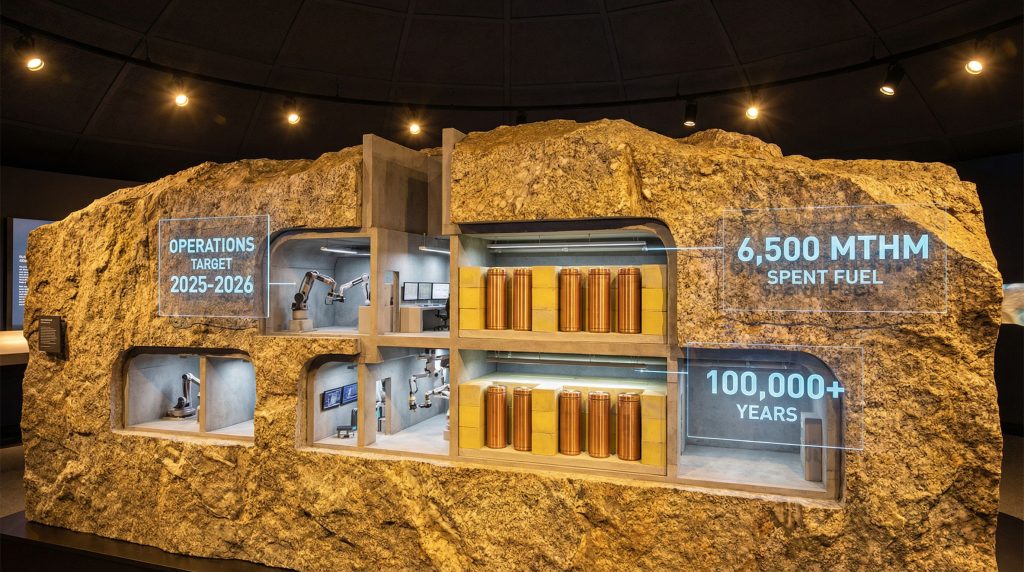
- Finland: 6,500 metric tonnes heavy metal equivalent spent fuel capacity
The multi-barrier approach eliminates single points of failure by ensuring waste isolation remains effective even if individual barriers degrade over time. This redundancy principle drives the engineering philosophy underlying successful deep geological repositories for nuclear waste across diverse geological settings.
When big ASX news breaks, our subscribers know first
How Do Different Geological Formations Support Long-Term Waste Isolation?
Geological diversity across repository programmes demonstrates multiple pathways for achieving long-term waste isolation. Each formation type offers distinct advantages based on regional geology and waste management requirements.
Crystalline Bedrock Applications:
Finland and Sweden leverage ancient granite formations dating back 1.8-1.9 billion years. These crystalline environments provide exceptional stability with measurable but controllable groundwater movement rates. Repository depths of 400-430 metres (Finland) and 500 metres (Sweden) position waste packages within stable geological zones proven resistant to tectonic disruption across geological timescales.
Key Performance Characteristics:
- Minimal groundwater flow requiring engineered groundwater control
- Chemical stability across regulatory timeframes exceeding 100,000 years
- Proven tectonic stability over billion-year timescales
- Compatibility with copper canister and bentonite buffer systems
Dense Clay Formation Strategies:
France and Switzerland utilise sedimentary clay formations as natural low-permeability barriers. These environments provide inherent chemical buffering and self-sealing properties that enhance engineered barrier performance. Clay formations near Bure, France, and northern Switzerland demonstrate how sedimentary geology can support repository development.
Tectonic Stability Considerations:
Switzerland's site selection process highlights geological stability requirements over million-year timeframes. With potential Alpine uplift of one kilometre over the next million years, repository siting focused on geologically stable regions away from active mountain-building zones. This approach prioritises "boring geology" over dramatic landscapes for optimal long-term performance.
Cross-Border Geological Coordination:
Repository sites near international boundaries require geological formation assessment across political borders. Switzerland's involvement of Germany throughout site selection demonstrates how geological continuity transcends national boundaries, requiring coordinated technical review and stakeholder engagement.
Salt Formation Properties:
The United States' operational WIPP facility validates salt's unique containment properties, including plastic deformation that self-seals fractures and extremely low water content. These characteristics provide alternative geological pathways for deep geological repositories for nuclear waste in appropriate regional settings. Moreover, such innovations complement broader mine reclamation innovation approaches.
What Are the Current Global Repository Development Timelines?
Repository development timelines reflect the complexity of first-of-a-kind facilities requiring unprecedented safety demonstrations. Current projects span multiple decades from initial concept through operational deployment.
Advanced Implementation Status (2025-2026):
| Country | Project | Current Phase | Decision Timeline | Operations Target |
|---|---|---|---|---|
| Finland | Onkalo | Final safety review | 2026 decision | 2026-2027 operations |
| Sweden | Forsmark | Underground excavation permit | 2026-2027 approval | 2030s operations |
| France | Cigéo | Construction licence review | 2027-2028 licence | 2035 pilot phase |
| Switzerland | Nördlich Lägern | General permit review | 2029 federal decision | 2050+ operations |
Finland's Operational Breakthrough:
Onkalo represents the most advanced deep geological repositories for nuclear waste globally, with safety documentation review approaching final stages as of December 2025. The facility has successfully commissioned encapsulation plants and completed underground testing with five copper canisters containing dummy fuel elements. Operations approval targets 2026, with actual waste disposal commencing thereafter.
Sweden's Construction Phase Advancement:
Sweden submitted applications for underground excavation in January 2025, building on decades of site characterisation at Forsmark. Surface construction continues whilst regulatory review proceeds, with underground construction approval expected by 2026-2027. This timeline validates the decade-long progression from government approval through construction permitting.
France's Licensing Milestone Achievement:
Cigéo achieved a significant milestone with favourable regulatory opinion issued in December 2025, following technical review completion in June. The construction licence application submitted in 2023 advances toward 2027-2028 approval, targeting 2035 pilot operations for the underground disposal tunnel system. Consequently, this supports broader sustainable mining transformation objectives.
Switzerland's International Coordination Model:
The November 2024 general permit application for Nördlich Lägern demonstrates sophisticated international coordination, with German participation throughout site selection due to border proximity. Federal Council decision targeting 2029, followed by parliamentary review in 2030 and potential national referendum in 2031, illustrates comprehensive democratic oversight of repository development.
Canada's Consent-Based Siting Success:
November 2024 community selection of Wabigoon Lake Ojibway Nation and Township of Ignace validates consent-based siting methodologies. The 14-year community engagement process leading to voluntary hosting agreements provides a model for other national programmes pursuing social licence approaches.
Why Do Repository Projects Require Decades of Development?
Deep geological repositories for nuclear waste represent unprecedented engineering challenges requiring extensive validation across multiple technical and social domains. Development timelines reflect the complexity of demonstrating safety across 100,000+ year regulatory frameworks.
Technical Validation Requirements:
- Site characterisation studies: 10-15 years of geological, hydrological, and geochemical analysis
- Safety case evolution: Comprehensive modelling of repository performance across regulatory timescales
- Technology demonstration: Full-scale testing of engineered barriers and waste handling systems
- Regulatory framework development: Parallel regulator expertise building and oversight capability development
Regulatory Adaptation Cycles:
Repository licensing involves regulatory bodies developing expertise alongside project advancement. Safety authorities must adapt their knowledge base throughout lengthy pre-operational phases, creating dynamic oversight frameworks for facilities with no operational precedent. This regulatory evolution process extends project timelines whilst ensuring appropriate safety oversight.
Community Engagement Imperatives:
Successful repository projects emphasise voluntary hosting arrangements requiring extensive stakeholder consultation. Finland's timeline from 1980s government target setting through 2020s operational deployment illustrates how community trust-building extends across multiple decades. Sweden's regulatory and court proceedings from 2011-2018 demonstrate the time required for comprehensive legal review processes.
Multi-Generational Project Scope:
Repository projects span multiple decades from development through closure, requiring institutional continuity across technological transitions. Canada's projected timeline from 2032 construction through 2092 closure illustrates the multi-generational scope requiring sustained institutional commitment.
Technology Evolution Challenges:
Long-term project development encounters technological change challenges, including evolving data storage formats and documentation systems. Early repository programmes initiated during pre-PC eras must maintain record accessibility across software transitions, highlighting the importance of forward-looking information management strategies. For instance, these challenges mirror those faced in mining industry innovation efforts.
What Lessons Are Emerging from International Repository Programmes?
International repository development provides valuable lessons for emerging national programmes and regulatory frameworks. Cross-border experience sharing accelerates technical advancement whilst reducing development risks.
Finland's Operational Validation:
Onkalo's progression to operational readiness validates the deep geological repositories for nuclear waste concept across crystalline rock environments. The successful integration of copper canisters, bentonite buffers, and underground facility operations provides proven templates for similar geological settings worldwide.
Regulatory Framework Flexibility Requirements:
International experience highlights the importance of adaptive regulatory frameworks accommodating design evolution throughout lengthy development cycles. Regulators must maintain safety standards whilst allowing conceptual refinement based on extended site characterisation and technology testing.
Stakeholder Engagement Evolution:
Critical Insight: "We need to understand what they want to understand and understand what they understand" – emphasising the bidirectional communication requirements for successful community engagement in repository acceptance.
Cross-Border Coordination Protocols:
Switzerland's integration of German stakeholders throughout site selection demonstrates essential coordination protocols for repositories near international boundaries. Geological formations transcending political borders require coordinated technical review and community engagement across national jurisdictions.
Polluter Pays Principle Implementation:
Sweden's clear responsibility allocation through polluter pays principles provides organisational clarity throughout multi-decade development timelines. This framework ensures waste producers maintain financial responsibility whilst establishing regulatory independence from industry influence.
Technology Transfer Opportunities:
International cooperation creates knowledge-sharing networks reducing development risks for emerging programmes. Countries entering repository development benefit from established technical solutions and regulatory approaches validated through operational programmes.
Public Opposition Management:
Historical project failures resulted from public opposition rather than technical inadequacy, emphasising the critical importance of social licence alongside technical capability. Successful programmes prioritise community consent and transparent decision-making processes.
How Do Repository Projects Address Long-Term Institutional Control?
Deep geological repositories for nuclear waste must function across timescales exceeding human institutional continuity, requiring passive safety designs minimising dependence on active management.
Passive Safety Design Philosophy:
Repository engineering prioritises systems functioning without human intervention, eliminating institutional control requirements over geological timescales. Multiple engineered barriers provide redundant containment independent of surface maintenance or monitoring activities.
Record Keeping Across Technological Transitions:
Long-term repository programmes encounter technological evolution challenges requiring adaptable documentation systems. Early programmes initiated during pre-PC eras demonstrate the importance of maintaining record accessibility across software platform transitions and data storage format evolution.
Intergenerational Responsibility Frameworks:
Repository programmes establish dedicated funding mechanisms ensuring operational continuity across multiple generations. These frameworks address the reality that repository development, operation, and closure timelines span multiple decades requiring sustained institutional commitment.
Knowledge Preservation Systems:
Repository programmes must maintain technical expertise and operational knowledge across technological and organisational transitions. This includes preserving understanding of design decisions, safety case foundations, and operational procedures for future oversight organisations.
Monitoring and Retrievability Considerations:
Whilst designed for permanent disposal, repository programmes maintain theoretical retrievability capabilities during operational phases. This provides flexibility for future generations whilst ensuring primary waste isolation objectives remain intact.
The next major ASX story will hit our subscribers first
What Are the Economic and Strategic Implications of Repository Development?
Repository development creates significant economic and strategic benefits extending beyond waste management objectives. These facilities enable expanded nuclear energy deployment whilst generating industrial innovation spillovers.
National Energy Security Benefits:
Permanent waste solutions remove key barriers to nuclear energy expansion, supporting carbon reduction goals and energy independence strategies. Countries with operational repository programmes gain competitive advantages in nuclear technology deployment and export markets.
Industrial Innovation Spillovers:
Deep geological repositories for nuclear waste require advanced underground construction techniques applicable to other infrastructure projects. Repository engineering advances benefit carbon storage facilities, critical mineral extraction operations, and underground research installations.
International Cooperation Economic Models:
Repository development creates opportunities for regional collaboration, particularly for smaller nuclear programmes lacking individual repository development capacity. Shared facility concepts could provide cost-effective solutions whilst maintaining safety standards.
Long-term Financing Mechanisms:
Repository programmes demonstrate sophisticated funding approaches ensuring multi-generational project continuity. These financial frameworks provide models for other long-term infrastructure projects requiring sustained investment across political cycles.
Technology Export Opportunities:
Leading repository programmes position countries as technology exporters for emerging nuclear waste management markets. Finnish, Swedish, and French repository expertise creates commercial opportunities in expanding nuclear markets worldwide.
What Challenges Remain for Global Repository Implementation?
Despite technical progress, significant challenges persist across repository development programmes. These obstacles require continued innovation in both technical and social domains.
Site Selection Optimisation
Balancing geological suitability with community acceptance requires sophisticated stakeholder engagement approaches. Future site selection methodologies must integrate technical requirements with voluntary hosting principles demonstrated by successful programmes.
Regulatory Harmonisation Opportunities
International standards development could accelerate repository deployment whilst maintaining locally appropriate safety requirements. Harmonised approaches balance regulatory efficiency with geological and social context variations.
Funding Security Across Generational Timescales
Long-term financing mechanisms must ensure repository operations and closure costs remain secured across multi-generational timeframes. Financial instruments must account for economic volatility and institutional changes over century-spanning project lifecycles.
Public Understanding Enhancement
The gap between technical feasibility and public perception requires continued communication innovation. Educational initiatives must bridge scientific complexity with accessible public understanding of repository safety and necessity.
International Coordination Framework Development
Expanding global nuclear programmes require coordinated repository development approaches. International frameworks should facilitate technology transfer whilst respecting national sovereignty over waste management decisions.
How Will Repository Technology Evolve in Coming Decades?
Repository technology continues advancing through operational experience and research innovation. Next-generation developments promise enhanced performance and reduced implementation complexity.
Advanced Materials Development:
Future container materials and engineered barriers may extend containment performance whilst reducing repository footprints. Materials science advances could enable more compact repository designs or enhanced safety margins.
Digital Twin Integration:
Sophisticated monitoring and modelling systems enable real-time repository performance assessment. Digital twin technologies could provide predictive maintenance capabilities and enhanced safety case validation throughout operational phases.
Modular Implementation Approaches:
Phased repository development allows operational experience to inform expansion decisions. Modular approaches maintain flexibility for evolving waste management strategies whilst demonstrating initial facility performance.
Enhanced Geological Characterisation Techniques:
Advanced subsurface investigation methods improve site characterisation accuracy whilst reducing investigation timelines. These developments could accelerate repository development whilst enhancing safety case confidence.
International Standardisation Evolution:
Emerging international standards for deep geological repositories for nuclear waste could facilitate technology transfer whilst maintaining safety performance. Standardised approaches balance technical efficiency with local geological and regulatory requirements.
Future Development Perspective: Repository programmes worldwide demonstrate that technical solutions exist for permanent nuclear waste management. The primary challenges involve maintaining multi-generational institutional commitment and public engagement throughout unprecedented project timescales.
Ready to Capitalise on Strategic Nuclear Waste Management Opportunities?
Discovery Alert's proprietary Discovery IQ model delivers real-time alerts on significant uranium and rare earth discoveries, instantly empowering subscribers to identify actionable opportunities ahead of the broader market. Begin your 30-day free trial today and secure your market-leading advantage as the nuclear sector continues its strategic expansion.