August 9, 2026
Deep Shale Resource Analysis: Technical Complexities in Unconventional Formation Development
The United States energy landscape continues evolving as advances in extraction technologies unlock previously inaccessible hydrocarbon deposits. Recent geological assessments reveal substantial resource potential in formations that present unique technical and economic challenges compared to conventional drilling targets. The USGS assessment of Permian Basin oil and gas potential indicates these deep formations contain significant untapped resources requiring sophisticated approaches to overcome technical barriers. Understanding these deep unconventional systems requires comprehensive analysis of their geological characteristics, operational requirements, and market dynamics.
Modern drilling operations increasingly focus on formations extending well beyond traditional depth parameters. These deeper targets contain significant hydrocarbon resources but demand specialized approaches to overcome technical barriers that differentiate them from established production zones.
When big ASX news breaks, our subscribers know first
Understanding Formation Depth and Accessibility in Deep Shale Systems
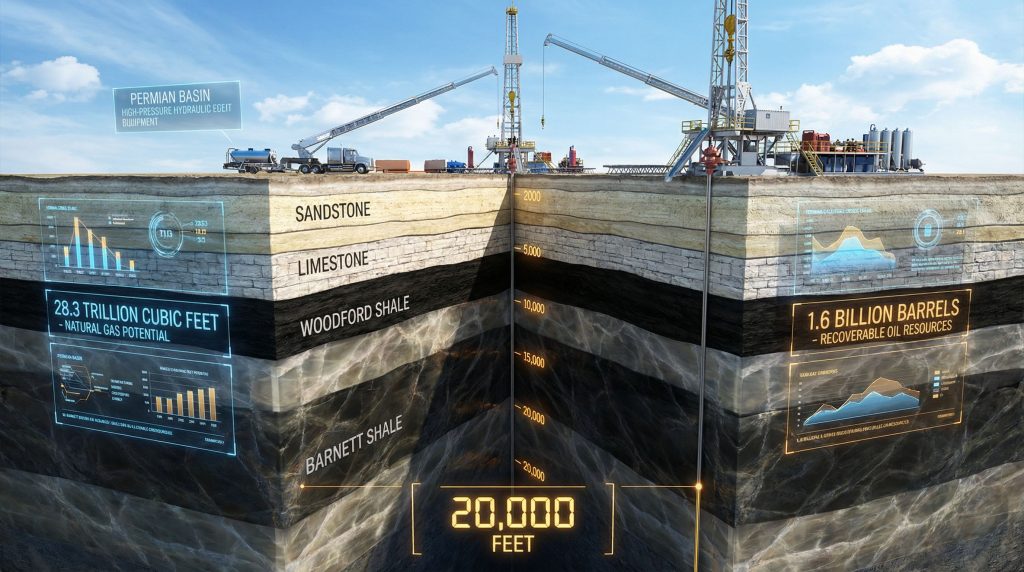
The Woodford and Barnett formations within the Permian Basin represent some of North America's most challenging unconventional targets, extending to depths reaching 20,000 feet below surface level. These extreme depths create operational complexities that fundamentally alter drilling economics and technical requirements.
Geological Characteristics of Extreme-Depth Formations
Deep shale systems exhibit distinct properties that impact extraction methodologies. Furthermore, these characteristics require ai drilling innovations to address the unique challenges presented at such depths:
• Temperature gradients at extreme depths frequently exceed 300°F, affecting completion fluid performance and equipment metallurgy requirements
• Pressure regimes demand specialized drilling mud systems capable of maintaining wellbore stability under high-pressure, high-temperature conditions
• Rock mechanics change significantly with depth, impacting fracture propagation patterns and completion design optimization
• Clay content variations create wellbore stability challenges during drilling operations, particularly in Barnett shale formations with elevated clay percentages
The USGS assessment of Permian Basin oil and gas potential indicates these formations contain 28.3 trillion cubic feet of technically recoverable natural gas and 1.6 billion barrels of oil resources. Additionally, 813 million barrels of natural gas liquids represent substantial liquid hydrocarbon potential within these deep systems.
Technical Challenges in Deep Formation Development Operations
Advanced Drilling and Completion Requirements
Accessing resources at extreme depths necessitates technological solutions beyond conventional drilling capabilities. Consequently, data-driven operations become essential for managing the complexity of these challenging environments:
High-Temperature Equipment Specifications:
• Downhole tools must withstand temperatures exceeding standard equipment ratings
• Completion fluids require thermal stability under extreme conditions
• Metallurgy considerations become critical for long-term equipment performance
• Real-time monitoring systems must function reliably in harsh downhole environments
Wellbore Stability Management:
• Clay-rich formations present drilling hazards requiring specialized fluid systems
• Formation pressure management becomes increasingly complex with depth
• Casing design must accommodate extreme pressure and temperature differentials
Resource Assessment and Sweet Spot Identification
| Technical Challenge | Required Solution | Industry Application |
|---|---|---|
| Formation mapping | Advanced seismic interpretation | 3D/4D seismic surveys with enhanced processing |
| Rock quality assessment | Comprehensive core analysis | Laboratory testing protocols and petrophysical analysis |
| Completion optimization | Multi-stage fracturing design | Horizontal well completions with stage spacing optimization |
| Pressure management | Real-time monitoring systems | Downhole pressure and temperature sensors |
| Clay stability | Specialized drilling fluids | Inhibitive mud systems and wellbore strengthening |
Production Economics and Resource Scale Analysis
Historical Production Context
Since development began in the late 1990s, cumulative production from Woodford and Barnett formations totals approximately 26 million barrels of oil. This historical output represents less than 2% of newly assessed technically recoverable resources, highlighting the significant undeveloped potential. However, industry evolution trends suggest that technological advances may improve recovery rates substantially.
Resource Scale and Market Impact
The assessed natural gas resources of 28.3 trillion cubic feet represent approximately 10 months of current U.S. consumption levels. This substantial resource base could contribute meaningfully to long-term domestic energy security, though development economics remain dependent on market conditions and technological advances.
Comparative Resource Analysis:
• Oil resources: 1.6 billion barrels technically recoverable
• Natural gas liquids: 813 million barrels potential
• Combined liquids represent significant addition to proven reserves
• Resource quality varies significantly across formation extent
Economic Viability Factors and Market Dynamics
Current Market Conditions Affecting Development
Deep formation development faces significant economic headwinds in current market conditions. For instance, the USGS assessment of Permian Basin oil and gas potential reveals substantial resources, yet current market volatility impacts development timing decisions:
Operational Cost Structure:
• Deep drilling requires higher capital expenditure per well due to extended drilling times and specialized equipment requirements
• Completion costs increase exponentially with formation depth and complexity
• Extended drilling exploration programs impact project cash flow timing
• Infrastructure requirements for deep development exceed shallow formation needs
Market Price Sensitivity:
Current oil prices around $60 per barrel create margin pressure for high-cost unconventional development. Natural gas pricing volatility further complicates development timing decisions, while competition from lower-cost conventional sources impacts regional economics.
Production Decline Characteristics in Shale Operations
Unconventional wells typically experience 70-90% production decline within three years of initial production, requiring continuous drilling investment to maintain output levels across field developments.
Decline Curve Economics:
• First-year production peaks followed by rapid decline rates
• Annual decline rates of 20-40% without additional drilling activity
• Capital allocation must account for field depletion characteristics
• Continuous investment required to maintain production plateaus
This phenomenon, known as the Red Queen Syndrome, forces operators to maintain aggressive drilling schedules simply to offset natural field decline. Recent analysis indicates that since 2019, oil and gas companies have allocated nearly 90% of annual investment simply to arrest decline in existing fields.
Technology Advances Enabling Deep Formation Access
Horizontal Drilling Innovations
Modern unconventional development relies on extended horizontal well designs that maximize formation contact while minimizing surface footprint requirements. In addition, 3d geological modelling enhances precision in well placement and completion design:
Technical Capabilities:
• Horizontal sections extending 10,000+ feet in optimal reservoir rock
• Multi-stage hydraulic fracturing systems with precise stage placement
• Real-time drilling optimization technologies for trajectory control
• Advanced logging-while-drilling systems for formation evaluation
Fracturing Technology Evolution for Deep Applications
Deep formation fracturing requires specialized approaches to achieve effective reservoir stimulation:
• High-pressure pumping equipment capable of 15,000+ PSI surface pressures
• Proppant placement optimization in complex geological environments
• Fluid chemistry adapted for high-temperature, high-pressure conditions
• Stage spacing optimization based on reservoir characteristics
The next major ASX story will hit our subscribers first
Strategic Energy Security Implications
Domestic Resource Significance
The newly identified resources contribute to long-term domestic energy supply diversification, though development timelines and economic viability remain subject to market conditions and technological advancement. Furthermore, the USGS scientific assessments provide crucial data for strategic energy planning.
Supply Chain Benefits:
• Reduced dependence on energy imports
• Regional economic development potential in producing areas
• Infrastructure investment supporting local communities
• Technology advancement driving broader industry innovation
Global Energy Market Context
U.S. shale production continues influencing global oil market dynamics. OPEC production decisions directly impact unconventional development economics, while geopolitical factors create uncertainty in long-term energy planning scenarios.
Comparative Analysis with Previous USGS Assessments
Assessment Methodology Evolution
Previous USGS evaluations focused primarily on shallower, more accessible formations within established Permian Basin producing areas. The current assessment represents the first comprehensive analysis of these deeper unconventional targets using advanced geological modeling techniques.
Technical Assessment Approaches:
• Probabilistic resource estimation techniques incorporating geological uncertainty
• Monte Carlo simulation modeling for resource range determination
• Geological analog comparisons with producing formations
• Economic threshold analysis for technical recoverability
Infrastructure Requirements for Deep Formation Development
Transportation and Processing Infrastructure Needs
Deep formation development requires substantial infrastructure investment to support production operations:
Pipeline and Processing Infrastructure:
• Natural gas gathering systems with high-pressure capabilities
• Oil transportation capacity for remote locations
• Processing facilities designed for high-pressure, high-temperature applications
• Compression stations for natural gas transportation
Regional Development Impact:
• Workforce housing and support services for extended drilling operations
• Road infrastructure capable of supporting heavy equipment transportation
• Utility infrastructure including electrical power and water supply
• Environmental monitoring systems for regulatory compliance
Technical Risk Assessment and Development Outlook
Formation-Specific Challenges
Deep Woodford and Barnett formations present unique geological challenges that differentiate them from established shale plays:
• Higher gas-to-oil ratios in deeper portions affect economics
• Sweet spot identification requires extensive geological analysis
• Completion optimization demands formation-specific approaches
• Operational complexity increases with depth and temperature
Development Timeline Considerations
Commercial production timing depends on multiple factors including oil price recovery, technological advances, and operator capital allocation decisions. Current market conditions suggest selective development focused on highest-quality locations within these formations.
Critical Success Factors:
• Oil price sustainability above $70 per barrel for economic viability
• Technological advancement reducing drilling and completion costs
• Infrastructure development supporting efficient operations
• Regulatory framework facilitating responsible development
Environmental and Regulatory Considerations
Deep Formation Development Requirements
Environmental considerations for deep drilling operations extend beyond conventional development protocols:
• Enhanced environmental monitoring throughout drilling and completion operations
• Water management systems for high-volume hydraulic fracturing operations
• Air quality monitoring in producing areas
• Regulatory compliance protocols for deep formation development
Disclaimer: Resource assessments represent technical recoverability estimates and do not guarantee commercial viability. Development economics depend on commodity prices, technology costs, and market conditions that may fluctuate significantly. Investment decisions should consider multiple risk factors including geological uncertainty, regulatory changes, and market volatility.
The USGS assessment of Permian Basin oil and gas potential in deep shale formations represents a significant addition to America's technically recoverable resource base. However, realising this potential requires continued technological advancement, favourable market conditions, and substantial infrastructure investment. While these resources offer long-term energy security benefits, their development timeline and economic impact remain subject to evolving industry dynamics and market forces.
Interested in Energy Sector Investment Opportunities?
Discovery Alert's proprietary Discovery IQ model delivers real-time alerts on significant ASX mineral and energy discoveries, instantly empowering subscribers to identify actionable opportunities ahead of the broader market. Begin your 30-day free trial today and secure your market-leading advantage in the rapidly evolving resources sector.