August 25, 2026
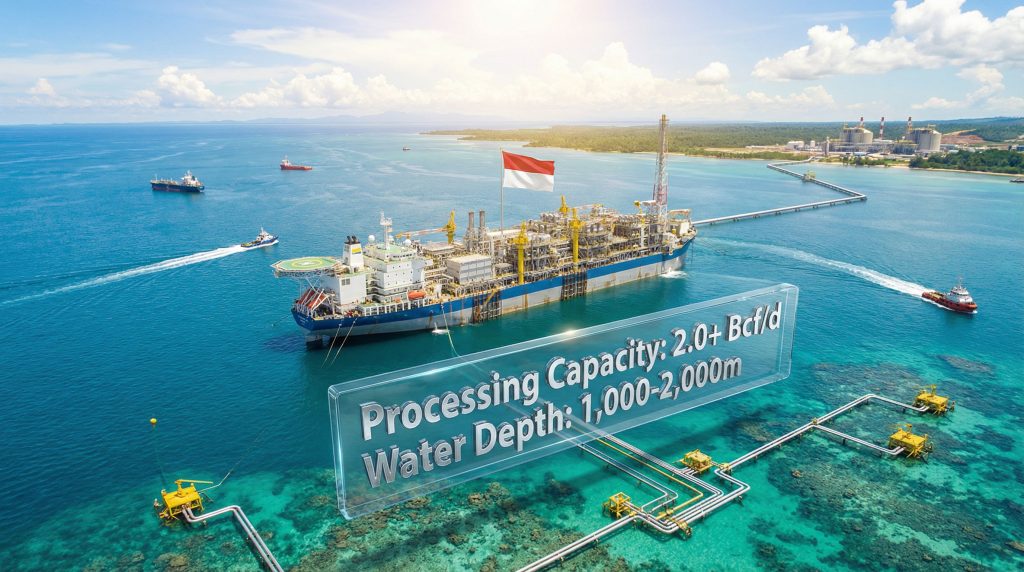
The engineering complexities of Southeast Asia's energy infrastructure have reached unprecedented depths, where subsea production systems must navigate water columns exceeding 2,000 meters while maintaining economic viability. Modern deepwater developments require integration of specialised hull designs, advanced processing modules, and sophisticated tie-back networks that can withstand tropical cyclone conditions while maximising hydrocarbon recovery. These technical challenges define the operational boundaries for deep water gas hubs in Indonesia, where geological formations contain substantial condensate yields requiring purpose-built floating production systems.
Technical Architecture of Indonesia's Deepwater Hub Networks
Subsea Production System Integration Standards
Indonesia's deepwater gas developments operate within distinct water depth classifications that determine infrastructure design requirements. The South Hub configuration encompasses the Gendalo and Gandang fields positioned in 1,000-1,800 metre water depths, utilising seven producing wells connected through subsea production systems to the Jangkrik floating production unit. This depth range permits conventional manifold configurations with standard deepwater wellhead technology adapted for moderate pressure differentials and temperature regimes typical of Southeast Asian geological formations.
The North Hub represents significantly more complex engineering challenges, with 16 producing wells deployed across 1,700-2,000 metre water depths. This ultra-deep configuration requires advanced riser technology and umbilical systems designed to accommodate extreme pressure and temperature effects whilst maintaining structural integrity during seasonal cyclone events. The water depth differential between hub configurations reflects optimisation strategies where geological characteristics and operational requirements dictate processing location and recovery methodologies.
FPSO Processing Capacity Specifications
The newly constructed floating production unit for the North Hub incorporates processing capacity exceeding 1 billion standard cubic feet per day (scfd) of gas and 90,000 barrels per day (b/d) of condensate, with dedicated storage capacity of 1.4 million barrels. These specifications establish measurable benchmarks for hub performance, where storage capacity enables approximately 15-17 days of condensate production storage at plateau rates, providing operational flexibility for weather-related shutdowns and shuttle tanker scheduling coordination.
Table: Indonesian Deepwater Hub Infrastructure Comparison
| Hub Configuration | Water Depth (metres) | Processing Wells | Gas Capacity (Bcf/d) | Condensate Capacity (b/d) | Storage (MMbbl) |
|---|---|---|---|---|---|
| South Hub (Jangkrik) | 1,000-1,800 | 7 | 0.75+ | Variable | Existing FPU |
| North Hub (New FPSO) | 1,700-2,000 | 16 | 1.0+ | 90,000 | 1.4 |
| Combined Network | 1,000-2,000 | 23 | 2.0+ | 90,000+ | 1.4+ |
Hub Network Economics vs. Standalone Development
The dual-hub architecture enables capital efficiency through consolidated processing and storage infrastructure serving multiple field discoveries within economic tie-back distance constraints. The combined resource base totals approximately 10 trillion cubic feet (tcf) of gas initially in place with 550 million barrels of associated condensate, establishing the economic threshold for justifying subsea infrastructure investment and specialised FPSO deployment. Furthermore, these developments reflect growing energy exports challenges facing Southeast Asian producers in global markets.
Capital allocation decisions reflect water depth optimisation principles, where the South Hub fields connect to existing Jangkrik FPU infrastructure, reducing per-barrel capital costs through shared processing facilities. The North Hub justifies investment in new FPSO capacity due to extreme water depths requiring specialised processing technology optimised for high condensate yields characteristic of Kutei Basin geological formations.
When big ASX news breaks, our subscribers know first
Kutei Basin Resource Recovery Optimisation Strategies
Multi-Reservoir Production Management
The Geng North and Gehem fields comprising the North Hub contain condensate-rich formations requiring specialised recovery techniques to maximise liquid hydrocarbon yields. The calculated condensate-to-gas ratio of approximately 9 barrels per million cubic feet (bbl/MMcf) at plateau production levels indicates medium-to-rich gas condensate formations where liquid recovery represents a significant economic driver alongside gas sales revenue.
Recovery factor optimisation across the 10 tcf gas-in-place volume typically achieves 70-85% recovery rates for pressure-depleted gas fields, depending on aquifer support and pressure maintenance strategies. Extrapolating these industry-standard parameters suggests actual recoverable reserves of approximately 7-8.5 tcf of gas, with recovery rates enhanced through selective well shut-in procedures and potential water flooding techniques in appropriate reservoir sections.
Pressure Maintenance and Flow Assurance Engineering
The subsea production systems must accommodate multi-phase flow containing gas, condensate, and formation water across umbilical distances from extreme depths to surface processing facilities. Flow assurance engineering addresses critical operational challenges including hydrate formation prevention, wax deposition control, and asphaltene precipitation mitigation in export pipelines and risers operating under high-condensate yield conditions.
Key Flow Assurance Parameters:
• Hydrate prevention through methanol injection systems and thermal management
• Wax deposition control using chemical inhibitors and pipeline heating protocols
• Corrosion management addressing high-CO2 content typical of Indonesian deepwater formations
• Pressure boosting requirements for maintaining adequate flow rates across extended tie-back distances
The 18-month ramp-up period from 2028 startup to 2029 plateau production accommodates well completion phases, processing system commissioning, and subsea infrastructure testing protocols essential for multi-well deepwater field development schedules. However, these timelines may face challenges from oil price movements affecting project economics.
Advanced FPSO Technology for Tropical Operations
Hull Design for Indonesian Sea States
Modern deep water gas hubs in Indonesia require FPSO designs specifically engineered for equatorial and tropical monsoon climates characterised by annual cyclone seasons and significant wave heights during storm periods. The North Hub FPSO employs dynamic positioning (DP) systems rather than fixed mooring configurations, reducing structural loading from mooring line tension whilst enabling operational flexibility during seasonal weather challenges.
The decision to construct a purpose-built FPSO rather than converting existing tanker hulls reflects recognition that specialised designs optimise condensate yield recovery through modular topside arrangements. These configurations enable early-stage separation of produced gas from condensate, reducing carry-over losses and maximising condensate export quality for international markets.
Processing Module Configuration for High Condensate Yields
The processing systems incorporate specialised equipment configurations designed for Indonesian gas compositions:
• Three-phase separation systems for efficient gas-condensate-water separation
• Hydro cyclone technology for enhanced liquid recovery from gas streams
• Condensate stabilisation systems optimising export quality and vapour pressure control
• Slug catcher configurations managing irregular flow patterns from deepwater wells
Storage tank optimisation enables export scheduling flexibility, accommodating shuttle tanker operations and weather-dependent export windows typical of Southeast Asian offshore operations. The 1.4 million barrel capacity provides sufficient buffer storage for maintaining continuous production during extended weather delays or scheduled maintenance periods.
Remote Monitoring and Intervention Capabilities
Deepwater systems operating 1,000+ kilometres from shore require advanced subsea wellhead technology permitting remote interventions without platform shutdown. Modern AI in drilling optimisation enhances these capabilities through predictive analytics and automated control systems. Modern subsea infrastructure incorporates:
• Hot tap capabilities for live well connections during operational periods
• Remote valve operation through subsea control modules
• Real-time monitoring systems for pressure, temperature, and flow rate optimisation
• Predictive maintenance protocols reducing vessel-dependent intervention requirements
Strategic Integration with Bontang LNG Infrastructure
Pipeline Transmission System Requirements
The combined plateau production of 2 billion scfd establishes feedstock availability for existing onshore infrastructure, including both domestic pipeline networks and the Bontang LNG facility. High-pressure gas transmission typically operates at 100-150 bar operating pressure to maintain adequate flow rates across transmission distances whilst overcoming frictional losses in multi-phase transmission lines.
Gas quality management across multiple feed sources requires pressure regulation systems accommodating varying production rates from different reservoir sources. The integration incorporates specialised corrosion inhibition protocols addressing high-CO2 content typical of deepwater Indonesian formations, where condensate carries entrained water and acid gases necessitating corrosion-resistant infrastructure components.
Train F Reactivation Economics
The development plan includes extending the operating life of the Bontang LNG plant through Train F reactivation, currently in idle status. This infrastructure optimisation avoids costly new LNG train construction whilst establishing immediate market access for deepwater production. The reactivation scope requires feed gas specification compatibility assessments and capacity balancing coordination between domestic supply obligations and export market opportunities.
The strategic value of connecting deepwater hub production directly to existing LNG infrastructure creates an integrated supply chain from 2,000-metre water depths to final product delivery, maximising economic returns whilst minimising additional capital requirements.
Dual Market Supply Strategy
The integrated system supplies both domestic demand through existing pipeline networks and international markets through LNG export capabilities. This dual-market approach provides revenue optimisation flexibility, enabling operators to balance domestic supply obligations against international market pricing opportunities. Condensate processing and storage aboard the offshore FPSO enables direct export via shuttle tanker, creating separate revenue streams for liquid and gaseous hydrocarbon products.
Global Benchmarking and Operational Comparisons
International Deepwater Hub Precedents
Indonesian deepwater developments compare favourably with established international hub models across several operational parameters:
North Sea Cluster Developments:
• Typical water depths: 100-400 metres
• Hub processing capacity: 500-800 MMcfd
• Tie-back distances: 20-75 kilometres
Gulf of Mexico Deepwater Hubs:
• Water depths: 1,500-3,000 metres
• Processing capacity: 1-2 Bcfd
• Infrastructure sharing across multiple operators
West Africa FPSO-Based Systems:
• Water depths: 1,000-2,500 metres
• Condensate yields: 5-15 bbl/MMcf
• Tropical cyclone operational considerations
Unique Indonesian Operational Factors
Deep water gas hubs in Indonesia incorporate specialised design elements addressing regional operational requirements:
• Monsoon weather window planning for construction and maintenance operations
• Coral reef ecosystem protection requiring advanced environmental management protocols
• Local content requirements influencing equipment sourcing and workforce development strategies
• Multi-cultural crew coordination across international and domestic operational teams
The Kutei Basin geological characteristics present unique advantages including relatively low H2S content compared to other Southeast Asian basins, reducing specialised metallurgy requirements whilst maintaining high condensate yields that enhance project economics. These developments contrast sharply with the Alaska drilling policy shift affecting Arctic operations.
Future Expansion and Technology Evolution
Tie-Back Development Opportunities
The North Hub design creates additional tie-back opportunities for future discoveries within economic connection distances. Typical tie-back economics remain viable within 50-150 kilometre ranges, depending on reservoir size, production rates, and processing capacity utilisation on existing facilities.
Future Expansion Considerations:
• Exploration prospects within current hub infrastructure reach
• Modular processing expansion capabilities of existing FPSO systems
• Pipeline capacity optimisation for additional field connections
• Subsea manifold expansion potential for incremental well additions
Technology Integration Pathways
Advancing subsea processing technology creates opportunities for enhanced recovery and operational efficiency:
• Subsea separation systems reducing topside processing requirements
• Digital twin technology for predictive maintenance and optimisation
• Artificial intelligence applications in production optimisation and flow management
• Carbon capture integration addressing future regulatory requirements
Table: Technology Evolution Impact Assessment
| Technology Area | Current Status | Near-Term Development | Long-Term Potential |
|---|---|---|---|
| Subsea Processing | Basic separation | Advanced multiphase | Integrated processing |
| Remote Operations | Manual intervention | Semi-automated | Fully autonomous |
| Environmental Monitoring | Periodic surveys | Real-time sensing | Predictive analytics |
| Carbon Management | Venting/flaring | Capture consideration | Full integration |
The next major ASX story will hit our subscribers first
Operational Excellence in Extreme Water Depths
Production Optimisation Across Multiple Reservoirs
Well performance monitoring across 23 total wells between both hubs requires sophisticated data management systems tracking individual well contributions, reservoir pressure maintenance, and optimised production allocation. Gas lift optimisation addresses varying reservoir pressures across different geological formations, ensuring maintained production rates as reservoir pressures naturally decline over field life.
Critical Performance Indicators:
• Individual well productivity tracking and optimisation protocols
• Reservoir pressure maintenance through selective well management
• Condensate recovery maximisation techniques and processing efficiency
• Equipment reliability metrics for subsea and topside systems
Maintenance and Logistics Coordination
Deepwater operations 1,700-2,000 metres from surface require specialised vessel coordination and logistics planning. Maintenance scheduling accommodates weather windows, equipment availability, and production impact minimisation through detailed planning protocols.
Logistics Management Requirements:
• Multi-vessel coordination for simultaneous maintenance operations
• Spare parts inventory optimisation for critical subsea components
• Personnel transfer safety protocols during challenging weather conditions
• Emergency response preparation for subsea system failures or weather-related emergencies
Risk Management and Operational Resilience
Environmental and Weather Risk Mitigation
Indonesian offshore operations address tropical cyclone risks through advanced weather monitoring, emergency shutdown procedures, and personnel evacuation protocols. The FPSO dynamic positioning system enables rapid disconnection and safe departure during severe weather events, protecting both personnel and equipment whilst minimising production downtime.
Environmental protection protocols address coral reef ecosystems and marine biodiversity through specialised discharge management, waste minimisation, and continuous monitoring of offshore operations' environmental impact. These protocols exceed standard international requirements due to the sensitive marine ecosystems surrounding development areas.
Technical Risk Assessment
Primary Technical Risk Categories:
• Subsea equipment failure in extreme water depths requiring specialised intervention vessels
• Flow assurance challenges from high condensate yields and corrosive gas compositions
• Processing system disruptions affecting both gas and condensate production streams
• Pipeline integrity management across extended transmission distances to shore
Mitigation strategies incorporate redundant systems, predictive maintenance protocols, and emergency response capabilities designed for rapid intervention in deepwater environments. These risk factors contribute to broader industry concerns regarding oil price crash analysis affecting project economics globally.
Economic Impact and Strategic Significance
Regional Energy Security Contributions
The integrated deep water gas hubs in Indonesia contribute significantly to Southeast Asian energy security through diversified supply sources and enhanced LNG export capacity. The 2 billion scfd plateau production represents substantial additional supply for both domestic Indonesian consumption and regional export markets, reducing dependence on imported energy sources.
Local economic benefits include technology transfer, workforce development, and supply chain integration supporting Indonesian energy sector capabilities. The projects demonstrate successful integration of international expertise with local operational capacity, creating sustainable long-term energy infrastructure.
Investment Model Replicability
The technical and economic framework established through these developments creates a template for additional Southeast Asian deepwater projects. The combination of subsea tie-back networks, specialised FPSO technology, and existing infrastructure integration provides a proven model for similar geological and operational environments across the region.
Strategic Framework Components:
• Multi-field hub architecture maximising capital efficiency
• Integrated processing and export systems reducing infrastructure requirements
• Flexible market access through dual domestic and export capabilities
• Environmental compliance protocols addressing tropical marine ecosystem protection
The success of these projects demonstrates how detailed technical analysis supports major investment decisions in challenging offshore environments.
Technical Innovation Leadership in Southeast Asia
The successful development of deep water gas hubs in Indonesia represents a significant advancement in Southeast Asian offshore technology capabilities. The integration of 2,000-metre water depth operations, multi-field subsea networks, and high-condensate yield processing establishes new technical benchmarks for regional deepwater development programmes.
These projects demonstrate the economic viability of hub-based development strategies in challenging operational environments, creating pathways for additional resource development across Southeast Asian offshore basins. The combination of advanced subsea technology, specialised FPSO designs, and integrated pipeline infrastructure provides a comprehensive framework for future deepwater energy projects throughout the region.
Disclaimer: This analysis is based on publicly available technical information and industry-standard engineering practices. Actual project performance, timelines, and economic outcomes may vary based on operational conditions, market factors, and unforeseen technical challenges. Investment decisions should consider comprehensive risk assessments and expert technical evaluation.
Ready to Capitalise on the Next Major Energy Discovery?
Discovery Alert's proprietary Discovery IQ model delivers instant notifications on significant ASX mineral and energy discoveries, empowering investors to identify actionable opportunities ahead of the broader market. While Indonesia's deepwater developments demonstrate the technical complexities of major resource projects, Discovery Alert's discoveries page showcases how early identification of resource breakthroughs can generate exceptional returns for informed investors who act quickly on emerging opportunities.