
July 25, 2026
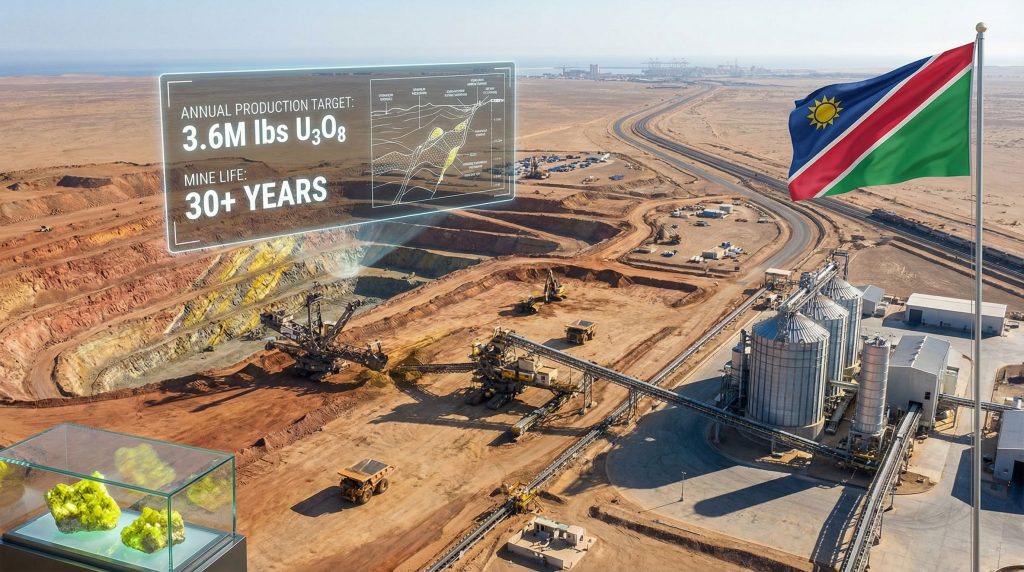
The global uranium industry stands at a critical juncture where advanced geological understanding intersects with sophisticated mining methodologies. The Deep Yellow ASX Tumas Project exemplifies how uranium market trends are driving renewed focus on technically advanced developments. Within this landscape, palaeochannel deposit systems represent some of the most technically advantageous uranium concentrations worldwide, offering unique extraction opportunities that leverage natural geological processes developed over millions of years.
These ancient riverbed systems concentrate uranium through complex geochemical mechanisms, creating economically viable deposits that can support decades of sustained production. The technical sophistication required to successfully extract uranium from these formations demands comprehensive understanding of both geological formations and modern mining engineering principles.
Understanding Namibia's Tier-1 Uranium Development Framework
Regional Mining Infrastructure and Competitive Positioning
Namibia's uranium sector operates within a well-established framework that has supported consistent global supply for over five decades. The country contributes approximately 7-8% of global uranium production annually, according to World Nuclear Association data, positioning it as a critical supplier to international nuclear fuel markets.
The existing operational landscape includes three major facilities demonstrating proven palaeochannel extraction methodologies. Rössing Mine maintains approximately 3 million pounds annual production through open-pit operations that have operated continuously since 1976. Furthermore, Husab Mine contributes roughly 5.5 million pounds annually using modern open-pit techniques implemented since 2014.
Langer Heinrich Mine, operated by Paladin Resources, has transitioned from care and maintenance to active production status, significantly expanding capacity through recent operational enhancements. This established infrastructure provides crucial operational precedents for new developments entering the sector.
The proximity to Walvis Bay port facilities, located within 80 kilometres of major deposit areas, creates significant logistical advantages compared to landlocked uranium projects globally. Shipping routes from Walvis Bay connect directly to major nuclear fuel markets in Europe, Asia, and North America, particularly important given recent developments in US uranium import ban policies.
Technical Classification Standards and Resource Verification
Modern uranium resource classification follows JORC Code 2012 standards, ensuring international transparency and comparability across projects. The distinction between resource categories reflects drilling density, geological confidence, and economic viability assessments, helping investors understand different mineral deposit tiers.
Resource Classification Hierarchy:
- Indicated Resources: Higher confidence levels supported by systematic drilling programs
- Inferred Resources: Lower confidence estimates requiring additional investigation
- Proven Reserves: Economically extractable resources with detailed engineering studies
- Probable Reserves: Economically extractable resources with moderate confidence levels
Projects achieving strong conversion ratios from total resources to proven reserves demonstrate advanced technical understanding and reduced development risk. A conversion ratio exceeding 50% typically indicates comprehensive geological characterisation and robust feasibility studies supporting Final Investment Decision processes.
The 30+ year mine life specification places advanced projects above global industry averages, which typically range between 15-25 years for mid-tier uranium developments. Extended mine lives provide operational stability and enhanced capital investment returns through prolonged cash generation periods.
When big ASX news breaks, our subscribers know first
Palaeochannel Geological Formation Mechanisms
Ancient Riverbed Uranium Concentration Processes
Palaeochannel uranium deposits form through sophisticated geochemical processes occurring over geological timescales. These ancient river systems initially deposited clastic sediments including sand, gravel, and silt during specific geological periods. Secondary uranium mineralisation occurs when groundwater carrying dissolved uranium encounters reducing chemical conditions.
The concentration mechanism requires specific geological conditions:
- Permeable sedimentary sequences allowing fluid migration
- Impermeable barriers creating natural flow restrictions
- Reducing environments containing organic matter, pyrite, or carbon
- Chemical precipitation zones where uranium transitions from solution to solid minerals
Within Namibia's Damara Sequence formation, these conditions align to create world-class uranium concentrations. The structural geometry includes interbedded permeable and impermeable strata that naturally channel mineralising fluids toward optimal deposition zones.
Extended Corridor Analysis and Resource Distribution
The 125-kilometre deposit corridor represents a continuous geological structure significantly larger than typical single-deposit uranium projects. Comparable long-axis systems include certain Athabasca Basin developments and Kazakhstan deposits that have historically supported multiple mining operations along their geological trends.
Current resource definition covers approximately 70% of the prospective corridor, with systematic drilling and geochemical surveys completed in primary deposit areas. The remaining 30% represents unexplored upside potential where geological continuity suggests similar uranium concentrations may exist.
Exploration Status Breakdown:
- Tested Areas: 87.5 kilometres with systematic drilling coverage
- Untested Territory: 37.5 kilometres requiring future exploration programs
- Resource Density: Approximately 1.1 million pounds U₃O₈ per kilometre in tested areas
- Potential Upside: Proportional estimates suggest 40-60 million pounds additional resources possible
Geochemical modelling supports paleochannel continuity interpretation along the full corridor length. However, economic viability depends on uranium price environments and infrastructure proximity considerations.
Engineering Design Fundamentals for Large-Scale Production
Open-Pit Mining System Requirements
Open-pit extraction represents the industry-standard methodology for shallow palaeochannel deposits globally. This approach minimises technical risk through proven methodologies demonstrated across multiple Namibian operations over decades, reflecting broader advances in mining industry innovation.
Typical Mining Fleet Specifications:
| Equipment Category | Units Required | Capacity Range |
|---|---|---|
| Hydraulic Excavators | 3-4 units | CAT 390F equivalent |
| Wheel Loaders | 4-5 units | CAT 980 equivalent |
| Haul Trucks | 20-30 units | 95-120 tonne capacity |
| Drill Rigs | 2-3 units | Rotary/percussion |
| Primary Crusher | 1 unit | 400-600 tonnes/hour |
Pit design parameters for palaeochannel deposits typically incorporate strip ratios of 3:1 to 5:1 (waste-to-ore), reflecting the shallow depth and favourable geometry of these geological formations. Final pit dimensions often reach 4-6 kilometres in length, 1-2 kilometres in width, and 300-350 metres in depth based on resource geometries and geotechnical considerations.
Operating schedules generally plan 5-7 year ramp-up periods from project commencement, reaching design capacity during years 5-6 of operation. This graduated approach allows for systematic optimisation of mining rates, equipment utilisation, and processing plant integration.
Processing Plant Engineering and Annual Output Targets
Achieving 3.6 million pounds U₃O₈ annual production requires processing approximately 8-15 million tonnes of ore annually, depending on average uranium grades within the ore body. Processing plant design incorporates proven uranium extraction methodologies adapted to palaeochannel ore characteristics.
Processing Circuit Components:
- Primary crushing: Reduction to 150-200mm particle size
- Secondary grinding: Fine grinding to optimal liberation size
- Acid leaching: Uranium dissolution using sulfuric acid circuits
- Solvent extraction: Uranium concentration and purification
- Precipitation: Yellow cake (U₃O₈) production
- Tailings management: Neutralisation and disposal systems
Plant design capacity typically incorporates 15-20% overcapacity to accommodate ore grade variations and ensure consistent annual output targets. Processing recovery rates for palaeochannel ores generally achieve 85-95% uranium extraction efficiency using conventional acid leaching methodologies.
Environmental management systems integrate tailings neutralisation, groundwater monitoring, and rehabilitation planning throughout the processing circuit. Tailings storage facilities require engineered containment systems designed for 30+ year operational periods with long-term environmental monitoring protocols, aligning with sustainable mining practices.
Strategic Leadership Transition and Project Development
Executive Experience in Large-Scale Project Delivery
The acceleration of leadership transitions reflects strategic positioning for advanced project phases requiring specialised execution capabilities. According to Deep Yellow's recent announcements, Greg Field's background includes 29 years in resources sector development, with particular expertise in large-scale mining project delivery.
His role as Managing Director of Project Development at Rio Tinto included oversight of the US$7 billion Oyu Tolgoi underground development in Mongolia, representing one of the world's largest copper mining investments. This experience translates directly to complex mining project execution requiring coordination between engineering, construction, permitting, and operational readiness phases.
The transition from exploration-focused leadership to development-focused management reflects project maturation from resource definition to construction preparation phases. Mining licence approval achieved in September 2023 provides the regulatory foundation supporting detailed engineering work and Final Investment Decision preparation.
Infrastructure Optimisation and Logistical Advantages
The 80-kilometre distance to Walvis Bay port creates substantial logistical cost advantages compared to landlocked uranium projects requiring overland transport to coastal shipping facilities. Port infrastructure supports bulk commodity exports with direct shipping connections to global nuclear fuel markets.
Namibian mining infrastructure includes established supplier networks, skilled workforce availability, and regulatory frameworks refined through decades of uranium mining experience. Power grid connections and road networks support heavy industrial operations without requiring significant infrastructure investments.
Regional uranium industry ecosystem benefits include shared technical expertise, equipment supplier relationships, and established environmental management protocols. This infrastructure foundation reduces project development timelines and capital requirements compared to greenfield developments in less established mining regions.
Updated Feasibility Studies and Technical Optimisation
Infill Drilling Integration and Resource Confidence Enhancement
The 2025 Detailed Feasibility Study incorporates extensive infill drilling results designed to upgrade resource classification and optimise mine planning parameters. Systematic drilling programs completed during 2024-2025 focused on converting Inferred Resources to Indicated categories, subsequently supporting Probable Reserve classifications.
Resource confidence enhancement through infill drilling provides several technical advantages:
- Improved grade continuity understanding for mine sequencing optimisation
- Enhanced geotechnical data supporting pit slope design confirmation
- Refined processing plant feed specifications for equipment sizing
- Optimised waste-to-ore ratios reducing total material movement requirements
Detailed engineering work completion supports equipment procurement, construction contracting, and operational workforce planning phases. The Q3 2027 production target represents a compressed development timeline positioning the project among faster-developing uranium developments globally.
Production Timeline Critical Path Analysis
The progression from mining licence approval to production readiness represents a 4-year development timeline when Final Investment Decision occurs. This timeframe compares favourably to global uranium project development averages, which typically require 5-7 years from permitting to first production.
Critical Development Phases:
- Detailed engineering completion: 12-18 months
- Construction phase: 24-30 months
- Equipment procurement and installation: 18-24 months
- Commissioning and ramp-up: 6-12 months
- Design capacity achievement: 36-48 months from FID
"The integration of proven palaeochannel mining methodologies with established Namibian infrastructure creates development timeline advantages not available to greenfield projects in less established jurisdictions."
Multi-Project Operational Integration Potential
Combined Production Capacity Analysis
The strategic development of geographically diversified uranium projects creates potential for 7+ million pounds annual combined production when both major developments achieve operational status. This production scale positions the combined portfolio among globally significant uranium suppliers serving multiple regional markets simultaneously.
Production Portfolio Framework:
- Tumas Project: 3.6 million pounds annually (Namibia)
- Mulga Rock Project: 3.5 million pounds annually (Western Australia)
- Combined Output: 7.1 million pounds annually at design capacity
- Geographic Diversification: Two tier-1 mining jurisdictions
- Market Access: Multiple regional supply chains
The 15-year mine life at Mulga Rock complements the 30+ year Tumas operation, creating sequential production phases that optimise capital deployment and operational expertise transfer between projects.
Operational Knowledge Transfer Mechanisms
Multi-project development enables systematic transfer of technical expertise, operational protocols, and best practices between geographically separated operations. This knowledge transfer creates operational efficiencies and reduces technical risk across the combined portfolio.
Uranium processing methodologies developed for palaeochannel deposits translate effectively between projects utilising similar geological formations. Equipment specifications, maintenance protocols, and operational optimisation techniques can be standardised across multiple sites, reducing operational costs and improving technical performance.
Environmental management systems and community engagement protocols developed for initial projects provide frameworks for subsequent developments, accelerating permitting processes and reducing regulatory approval timelines.
The next major ASX story will hit our subscribers first
Comparative Analysis Within Global Uranium Mining Context
Namibian Operations Benchmarking
Namibia's position as the fourth-largest global uranium producer reflects consistent operational performance across established mining operations. The addition of a fourth major Namibian operation would enhance the country's global market position while leveraging existing infrastructure investments.
Current Namibian Production Comparison:
| Operation | Annual Production | Technology | Operating Since |
|---|---|---|---|
| Rössing | ~3.0M lbs | Open pit/acid leach | 1976 |
| Husab | ~5.5M lbs | Open pit/acid leach | 2016 |
| Langer Heinrich | ~2.2M lbs | Heap leach | 2007 |
| Tumas (Planned) | 3.6M lbs | Open pit/acid leach | 2027 target |
Processing technology standardisation across Namibian operations creates technical synergies through shared expertise, equipment supplier relationships, and operational best practices. The consistent use of open-pit mining with acid leaching reflects optimal alignment between geological conditions and proven extraction methodologies.
Environmental Management System Implementation
Modern uranium mining operations implement comprehensive environmental management protocols addressing water resources, tailings storage, and long-term site rehabilitation. Namibian operations demonstrate effective environmental stewardship through decades of operational experience in arid climate conditions.
Environmental Management Components:
- Groundwater monitoring: Continuous monitoring of aquifer systems
- Tailings neutralisation: Acid mine drainage prevention protocols
- Progressive rehabilitation: Concurrent restoration during operations
- Biodiversity protection: Native species conservation programs
- Community engagement: Stakeholder consultation and benefit-sharing
These established frameworks provide templates for new operations, reducing environmental approval timelines and demonstrating effective long-term stewardship approaches to regulatory authorities and community stakeholders.
Technical Risk Assessment and Development Dependencies
Regulatory Approval Dependencies and Processing Timelines
While mining licence approval provides the fundamental regulatory foundation, additional permits and approvals remain critical path dependencies for construction commencement. These include environmental clearances, water use licenses, and construction permits that typically require 12-18 months processing time in Namibian jurisdictions.
Remaining Regulatory Requirements:
- Environmental Impact Assessment updates reflecting detailed engineering
- Water abstraction licenses for processing plant operations
- Construction permits for major infrastructure development
- Import/export licenses for equipment and product shipments
- Community development agreements with local stakeholder groups
The September 2023 mining licence approval demonstrates successful navigation of Namibian regulatory processes, providing confidence in the ability to secure remaining permits within projected timelines.
Construction Phase Critical Path Dependencies
Large-scale mining project construction involves complex coordination between multiple critical path activities. Equipment procurement, skilled workforce availability, and contractor capacity represent potential constraint factors affecting development timelines.
Critical Construction Dependencies:
- Equipment delivery schedules: 12-24 month lead times for major components
- Skilled workforce availability: Competition with other regional projects
- Construction contractor capacity: Limited specialised mining construction firms
- Infrastructure development: Road, power, and communication systems
- Weather dependencies: Construction scheduling around seasonal conditions
The US$474 million capital requirement necessitates sophisticated project financing arrangements that may include debt facilities, equity partnerships, or strategic investor participation. Financing completion represents a critical prerequisite for construction commencement.
Technical Readiness Framework for Market Entry
Production Capability Verification and Scalability Assessment
The technical foundation established through comprehensive feasibility studies, regulatory approvals, and detailed engineering work positions the Deep Yellow ASX Tumas Project for systematic production capability verification during development phases. This verification process ensures operational readiness prior to commercial production commencement.
Production Readiness Indicators:
- Resource classification confidence: 79.5 million pounds in reserves
- Processing plant design completion: Proven acid leaching methodology
- Mining methodology validation: Open-pit approach with established precedents
- Infrastructure accessibility: Port logistics and transportation networks
- Regulatory compliance framework: Mining licence and environmental approvals
Scalability considerations include the potential for production expansion through additional resource definition within the 125-kilometre corridor system. The 30% unexplored territory represents long-term growth potential supporting extended operational periods beyond initial mine planning.
Long-term Operational Sustainability Analysis
Sustainable uranium mining operations require integration of technical performance, environmental stewardship, and community benefit frameworks. The 30+ year operational timeframe necessitates robust planning for technology evolution, regulatory compliance, and stakeholder engagement throughout the operational lifecycle.
Sustainability Framework Components:
- Technology advancement integration: Continuous improvement in processing efficiency
- Environmental impact minimisation: Progressive rehabilitation and impact reduction
- Community development contribution: Long-term economic benefit generation
- Workforce development programs: Skills training and local employment opportunities
- Supplier network optimisation: Regional economic integration and value creation
The combination of proven geological understanding, established mining methodologies, and comprehensive planning frameworks creates a technical foundation supporting sustained uranium production within global supply chain requirements. Moreover, recent industry analysis reports highlight the strategic timing of the Deep Yellow ASX Tumas Project development within the current uranium market cycle.
This technical analysis demonstrates that advanced palaeochannel uranium developments represent sophisticated integration of geological science, mining engineering, and operational excellence. The convergence of these technical capabilities with established infrastructure and regulatory frameworks positions the Deep Yellow ASX Tumas Project as a critical component of global uranium supply chain evolution supporting expanding nuclear energy requirements worldwide.
This analysis is based on publicly available information and technical assessments. Uranium mining involves significant technical, regulatory, and market risks. Potential investors should conduct independent research and seek professional advice before making investment decisions. Uranium prices and market conditions can significantly impact project economics and development timelines.
Want to Position Yourself Ahead of Major Uranium Discoveries?
Discovery Alert's proprietary Discovery IQ model delivers instant notifications when significant ASX mineral discoveries are announced, transforming complex geological data into actionable trading insights for uranium and other critical commodities. Begin your 30-day free trial today and gain the market advantage that comes from being first to identify the next major uranium discovery before the broader market responds.