May 19, 2026
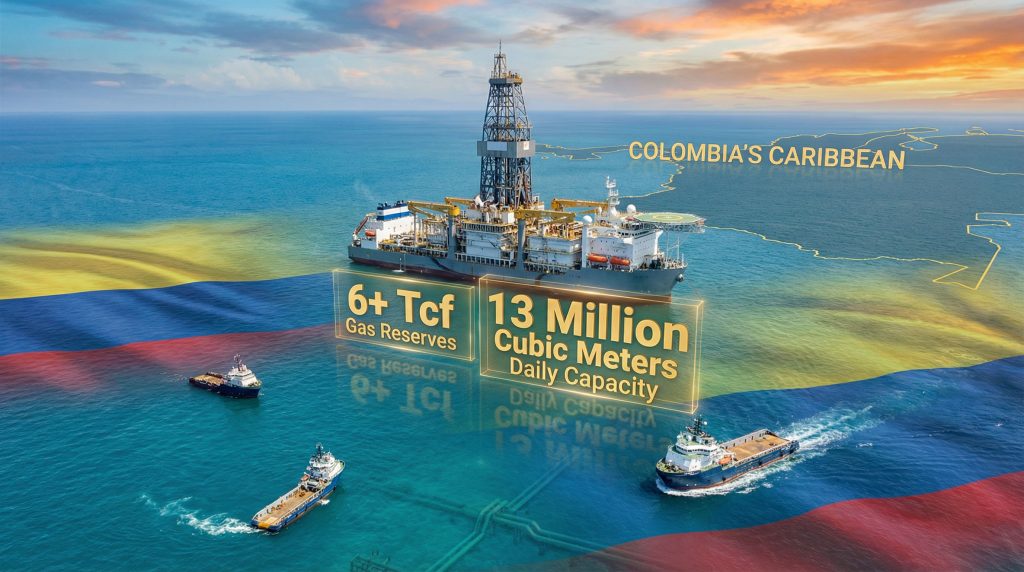
The Caribbean region's energy landscape is undergoing significant transformation as deepwater gas discovery offshore Colombia emerges as a pivotal development for regional supply security. Recent exploration activities have confirmed substantial hydrocarbon potential in Colombian waters, demonstrating the region's capacity for major resource discoveries that could reshape South America's energy dynamics.
Geological Architecture Drives Caribbean Deepwater Success
The geological characteristics of Colombia's Caribbean offshore region demonstrate unique advantages for natural gas exploration. Operating at water depths approaching 964 meters, recent drilling activities have revealed complex reservoir architectures that extend across multiple hydrocarbon-bearing formations. The proximity clustering of exploration targets suggests extensive geological continuity across the basin, with secondary target zones providing additional resource potential beyond primary drilling objectives.
Advanced reservoir characterization techniques have become essential for unlocking these deepwater opportunities. Wireline logging technologies enable real-time formation evaluation during drilling operations, while sophisticated fluid sampling methodologies provide immediate confirmation of hydrocarbon presence. These technical capabilities allow operators to assess reservoir quality indicators and identify gas-bearing intervals with precision that was previously unattainable in deepwater environments.
The Caribbean basin's structural complexity presents both challenges and opportunities for exploration teams. Multiple gas-bearing intervals identified through comprehensive logging programs indicate substantial resource potential, while the discovery of hydrocarbons in secondary target zones demonstrates the region's geological diversity. Laboratory analysis programs will determine reservoir properties and volume estimates, providing the foundation for future development planning.
When big ASX news breaks, our subscribers know first
Partnership Structures Optimise Risk and Technology Sharing
International collaboration models have proven essential for deepwater gas discovery offshore Colombia success. The current partnership structure combines Brazilian deepwater operational expertise with Colombian market knowledge through a strategic alliance that distributes both technical capabilities and financial exposure across participating entities.
Partnership Framework Analysis:
- Petrobras International Braspetro B.V.: 44.44% operating interest
- Ecopetrol S.A.: 55.56% non-operating partnership
- Technology Transfer: Advanced deepwater capabilities integration
- Market Access: Dual-country energy security benefits
- Capital Allocation: Shared multi-billion dollar development exposure
This collaboration model represents a sophisticated approach to risk management in deepwater exploration. The Brazilian operator brings extensive pre-salt development experience and subsea production expertise, while the Colombian partner provides regulatory navigation capabilities and local market understanding. Furthermore, the partnership structure facilitates knowledge transfer and operational best practices sharing between national energy companies with complementary strengths.
The 44.44% to 55.56% interest split creates an unusual dynamic where the operating partner maintains minority ownership. This arrangement may reflect Colombian regulatory frameworks favouring domestic participation or negotiated terms that balance operational control with financial exposure. Such structures have become increasingly common in Latin American offshore projects where technical expertise and local content requirements intersect.
Economic Implications Reshape Regional Energy Markets
The potential scale of Colombia's deepwater gas discoveries could fundamentally alter the nation's energy import profile and regional supply dynamics. Current exploration activities target resources that may significantly expand Colombia's proven gas reserves, though volume estimates remain subject to comprehensive reservoir analysis currently underway. However, the implications for regional energy security insights extend far beyond national boundaries.
Development Economics Overview:
| Development Phase | Technical Requirements | Market Impact | Timeline Considerations |
|---|---|---|---|
| Reservoir Confirmation | Laboratory analysis completion | Volume estimate refinement | 6-12 months |
| Appraisal Drilling | Extended well programs | Reserve booking potential | 2-3 years |
| Development Planning | Subsea infrastructure design | Supply contract negotiations | 3-5 years |
| Production Startup | Offshore-to-onshore systems | Import displacement capability | 5-7 years |
Infrastructure development requirements for deepwater gas projects typically involve sophisticated subsea production systems capable of operating in challenging marine environments. Pipeline infrastructure connecting offshore production facilities to onshore processing capabilities represents a critical component of project economics, particularly for developments targeting domestic market supply.
The economic significance of successful deepwater gas development extends beyond immediate hydrocarbon value creation. Regional energy security benefits emerge through reduced import dependency and price stability enhancement, while local content requirements generate service sector opportunities throughout the development lifecycle. Similarly, these developments influence broader energy exports challenges faced by resource-rich nations.
Regulatory Navigation Shapes Development Timelines
Environmental and social governance frameworks play increasingly important roles in deepwater project approval processes across South America. Colombian regulatory requirements typically encompass comprehensive environmental impact assessments, indigenous community consultation programmes, and marine ecosystem protection protocols that extend development timelines significantly beyond technical considerations alone.
Key Regulatory Components:
- Environmental Impact Assessment: Comprehensive marine ecosystem analysis
- Community Consultation: Indigenous and local stakeholder engagement
- Production Authorisation: Multi-year permitting processes
- Social Licence Requirements: Ongoing stakeholder approval maintenance
The regulatory environment for offshore exploration in Colombia reflects broader energy transition policy considerations that balance fossil fuel development with climate commitments. Current administration policies regarding new licensing rounds and environmental protection create complex navigation requirements for international operators pursuing deepwater opportunities.
"Regulatory timeline considerations show that deepwater gas projects typically require 3-5 years for complete regulatory approval, with environmental assessments and community consultation processes representing the most time-intensive components," according to industry analysis.
Foreign investment frameworks facilitating international partnerships have become essential for deepwater project success. Colombian regulatory structures accommodate joint venture arrangements while maintaining domestic participation requirements that balance technology access with local economic benefits.
Regional Energy Security Transformation Potential
Colombia's position within South America's evolving energy landscape could shift substantially based on deepwater gas discovery offshore Colombia outcomes. The nation's current energy profile reflects declining domestic gas production coupled with increasing demand, creating import dependency challenges that successful offshore development could address.
Regional Context Analysis:
- Brazil's Pre-Salt Success: Established deepwater development precedents
- Guyana's Offshore Expansion: Neighbouring exploration acceleration
- Trinidad's Production Base: Caribbean gas export infrastructure
- Venezuela's Constrained Resources: Geopolitical limitations on development
The confirmation of significant gas discoveries in Colombian waters aligns with broader Caribbean basin exploration trends that have transformed regional energy supply calculations. Successful development could position Colombia as both a domestic supply security provider and potential regional energy hub, depending on resource scale and infrastructure investment levels. Moreover, these developments intersect with oil price movements that affect regional energy economics.
Import displacement potential represents the most immediate economic benefit from deepwater gas development. Colombia's current gas consumption patterns and import requirements create substantial market opportunities for domestic production increases, while surplus production capacity could enable regional export consideration in later development phases.
Technical Challenges Define Operational Complexity
Deepwater gas exploration and production present unique technical challenges that require specialised expertise and equipment capabilities. Operations in 964-metre water depths demand advanced drilling technologies, weather-resistant equipment designs, and remote monitoring systems capable of maintaining production efficiency in challenging marine environments.
Operational Challenge Management:
- Extended Drilling Campaigns: Multi-month operations from November 2025 continuing into 2026
- Caribbean Weather Patterns: Seasonal hurricane considerations affecting operations
- Subsea Completion Systems: Advanced production technology deployment
- Remote Monitoring Integration: Digital technologies enabling offshore management
The technical complexity of deepwater projects extends beyond initial exploration to encompass long-term production system design and maintenance. Subsea technology deployment requires careful consideration of water depth constraints, seafloor conditions, and production optimisation requirements that influence both capital costs and operational efficiency. For instance, these challenges mirror offshore drilling challenges faced in other global deepwater regions.
Cost structure optimisation becomes essential for deepwater project economics, particularly given the capital-intensive nature of subsea infrastructure and extended development timelines. Break-even analysis must account for volatile gas price environments and long-term market demand projections that influence investment decision-making.
How Do Weather Windows Affect Operations?
Weather window management represents a critical operational consideration for Caribbean deepwater projects. Seasonal patterns affecting offshore operations require careful scheduling coordination and contingency planning to maintain drilling and production efficiency throughout annual weather cycles. Recent discoveries have demonstrated successful navigation of these challenges through advanced planning methodologies.
Consequently, operators must integrate meteorological forecasting into project scheduling to minimise weather-related operational interruptions. The Caribbean region's hurricane season typically affects offshore activities from June through November, requiring strategic timing for critical operations such as drilling and subsea installation activities.
The next major ASX story will hit our subscribers first
Strategic Implications for Colombia's Energy Future
The emergence of Colombia as a significant deepwater gas producer could reshape the nation's long-term energy strategy and economic development trajectory. Technology capability building through international partnerships provides knowledge transfer opportunities that extend beyond individual project boundaries to enhance domestic technical expertise across the energy sector.
Investment Climate Enhancement Factors:
- Successful Project Outcomes: Demonstration effects encouraging additional exploration
- International Partnership Models: Replicable collaboration frameworks
- Service Sector Development: Local content opportunities in deepwater operations
- Regional Energy Hub Potential: Colombia's emerging supply security role
The intersection of advanced technology, international partnerships, and substantial resource volumes creates foundation elements for sustained energy sector growth. Successful navigation of regulatory, technical, and commercial challenges will determine whether current discoveries translate into transformative energy security benefits for both Colombia and the broader Caribbean region. Additionally, these developments align with broader US natural gas forecast trends affecting global markets.
Hydrocarbon resource base expansion through deepwater development reduces geological risk by diversifying production sources and extending reserve life. The proximity of multiple discoveries suggests broader regional prospectivity that could support additional exploration investment and further reserve additions over time.
What Are the Long-Term Strategic Benefits?
Long-term strategic positioning depends on Colombia's ability to leverage current exploration success into sustained development momentum. Knowledge transfer acceleration through international partnerships provides technical skill development opportunities while infrastructure investment creates lasting economic benefits that extend throughout regional energy markets.
Furthermore, the deepwater gas discovery offshore Colombia represents more than immediate resource addition—it demonstrates Colombia's capacity to attract international investment and technical expertise necessary for complex energy projects. This capability enhancement positions the nation advantageously for future exploration opportunities and technology development initiatives.
This analysis is based on current exploration activities and industry trends. Reserve estimates, production timelines, and development costs remain subject to comprehensive technical analysis and market conditions. Investors should conduct independent research and consider consulting qualified professionals before making investment decisions.
Are You Tracking the Next Major Resource Discovery?
Discovery Alert's proprietary Discovery IQ model instantly identifies significant ASX mineral discoveries, transforming complex exploration data into actionable investment insights that keep you ahead of market movements. Explore how major discoveries have generated exceptional returns for informed investors who positioned themselves early in the development cycle.