May 16, 2026
How Deepwater Innovation Unlocks Value in Ultra-High Pressure Reservoirs
Modern offshore exploration has reached unprecedented depths as energy companies pursue increasingly complex geological formations. The recent technical achievements in deepwater drilling demonstrate how advanced engineering solutions enable access to previously unreachable hydrocarbon reserves, particularly when Shell INEOS Energy discover oil in the Gulf of America. These developments represent a fundamental shift in how the industry approaches ultra-deepwater resource extraction, combining cutting-edge technology with strategic partnership models.
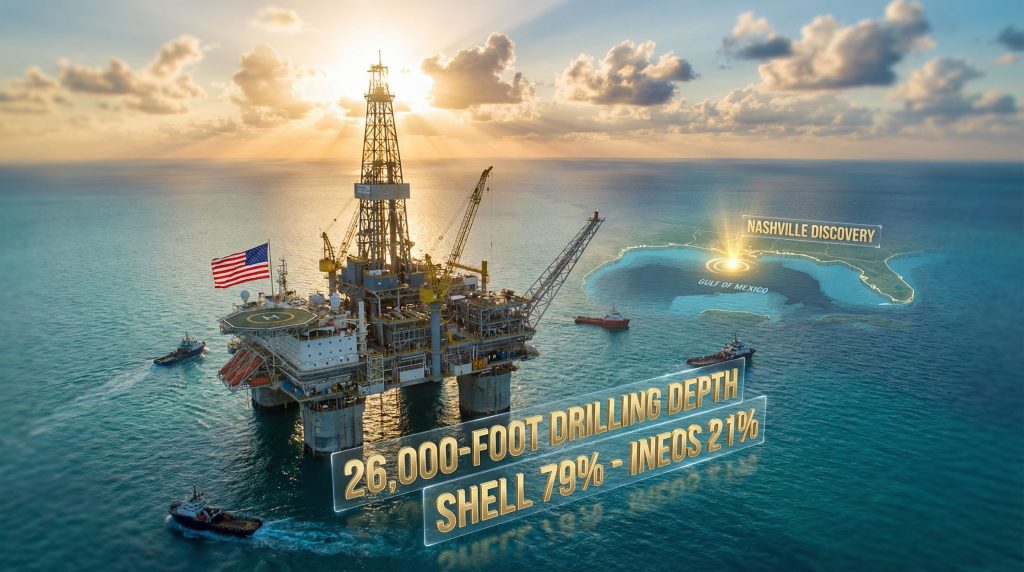
The Nashville Discovery exemplifies this evolution, showcasing drilling capabilities that extend beyond conventional deepwater parameters. Located in federal waters, this project demonstrates the technical feasibility of accessing reserves at extreme depths while maintaining operational safety standards. The collaboration between Shell and INEOS Energy reflects industry trends toward risk-sharing partnerships that leverage complementary expertise and capital resources.
Technical Breakthrough in Extreme Operating Conditions
The technological requirements for ultra-deepwater drilling demand specialised equipment capable of withstanding extraordinary pressures and temperatures. High-pressure, high-temperature (HPHT) conditions require AI drilling innovation to optimise performance and safety protocols.
- Subsea wellhead systems rated for pressures exceeding 15,000 psi
- Advanced drilling fluids engineered for thermal stability at temperatures above 300°F
- Enhanced blowout preventers with redundant safety mechanisms
- Real-time monitoring systems for formation pressure analysis
- Specialised completion equipment designed for extended service life
The Norphlet formation presents unique geological challenges due to its carbonate composition and structural complexity. This formation's characteristics include variable porosity, natural fracture networks, and compartmentalised reservoir architecture that requires precise drilling techniques to maximise recovery rates.
According to industry standards established by the American Petroleum Institute, deepwater operations typically encompass water depths exceeding 1,000 feet. Furthermore, ultra-deepwater classifications apply to depths beyond 5,000 feet. The Nashville Discovery's technical parameters place it within the ultra-deepwater category, requiring advanced drilling technologies and enhanced safety protocols.
Strategic Partnership Architecture for Risk Mitigation
The partnership structure between Shell (79% operating interest) and INEOS Energy (21% participating interest) reflects established industry practices for capital-intensive deepwater projects. This arrangement provides several strategic advantages whilst incorporating proven capital raising methods for large-scale operations.
Operational Leadership Benefits:
- Shell's extensive deepwater operational experience
- Access to proprietary drilling technologies
- Established regulatory compliance frameworks
- Integrated project management capabilities
Financial Risk Distribution:
- Shared capital expenditure burden
- Diversified investment exposure
- Enhanced project financing options
- Improved return on invested capital potential
Industry analysis indicates that major integrated oil companies typically maintain controlling interests (70% or greater) in ultra-deepwater projects due to technical complexity and regulatory requirements. Consequently, independent energy companies often seek minority positions to gain exposure to high-value assets while limiting operational responsibilities.
When big ASX news breaks, our subscribers know first
Why Infrastructure-Led Development Models Transform Project Economics
The strategic utilisation of existing offshore infrastructure represents a paradigm shift in deepwater development economics. Tie-back operations to established production platforms can reduce capital expenditure by 30-50% compared to greenfield developments, while accelerating project timelines from discovery to first oil production.
The Appomattox hub, operated by Shell in the Gulf of Mexico, serves as a potential tie-back destination for the Nashville Discovery. This infrastructure-led approach leverages existing processing facilities, export systems, support infrastructure, and regulatory permits.
What Makes Tie-Back Operations So Cost-Effective?
Comparative development economics reveal significant cost advantages for tie-back projects versus standalone facilities. However, current US drilling trends suggest operators must carefully evaluate project economics in challenging market conditions.
| Development Type | Capital Cost Range | Timeline to Production | Break-even Price |
|---|---|---|---|
| Greenfield Platform | $3-8 billion | 4-6 years | $45-65/barrel |
| Tie-back Development | $800M-2.5 billion | 2-4 years | $35-50/barrel |
| Subsea-to-Shore | $1.5-4 billion | 3-5 years | $40-60/barrel |
Current market conditions in December 2025 show Brent crude trading near $62 per barrel, with WTI crude at approximately $58 per barrel. These price levels create challenging economics for higher-cost development scenarios whilst supporting efficient tie-back projects.
The infrastructure utilisation strategy reduces per-barrel development costs through shared processing costs across multiple fields, economies of scale in equipment procurement, reduced installation complexity for subsea systems, and lower operational overhead through consolidated facilities.
Subsea Technology Integration Requirements
Modern tie-back systems incorporate sophisticated subsea technologies including subsea Christmas trees for well control and monitoring, flexible flowlines (typically 6-12 inches diameter for oil transport), umbilical systems for hydraulic, electrical, and chemical injection, manifold systems for commingling multiple well streams, and dynamic riser systems connecting seabed to surface facilities.
Installation and commissioning of these systems require specialised vessels with dynamic positioning capabilities. For instance, experienced offshore crews trained in deepwater operations ensure successful project execution.
How Regional Supply Dynamics Shape Energy Market Positioning
The Gulf of Mexico remains a strategically important oil-producing region for U.S. energy security, contributing approximately 1.5-1.7 million barrels per day to domestic supply. This production represents roughly 15% of total U.S. crude oil output, making the region the second-largest producing area after the Permian Basin.
Current global market dynamics reveal complex supply and demand patterns despite apparent oversupply conditions. According to December 2025 market data, global floating storage reached 1.3 billion barrels (highest since 2020), Indian crude imports from Russia averaged 1.2 million barrels daily, Chinese crude imports totalled 3.68 million barrels daily (four-week average), and Iranian crude exports are approaching highest annual levels since 2018.
Major Operator Market Share Distribution
The Gulf of Mexico deepwater sector features concentrated operator presence among integrated oil companies. Shell maintains its position as the largest deepwater operator by production, alongside BP with significant deepwater portfolio, ExxonMobil with major deepwater developments, Chevron with established deepwater presence, and Equinor bringing international deepwater expertise.
Reserve replacement ratios remain critical for operator sustainability, with industry targets typically exceeding 100% annually. The Nashville Discovery, where Shell INEOS Energy discover oil in the Gulf of America, if developed successfully would contribute to reserve additions for both participating companies, supporting long-term production profiles.
Strategic Supply Chain Resilience Factors
Gulf of Mexico production benefits from established supply chain infrastructure including specialised service vessels for deepwater operations, subsea equipment suppliers with regional manufacturing capabilities, engineering and installation contractors experienced in Gulf conditions, and regulatory compliance services familiar with federal requirements.
The region's strategic importance extends beyond domestic energy security to include export market participation. Since the lifting of the U.S. crude oil export ban in December 2015, Gulf Coast crude has accessed global markets, with pricing influenced by international benchmark relationships.
What Investment Frameworks Guide Deepwater Project Economics
Current market conditions present challenging economics for upstream oil investments, with analysts expecting oil prices to remain below $60 per barrel Brent for extended periods in 2026. This environment requires disciplined capital allocation and selective project investment approaches that align with broader energy transition strategies.
Corporate Strategy Alignment in Volatile Markets
Shell's Upstream Portfolio Optimisation:
Shell maintains integrated upstream operations across multiple regions whilst emphasising capital discipline in response to price volatility. The company's deepwater Gulf of Mexico assets represent core legacy holdings with established infrastructure and operational expertise.
INEOS Energy's North American Expansion:
As a subsidiary of INEOS Group, INEOS Energy has pursued selective upstream opportunities in North America. Furthermore, the company leverages parent company financial resources and industrial expertise. The Nashville Discovery partnership provides exposure to high-quality deepwater assets without operational complexity.
Net Present Value Modelling for Deepwater Projects
Standard petroleum economics methodology incorporates multiple variables affecting project viability. Key economic parameters include oil price assumptions (current range: $60-65/barrel Brent), production profiles (ramp rates, plateau duration, decline curves), capital costs (subsea equipment, drilling, installation, facilities), operating costs (maintenance, personnel, energy, processing), discount rates (typically 8-12% for major IOC projects), and tax and royalty regimes (federal royalty rates: 12.5% on revenue).
Risk-adjusted return calculations incorporate geological, operational, price volatility, regulatory, and counterparty risks. These calculations utilise probability weighting methodologies established by the Society of Petroleum Engineers.
Market Response to Discovery Announcements
Deepwater discoveries typically generate measured investor responses due to extended development timelines and capital intensity requirements. Key valuation factors include resource size estimates and probability assessments, development cost projections based on comparable projects, production timeline expectations from discovery to first oil, tie-back infrastructure availability and capacity margins, and regulatory approval complexity and timeline requirements.
Current market conditions with weak oil prices and oversupply concerns may limit immediate valuation impacts. However, strategic value for long-term portfolio strength remains significant for participating companies.
How Regulatory Frameworks Influence Development Timelines
Federal offshore development in U.S. waters requires comprehensive permitting insights and environmental compliance processes managed by multiple regulatory agencies. The current political environment under the Trump administration has generally favoured domestic energy development, though environmental protection requirements remain in effect.
Federal Permitting and Compliance Requirements
Key Regulatory Bodies:
- Bureau of Safety and Environmental Enforcement (BSEE): Operational safety and environmental compliance oversight
- National Oceanic and Atmospheric Administration (NOAA): Environmental consultation and marine resource protection
- U.S. Environmental Protection Agency (EPA): Water quality and emissions regulations
- Department of Interior (DOI): Federal lease rights management
Standard Permit Requirements:
Drilling permits issued by BSEE with technical review, environmental impact assessments under NEPA compliance, biological opinions addressing Endangered Species Act requirements, air quality permits for emissions management, and water discharge permits under NPDES regulations.
Environmental Impact Assessment Protocols
Deepwater environmental assessments typically address marine mammal and sea turtle impact analysis, fish migration pattern studies, seabed habitat characterisation, water quality monitoring protocols, and air emissions quantification and mitigation.
These assessments often require 12-24 months for completion, depending on project complexity and stakeholder engagement requirements. Additionally, public comment periods typically range from 30-60 days minimum, with additional consultation requirements for affected communities.
How Do ESG Considerations Affect Current Development?
Despite weak oil prices and production adjustments across the industry, major oil producers continue investing in fossil fuel production due to sustained global demand. December 2025 market data indicates continued strong import demand from India and China, reflecting ongoing global oil consumption requirements.
ESG Integration Requirements:
- Carbon intensity reduction strategies through operational efficiency improvements
- Biodiversity protection measures including marine life protection protocols
- Community engagement programmes for local economic impact optimisation
- Supply chain sustainability initiatives addressing contractor environmental performance
Environmental advocacy group participation in permitting processes can extend project timelines through formal objections and additional review requirements. Nevertheless, federal support for domestic energy development generally facilitates approval processes.
What Project Milestones Define Development Pathways
The Nashville Discovery development timeline reflects standard industry practices for deepwater project progression from discovery through commercial production. Key milestone sequencing determines investment decision timing and resource allocation requirements when Shell INEOS Energy discover oil in the Gulf of America.
When Will Appraisal Programs Begin?
2026 Appraisal Objectives:
- Reservoir characterisation through additional drilling and testing
- Resource estimation refinement using advanced geological modelling
- Production performance assessment via extended well testing
- Development concept optimisation incorporating tie-back feasibility studies
Appraisal programmes typically require 12-18 months for completion, including drilling operations, data analysis, and engineering studies. The scope may include multiple well locations to define reservoir boundaries and assess production potential across the discovery area.
Final Investment Decision Framework
The Final Investment Decision (FID) process incorporates multiple evaluation criteria across technical, economic, and strategic dimensions. Technical criteria include reservoir performance validation through appraisal results, development concept technical feasibility confirmation, infrastructure capacity and availability assessment, and regulatory approval status and timeline clarity.
Economic criteria encompass net present value exceeding corporate hurdle rates, internal rate of return meeting investor expectations, payback period acceptable under price scenarios, and capital efficiency competitive with alternative investments.
Strategic criteria include portfolio fit with corporate development strategy, geographic diversification benefits, reserve replacement contribution significance, and operational synergies with existing assets.
The target FID timing for late 2026 aligns with typical 18-24 month appraisal programme duration. This allows sufficient time for comprehensive evaluation and investment decision preparation.
First Oil Production Projections
Development execution following FID typically requires 24-36 months for tie-back projects, leading to estimated first oil production in 2028. This timeline includes subsea equipment procurement and manufacturing (12-18 months), installation vessel contracting and mobilisation (6-12 months), subsea installation and commissioning (6-12 months), and production system integration and startup (3-6 months).
Weather window limitations in the Gulf of Mexico affect installation scheduling. Optimal conditions are typically available from April through October each year.
The next major ASX story will hit our subscribers first
How Energy Transition Dynamics Affect Investment Allocation
The global energy transition creates complex investment decision frameworks for oil and gas companies balancing traditional hydrocarbon development with renewable energy opportunities. Current market dynamics reflect this tension between near-term cash flow requirements and long-term energy transition positioning.
Balancing Portfolio Investment Strategies
Major integrated oil companies face capital allocation challenges between traditional upstream investments and renewable energy investments. Traditional upstream investments offer proven technology and operational expertise, established market demand and pricing mechanisms, shorter payback periods for efficient projects, and existing infrastructure utilisation opportunities.
Meanwhile, renewable energy investments provide long-term growth potential in emerging markets, government policy support and incentives, technology advancement and cost reduction trends, and environmental, social, and governance (ESG) investor expectations.
Oil demand outlook through 2030 suggests continued global consumption growth, particularly in developing economies. This supports investment justification for efficient deepwater projects like the Nashville Discovery.
Technology Transfer and Innovation Applications
Deepwater drilling advancements contribute to broader industry innovation through digital transformation in offshore operations using real-time data analytics, automation technologies reducing personnel requirements and operational risk, materials science improvements enhancing equipment durability and performance, and environmental monitoring systems providing enhanced safety and compliance capabilities.
These technological developments often find applications in renewable energy projects, particularly offshore wind development. Consequently, they create synergies between traditional and alternative energy investments.
What Does Long-term Market Positioning Require?
The Nashville Discovery development timeline extends through 2028 and beyond, positioning the project within evolving energy market dynamics. Key considerations include global oil demand trajectories influenced by economic growth and energy transition pace, carbon pricing mechanisms potentially affecting project economics, technology advancement in both oil and gas and renewable energy sectors, and regulatory evolution regarding environmental standards and emissions requirements.
Strategic value creation requires balancing immediate cash flow generation from proven hydrocarbon resources with long-term positioning for energy transition opportunities.
What Regional Economic Impact Extends Beyond Energy Sector
Gulf Coast energy development generates substantial economic multiplier effects throughout regional supply chains and supporting industries. The Nashville Discovery's potential development would contribute to established economic networks supporting offshore oil and gas operations where Shell INEOS Energy discover oil in the Gulf of America.
Employment and Economic Development
Direct Employment Categories:
- Upstream operations: Drilling crews, production technicians, maintenance personnel
- Engineering services: Reservoir engineers, facilities designers, project managers
- Marine operations: Vessel crews, diving services, logistics coordination
- Regulatory compliance: Environmental specialists, safety inspectors, permitting experts
Indirect Economic Benefits:
Supply chain vendor opportunities for equipment and services, transportation and logistics services supporting offshore operations, professional services including legal, financial, and consulting support, and local community services benefiting from increased economic activity.
Industry analysis suggests that each direct offshore job supports approximately 3-4 additional positions throughout the regional economy. This creates significant economic multiplier effects.
Infrastructure Utilisation and Optimisation
The Gulf Coast region benefits from established energy infrastructure including pipeline networks, refinery processing capabilities, and export terminal infrastructure. Crude oil transmission systems connect offshore platforms to refineries, while natural gas gathering and processing facilities serve domestic and export markets.
Gulf Coast refining capacity exceeds 3.5 million barrels per day, with heavy crude processing capabilities suited for various global crude types and product export facilities serving international markets.
Export terminal infrastructure includes deep water port facilities accommodating large crude carriers, storage tank capacity supporting inventory management, and loading systems designed for efficient vessel operations.
Tax Revenue and Community Impact
Federal offshore development generates multiple revenue streams including federal royalty payments at 12.5% of gross revenue, bonus payments for lease acquisition rights, corporate income taxes on project profits, and payroll taxes from direct and indirect employment.
State and local governments benefit from property taxes on onshore support facilities, sales taxes from equipment and service procurement, local employment taxes and economic activity, and port usage fees and related maritime services.
These revenue streams support public services and infrastructure development throughout the Gulf Coast region. They create lasting community benefits beyond the project's operational life.
Key Strategic Success Factors for Deepwater Development
The Nashville Discovery's development success depends on multiple integrated factors ranging from technical execution to market positioning. Industry experience with similar deepwater projects provides valuable insights for optimisation strategies.
Partnership Structure Optimisation
Effective Risk-Sharing Models:
- Technical expertise alignment between partners with complementary capabilities
- Financial capacity matching project capital requirements with partner resources
- Operational responsibility clarity defining roles and decision-making authority
- Exit strategy flexibility allowing partnership evolution as projects mature
The Shell-INEOS Energy partnership structure reflects industry best practices for major operator-independent partner collaborations. It balances operational expertise with financial participation effectively.
Technology Deployment Effectiveness
Critical Success Factors:
Advanced reservoir modelling using seismic data and geological analysis, drilling optimisation through real-time data monitoring and adjustment, subsea system reliability ensuring consistent production performance, and digital integration enabling remote monitoring and predictive maintenance.
Technology advancement continues driving deepwater project economics improvement through enhanced recovery rates and reduced operational costs. Furthermore, innovation in drilling techniques continues to unlock previously inaccessible resources.
How Can Risk Management Ensure Project Success?
Comprehensive Risk Mitigation:
- Geological risk assessment through extensive pre-development studies
- Operational safety protocols exceeding regulatory minimum requirements
- Environmental protection measures addressing marine ecosystem preservation
- Market price hedging providing revenue stability during development
Industry learning from previous deepwater developments emphasises proactive risk management throughout project lifecycles. This extends from exploration through decommissioning phases.
Future Market Positioning and Competitive Landscape Evolution
The Nashville Discovery development occurs within rapidly evolving global energy markets characterised by supply abundance, demand uncertainty, and technological advancement. Strategic positioning requires understanding multiple market dynamic interactions as detailed in recent upstream analysis.
Competitive Landscape Dynamics
Global Deepwater Competition:
- Brazil pre-salt developments offering large-scale, low-cost production
- Guyana offshore discoveries providing significant new supply growth
- West Africa deepwater projects competing for international investment capital
- North Sea mature field optimisation extending productive life through technology
The Nashville Discovery must compete for capital allocation within this global context. It emphasises unique advantages including infrastructure proximity, regulatory stability, and technical expertise availability.
Resource Development Prioritisation
Investment Decision Criteria:
Capital efficiency metrics comparing development costs per flowing barrel, production timeline acceleration through infrastructure utilisation, market access advantages via established crude oil marketing networks, and operational risk mitigation through proven regulatory and technical frameworks.
Current market conditions favour projects with rapid payback periods and low breakeven costs. This supports the tie-back development approach for the Nashville Discovery.
What Ensures Long-term Value Creation?
Sustainable Competitive Advantages:
- Reserve base expansion through exploration success and acquisition
- Operational excellence achieving industry-leading cost and safety performance
- Technology innovation driving continuous improvement in recovery and efficiency
- Stakeholder value alignment balancing investor returns with community and environmental benefits
The Nashville Discovery represents one component of broader portfolio strategies aimed at maintaining competitive positioning. Additionally, it focuses on generating attractive returns for all stakeholders involved in its development.
Please note: This analysis is based on publicly available information as of December 2025. Specific project details, including drilling depths, resource estimates, and development costs, require confirmation from official company announcements and regulatory filings. Market conditions and commodity prices remain subject to significant volatility, and investment decisions should consider comprehensive risk assessment and professional advice.
Could Your Portfolio Benefit from Real-Time Mining Discovery Alerts?
Whilst offshore oil discoveries like Nashville demonstrate the value of immediate market intelligence, ASX mining discoveries often present even more compelling short-term opportunities for informed investors. Discovery Alert's proprietary Discovery IQ model delivers instant notifications when significant mineral discoveries are announced, enabling you to capitalise on market-moving discoveries before broader market recognition drives share prices higher. Start your 30-day free trial today and gain the same competitive edge that has helped subscribers identify transformative opportunities across over 30 commodities.