July 20, 2026
The Engineering Philosophy That Separates Profitable Deep Mines From Expensive Ones
Few operational variables in underground mining carry as much financial weight as groundwater. Yet across Africa's deep mining corridors, water management is still too frequently treated as a construction-phase problem rather than a design-stage priority. The consequences of this misalignment are measurable: schedule overruns, unplanned capital expenditure, safety incidents, and environmental liability that compounds over the full life of a mine.
The discipline of Cementation Africa dewatering design for underground water challenges represents a fundamental shift in this thinking. Rather than scaling up pump stations in response to water events that have already occurred, leading engineering practice now treats hydrogeological characterisation as a foundational input that shapes every subsequent infrastructure decision.
Understanding why this matters requires looking at what actually happens underground in African deep mining environments, and why the physics of those environments demand a different engineering logic entirely. Furthermore, mine reclamation strategies are increasingly shaped by how effectively water is managed throughout the operational life of a mine.
When big ASX news breaks, our subscribers know first
Why African Geology Creates Extraordinary Water Hazards
The Depth-Pressure Relationship
Mines operating below 2,000 metres in southern Africa encounter hydrostatic conditions that have no meaningful parallel in shallow mining. At these depths, water trapped within fractured rock or sealed fault zones can exert pressures exceeding 20 megapascals (MPa), a force equivalent to approximately 200 times standard atmospheric pressure at surface.
This distinction is critical. The primary hazard in ultra-deep African mines is rarely the volume of water, but rather its pressure. A sealed fissure containing a relatively modest volume of water under extreme hydrostatic head presents a fundamentally different engineering problem than a high-flow seepage zone. Conflating the two leads to infrastructure that is either dangerously under-specified or wastefully over-capitalised.
Regional Geology and Hydrological Complexity
Two of Africa's most productive mining regions carry distinct hydrological signatures that engineers must understand before a single bore is drilled:
-
South African gold fields are characterised by ancient fractured quartzites and dolomitic formations that host interconnected fissure networks. These aquifers can sustain high recharge rates driven by surface precipitation, meaning that managing them is not a one-time intervention but an ongoing hydrogeological challenge.
-
The Zambian Copperbelt presents a different profile, with ore bodies hosted within sedimentary sequences that include permeable horizons and fault-controlled water pathways. The interaction between mineralisation and groundwater in this context also accelerates the formation of chemically aggressive mine water.
In both settings, fault zones and permeable ore body contacts create water pathways that resist straightforward prediction. Borehole intersections and pressure testing during site investigation phases frequently reveal connectivity between aquifer systems that surface mapping alone would never identify.
Key Insight: In ultra-deep African mines, the primary water hazard is often hydrostatic pressure rather than volume. A sealed fissure under 20 MPa of pressure presents a fundamentally different engineering problem than a high-flow seepage zone, and conflating the two leads to costly design failures.
The Four-Layer Engineering Model for Underground Water Management
Moving From Reactive to Integrated Design
Effective underground water management in deep African mines follows a layered engineering logic, where each layer builds on the one preceding it. This is not a linear checklist but an integrated framework where decisions at each level directly constrain the options available at the next. In addition, natural capital in mining increasingly informs how water resources are valued and protected within these frameworks.
| Layer | Function | Primary Tools | Design Priority |
|---|---|---|---|
| Layer 1: Hydrogeological Characterisation | Mapping water sources, flow paths, pressure heads | Borehole drilling, pressure testing, aquifer connectivity studies | Highest: determines all downstream decisions |
| Layer 2: Water Exclusion and Sealing | Intercepting water at source before it enters mine void | Grouting, precementation, aquifer exclusion crosscuts | High: reduces total water volume requiring extraction |
| Layer 3: Controlled Drainage and Collection | Directing residual water to designed collection infrastructure | Sump positioning, crosscut drainage design | Medium: optimises mechanical extraction efficiency |
| Layer 4: Mechanical Extraction | Removing collected water to surface | Pump selection, pipe routing, surface discharge | Lowest: final intervention only after exclusion measures |
The financial logic of this model is compelling. Each litre of water prevented from entering the mine void eliminates the energy cost of pumping it, the infrastructure cost of treating it, and the environmental liability of discharging it. Front-loading investment in exclusion and sealing delivers compounding returns across the full operational life of the mine.
Why Grouting Is the Primary Engineering Intervention
Grouting operations targeting subsurface fissure networks represent the most technically demanding and highest-value intervention in this framework. The process involves precision drilling to intersect and characterise fracture zones, followed by the injection of grout under controlled pressure to create permanent hydraulic barriers within the rock mass.
The choice between grout types carries significant engineering consequences:
| Intervention Type | Primary Mechanism | Optimal Application | Key Limitation |
|---|---|---|---|
| Cementitious Grouting | Fills voids with hardened cement paste | High-volume fissure networks, shaft precementation | Limited penetration in micro-fractures below 0.1mm aperture |
| Chemical Grouting | Low-viscosity resin or polyurethane injection | Fine fractures, high-pressure water zones | Higher material cost per cubic metre treated |
| Aquifer Exclusion Crosscuts | Intercepts aquifer flow at orebody perimeter | Preventing recharge of active mining areas | Requires precise hydrogeological mapping to position correctly |
| Mechanical Dewatering | Submersible and plunger pump extraction | Residual water management after primary sealing | Ongoing energy and maintenance cost throughout mine life |
Cementitious grouts offer cost efficiency and proven long-term durability in high-volume fissure applications. Chemical grouts, including polyurethane and acrylate-based formulations, penetrate fracture apertures that cement particles physically cannot enter, making them indispensable where micro-fracture networks carry pressurised water. In practice, most deep African mine water management programmes deploy both grout types in sequence, with cement used for bulk void filling and chemical grouts applied for final hydraulic sealing.
Precementation: The Non-Negotiable Intervention for Deep Shaft Development
Why Grouting Before Sinking Changes Everything
Precementation is the practice of systematically grouting water-bearing rock formations before shaft sinking begins, rather than responding to water inflows as they are encountered during excavation. In southern African gold mining, where shaft depths routinely exceed 2,000 metres and water-bearing horizons are predictable from geological mapping, this approach has become standard practice in well-engineered projects.
The sequence is methodical:
-
Systematic borehole drilling ahead of the proposed shaft position to intersect known water-bearing horizons.
-
Packer pressure testing to measure hydraulic conductivity and establish the interconnectivity of fracture systems.
-
Grout injection at calculated pressures designed to achieve complete penetration without hydraulic fracturing of the surrounding rock mass.
-
Post-grouting verification drilling and pressure testing to confirm hydraulic barrier integrity before shaft sinking commences.
The safety argument for precementation is straightforward: a sudden high-pressure water inrush during shaft sinking is among the most dangerous events in underground mining, combining the risk of flooding with the immediate hazard of high-velocity water jets capable of injuring workers and damaging equipment. Eliminating this risk profile before it can manifest is not merely good engineering practice; it is a fundamental obligation to personnel safety.
Aquifer Exclusion as a Cost Multiplier
Beyond shaft protection, aquifer exclusion crosscuts positioned at the perimeter of the orebody serve a long-term hydrological management function. By intercepting groundwater flow before it reaches active working areas, exclusion infrastructure reduces the rate at which aquifers recharge within the mine footprint.
Engineering Principle: Intercepting groundwater at the aquifer boundary, rather than allowing it to flow toward active workings, can substantially reduce the total volume of water requiring mechanical extraction, lowering both energy consumption and surface treatment infrastructure requirements.
This translates directly into reduced pumping costs over the life of mine, smaller surface water treatment infrastructure, and lower environmental liability associated with discharge management. Consequently, permitting in mining becomes considerably more straightforward when proactive water management measures are embedded in the project design from the outset.
Pump Engineering for Extreme Pressure Environments
Why Standard Specifications Fail Underground
Pump selection for deep African mine dewatering cannot be approached using surface industry specifications. The combination of extreme hydrostatic head, abrasive ore fines suspended in mine water, and chemically aggressive leachate from mineralised formations creates operating conditions that destroy equipment specified to generic standards. According to industry analysis of underground dewatering challenges, these conditions are among the most demanding faced by any pump engineering team globally.
Key considerations for pump specification in these environments include:
-
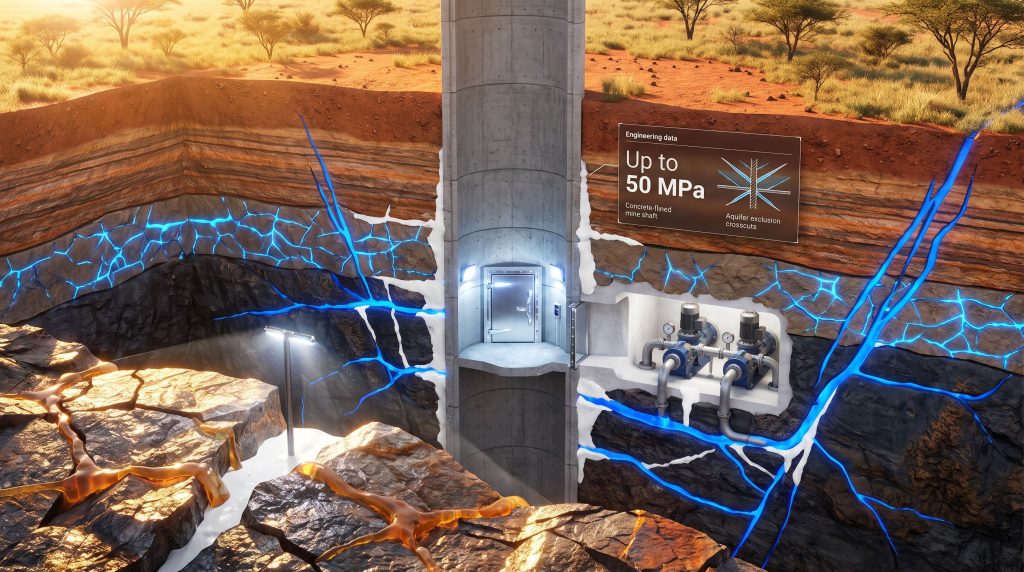
Pressure capability: Electro-hydraulic and air-driven plunger pumps rated to 50 MPa are required for high-pressure deep mine applications, far exceeding the capability of standard submersible pumps.
-
Abrasion resistance: Impellers, casings, and seals must be manufactured from materials selected specifically for contact with abrasive fines. Chrome alloy and ceramic-lined components significantly extend service intervals in these conditions.
-
Corrosion resistance: Mine water in the Zambian Copperbelt and South African gold fields frequently carries dissolved sulphates, heavy metals, and low pH values that aggressively attack standard pump materials.
-
Motor protection: At depth, thermal management, leakage detection, and automated level controls are not optional accessories but core components of reliable pump station design.
| Pump Type | Pressure Capability | Best-Fit Application | Key Design Consideration |
|---|---|---|---|
| Submersible Pump | Low to medium pressure | Wet stopes, sumps, collection points | Abrasion resistance, automated controls |
| Plunger Pump (Air-Driven) | Up to 50 MPa | High-pressure grouting, deep shaft drainage | Seal integrity under cyclic pressure loading |
| Electro-Hydraulic Plunger Pump | Up to 50 MPa | Deep mine dewatering, high-head applications | Power supply reliability at depth |
| Centralised Pump Station | Variable (multi-stage) | Primary dewatering to surface | Infrastructure capital cost, pipe routing optimisation |
Watertight door installations complement pump station design by providing passive pressure containment in shaft and drive environments. These barriers are designed to withstand high-pressure water events without requiring active mechanical intervention, buying critical time for dewatering operations to respond and protecting personnel and infrastructure in adjacent excavations.
The Economic and Safety Case for Front-Loaded Water Engineering
Cost Differentials Between Early Design and Reactive Remediation
The financial argument for integrating dewatering design into feasibility and pre-feasibility studies is compelling, even before safety considerations are introduced. Hydrogeological investigations conducted at the feasibility stage are a fraction of the cost of remediating an unexpected water inrush event during shaft sinking or early development.
Late-stage water ingress events generate costs across multiple dimensions simultaneously:
-
Direct remediation costs including emergency grouting, accelerated pump procurement, and unplanned infrastructure construction.
-
Schedule delays that compress revenue timelines and increase the duration over which project capital attracts financing costs.
-
Damage to existing shaft linings, electrical installations, and trackless equipment that must be repaired or replaced.
-
Regulatory notifications and potential enforcement actions under southern African environmental legislation.
By contrast, a comprehensive hydrogeological investigation conducted during pre-feasibility allows engineers to select the optimal combination of exclusion, sealing, and pumping strategies before any infrastructure is committed. The result is a water management system that is sized to duty rather than worst-case emergency scenarios, with a correspondingly lower capital and operating cost profile. For broader context, the mining commodity outlook underscores why operational efficiency at deep mines is more commercially critical than ever.
The next major ASX story will hit our subscribers first
Environmental Co-Benefits and ESG Alignment
Preventing Contamination Rather Than Treating It
The environmental case for proactive water exclusion design is increasingly relevant in the context of ESG reporting requirements imposed by international project financiers. When groundwater is allowed to contact sulphide ore bodies, the resulting oxidation chemistry generates sulphuric acid and dissolves heavy metals in a process known as acid mine drainage (AMD). Treating AMD is technically complex, operationally expensive, and carries long-term environmental liability that can extend well beyond a mine's operational life.
Intercepting groundwater before it enters the mine void eliminates the conditions for AMD formation within the active mining area. This is not simply a regulatory compliance argument; it is a direct cost saving that compounds over the life of mine, reduces the capital required for surface water treatment infrastructure, and substantially lowers closure liability. Furthermore, mining sustainability transformation across southern Africa is increasingly driven by precisely these kinds of integrated water and environmental design decisions.
Southern African mining legislation, including South Africa's National Water Act and associated regulations, places explicit obligations on mine operators regarding groundwater protection and water use licensing. Proactive water management design that demonstrably reduces aquifer interaction and contamination risk supports licence compliance and reduces the probability of regulatory enforcement actions.
Frequently Asked Questions: Underground Dewatering Design in African Mining
What Is the Difference Between Dewatering and Water Exclusion in Underground Mining?
Dewatering refers to the mechanical removal of water that has already entered the mine environment, typically through pumping systems. Water exclusion is a proactive engineering strategy that uses grouting, sealing, and strategic infrastructure placement to prevent groundwater from reaching active mining areas in the first place. In deep African mines, exclusion is generally the preferred primary strategy due to the extreme pressures involved.
Why Is Precementation Used in Deep Shaft Development?
Precementation involves injecting grout into water-bearing rock formations before shaft sinking commences. This process creates hydraulic barriers that neutralise high-pressure water zones, making shaft development safer and reducing the risk of catastrophic inrush events during construction. Cementation Africa dewatering design for underground water challenges places particular emphasis on this intervention as a foundational safety measure.
What Pump Technologies Are Used in High-Pressure Deep Mine Environments?
High-pressure underground water management typically relies on electro-hydraulic and air-driven plunger pumps rated to pressures of up to 50 MPa, complemented by watertight door installations for passive pressure containment. Submersible pumps are used for lower-pressure collection points such as sumps and wet stopes.
How Does Early-Stage Dewatering Design Reduce Project Costs?
Integrating hydrogeological studies and water management design into feasibility-stage planning allows engineers to select the most cost-effective combination of sealing, exclusion, and pumping strategies before infrastructure is committed. This avoids expensive remediation, schedule delays, and unplanned capital expenditure caused by water events encountered during construction. As Cementation Africa's approach to early dewatering design demonstrates, front-loading this analysis consistently delivers superior project economics.
What Environmental Benefits Does Proactive Water Management Deliver?
By intercepting groundwater before it contacts ore bodies, proactive water management prevents the formation of contaminated mine water and acid mine drainage. This reduces treatment costs, lowers environmental liability, and supports compliance with increasingly stringent southern African environmental regulations.
Key Takeaways: Engineering Principles for Underground Water Management in African Mines
-
Underground water management in deep African mines is fundamentally a design challenge, not an equipment procurement decision.
-
The most cost-effective strategy prioritises water exclusion through grouting and aquifer interception over bulk mechanical dewatering.
-
Precementation of deep shafts is a non-negotiable risk mitigation measure in high-pressure hydrological environments exceeding 2,000 metres depth.
-
Pump selection and station design must account for abrasive and corrosive mine water conditions specific to African geological settings, with pressure ratings up to 50 MPa required for deep high-head applications.
-
Early-stage hydrogeological characterisation is the foundational input that determines the effectiveness of every subsequent engineering intervention.
-
Environmental protection, operational continuity, and ESG compliance are co-benefits of well-designed water management systems, not secondary considerations.
-
The feedback loop between operational monitoring and design refinement as mining progresses to greater depth is a continuous process, not a one-time exercise.
-
Cementation Africa dewatering design for underground water challenges sets a benchmark for how integrated, front-loaded water engineering can transform project outcomes across Africa's deep mining sector.
This article presents general engineering principles and industry analysis for informational purposes. It does not constitute professional engineering advice. Project-specific water management strategies should be developed in consultation with qualified hydrogeological and mining engineers with direct knowledge of site conditions.
Readers seeking additional context on underground water management practices and engineering approaches in African mining can explore related industry coverage published by Africa Mining & Engineering Review at miningandengreview.com. The publication covers a broad range of operational and technical topics relevant to southern and central African mining operations.
Want to Identify the Next Major ASX Mining Discovery Before the Market Does?
Discovery Alert's proprietary Discovery IQ model delivers real-time alerts the moment significant mineral discoveries are announced on the ASX, turning complex geological and commodity data into actionable investment insights for both short-term traders and long-term investors — explore historic discoveries and their remarkable returns, then begin your 14-day free trial at Discovery Alert to position yourself ahead of the market.