August 6, 2026
How Do Rising Diesel Prices Threaten Global Economic Stability?
The diesel prices impact global economy through complex interconnected systems that modern industrial nations have built over decades. Energy distribution networks have evolved into intricate webs of dependency where localized supply constraints can trigger widespread economic instability across continents. Furthermore, the interconnected nature of fuel markets, transportation infrastructure, and manufacturing processes has created a system where disruptions cascade through multiple economic layers simultaneously.
Understanding these systemic risks requires examining how energy price shocks differ from other economic disruptions in both scope and transmission speed. Unlike demand-driven market corrections or monetary policy adjustments, supply-side energy constraints affect the core operational costs of virtually every economic sector. Consequently, this creates inflationary pressures that central banks struggle to address through traditional policy tools.
When big ASX news breaks, our subscribers know first
What Makes Diesel Price Volatility More Dangerous Than Other Energy Shocks?
The Industrial Fuel Foundation of Modern Economies
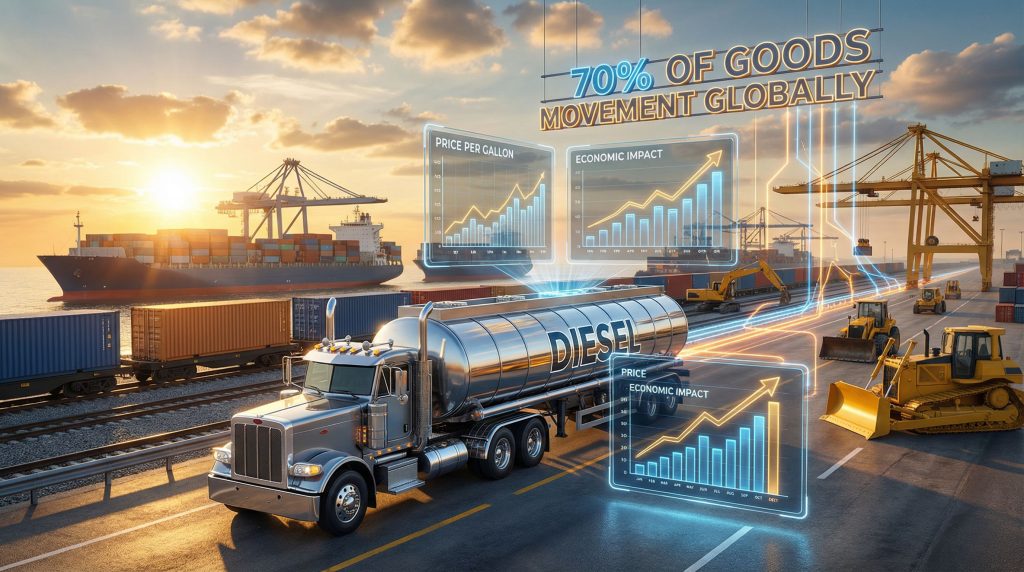
Diesel fuel serves as the backbone of global commerce in ways that distinguish it from other energy commodities. While gasoline primarily affects consumer transportation, diesel powers the machinery that keeps entire economies functioning. Heavy-duty trucks transport approximately 70% of all goods across major developed economies, making oil price movements directly impact the cost structure of virtually every manufactured product.
The economic multiplier effects of diesel price increases demonstrate mathematical precision in their propagation. When diesel costs rise by $1 per gallon, transportation companies typically pass through 60-80% of the cost increase to shippers within 30-60 days. This creates a compounding effect where multiple transportation segments in a single supply chain each add their margin on top of the fuel surcharge.
Agricultural operations face particularly acute vulnerability during seasonal peaks. Farm equipment consumes approximately 10-15% of total production costs in diesel fuel alone, but this percentage rises dramatically during planting and harvesting seasons. The timing sensitivity creates scenarios where fuel price spikes coinciding with critical agricultural windows can affect entire crop years.
Refining Bottlenecks Amplify Price Volatility
The technical complexity of producing ultra-low sulphur diesel (ULSD) creates structural constraints that amplify price volatility beyond simple supply and demand dynamics. ULSD production requires specialised hydrodesulfurisation units that cost $200-500 million per refinery to install. These units operate at temperatures exceeding 300-400°C under high-pressure hydrogen environments.
Current market conditions reveal extreme margin expansion that indicates severe supply-demand imbalances. Asian 10ppm sulphur diesel margins have reached $33 per barrel, representing a $12 premium above pre-crisis levels. European ultra-low sulphur diesel prices at Amsterdam-Rotterdam-Antwerp trading hubs have surged 55% since late February, reaching $1,165 per metric tonne.
These margins compare starkly with historical norms. Industry analysts note that diesel typically trades at $20-25 per barrel above crude oil prices. However, current conditions show margins of $30-65 per barrel and higher. This represents margin expansion of 150-260% above historical averages, indicating refining capacity operating at maximum utilisation with no spare capacity buffer.
How Do Geopolitical Disruptions Create Cascading Economic Effects?
Critical Shipping Corridor Dependencies
The Strait of Hormuz represents one of the most significant single points of failure in global energy infrastructure. Between 10-20% of global seaborne diesel supplies transit through this narrow waterway, creating vulnerability that extends far beyond the Middle Eastern region. The wide range in this percentage reflects measurement challenges between different types of petroleum products and seasonal variations in shipping patterns.
Energy economist Philip Verleger estimates that Strait of Hormuz disruptions could eliminate 3-4 million barrels per day of diesel supply, representing 5-12% of total global consumption. Furthermore, an additional 500,000 barrels per day could be lost from blocked Middle Eastern refinery exports, compounding supply constraints.
Alternative routing through the Suez Canal or around the Cape of Good Hope adds 10-21 days to shipping times. This increases transportation costs by $2-4 per barrel for petroleum products. These delays create inventory financing costs and force buyers to maintain larger strategic reserves, effectively removing product from active markets.
Regional Supply Chain Vulnerabilities
European diesel markets demonstrate how geopolitical events can create concentrated vulnerability through policy-driven supply diversification. Europe's efforts to reduce Russian energy imports have increased dependence on Middle Eastern refineries, creating new concentration risks. European diesel imports from the Middle East have increased 35-40% since 2022, replacing traditional Russian supply relationships.
The timing of supply disruptions creates multiplier effects based on seasonal demand patterns. Spring planting season in North America, summer driving season globally, and winter heating demand in northern climates create predictable demand spikes. These spikes amplify the impact of supply constraints, as OPEC production impact demonstrates in global markets.
Agricultural diesel consumption increases 40-60% during peak planting and harvesting periods, showing how these diesel prices impact global economy through seasonal variations.
Which Economic Sectors Face the Greatest Diesel Price Impact?
Transportation and Logistics Industry Analysis
The trucking industry operates on historically thin profit margins, making it extremely sensitive to fuel cost fluctuations. Long-haul trucking companies typically maintain net profit margins of 2-4%, with fuel representing 25-35% of total operating costs. A $28 per barrel increase in diesel prices translates to approximately $0.67 per gallon at retail. This potentially eliminates profitability for operators unable to pass costs through to customers immediately.
Freight rate elasticity varies significantly by market segment and contract type. Spot market freight rates typically adjust within 7-14 days of fuel price changes. In contrast, contract freight rates may take 30-90 days to reflect new fuel surcharges. This lag creates cash flow pressures for carriers who must pay higher fuel costs immediately while waiting for rate adjustments.
Rail freight operations face different but equally significant pressures. Class I railroads consume approximately 3.5-4.2 billion gallons of diesel fuel annually in North America alone. Each $10 per barrel increase in diesel prices adds roughly $800 million-1.2 billion in annual fuel costs across the rail industry. This represents 2-3% of total rail industry revenues.
Agricultural Sector Economic Pressures
Modern agriculture's diesel dependency creates vulnerability that extends beyond direct fuel consumption. Large-scale farming operations typically consume 5-8 gallons of diesel per acre for major row crops. However, this consumption concentrates during narrow seasonal windows when alternatives are limited.
The current crisis timing coincides with North American spring planting season, creating particular vulnerability. Farmers typically commit to planted acreage based on input cost calculations made weeks in advance. Sudden fuel cost increases can force 10-15% reductions in planted acres for price-sensitive crops. This affects food production for the entire year.
Food price transmission occurs through multiple pathways simultaneously. Direct fuel costs for farm equipment, indirect costs through fertiliser production, and transportation costs for moving products from farms to processing facilities all increase concurrently. These factors contribute to how tariff market impacts can compound agricultural sector pressures.
Construction and Mining Industry Implications
Heavy construction equipment represents one of the most diesel-intensive sectors outside transportation. Large excavators consume 15-25 gallons per hour during active operation. Meanwhile, mining haul trucks can consume 50-100 gallons per hour depending on load and terrain conditions.
Construction project economics often depend on fuel cost assumptions built into contract bids submitted months earlier. Fixed-price construction contracts expose contractors to fuel cost increases that cannot be passed through to project owners. This potentially converts profitable projects into loss-making commitments.
Mining operations face particularly acute exposure due to remote locations that increase fuel transportation costs. These locations also limit alternative energy sources. Surface mining operations typically consume 0.5-1.5 gallons of diesel per ton of material moved. This makes fuel costs a significant component of cash production costs for bulk commodities.
What Are the Macroeconomic Indicators of Diesel-Driven Inflation?
Historical Price Correlation Analysis
Econometric analysis reveals strong correlations between diesel prices and broader inflation measures. However, important lag effects complicate policy responses. Consumer Price Index data shows that 10% increases in diesel prices typically correlate with 1.2-1.8% increases in headline CPI over 6-9 month periods.
The transmission mechanism operates through multiple channels simultaneously. Core goods inflation shows the strongest correlation with diesel prices, reflecting transportation cost pass-through effects. Food inflation demonstrates the second-strongest relationship due to agricultural sector diesel dependency and food distribution costs.
Regional economic sensitivity varies based on industrial composition and energy intensity. Manufacturing-heavy regions show 2-3 times higher sensitivity to diesel price shocks compared to service-sector-dominated economies. Rural areas face disproportionate impacts due to longer transportation distances and higher diesel dependency in local economic activity.
Central Bank Policy Response Frameworks
Supply-side inflation from energy costs presents central banks with limited policy options compared to demand-driven inflation. Interest rate increases have minimal direct impact on energy supply constraints. Nevertheless, they can exacerbate economic slowdown while inflation pressures persist.
Historical precedent from the 1970s energy crises demonstrates the challenges of addressing supply-driven inflation through monetary policy. Federal Reserve responses during previous energy shocks have typically involved accepting temporarily higher inflation. However, they focus on preventing wage-price spirals and inflation expectations from becoming entrenched.
Current policy frameworks emphasise distinguishing between temporary supply shocks and persistent inflation trends. Central bank communications increasingly focus on core inflation measures that exclude volatile energy prices. Yet this approach faces challenges when energy cost increases persist for extended periods, particularly when considering the broader US economic outlook.
How Do Current Diesel Prices Compare to Historical Crisis Periods?
Price Level Benchmarking Against Previous Shocks
Current diesel price movements show concerning similarities to previous energy crises while also displaying unique characteristics. U.S. diesel futures have gained more than $28 per barrel from February 27 to March 10, 2026. This compares with $16 per barrel increases in crude oil over the same period. This 1.75:1 ratio of diesel to crude price increases exceeds historical crisis patterns.
| Crisis Period | Peak Diesel Price | Duration | Economic Impact |
|---|---|---|---|
| 2008 Financial Crisis | $4.76/gallon | 6 months | Severe recession |
| 2011 Arab Spring | $4.12/gallon | 4 months | Moderate slowdown |
| 2014 Oil Collapse | $2.43/gallon (low) | 18 months | Deflationary pressure |
| COVID-19 Recovery | $3.85/gallon | 8 months | Supply chain disruption |
| Current Crisis (2026) | $4.50+/gallon | Ongoing | To be determined |
Regional Price Variation Analysis
Geographic price disparities reveal structural vulnerabilities in regional energy markets. West Coast diesel prices typically trade $0.15-0.30 per gallon above East Coast prices. This occurs due to refining capacity constraints and environmental regulations requiring specialised fuel blends.
International price comparisons show concerning divergence patterns. European diesel prices have increased 55% since late February, while Asian diesel margins have expanded to three-and-a-half-year highs. These synchronised global increases indicate supply constraints rather than localised market inefficiencies.
The next major ASX story will hit our subscribers first
What Economic Scenarios Could Emerge from Prolonged Diesel Price Elevation?
Stagflation Risk Assessment
Economic analysis suggests diesel-driven energy shocks create inherently stagflationary conditions that challenge traditional macroeconomic policy responses. Sustained diesel price elevation simultaneously increases business operating costs while reducing consumer purchasing power. This creates the dual pressures of rising inflation and slowing economic growth.
Historical stagflation episodes from the 1970s provide relevant precedent for current conditions. Energy cost increases that persist beyond 6-8 months typically begin affecting wage negotiations and inflation expectations. This creates secondary effects that prove difficult to reverse through monetary policy alone.
Economic modelling suggests that diesel prices remaining 50% above long-term averages for more than one year could reduce GDP growth by 0.8-1.2 percentage points. Additionally, this could add 1.5-2.0 percentage points to inflation rates. These effects compound over time as businesses adjust operations and consumers modify behaviour patterns.
Supply Chain Restructuring Implications
Persistent transportation cost increases accelerate existing trends toward supply chain regionalisation and inventory strategy modifications. Just-in-time manufacturing becomes less economically attractive when transportation costs are volatile and elevated. This forces companies to hold larger inventory buffers.
Reshoring and nearshoring decisions increasingly factor transportation cost volatility into long-term strategic planning. Manufacturing location analysis now weights transportation cost stability equally with labour costs and regulatory environments. This occurs when evaluating production location options.
Modal shift analysis shows increased interest in rail transportation for long-distance freight movement. Rail fuel efficiency advantages become more economically significant during periods of elevated diesel prices. Intermodal transportation growth accelerates when diesel prices remain elevated for extended periods.
Which Investment Sectors Benefit from Diesel Price Volatility?
Energy Sector Investment Opportunities
Refining capacity expansion becomes increasingly attractive under sustained high diesel margins. Independent refineries with diesel-heavy product slates benefit disproportionately from margin expansion. Meanwhile, integrated oil companies see improved downstream profitability offsetting potential upstream pressure, particularly during oil price rally dynamics.
Refinery utilisation rates approaching 95-97% in key regions indicate structural capacity constraints that support long-term investment in new capacity. However, environmental regulations and energy transition policies complicate new refinery investment decisions. These factors create uncertain long-term demand projections.
Alternative fuel infrastructure receives accelerated investment interest during diesel price spikes. Electric vehicle charging networks, hydrogen fuel infrastructure, and biofuel production capacity all attract increased capital allocation when conventional fuel costs remain elevated.
Transportation Technology Innovation Drivers
Fuel efficiency technology development accelerates during sustained high fuel price periods. Advanced engine technologies, aerodynamic improvements, and route optimisation software all see increased R&D investment and faster market adoption rates.
Electric vehicle adoption in commercial transportation segments shows increased traction when diesel prices remain elevated. Electric delivery trucks and electric buses reach economic competitiveness faster under high diesel price scenarios. This accelerates fleet replacement cycles.
How Can Businesses and Economies Build Resilience Against Diesel Price Shocks?
Corporate Risk Management Strategies
Fuel hedging programmes provide protection against price volatility but require sophisticated risk management capabilities. Financial derivatives including futures contracts, options, and swaps allow companies to lock in fuel costs. However, hedging effectiveness depends on accurate consumption forecasting and contract timing.
Operational efficiency improvements offer long-term protection against fuel cost volatility. Fleet optimisation, route planning software, and equipment maintenance programmes can reduce fuel consumption by 10-20%. Furthermore, these measures improve service reliability.
Supply chain diversification strategies increasingly consider transportation cost volatility alongside traditional risk factors. Multi-modal transportation options and regional supplier networks provide flexibility during fuel price spikes.
Government Policy Response Options
Strategic petroleum reserves can provide temporary supply buffer during acute shortages. However, diesel-specific reserves are limited in most countries. Emergency fuel sharing agreements between allied nations provide additional supply options during crisis periods.
Tax policy adjustments offer governments tools to moderate consumer fuel cost impacts. Nevertheless, these policies reduce government revenue and may limit price signals that encourage conservation. Fuel tax holidays provide immediate relief but complicate infrastructure funding mechanisms.
What Does the Current Crisis Reveal About Global Energy Security?
Systemic Vulnerabilities in Global Energy Systems
The current crisis exposes fundamental architectural weaknesses in global energy systems that extend beyond simple supply and demand imbalances. Geographic concentration of refining capacity in geopolitically sensitive regions creates single points of failure. These affect global markets disproportionately, as documented in studies of geopolitics on fuel prices.
Infrastructure interdependencies create cascading failure risks where disruption in one system component affects multiple related systems. Pipeline networks, shipping terminals, and storage facilities represent critical infrastructure nodes. Their disruption affects regional and global energy flows.
Market structure concentration among major energy companies creates systemic risks when operational disruptions affect large market participants. Vertical integration in energy companies means upstream disruptions automatically affect downstream refining and distribution capabilities.
The current diesel crisis demonstrates how geopolitical tensions can exploit structural vulnerabilities in global energy systems, creating economic disruptions that extend far beyond the initial conflict zones.
Future-Proofing Economic Systems Against Energy Shocks
Energy security planning must evolve beyond traditional supply diversification to include demand flexibility and alternative energy source development. Strategic energy independence requires balancing import diversification with domestic production capability. This also requires renewable energy transition planning.
Economic resilience building involves creating buffer mechanisms that can absorb energy cost shocks without triggering broader economic disruption. Emergency response protocols, strategic reserve management, and international coordination frameworks provide essential crisis management capabilities.
Long-term energy transition strategies must account for interim vulnerability periods where economies remain dependent on traditional energy sources while building alternative infrastructure. Transition planning requires managing energy security risks during multi-decade transformation periods.
The diesel prices impact global economy through multiple interconnected pathways that extend far beyond simple fuel cost increases. Understanding these systemic relationships provides essential insight for policymakers, business leaders, and investors navigating an increasingly complex global energy landscape. The current crisis serves as a reminder that energy security remains fundamental to economic stability in an interconnected world.
Disclaimer: This analysis is based on publicly available information and economic modelling. Energy market conditions and geopolitical situations can change rapidly, affecting the accuracy of projections and analysis. Readers should consult current market data and professional advisors before making investment or business decisions based on this information.
Ready to Capitalise on Energy Sector Volatility?
Diesel price shocks like these create significant opportunities for astute investors in energy and commodity markets across the ASX. Discovery Alert's proprietary Discovery IQ model identifies emerging opportunities in energy exploration and commodity sectors, delivering instant alerts when significant discoveries could benefit from elevated commodity prices and supply constraints. Begin your 14-day free trial today and position yourself to profit from market-moving discoveries during periods of energy market volatility.