May 19, 2026
Understanding Digital Mine Infrastructure in Desert Environments
The mining industry stands at a technological crossroads where traditional extraction methods meet cutting-edge digital solutions. Technology innovation at Mansourah-Massarah gold project exemplifies how extreme climate conditions, where temperatures exceed 50°C, can be successfully managed through the integration of digital mining technologies. The convergence of IoT sensors, autonomous equipment, and real-time data analytics is fundamentally transforming how mining operations function in some of the world's harshest environments.
What Makes a Mine "Digital" in Extreme Climate Conditions?
Digital mining transcends conventional automation by creating interconnected networks of intelligent systems that continuously monitor, analyze, and optimize operations. Furthermore, this represents part of the broader data-driven mining operations transforming the industry. Unlike traditional mining approaches that rely on scheduled maintenance and reactive problem-solving, digital mines leverage predictive analytics and machine learning algorithms to anticipate equipment failures and operational inefficiencies.
Key Performance Indicators for Desert Mining Efficiency:
- Equipment uptime rates exceeding 90% through predictive maintenance
- Real-time temperature monitoring across all operational zones
- Automated dust suppression systems responding to wind patterns
- Energy consumption optimization during peak heat periods
- Worker safety metrics enhanced through environmental monitoring
Temperature management represents one of the most critical challenges in desert mining operations. When ambient temperatures reach 50°C and equipment surfaces can exceed 70°C, traditional machinery experiences accelerated wear, reduced efficiency, and increased failure rates. Digital monitoring systems continuously track thermal conditions, automatically adjusting operational parameters to maintain equipment within optimal temperature ranges.
The integration of sensor networks in harsh environments requires specialised hardware designed to withstand extreme temperatures, sand infiltration, and UV radiation. These sensors must maintain communication reliability while operating in conditions that would disable conventional electronic equipment.
Core Technology Stack for Modern Gold Operations
Modern digital mining operations deploy sophisticated technology architectures that integrate multiple layers of hardware and software systems. Moreover, AI transforming mining has become increasingly prevalent in ore sorting and process optimisation. IoT sensor deployment strategies encompass everything from vibration monitoring on crushers to real-time ore grade analysis through spectroscopic sensors.
Essential Components of Digital Mining Infrastructure:
- Environmental Sensors: Temperature, humidity, air quality, and wind speed monitoring
- Equipment Sensors: Vibration analysis, thermal imaging, and performance metrics
- Geological Sensors: Real-time ore grade assessment and structural monitoring
- Safety Sensors: Personal protective equipment monitoring and emergency response systems
- Communication Networks: Fibre optic backbones with wireless mesh extensions
Real-time data collection capabilities enable mining operations to process thousands of data points per second, creating comprehensive operational intelligence that was previously impossible. This data flows through edge computing systems that can make immediate operational adjustments without waiting for centralised processing.
Autonomous equipment integration protocols ensure that self-operating trucks, drilling systems, and processing equipment can coordinate seamlessly. These systems use advanced GPS positioning, LiDAR mapping, and machine vision to navigate complex mine environments while optimising routes and operational sequences.
Digital twin modelling creates virtual replicas of physical mining assets, allowing engineers to simulate operational scenarios, test optimisation strategies, and predict maintenance requirements with remarkable accuracy. These models continuously update based on real-world sensor data, ensuring they remain synchronised with actual equipment performance.
When big ASX news breaks, our subscribers know first
Advanced Ore Processing Technologies for Refractory Gold Deposits
The challenge of extracting gold from refractory ore bodies has driven remarkable innovations in metallurgical processing. At the Mansourah-Massarah project, with its mineral resource of 116 million tonnes grading 2.8 g/t, technology innovation at Mansourah-Massarah gold project demonstrates how advanced processing technologies are essential for maximising recovery rates while maintaining economic viability.
Refractory gold deposits present unique technical challenges because the gold particles are locked within sulfide minerals or encapsulated in silicate matrices that resist conventional cyanide leaching. Consequently, these ores require pre-treatment to liberate the gold before traditional extraction methods can achieve acceptable recovery rates.
Pressure Oxidation (POX) Systems: Engineering Deep Dive
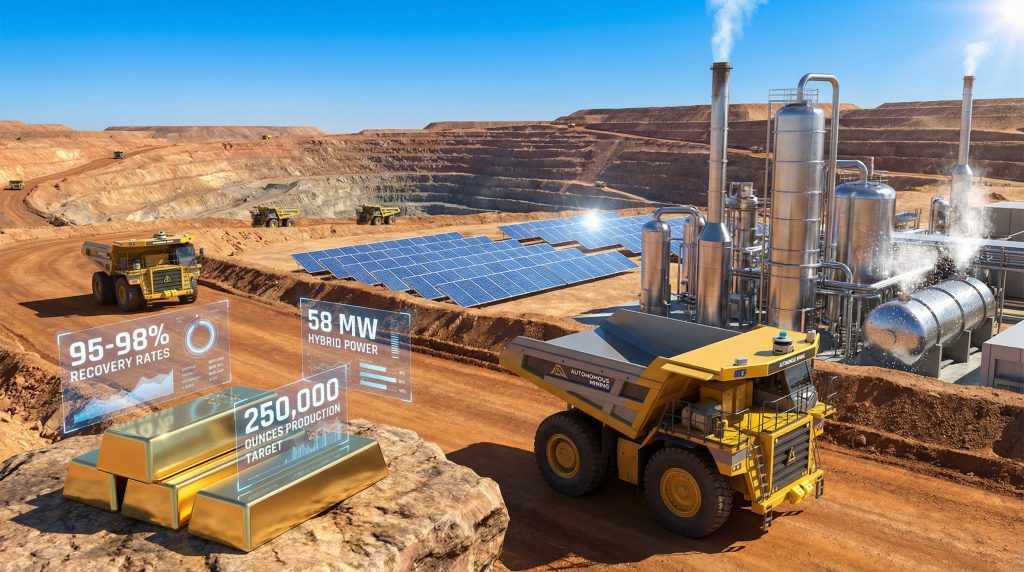
Pressure oxidation represents the pinnacle of refractory ore processing technology, utilising high-temperature, high-pressure environments to break down the mineral matrices that encapsulate gold particles. This process operates at temperatures between 200-230°C and pressures of 2-4 MPa, creating conditions that oxidise sulfide minerals and expose previously inaccessible gold.
| Processing Method | Recovery Rate | Energy Requirements | Environmental Impact |
|---|---|---|---|
| POX Technology | 95-98% | High initial, efficient long-term | Lower emissions |
| Conventional CIL | 85-90% | Moderate | Higher chemical usage |
| Heap Leaching | 70-85% | Low | Variable environmental impact |
Autoclave technology specifications must account for the corrosive nature of the oxidation process, requiring specialised metallurgy and advanced process control systems. The integration of multiple autoclaves allows for continuous processing while individual units undergo maintenance cycles.
Carbon-in-leach (CIL) integration with POX systems creates a seamless processing circuit where oxidised ore slurry flows directly into the gold extraction phase. This integration eliminates intermediate handling steps and reduces overall processing costs while maintaining optimal recovery rates.
Metallurgical Innovation for Complex Ore Bodies
Refractory ore characterisation requires sophisticated analytical techniques to understand the mineralogical composition and determine optimal processing parameters. Advanced techniques include automated mineralogy systems, electron microscopy, and X-ray diffraction analysis that provide detailed insights into ore behaviour.
The 2.8 g/t processing efficiency achieved at modern refractory gold operations represents a significant improvement over historical recovery rates. This efficiency stems from precise control of processing parameters, advanced flotation techniques, and optimised reagent addition protocols.
Resource utilisation strategies for the 116 million tonne mineral resource emphasise selective mining techniques that prioritise higher-grade zones while developing infrastructure for lower-grade materials. Additionally, these efforts align with broader Saudi mining licences expansion across the Kingdom. This approach maximises net present value while extending mine life through strategic resource development.
Hybrid Power Systems: Solar Integration in Mining Operations
The integration of renewable energy sources into mining operations represents a fundamental shift toward sustainable resource extraction. In desert environments where solar irradiance can exceed 2,500 kWh/m² annually, renewable energy solutions offer compelling economic and environmental advantages.
Hybrid power plants in mining can reduce fossil fuel dependency by over 25% while maintaining operational reliability in extreme desert conditions.
Engineering Renewable Energy for 24/7 Mining Operations
Mining operations demand continuous, reliable power supply regardless of weather conditions or time of day. A 58 MW hybrid system must balance renewable energy generation with conventional backup power to ensure uninterrupted operations. This requires sophisticated power management systems that can seamlessly transition between energy sources.
Solar PV array positioning in desert climates must account for several factors beyond simple solar tracking. Dust accumulation, thermal cycling, and extreme weather events all influence system design and positioning strategies. Advanced cleaning systems, often automated, maintain panel efficiency in dusty environments.
Critical Design Considerations for Desert Solar Installations:
- Panel mounting systems designed for 150+ km/h wind loads
- Temperature derating accounting for 80°C+ panel temperatures
- Dust mitigation through optimised tilt angles and cleaning protocols
- Inverter protection in climate-controlled enclosures
- Cable management accounting for thermal expansion in extreme heat
Wärtsilä engine integration provides baseload power stability when solar generation cannot meet demand. These engines offer rapid startup capabilities and can respond to load changes within minutes, ensuring mining operations never experience power interruptions that could damage equipment or compromise safety.
Power Management and Grid Stability
Load balancing between renewable and conventional sources requires advanced control algorithms that predict power demand based on operational schedules while accounting for weather forecasts and solar generation patterns. These systems continuously optimise the energy mix to minimise fuel consumption while maintaining grid stability.
Energy storage solutions bridge the gap between renewable generation and demand patterns. In mining applications, storage systems must handle both routine daily cycling and emergency backup requirements. Advanced battery management systems ensure optimal performance in extreme temperatures while maximising battery life.
Cost-Benefit Analysis Components:
- Initial capital investment versus fuel cost savings over 20+ year mine life
- Maintenance costs for renewable systems versus diesel generator upkeep
- Carbon credit potential and regulatory compliance benefits
- Grid stability improvements and power quality enhancements
Water and Tailings Management: Advanced Engineering Solutions
Water management in desert mining environments represents one of the most critical operational challenges. With limited local water sources and extreme evaporation rates, advanced water conservation and recycling technologies become essential for sustainable operations.
Thickened Tailings Transport Systems
Hydraulic modelling for non-Newtonian fluid transport requires specialised engineering analysis to predict flow behaviour in pipeline systems. Thickened tailings typically exhibit yield stress characteristics, meaning they require minimum pressure to initiate flow and behave differently than conventional slurries.
Key Hydraulic Parameters for Thickened Tailings:
- Yield stress: 50-200 Pa depending on solids content
- Viscosity: Highly shear-rate dependent (1-100 Pa·s)
- Density: 1.4-1.8 specific gravity
- Solids content: 60-75% by weight
Victaulic coupling systems address thermal expansion challenges in pipeline networks exposed to extreme temperature variations. These mechanical joints accommodate thermal movement while maintaining leak-proof seals, critical in water-scarce environments where any loss represents significant operational cost.
Centre-line thickened discharge (CTD) implementation allows for gravity-fed tailings deposition without requiring elaborate pumping systems to the final storage location. This technique reduces energy consumption while creating more stable tailings stacks with improved long-term stability characteristics.
Water Conservation Technologies in Arid Environments
Evaporation reduction strategies encompass both physical and chemical approaches to minimising water loss. Floating cover systems, chemical evaporation suppressants, and optimised pond geometry all contribute to water conservation efforts.
Advanced Water Conservation Techniques:
- Closed-loop processing: 90%+ water recycling rates through advanced filtration
- Atmospheric water generation: Extracting moisture from desert air during cooler periods
- Saline water treatment: Desalination systems for brackish groundwater utilisation
- Condensate recovery: Capturing water vapour from processing equipment
Water recycling and treatment systems must handle increasingly concentrated solutions as recycling rates increase. Advanced membrane technologies, ion exchange systems, and biological treatment processes enable water reuse that was previously impossible with conventional treatment methods.
Workforce Development and Technology Transfer
The transformation toward digital mining requires a fundamental shift in workforce capabilities and training programs. Traditional mining skills must evolve to incorporate data analysis, automated system operation, and advanced troubleshooting techniques.
Digital Skills Training for Mining Operations
University partnership models demonstrate the industry's commitment to developing indigenous technical expertise. The establishment of mining engineering programs at King Fahd University of Petroleum and Minerals, combined with curriculum upgrades at King Abdulaziz University and King Saud University, creates comprehensive educational pathways for mining professionals.
Essential Digital Mining Competencies:
- Data analytics: Statistical analysis and machine learning applications
- System integration: Understanding interconnected operational technologies
- Cybersecurity: Protecting digital infrastructure from emerging threats
- Human-machine interface: Optimising interactions between workers and automated systems
- Predictive maintenance: Utilising data to anticipate equipment failures
Young Saudis show remarkable enthusiasm for natural resources careers, building on the country's foundation in oil and gas industries. With the majority of Saudi Arabia's population under 30 years old, this demographic represents an exceptional opportunity for rapid skill development and technology adoption.
Internship programs provide hands-on experience with cutting-edge mining technologies while creating direct pathways from education to employment. These programs focus on practical application of digital mining concepts in real operational environments.
Knowledge Transfer Mechanisms
Frequently Asked Questions About Digital Mining Technology:
How do digital mining technologies improve safety outcomes?
Digital systems provide continuous monitoring of environmental conditions, equipment status, and worker locations. Automated alerts can trigger immediate responses to dangerous conditions, while predictive analytics help prevent accidents before they occur.
What training is required for operating autonomous mining equipment?
Operators need comprehensive training in system monitoring, exception handling, and emergency procedures. While direct equipment operation decreases, the requirement for systems thinking and troubleshooting skills increases significantly.
How does digital monitoring reduce operational costs?
Predictive maintenance reduces unplanned downtime by 30-40%, while optimised processes can improve energy efficiency by 20-25%. Real-time optimisation also maximises throughput and recovery rates.
Gender diversity initiatives focus on creating inclusive opportunities for women in technical and operational roles. These programs provide specialised training, mentoring, and career development pathways that address traditional barriers to entry in the mining industry.
Operational Performance Metrics and Benchmarking
Digital mining implementation creates measurable improvements across multiple operational parameters. The transition from traditional to digital operations requires comprehensive performance tracking to validate technology investments and identify optimisation opportunities.
Production Optimisation Through Technology
The target production capacity of 250,000 ounces annually from the 10.4 million ounce resource base represents approximately 41 years of operational life at current extraction rates. However, ongoing exploration and resource expansion efforts may significantly extend this timeline.
Resource growth tracking demonstrates the value of systematic exploration combined with advanced geological modelling. The addition of 3 million ounces at Mansourah-Massarah through targeted drilling programs shows how technology innovation at Mansourah-Massarah gold project supports resource expansion efforts.
Efficiency Gains from Digital Implementation:
- Equipment utilisation: Increased from 70-75% to 85-90% through optimised scheduling
- Processing throughput: 15-20% improvement through real-time optimisation
- Recovery rates: 2-5% improvement through precise process control
- Energy efficiency: 20-25% reduction through demand optimisation
Comparative Analysis: Digital vs. Traditional Mining
| Performance Metric | Traditional Operations | Digital Operations | Improvement % |
|---|---|---|---|
| Equipment Uptime | 75-80% | 90-95% | +15-20% |
| Safety Incidents | Baseline | Reduced monitoring | -30-40% |
| Energy Efficiency | Standard | Optimised | +20-25% |
| Water Usage | Baseline | Recycling systems | -40-50% |
| Maintenance Costs | Reactive | Predictive | -25-30% |
The transformation metrics demonstrate substantial operational improvements across all measured categories. Equipment uptime improvements of 15-20% translate directly to increased production capacity without additional capital investment.
Safety incident reductions stem from continuous environmental monitoring, automated hazard detection, and improved emergency response capabilities. Digital systems can identify potential safety issues before they become critical, allowing for proactive intervention.
The next major ASX story will hit our subscribers first
Future Technology Roadmap for Middle Eastern Mining
The evolution of mining technology continues to accelerate, with emerging technologies promising even greater operational improvements. Artificial intelligence, blockchain integration, and advanced robotics represent the next generation of mining innovation.
Emerging Technologies in Gold Mining
Artificial intelligence applications in ore sorting utilise machine vision and spectroscopic analysis to make real-time decisions about ore classification. These systems can process material at rates exceeding 1,000 tons per hour while achieving sorting accuracies above 95%.
AI-Driven Mining Applications:
- Geological modelling: Machine learning enhances ore body interpretation
- Process optimisation: AI algorithms continuously adjust processing parameters
- Predictive maintenance: Neural networks identify failure patterns before they occur
- Supply chain optimisation: AI manages complex logistics and inventory systems
Blockchain technology for supply chain transparency creates immutable records of gold production, processing, and distribution. This technology addresses increasing demands for responsible sourcing and environmental accountability in precious metals markets.
Advanced robotics for underground operations promise to eliminate human exposure to dangerous mining environments while achieving precision impossible with conventional equipment. These systems combine advanced sensors, AI control systems, and specialised mechanical designs optimised for mining applications.
Regional Technology Adoption Strategies
Middle Eastern mining operations have unique opportunities to leapfrog traditional mining methodologies by implementing the latest technologies from project inception. This approach avoids the legacy system constraints that limit technology adoption in established mining regions.
Technology transfer from established mining regions provides proven methodologies while allowing for adaptation to local conditions. However, the combination of international expertise with indigenous engineering capabilities creates optimal technology implementation strategies.
Innovation hubs for mining technology development could establish the Middle East as a centre for advancing mining technologies applicable to extreme climate conditions. These facilities would serve both local and international markets while creating high-value engineering careers.
Investment Implications and Market Impact
The capital requirements for digital mining infrastructure represent significant upfront investments that generate returns through operational improvements over extended timeframes. Understanding the financial implications helps stakeholders make informed decisions about technology adoption.
Capital Allocation for Technology Infrastructure
ROI analysis for digital mining investments typically shows payback periods of 3-5 years through operational improvements, followed by sustained cost advantages throughout the mine life. The key variables include equipment uptime improvements, maintenance cost reductions, and energy efficiency gains.
Technology Investment Categories:
- Sensor networks and monitoring systems: 5-10% of total capital cost
- Automation and control systems: 10-15% of processing plant investment
- Data infrastructure and analytics platforms: 2-5% of overall project cost
- Training and change management: 1-3% of operational budget
Technology deployment timelines require careful coordination with construction schedules and operational ramp-up phases. Early technology integration during project development proves more cost-effective than retrofitting systems after operations begin.
Risk mitigation through advanced monitoring systems reduces operational uncertainties while providing data for more accurate financial modelling. This improved predictability enhances project financing and investor confidence.
Regional Mining Sector Transformation
Scenario Analysis: Impact of Digital Mining Adoption
Rapid Adoption Scenario: If digital mining technologies achieve 75% adoption across Middle Eastern operations within 10 years, regional mining productivity could increase by 25-30% while reducing environmental impacts by 40-50%.
Gradual Adoption Scenario: More conservative technology adoption rates of 40% over 15 years would still generate significant improvements in safety, efficiency, and environmental performance while building indigenous technical capabilities.
Technology Leadership Scenario: Aggressive investment in mining technology development could position the Middle East as a global centre for extreme environment mining solutions, creating export opportunities for specialised equipment and services.
Competitive advantages for technology-forward operations extend beyond immediate operational improvements. These facilities attract top engineering talent, achieve superior environmental performance, and demonstrate industry leadership that enhances corporate reputation and stakeholder confidence.
Supply chain implications for global gold markets include more reliable production schedules, improved quality control, and enhanced traceability throughout the value chain. These factors contribute to market stability and may command premium pricing for responsibly-sourced gold.
Conclusion: The Digital Mining Blueprint
The transformation of desert mining operations through digital technology integration represents more than operational improvement—it demonstrates a fundamental evolution in how the industry approaches resource extraction in challenging environments. The successful implementation of digital mining systems at projects like Mansourah-Massarah creates replicable frameworks for similar operations worldwide.
Scalability of Technology Solutions
Replication potential across mining portfolios depends on standardising digital mining protocols while maintaining flexibility for site-specific adaptations. The lessons learned from pioneer projects provide valuable insights for accelerating technology adoption across multiple operations.
Standardisation of digital mining protocols creates economies of scale in training, maintenance, and system integration while ensuring consistent performance across operations. This standardisation also facilitates technology transfer and knowledge sharing within mining organisations.
Long-term sustainability through technological innovation positions the mining industry to meet increasing demands for responsible resource extraction. Digital systems enable precision mining techniques that minimise environmental impacts while maximising resource recovery rates.
The integration of renewable energy systems, advanced water management, and autonomous operations creates a template for sustainable mining in extreme environments. These technologies address critical environmental challenges while maintaining economic viability.
As mining industry evolution continues toward digital transformation, the experiences gained from pioneer projects will inform best practices for technology implementation, workforce development, and operational optimisation. The success of these early adopters will likely accelerate industry-wide adoption of digital mining technologies.
Disclaimer: This analysis includes forward-looking statements and projections based on current technology trends and operational data. Actual performance may vary due to technological developments, market conditions, and operational variables. Investment decisions should be based on comprehensive due diligence and professional financial advice.
Ready to Discover the Next Major Mineral Find?
Don't miss significant ASX mineral discoveries that could transform your investment portfolio. Discovery Alert's proprietary Discovery IQ model delivers instant notifications on major mineral discoveries across over 30 commodities, helping both short-term traders and long-term investors capitalise on market-moving announcements before the broader market reacts. Start your 30-day free trial today to position yourself ahead of the next breakthrough discovery at Discovery Alert.