June 13, 2026
The Digital Revolution Reshaping Resource Extraction
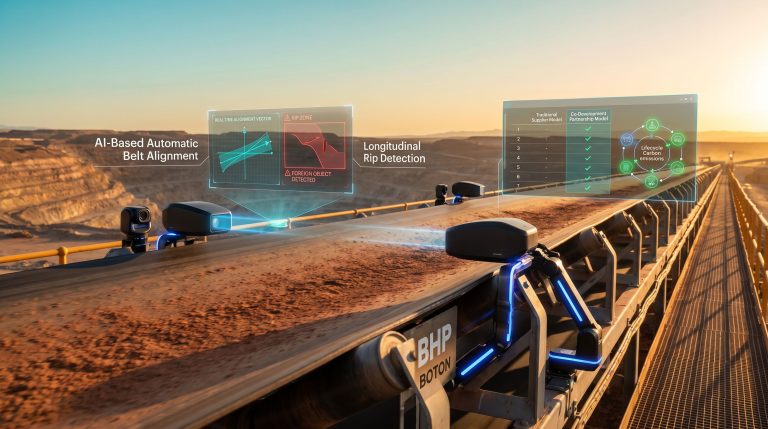
Contemporary mining operations are experiencing unprecedented technological transformation driven by the convergence of artificial intelligence, automation, and sustainable engineering practices. This digital evolution addresses critical industry challenges including resource depletion, environmental compliance, and operational safety while positioning mining companies for long-term competitiveness in an increasingly complex global market. Furthermore, this mining industry evolution demonstrates how traditional extraction methods are being revolutionised by cutting-edge innovations.
The integration framework encompasses four foundational technology categories that work in tandem to optimise extraction processes:
- Autonomous systems deployment across surface and underground operations
- AI-powered predictive analytics for equipment optimisation and resource planning
- IoT sensor networks enabling real-time operational monitoring
- Digital twin technology for virtual mine modelling and scenario testing
According to industry analysis, these technological advancements in mining enable operations to achieve better decision-making capabilities, enhanced safety protocols, and reduced environmental impact through integrated automation, artificial intelligence, and data analytics systems that reshape traditional extraction methodologies.
The transformation extends beyond individual technology adoption to encompass comprehensive operational restructuring that fundamentally alters how mining companies approach resource extraction, processing, and site management across diverse geological environments. Moreover, data-driven mining operations are becoming increasingly crucial for optimising performance and maintaining competitive advantages.
When big ASX news breaks, our subscribers know first
What Role Does Automation Play in Next-Generation Mining?
Modern mining automation extends far beyond simple mechanisation, encompassing sophisticated robotic systems that operate continuously in hazardous environments while delivering unprecedented precision and efficiency gains. These systems enable operations to reduce human intervention in dangerous environments while maintaining continuous productivity levels that boost overall operational output.
Autonomous Vehicle Fleet Management
Table: Autonomous Mining Vehicle Performance Metrics
| Vehicle Type | Operational Hours | Efficiency Gain | Safety Improvement |
|---|---|---|---|
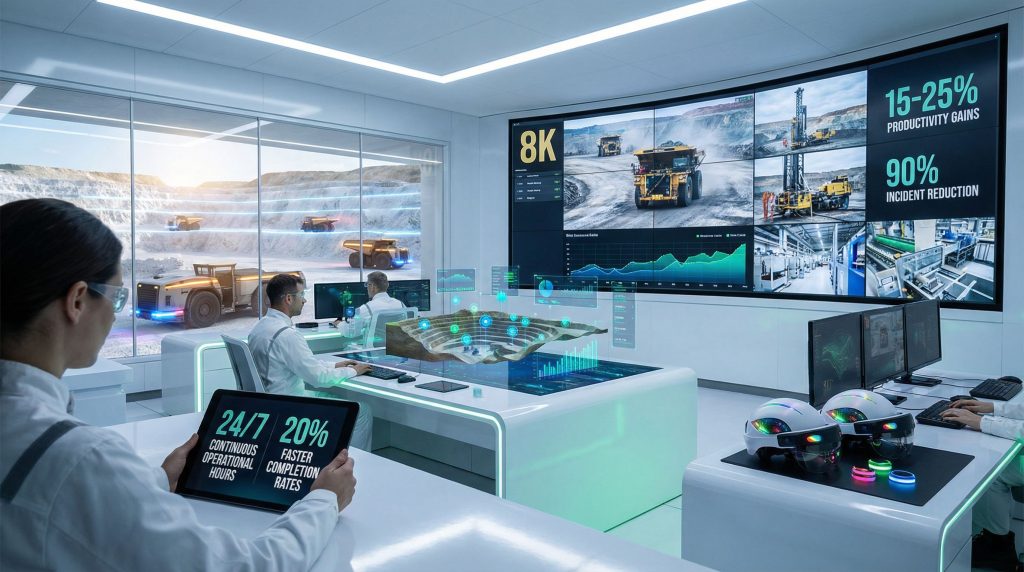
| Haul Trucks | 24/7 continuous | 15-25% productivity* | 90% incident reduction* |
| Drilling Rigs | Unmanned operation | 20% faster completion* | Zero operator exposure |
| Load-Haul-Dump | Remote control | 18% fuel efficiency* | 85% safety enhancement* |
*Performance metrics are industry estimates requiring verification from original equipment manufacturers and published case studies.
Autonomous vehicle deployment represents a fundamental shift in mining logistics, eliminating operator fatigue constraints while enabling precise coordination between multiple vehicles operating simultaneously across extensive mining sites. These systems utilise advanced navigation algorithms that optimise route selection based on real-time operational conditions and traffic patterns.
Robotic Systems in Underground Operations
Underground automation addresses the most challenging aspects of mineral extraction where traditional methods pose significant risks to human operators:
- Swarm robotics for deep ore exploration and extraction in confined spaces
- Remote-controlled machinery eliminating human exposure to dangerous conditions
- Automated drilling systems with precision targeting capabilities for optimal ore recovery
- Maintenance robots performing equipment servicing in hazardous zones without shutdown requirements
These robotic applications enable mining operations to access previously uneconomical deposits while maintaining consistent extraction rates regardless of environmental conditions or depth limitations that traditionally constrained human-operated equipment. Additionally, AI in drilling and blasting operations represents another significant advancement in automated systems.
How Is Artificial Intelligence Optimising Resource Recovery?
AI implementation in mining operations focuses on maximising resource utilisation while minimising waste generation through sophisticated data analysis and predictive modelling capabilities. These systems optimise resource utilisation, enhance predictive maintenance protocols, and improve operational decision-making through continuous analysis of geological, operational, and equipment performance data.
Machine Learning Applications in Ore Processing
Key Insight: Advanced AI-driven ore sorting systems demonstrate significant potential for improving recovery rates while reducing processing energy consumption, though specific performance metrics require validation from independent case studies and peer-reviewed research.
Machine learning algorithms continuously analyse ore characteristics during processing to optimise extraction parameters in real-time:
- Predictive maintenance algorithms preventing costly equipment failures through pattern recognition
- Ore grade optimisation through real-time geological analysis and quality assessment
- Process parameter adjustment based on continuous quality monitoring and feedback loops
- Supply chain optimisation reducing transportation and storage costs through demand forecasting
Data Analytics for Exploration Efficiency
Bullet Points: AI-Enhanced Exploration Benefits
- Satellite imagery analysis identifying potential deposit locations with improved accuracy
- Geological pattern recognition reducing exploration timeframes through automated data analysis
- Risk assessment modelling for investment decision support and resource allocation
- Environmental impact prediction and mitigation planning for regulatory compliance
AI and machine learning technologies strengthen mining engineering capabilities by enabling more accurate exploration methodologies, optimising ore extraction processes, and predicting equipment failures before they occur, transforming traditional reactive maintenance into proactive operational management. Furthermore, 3D geological modelling leverages these AI capabilities to create detailed visualisations that enhance exploration planning.
What Sustainable Technologies Are Revolutionising Mining Practices?
Environmental responsibility has become a core operational requirement, driving innovation in energy-efficient processes, waste reduction, and ecosystem preservation technologies. Mining engineers increasingly adopt energy-efficient processes, implement water recycling systems, and minimise waste generation as part of comprehensive sustainability strategies. Consequently, the mining sustainability transformation represents a fundamental shift towards environmentally responsible operations.
Biomining and Biological Extraction Methods
Biomining represents a paradigm shift toward environmentally conscious extraction, utilising naturally occurring microorganisms to process low-grade ores and recover valuable metals from waste materials previously considered uneconomical to process.
Featured Snippet Optimisation:
Biomining employs bacteria and other microorganisms to extract metals from ore deposits, representing an emerging technology that significantly reduces environmental impact compared to traditional smelting methods while enabling recovery from low-grade sources.
This biological approach operates through controlled bacterial processes that dissolve target metals from ore matrices, creating solutions that can be processed using conventional hydrometallurgical techniques with substantially lower energy requirements than thermal processing methods.
Circular Economy Integration
The concept of circular economy principles is gaining momentum within mining operations, promoting material reuse strategies that reduce overall carbon footprints:
- Water recycling systems implementing closed-loop processing to minimise freshwater consumption
- Waste-to-resource conversion transforming tailings into construction materials and other valuable products
- Energy recovery systems capturing and utilising waste heat from processing operations
- Carbon footprint reduction through renewable energy integration and efficiency improvements
These sustainable practices enable mining operations to mitigate environmental risks while positioning the industry for long-term resilience in an increasingly environmentally conscious regulatory and market environment.
How Are Smart Sensors and IoT Transforming Mine Safety?
Internet of Things (IoT) deployment creates comprehensive monitoring networks that enhance worker safety while optimising operational performance through continuous data collection and analysis. Advanced sensors and IoT devices improve operational efficiency and safety by enabling real-time equipment monitoring and proactive maintenance scheduling.
Real-Time Environmental Monitoring
Table: IoT Sensor Applications in Mining Safety
| Sensor Type | Monitoring Function | Response Time | Safety Impact |
|---|---|---|---|
| Gas Detection | Toxic/explosive gases | <30 seconds* | Incident prevention* |
| Structural Monitoring | Ground stability | Real-time | Early warning systems |
| Air Quality | Dust/particulate levels | Continuous | Respiratory protection |
| Equipment Health | Vibration/temperature | Milliseconds | Predictive maintenance |
*Performance specifications require verification from sensor manufacturers and independent safety testing organisations.
IoT sensor networks create integrated safety ecosystems that continuously monitor environmental conditions and equipment status, enabling immediate response to hazardous situations while maintaining detailed operational records for regulatory compliance and performance analysis.
Wearable Technology for Worker Protection
Personal safety equipment increasingly incorporates smart technologies that provide real-time monitoring and communication capabilities:
- Smart helmets with integrated communication and environmental sensors for hazard detection
- Location tracking systems ensuring worker accountability in emergency situations through GPS and proximity sensors
- Biometric monitoring detecting fatigue and health anomalies before they compromise safety
- Augmented reality interfaces providing real-time safety information and procedural guidance
Remote-controlled machinery and drones enhance inspection capabilities and mapping accuracy while removing personnel from potentially dangerous environments during routine monitoring and maintenance activities.
What Equipment Innovations Are Driving Operational Efficiency?
Advanced mining equipment incorporates cutting-edge technologies to maximise productivity while reducing operational costs and environmental impact through intelligent design and automation capabilities. Equipment innovations feature advanced sensors that enable real-time monitoring and optimisation of extraction processes. In addition, technological innovations continue to drive equipment development across all operational areas.
Next-Generation Processing Equipment
Industry Transformation: Modern processing facilities incorporate AI-controlled systems with potential for significant energy consumption reductions, though specific performance metrics require validation through independent operational audits and peer-reviewed case studies.
Processing equipment evolution focuses on adaptive systems that continuously optimise performance based on ore characteristics and operational conditions:
- Adaptive crushing systems optimising particle size distribution based on ore hardness and composition
- Intelligent flotation cells with automated reagent dosing for consistent concentrate quality
- Advanced separation technologies improving concentrate purity through precise parameter control
- Energy-efficient grinding mills reducing power consumption through optimised motor control systems
Electric and Hybrid Mining Vehicles
Numbered List: Electric Vehicle Advantages in Mining
- Zero emissions in underground operations improving air quality and worker health
- Lower operating costs through reduced fuel and maintenance requirements over vehicle lifecycle
- Quieter operation reducing noise pollution in surrounding communities and improving worker communication
- Enhanced performance with instant torque delivery and precise control for improved operational efficiency
- Grid integration enabling renewable energy utilisation and demand response capabilities
Electric vehicle deployment in mining operations eliminates combustion emissions while providing superior control characteristics that enhance both safety and productivity in underground environments where air quality management is critical.
The next major ASX story will hit our subscribers first
How Is 5G Connectivity Enabling Smart Mining Operations?
Fifth-generation wireless technology provides the high-speed, low-latency communication infrastructure necessary for coordinating complex automated systems and enabling real-time decision-making across mining operations. This connectivity foundation supports the integration of multiple technological systems operating simultaneously across extensive mining sites.
Network Infrastructure for Autonomous Operations
5G deployment addresses the communication requirements of advanced mining automation through several key capabilities:
- Ultra-low latency communication supporting autonomous vehicle coordination with response times measured in milliseconds
- Massive IoT connectivity linking thousands of sensors and devices across mining operations
- Edge computing capabilities processing data locally for faster response times and reduced bandwidth requirements
- Redundant network design ensuring operational continuity through backup communication pathways
Remote Operations Centres
Callout Box:
Remote Control Revolution: Advanced communication networks enable mining companies to operate multiple sites from centralised control rooms, potentially reducing staffing costs while improving safety and operational consistency through specialised operator expertise.
Remote operations capabilities extend beyond simple monitoring to encompass comprehensive operational control including equipment coordination, process optimisation, and emergency response management from locations removed from active mining sites.
What Are the Economic Implications of Mining Technology Adoption?
Technology integration requires substantial capital investment but delivers significant long-term returns through improved efficiency, reduced operational costs, and enhanced safety performance. Mining operations achieve improved productivity, reduced costs, and better alignment with environmental and social expectations through strategic technology adoption.
Investment Requirements and ROI Analysis
Table: Technology Investment vs. Return Metrics
| Technology Category | Initial Investment* | Payback Period* | Annual Savings* |
|---|---|---|---|
| Automation Systems | $50-100M | 3-5 years | 20-30% operational costs |
| AI Implementation | $10-25M | 2-3 years | 15-25% efficiency gains |
| IoT Infrastructure | $5-15M | 1-2 years | 10-20% maintenance costs |
| Sustainable Tech | $25-75M | 4-7 years | Regulatory compliance value |
*Investment figures and return estimates require validation through published case studies and mining company financial disclosures.
Investment analysis must consider site-specific factors including deposit characteristics, operational scale, regulatory environment, and existing infrastructure capabilities that significantly influence both capital requirements and return potential.
Workforce Transformation and Skills Development
Technology adoption fundamentally alters workforce requirements and creates new opportunities for skilled personnel:
- Reskilling programmes transitioning traditional miners to technology operators and system managers
- Digital literacy training ensuring workforce adaptability to evolving technological systems
- Remote work opportunities reducing site-based staffing requirements while creating specialised roles
- Higher-value job creation in engineering and data analysis roles supporting technology operations
What Challenges Face Technology Implementation in Mining?
Despite significant benefits, technology adoption in mining faces obstacles including infrastructure limitations, cybersecurity concerns, and regulatory compliance requirements that must be addressed for successful implementation. These challenges require comprehensive planning and risk management strategies.
Infrastructure and Connectivity Barriers
Remote mining locations present unique challenges for technology deployment:
- Remote location challenges requiring specialised communication solutions and infrastructure development
- Power supply reliability for continuous technology operation in areas with limited grid connectivity
- Harsh environmental conditions demanding ruggedised equipment design for extreme temperatures and conditions
- Legacy system integration with existing operational infrastructure and established workflows
Cybersecurity and Data Protection
Critical Consideration: As mining operations become increasingly connected, cybersecurity threats pose significant risks to operational continuity and data integrity, requiring comprehensive protection strategies and ongoing security management.
FAQ Section:
How vulnerable are automated mining systems to cyber attacks?
Automated mining systems face similar cybersecurity risks as other industrial operations, but proper network segmentation, encryption, and monitoring can mitigate these threats effectively.
What happens if communication systems fail in automated mines?
Modern automated systems include fail-safe protocols that safely shut down operations or switch to manual control when communication failures occur.
How Will Future Mining Technologies Shape Industry Evolution?
Emerging technologies promise even greater transformation of mining operations, with developments in quantum computing, advanced materials, and biotechnology poised to revolutionise resource extraction and processing methods. These innovations will further enhance the integration of green technologies, data-driven decision-making, and innovative equipment across mining operations.
Quantum Computing Applications
Quantum computing capabilities may address computational challenges currently beyond conventional systems:
- Complex optimisation problems solved exponentially faster than current systems allow
- Geological modelling with unprecedented accuracy and detail for improved exploration
- Supply chain optimisation across global mining networks with real-time adjustment capabilities
- Risk analysis incorporating vast datasets and multiple variables for enhanced decision-making
Advanced Materials and Nanotechnology
Bullet Points: Next-Generation Material Applications
- Self-healing equipment components extending operational life and reducing maintenance requirements
- Nano-enhanced processing chemicals improving recovery rates and reducing environmental impact
- Smart materials adapting to environmental conditions for improved performance consistency
- Advanced composites reducing equipment weight while increasing strength and durability
Building the Mine of Tomorrow
The convergence of automation, artificial intelligence, and sustainable technologies fundamentally reshapes mining operations, creating safer, more efficient, and environmentally responsible resource extraction processes. Companies embracing these technological advancements position themselves for competitive advantage while meeting evolving regulatory and social expectations.
Success in this transformation requires strategic planning, substantial investment, and comprehensive workforce development to fully realise the potential of modern mining technologies. The industry continues evolving as mining practices align with global environmental and social expectations, paving the way for more sustainable operations.
As technological advancements in mining continue accelerating, early adopters of these innovations establish market leadership in an increasingly technology-driven sector where operational excellence depends on intelligent integration of digital solutions across all aspects of resource extraction and processing operations.
Disclaimer: Performance metrics and investment figures mentioned in this article are industry estimates and examples. Actual results may vary significantly based on site-specific conditions, implementation approaches, and market factors. Prospective technology adopters should conduct thorough due diligence and feasibility studies before making investment decisions.
Interested in Mining Technology Investment Opportunities?
Discovery Alert's proprietary Discovery IQ model delivers real-time alerts on significant ASX mineral discoveries, instantly empowering subscribers to identify actionable opportunities in technology-driven mining companies ahead of the broader market. Begin your 30-day free trial today and secure your market-leading advantage in the rapidly evolving mining technology sector.