June 4, 2026
How Digital Technologies Are Transforming Mining Operations in 2025
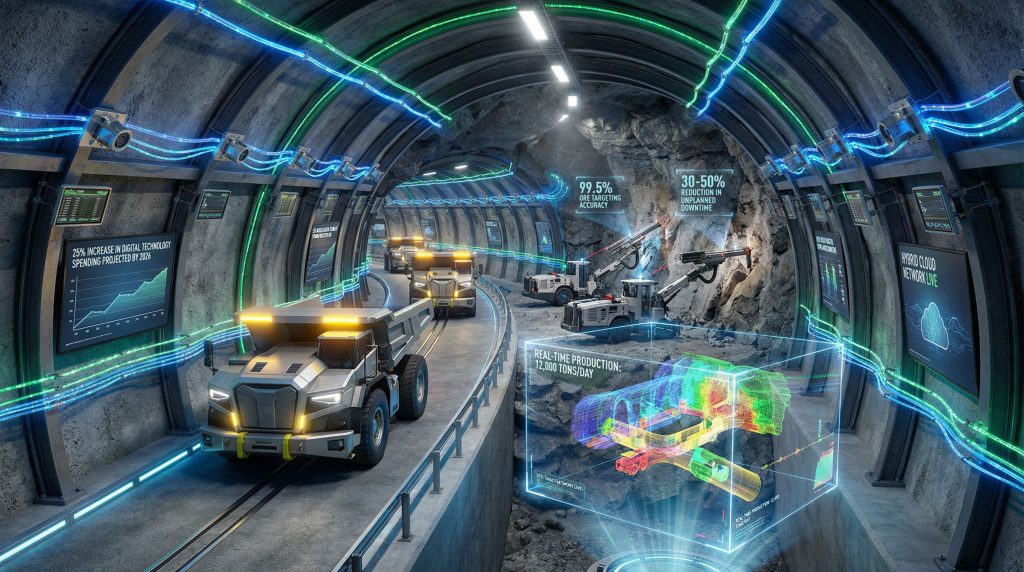
The mining industry stands at a technological crossroads where modernizing mining operations using advanced digital tools has evolved from optional enhancement to operational necessity. Companies worldwide are discovering that artificial intelligence, autonomous systems, and interconnected sensor networks create possibilities that extend far beyond traditional equipment upgrades. This transformation fundamentally reshapes how extraction companies approach geological assessment, production optimization, and final product delivery.
Furthermore, the integration of advanced digital tools across mining workflows has created unprecedented opportunities for efficiency gains, safety improvements, and environmental stewardship. Companies that successfully navigate this technological landscape discover competitive advantages that compound over time, while those that delay implementation risk operational obsolescence in an increasingly data-driven industry.
When big ASX news breaks, our subscribers know first
What Does Digital Mining Modernization Actually Mean?
The Connected Mine Ecosystem
Modern digital mining platforms represent comprehensive integration systems that connect every operational component through shared data networks. These platforms encompass real-time monitoring systems, predictive analytics engines, automated control mechanisms, and collaborative decision-making tools that function as unified operational intelligence networks.
The distinction between basic digitization and true digital transformation lies in systemic integration depth. Simple digitization involves converting analog processes to digital formats, while comprehensive transformation rebuilds operational workflows around data-driven mining strategies. True modernization creates adaptive systems that learn from operational patterns and continuously optimize performance parameters.
Key performance indicators for measuring modernization success include:
• Operational efficiency metrics: Production throughput per unit time, equipment utilization rates, and process optimization indicators
• Safety performance tracking: Incident reduction rates, hazardous exposure minimization, and emergency response effectiveness
• Environmental impact measurements: Resource consumption efficiency, waste reduction percentages, and emission control effectiveness
• Financial performance indicators: Cost reduction per unit produced, return on technology investment, and revenue enhancement through quality improvements
The Four Pillars of Mining Technology Integration
Successful digital transformation relies on four fundamental technological pillars that must function cohesively. Connectivity infrastructure forms the foundation, encompassing 5G networks, private LTE systems, and edge computing capabilities that enable real-time data transmission across mining sites. Underground environments present unique connectivity challenges that require specialized network architectures designed for harsh conditions.
Data collection and processing capabilities represent the second pillar, involving sensor networks that monitor everything from equipment vibrations to air quality measurements. These systems generate massive data volumes requiring sophisticated processing algorithms to extract actionable insights from raw information streams.
Automated decision-making systems constitute the third pillar, incorporating machine learning algorithms that can adjust operational parameters without human intervention. These systems learn from historical patterns and current conditions to optimize production schedules, equipment deployment, and resource allocation in real-time.
Human-machine interface optimization forms the fourth pillar, ensuring that technological capabilities enhance rather than replace human expertise. Effective interfaces provide operators with comprehensive situational awareness while enabling intuitive control over complex automated systems.
Which Automation Technologies Are Delivering the Highest ROI?
Autonomous Haulage Systems Performance Analysis
Autonomous haulage systems have emerged as transformative technologies that fundamentally alter mining transportation economics. These systems utilize GPS positioning, radar detection, and laser guidance technologies to coordinate fleets of driverless trucks across mining sites without human operators.
The operational advantages extend beyond simple labor cost reduction. Autonomous vehicles can operate continuously without fatigue-related performance degradation, maintaining consistent speeds and following optimized routes that human operators might find difficult to execute consistently. This continuous operation capability significantly improves overall site productivity while reducing fuel consumption through optimized driving patterns.
Equipment wear and tear reduction represents another significant benefit, as autonomous systems eliminate aggressive driving behaviors that typically accelerate component degradation. Predictive maintenance algorithms integrated with autonomous systems can anticipate component failures and schedule maintenance activities during planned downtime rather than responding to unexpected breakdowns.
| Technology Type | Initial Investment Range | Typical Payback Period | Primary Cost Savings |
|---|---|---|---|
| Autonomous trucks | $2-5M per vehicle | 18-24 months | 25-35% operational costs |
| Robotic drilling | $1-3M per unit | 12-18 months | 20-30% drilling costs |
| Automated processing | $5-15M per plant | 24-36 months | 15-25% processing costs |
Robotic Drilling and Extraction Systems
Precision drilling technology has achieved remarkable accuracy improvements through robotic automation. Modern systems can target ore deposits with precision rates exceeding 99% accuracy, dramatically reducing waste rock extraction while maximizing valuable mineral recovery. AI in drilling operations provides this precision capability that translates directly into improved project economics through higher ore grades and reduced processing costs.
Continuous operation represents a fundamental advantage of robotic drilling systems. Unlike human-operated equipment that requires shift changes and break periods, automated drilling platforms can maintain consistent operations around the clock. This capability is particularly valuable in remote locations where worker transportation and accommodation costs are significant.
Safety benefits extend beyond worker protection to include environmental risk mitigation. Robotic systems can operate in hazardous environments without exposing human workers to dangerous conditions such as unstable ground, toxic gases, or extreme temperatures. This capability enables mining companies to access previously inaccessible deposits while maintaining strict safety standards.
How Are IoT Sensors Revolutionizing Mine Safety and Efficiency?
Real-Time Environmental Monitoring Systems
Smart sensor networks deployed throughout mining operations provide continuous environmental monitoring capabilities that were previously impossible to achieve. Gas detection systems can identify dangerous accumulations before they reach hazardous levels, automatically triggering ventilation adjustments or evacuation procedures when necessary.
Ground stability monitoring represents a critical safety application where sensors detect subtle changes in geological conditions that might indicate impending structural failures. These systems use accelerometers, strain gauges, and displacement sensors to monitor rock movement patterns and identify potentially dangerous situations before they become critical.
Water management systems benefit significantly from IoT sensor networks that monitor groundwater levels, contamination indicators, and drainage system performance. Real-time data enables proactive responses to changing hydrological conditions that could impact both operational efficiency and environmental compliance.
Equipment Health and Predictive Maintenance
Vibration analysis sensors attached to critical equipment components can detect developing mechanical problems weeks or months before they result in equipment failures. These sensors monitor bearing wear, alignment issues, and component degradation patterns that indicate when preventive maintenance should be scheduled.
Additionally, thermal imaging systems complement vibration analysis by identifying heat buildup patterns that often precede mechanical failures. Electrical systems, hydraulic components, and rotating machinery all generate characteristic heat signatures that change as components approach failure points.
Predictive maintenance algorithms process sensor data to forecast equipment failure timelines with increasing accuracy. These systems can reduce unplanned downtime by 30-50% compared to traditional reactive maintenance approaches, while optimizing maintenance resource allocation across entire mining operations.
Worker Safety and Location Tracking
Proximity detection systems prevent accidents by automatically stopping equipment when workers enter dangerous zones around moving machinery. These systems use radio frequency identification, ultra-wideband positioning, or computer vision technologies to create safety perimeters around hazardous equipment.
Emergency response coordination benefits enormously from real-time location tracking systems that can immediately identify worker positions during emergency situations. These systems enable rapid evacuation coordination and ensure that all personnel are accounted for during emergency procedures.
Consequently, fatigue monitoring technologies are increasingly deployed to prevent accidents caused by worker exhaustion. Wearable devices can monitor physiological indicators that suggest dangerous fatigue levels, enabling supervisors to implement appropriate rest periods before accidents occur.
What Role Does Artificial Intelligence Play in Modern Mining Operations?
Machine Learning Applications in Ore Processing
Artificial intelligence algorithms revolutionize ore processing by identifying optimal separation parameters in real-time based on ore characteristics and processing conditions. Machine learning models analyze particle size distributions, mineral compositions, and chemical properties to adjust crushing, grinding, and flotation parameters for maximum recovery rates.
Automated ore sorting systems use computer vision and spectroscopic analysis to identify valuable minerals within ore streams. These systems can process thousands of rock fragments per minute, making sorting decisions based on mineral content, grade characteristics, and economic value calculations that would be impossible for human operators to perform at equivalent speeds.
Quality control applications leverage artificial intelligence to detect contamination sources and processing anomalies that could impact final product specifications. Machine learning algorithms learn to recognize patterns associated with quality problems, enabling proactive adjustments before defective products are produced.
AI-Driven Exploration and Resource Modeling
Geological data analysis represents one of the most promising applications of artificial intelligence in mining operations. Machine learning algorithms can process vast datasets from geological surveys, drilling programs, and historical production records to identify previously unrecognized patterns that indicate mineral potential.
Pattern recognition capabilities enable AI systems to identify geological formations associated with specific mineral deposits across different geographic regions. These algorithms can analyze satellite imagery, geophysical surveys, and geochemical data to prioritize exploration targets with higher probability of success.
Resource estimation accuracy improvements result from AI systems that can incorporate complex geological variables that traditional estimation methods struggle to process effectively. Machine learning models can account for geological uncertainty, spatial correlation patterns, and grade continuity factors that significantly impact resource estimation reliability.
Production Planning and Supply Chain Optimization
Dynamic scheduling algorithms adjust production plans based on real-time conditions including equipment availability, ore grade variations, and market demand fluctuations. These systems can optimize mine plans across multiple time horizons, from daily scheduling to long-term strategic planning.
Inventory management benefits from AI systems that predict demand patterns while optimizing storage costs and logistical efficiency. Machine learning algorithms can forecast market requirements and adjust production schedules to minimize inventory costs while ensuring delivery reliability.
AI-powered efficiency tools enable mining companies to adjust production priorities based on anticipated price movements and customer requirements. AI systems can analyze economic indicators, industry trends, and customer behavior patterns to optimize production mix decisions.
How Do Digital Twins Optimize Mining Operations?
Virtual Mine Modeling and Simulation
Digital twin technology enables mining companies to create comprehensive virtual replicas of their physical operations that update in real-time based on sensor data and operational changes. These virtual models incorporate geological conditions, equipment performance, and environmental factors to provide accurate representations of actual mining conditions.
Production scenario testing through digital twins allows operators to evaluate different extraction strategies without risking actual operations. Companies can simulate changes in mining methods, equipment deployment, or production schedules to identify optimal approaches before implementing changes in physical operations.
Equipment placement optimization benefits from virtual modeling capabilities that can test different configurations and layouts to maximize efficiency while minimizing operational conflicts. Digital twins enable comprehensive analysis of material flow patterns, equipment interactions, and logistical efficiency across entire mining sites.
Process Optimization Through Virtual Testing
Ventilation system design represents a critical application where digital twins enable comprehensive airflow modeling throughout underground operations. These models can simulate different ventilation configurations to optimize air quality while minimizing energy consumption and ensuring regulatory compliance.
Production bottleneck identification becomes significantly easier when digital twins can model entire production chains and identify constraint points that limit overall throughput. Virtual analysis can test different approaches to eliminating bottlenecks before implementing expensive equipment modifications.
Environmental impact assessment capabilities enable mining companies to model potential environmental consequences of operational changes before implementation. Digital twins can simulate water management systems, waste disposal processes, and emission control systems to ensure environmental compliance.
Maintenance Planning and Asset Management
Virtual maintenance scheduling enables optimization of maintenance resources across entire mining operations. Digital twins can simulate different maintenance strategies to identify approaches that minimize operational disruption while ensuring equipment reliability.
Component lifecycle prediction becomes more accurate when digital twins incorporate real-time equipment performance data with historical failure patterns. These models can forecast when specific components will require replacement and optimize maintenance scheduling accordingly.
Cost-benefit analysis for equipment upgrades benefits from digital twin modeling that can simulate operational performance improvements from proposed investments. These analyses help justify capital expenditures by quantifying expected returns from equipment modernization projects.
The next major ASX story will hit our subscribers first
Which Cloud Computing Solutions Are Best for Mining Operations?
Hybrid Cloud Architectures for Mining
Mining operations typically require hybrid cloud solutions that balance on-premises processing capabilities with cloud-based analytics and collaboration tools. Time-sensitive control systems often require local processing to ensure rapid response times, while long-term data analysis and reporting can leverage cloud computing resources.
Edge computing solutions address latency requirements for real-time decision-making systems that cannot tolerate delays associated with cloud connectivity. Edge devices process critical data locally while transmitting summary information to cloud systems for comprehensive analysis and reporting.
Data security considerations are particularly important for mining operations that handle proprietary geological data and operational information. Hybrid architectures enable companies to maintain sensitive data on-premises while leveraging cloud capabilities for less sensitive applications. However, recent research on digitised depths and next-gen technology demonstrates how secure cloud integration can accelerate innovation across the mining sector.
Big Data Analytics Platforms
Data lake architectures enable mining companies to store and analyze massive datasets from diverse sources including sensors, geological surveys, production records, and market information. These platforms can process structured and unstructured data to extract insights that would be impossible with traditional database systems.
Real-time analytics capabilities enable immediate response to changing operational conditions. Dashboard systems can display current performance metrics, alert operators to developing problems, and provide recommendations for operational adjustments based on predictive models.
Cross-site data integration becomes critical for mining companies operating multiple locations. Standardized data platforms enable comparison of performance metrics across different sites and identification of best practices that can be implemented company-wide.
Collaboration and Remote Operations Management
Virtual control rooms enable expert operators to monitor and control mining operations from remote locations, reducing the need for specialized personnel at remote mining sites. These systems provide comprehensive operational visibility and control capabilities that match traditional on-site control rooms.
Multi-site coordination platforms enable mining companies to optimize resources across multiple operations. Centralized systems can coordinate equipment sharing, personnel deployment, and technical expertise across different mining sites.
Mobile applications provide field personnel with access to critical information and communication capabilities. These tools enable real-time collaboration between field workers and technical experts, improving decision-making quality while reducing response times to operational issues.
What Are the Key Challenges in Mining Digital Transformation?
Infrastructure and Connectivity Limitations
Underground communication systems face unique technical challenges related to signal propagation through rock formations and interference from mining equipment. Specialized networking solutions including fiber optic cables, leaky feeder systems, and mesh networks are often required to provide reliable connectivity in underground environments.
Remote location networking presents significant challenges for mining operations in areas with limited telecommunications infrastructure. Satellite communication systems, private wireless networks, and hybrid connectivity solutions may be necessary to provide adequate bandwidth for digital transformation initiatives.
Bandwidth requirements continue to increase as mining operations deploy more sensors, cameras, and real-time monitoring systems. Network capacity planning must account for future technology deployments and ensure sufficient bandwidth for growing data transmission requirements.
Workforce Training and Change Management
Digital skills development represents a critical challenge as modernizing mining operations using advanced digital tools requires workers who can effectively interact with automated systems and interpret data-driven insights. Training programs must address both technical skills and cultural changes associated with technology adoption.
Technology adoption resistance often emerges from workers who are concerned about job security or who prefer traditional operational methods. Change management strategies must address these concerns while demonstrating how technology enhances rather than replaces human capabilities.
Safety training for human-machine collaboration becomes increasingly important as automated systems are integrated with human workers. Training programs must ensure that workers understand how to safely interact with autonomous equipment and automated processes.
Cybersecurity and Data Protection
Industrial control system vulnerabilities represent significant security risks for mining operations that increasingly rely on networked systems for critical functions. Cybersecurity frameworks must address both traditional IT security concerns and specialized industrial control system requirements.
Data privacy regulations vary significantly across different jurisdictions where mining companies operate. Compliance strategies must address local requirements while enabling efficient data sharing and analysis across multiple locations.
Incident response planning must account for cyber threats that could disrupt mining operations or compromise sensitive data. Response plans should include procedures for maintaining operational safety during cyber incidents while minimizing business impact.
How Can Mining Companies Measure Digital Transformation Success?
Operational Performance Metrics
Production efficiency measurements should track throughput improvements, quality enhancements, and resource utilization optimization resulting from digital technology implementations. These metrics provide direct evidence of operational value creation from technology investments.
Equipment availability and utilization rates indicate how effectively digital technologies are improving asset management. Predictive maintenance systems and automated monitoring should demonstrate measurable improvements in equipment uptime and utilization efficiency.
Energy consumption reduction represents both cost savings and environmental benefits that can be directly attributed to digital optimization systems. Smart control systems and process optimization algorithms should demonstrate quantifiable energy efficiency improvements.
Financial Performance Indicators
Return on digital investment calculations should account for both direct cost savings and revenue enhancements resulting from technology implementations. These analyses should consider implementation costs, ongoing operational expenses, and measurable benefits across multiple time horizons.
Operational cost reduction percentages provide clear evidence of financial benefits from digital transformation initiatives. Cost reductions should be measured across categories including labor, energy, maintenance, and material consumption.
Revenue enhancement through improved recovery rates, quality improvements, and productivity gains represents significant value creation opportunities. Digital technologies should demonstrate measurable improvements in output value per unit of input resource.
Safety and Environmental Impact Measurements
Incident reduction rates provide critical evidence of safety improvements resulting from digital technology implementations. Safety metrics should track both frequency and severity of incidents while identifying specific technology contributions to safety improvements.
Environmental compliance and emission reductions demonstrate how digital technologies support sustainability objectives. Environmental monitoring systems and process optimization should show measurable improvements in environmental performance indicators.
Worker satisfaction and retention metrics indicate how successfully digital transformation initiatives are being integrated with human workforce requirements. Technology implementations should enhance rather than diminish job satisfaction and career development opportunities.
What Does the Future Hold for Digital Mining Technologies?
Emerging Technologies on the Horizon
Quantum computing applications in mining optimization represent revolutionary potential for solving complex optimization problems that are currently intractable with conventional computing systems. Quantum algorithms could enable real-time optimization of entire mining operations while considering thousands of variables simultaneously.
Advanced robotics development continues to expand automation capabilities beyond current applications. Future mining innovation may include robotic systems capable of autonomous exploration, complex repair operations, and adaptive responses to unexpected geological conditions.
Blockchain integration for supply chain transparency addresses growing demands for responsible sourcing verification. Distributed ledger systems could provide immutable records of mineral extraction, processing, and transportation that enable end-to-end supply chain verification.
Industry 4.0 Integration Roadmap
Fully autonomous mining operations represent the ultimate goal of digital transformation initiatives. These operations would require minimal human intervention while maintaining safety, environmental compliance, and operational efficiency standards.
For instance, sustainable mining technology development focuses on minimizing environmental impact while maximizing resource recovery efficiency. Research from digital innovation projects demonstrates how future technologies will balance operational performance with increasingly stringent environmental requirements.
Integration with renewable energy systems enables mining operations to reduce their carbon footprint while potentially reducing energy costs. Smart grid integration and energy storage systems could enable mining operations to optimize energy consumption patterns.
Investment Trends and Market Projections
Digital technology spending in mining continues to accelerate as companies recognize competitive advantages from early technology adoption. Industry analysts project continued growth in technology investment as successful implementations demonstrate clear returns on investment.
Venture capital investment in mining technology reflects growing confidence in digital transformation opportunities. Innovative startups are developing specialized solutions for mining applications while established technology companies are adapting proven solutions for mining requirements.
Public-private partnerships are increasingly important for driving innovation in mining technology development. Government support for technology development and deployment helps accelerate adoption of advanced technologies while supporting domestic mining competitiveness. Furthermore, mining industry innovation continues to evolve through collaborative research initiatives and cross-industry knowledge sharing.
Disclaimer: The projections and market forecasts presented in this article are based on current industry trends and expert analysis. Actual market developments may vary significantly due to technological changes, regulatory modifications, economic conditions, and other factors beyond current prediction capabilities. Readers should conduct their own research and consult with industry professionals before making investment or operational decisions based on this information.
The Path Forward for Modern Mining Operations
Mining companies that successfully navigate the digital transformation landscape will establish sustainable competitive advantages through enhanced operational efficiency, improved safety performance, and reduced environmental impact. The integration of autonomous systems, artificial intelligence, and comprehensive sensor networks represents more than technological upgrades; these capabilities fundamentally redefine what is possible in modernizing mining operations using advanced digital tools.
The path forward requires strategic planning, substantial investment, and cultural adaptation throughout mining organizations. However, companies that embrace these digital tools while addressing implementation challenges will be positioned to thrive in an increasingly competitive and environmentally conscious mining industry. The future of mining lies not just in finding and extracting resources, but in doing so with unprecedented precision, efficiency, and responsibility.
Ready to Capitalise on Mining Technology Breakthroughs?
Discovery Alert's proprietary Discovery IQ model delivers instant notifications when ASX mining companies announce significant technological advances or operational breakthroughs, helping subscribers identify emerging opportunities in the rapidly evolving digital mining sector. Begin your 30-day free trial today and stay ahead of mining innovation trends that could transform your investment portfolio.