July 17, 2026
The Hidden Infrastructure Revolution Reshaping How the World Extracts Resources
Long before a single gram of copper or lithium reaches a battery cell or a wind turbine, it passes through one of the most complex industrial systems on earth. Mining has always been capital-intensive, geographically constrained, and operationally hazardous. For much of its modern history, productivity improvements came incrementally through bigger machines, better explosives, and smarter logistics. What is unfolding now is categorically different. Digital transformation in mining is not an incremental upgrade. It is a structural reordering of how extraction-based industries create value, manage risk, and respond to a world that demands both more minerals and cleaner ways of producing them.
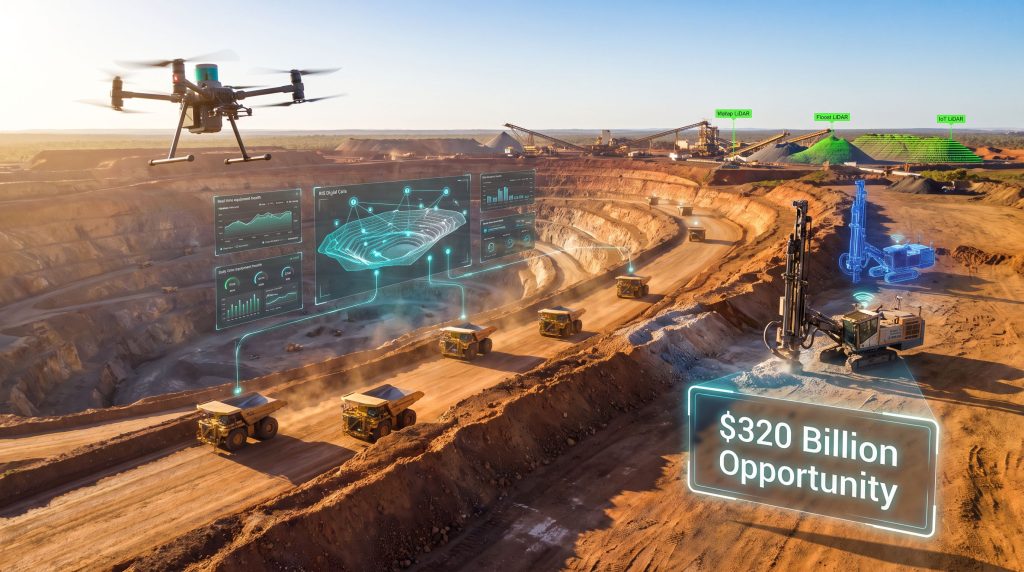
The scale of what is at stake helps frame the urgency. The World Economic Forum has projected that digitalisation across the mining sector could generate more than $320 billion in value by 2025, driven by gains in energy efficiency, workforce productivity, and safety performance. That figure is not a technology vendor's marketing claim. It reflects the aggregate economic potential identified across global mining operations when advanced technologies are applied systematically and at scale.
When big ASX news breaks, our subscribers know first
What Digital Transformation in Mining Actually Means
The phrase gets used broadly, which creates confusion. In practice, data-driven mining operations are at the heart of Mining 4.0, which refers to the end-to-end integration of technologies including artificial intelligence, the Internet of Things, automation, robotics, digital twins, blockchain, drones, and cloud computing across the entire mining value chain. The objective is not to digitise individual tasks in isolation but to connect the full lifecycle — from early-stage exploration and resource modelling through extraction, processing, logistics, and supply chain delivery — into a coherent, data-driven operational system.
What distinguishes Mining 4.0 from earlier waves of industrial automation is the convergence of information technology (IT) and operational technology (OT). Previous automation waves improved specific machines or processes. The current shift bridges the gap between enterprise data systems and the physical equipment operating underground or in open pits, creating bidirectional data flows that allow real-time decisions to be made at every level of the operation.
The Core Technology Stack Driving Mining's Digital Future
Understanding which technologies are involved, and what each one contributes, is essential for evaluating where the most significant value is being created.
| Technology | Primary Mining Application | Key Operational Benefit |
|---|---|---|
| AI and Machine Learning | Predictive maintenance, ore sorting, production scheduling | Reduces unplanned downtime and energy waste |
| IoT and Smart Sensors | Equipment health monitoring, environmental tracking | Creates data continuity across the asset lifecycle |
| Digital Twins | Virtual mine simulation, process optimisation | Improves forecasting accuracy and decision quality |
| Autonomous Systems | Driverless haulage, automated drilling and loading | Eliminates human exposure in high-hazard environments |
| Blockchain | Supply chain traceability from extraction to delivery | Reduces fraud and supports ethical sourcing verification |
| Drones (UAVs) | Terrain mapping, pit wall inspection, post-blast survey | Covers large terrain rapidly without safety exposure |
| AR and VR | Workforce training, remote operational support | Closes skill gaps and improves safety preparedness |
| Cloud and Big Data | Cross-site data collaboration, real-time analytics | Accelerates data-driven decisions at scale |
These technologies do not function in isolation. Their combined deployment creates feedback loops where sensor data informs AI models, AI outputs guide autonomous systems, and digital twins simulate the downstream consequences of operational choices before they are executed physically.
Autonomous Equipment: The Shift That Is Restructuring Shift Economics
Of all the technologies transforming modern mining, autonomous haulage systems represent the most visible and operationally disruptive change. The broader adoption of mining automation technologies means that autonomous mining equipment can operate continuously without breaks — a capability that fundamentally restructures the economics of production cycles previously constrained by human shift patterns.
These systems rely on the integration of GPS positioning, radar detection, and laser-based sensing to navigate mine haul roads, avoid obstacles, and deliver payloads with precision. Fleet management software coordinates multiple vehicles simultaneously, optimising routing and load sequencing in real time.
The operational benefits extend across three measurable dimensions:
- Fuel efficiency: Autonomous trucks follow optimised speed and routing profiles, reducing fuel consumption compared to operator-driven vehicles
- Labour cost reduction: Fewer personnel are required in hazardous operational zones, with supervisory roles shifting to remote monitoring environments
- Equipment longevity: Consistent, algorithmically controlled operation reduces the mechanical stress caused by variable human driving behaviour, extending component life and reducing maintenance frequency
Automation has also expanded beyond surface haulage. Automated drills, loaders, and underground robotic systems are now in active deployment at major operations globally. Furthermore, the broader implication is that automation does not simply replace individual workers — it enables entirely new production architectures where continuous operation is the default rather than the exception.
How AI and Machine Learning Are Transforming Operational Intelligence
Artificial intelligence is reshaping how mining companies analyse data and translate it into operational decisions. The volume and complexity of data generated by modern mining operations — spanning IoT sensors, geological surveys, satellite imagery, and equipment telemetry — exceeds what any human analytical team can process manually. AI systems process this data at scale and surface patterns that would otherwise remain invisible.
Predictive Maintenance: From Reactive to Anticipatory Asset Management
One of the highest-value AI applications in mining is predictive maintenance in mining. Rather than scheduling maintenance at fixed intervals or responding to equipment failures after they occur, AI-driven systems continuously analyse equipment performance signals to identify degradation patterns before they result in breakdowns. This capability reduces unplanned downtime, which is among the most costly operational disruptions a mine can experience.
Machine Learning Across the Full Value Chain
AI and machine learning applications extend well beyond maintenance into every stage of the mining process:
- Exploration: Machine learning models accelerate mineral discovery by identifying geological signatures in datasets that correlate with ore deposit characteristics, improving resource estimation accuracy
- Processing: AI optimises ore blending ratios, sorting parameters, and mineral recovery rates in processing plants, improving yield from the same ore volume
- Production scheduling: Dynamic scheduling algorithms adjust mine plans in real time based on equipment availability, ore grades, and market conditions
- Energy management: AI identifies inefficiencies across equipment fleets and processing circuits, reducing total energy consumption
Generative AI represents an early-stage but potentially significant extension of these capabilities. In addition, AI-powered mining efficiency tools are beginning to support decision workflow processes where AI systems assist geologists, mine planners, and engineers in evaluating complex trade-offs more rapidly.
Digital Twins: Zero-Risk Simulation for Capital-Intensive Decisions
Digital twin technology creates a living virtual replica of a physical mine that is continuously updated with real-world operational data. This virtual model allows operators to simulate changes in production schedules, equipment configurations, and environmental conditions before committing physical resources.
Digital twin platforms allow mine operators to stress-test operational decisions in a zero-risk virtual environment before implementation — a capability that fundamentally changes how capital-intensive planning decisions are made.
The practical value of digital twins spans several operational dimensions. Maintenance teams can simulate the impact of different servicing strategies on equipment availability. Mine planners can model the downstream consequences of altering blast patterns or ore feed sequences. Environmental managers can track how changes in water usage or tailings management affect site conditions over time.
The next major ASX story will hit our subscribers first
Drones, IoT, and the Infrastructure of Real-Time Mine Visibility
UAV Applications Across the Mining Lifecycle
Drones have moved well beyond experimental status in mining. Their capacity to cover vast land areas rapidly and collect high-resolution data without placing human workers at risk makes them indispensable across multiple operational functions:
- Terrain mapping and topographic surveying at the exploration stage
- Post-blast inspection of fragmented rock before crews re-enter blast zones
- Pit wall monitoring to detect unstable faces or slope movements before they become safety incidents
- LiDAR-enabled three-dimensional stockpile measurement for accurate inventory management
- Aerial environmental monitoring to track dust, water flow, and disturbed land areas
Smart Sensor Networks and the Connected Mine
IoT-enabled smart sensors embedded throughout mine infrastructure create continuous data streams covering equipment health, atmospheric conditions, structural integrity, and environmental compliance parameters. This data infrastructure enables remote monitoring capabilities that reduce the need for human presence in hazardous zones while simultaneously improving situational awareness for operational teams.
Edge computing plays a critical supporting role here. Rather than transmitting all raw sensor data to centralised cloud platforms, edge computing processes data at the point of origin, reducing latency and enabling faster automated responses to safety-critical conditions.
Blockchain and the Growing Demand for Supply Chain Transparency
The minerals supply chain has faced increasing scrutiny from regulators, downstream manufacturers, and end consumers who require verifiable evidence of responsible sourcing. According to Deloitte's digital transformation in mining research, blockchain technology addresses this challenge by creating an immutable, distributed record of every transaction and custody transfer from extraction through to delivery.
Smart contracts built on blockchain infrastructure can automate payment release upon verified quality confirmation, reducing administrative friction and counterparty risk. For commodities like cobalt, lithium, and rare earth elements where ethical sourcing verification is commercially and reputationally significant, blockchain-based traceability is transitioning from a competitive differentiator to a baseline expectation.
It is worth noting that blockchain adoption across the broader mining and metals recycling sector remains in relatively early stages and will require industry-wide coordination and standardisation before its full potential can be realised at scale.
Safety Transformation: Technology as a Risk Elimination Strategy
Digital transformation in mining is not only an economic proposition. It is reshaping the fundamental risk profile of one of the world's most hazardous industries. Key safety advances include:
- Remote and autonomous operations that physically remove workers from high-risk environments including blast zones, unstable pit walls, and underground hazard areas
- Underground 3D imaging and real-time atmospheric sensing that provide continuous visibility into conditions previously assessed only through periodic manual inspections
- Post-blast drone deployment that allows safe assessment of fragmentation and rock stability before crews re-enter
- AR and VR training environments that build workforce competency in realistic simulated scenarios without physical risk exposure
- Wearable sensors that monitor individual worker health metrics and environmental conditions, enabling early intervention before harm occurs
Furthermore, the application of AI in drilling and blasting is contributing directly to safer operational outcomes by improving precision and reducing unpredictable outcomes in high-hazard activities.
Sustainability: How Digital Tools Support Environmental Performance
The sustainability case for digital transformation is substantial and increasingly important as mining companies face tighter regulatory requirements and ESG scrutiny from investors. Operational optimisation enabled by AI and IoT directly reduces energy consumption per tonne of material produced. Dynamic scheduling and predictive maintenance reduce idle running time across equipment fleets, cutting both fuel use and emissions.
Digital tools are also supporting the expansion of urban mining and e-waste extraction, applying the same analytical frameworks used in conventional mining to the identification and recovery of valuable materials from waste streams. This capability positions digital technology as an enabler of circular economy models that reduce demand for primary resource extraction over time.
The Real Barriers: Why Most Transformation Programs Stall
The technology itself is rarely the primary obstacle. Industry experience consistently identifies two categories of barrier that undermine even well-resourced transformation programs:
The most frequently cited obstacles to mining digitalisation are not technological. Cultural resistance to change, misaligned cross-functional priorities, and the absence of a clearly defined business case consistently undermine even well-resourced transformation programs.
Beyond cultural and strategic barriers, operators face several practical constraints:
- Cybersecurity exposure: Increasing connectivity between operational systems and external networks creates attack surfaces that did not exist in isolated OT environments
- Remote location constraints: Many mine sites operate in areas with limited telecommunications infrastructure, creating real challenges for cloud-dependent and IoT-heavy deployments
- Skills gaps: The workforce capability required to deploy, maintain, and extract value from advanced digital systems is scarce in many mining regions
- Legacy system integration: Many operations run on older OT infrastructure that was not designed to interface with modern IT platforms, creating complex and expensive integration challenges
- Data governance complexity: Across multi-site operations, establishing consistent standards for data collection, ownership, access, and quality is a significant organisational undertaking
Two Strategic Paths to Digital Adoption
Mining companies approaching digital transformation face a strategic choice between two primary models, and the strongest outcomes typically draw on elements of both.
Path 1: The Digital Mine Program involves committing to end-to-end transformation at the enterprise level. This approach delivers the most comprehensive long-term value but requires substantial upfront investment, strong board-level commitment, and extended implementation timelines.
Path 2: High-Value Use Case Targeting focuses digital investment on specific, measurable opportunities where technology can demonstrate rapid ROI. Predictive maintenance, autonomous haulage, and drone-based surveying are common entry points. This approach builds internal confidence, develops digital capability, and generates early wins that justify broader investment.
The organisations achieving the strongest outcomes combine both approaches: using high-value use cases to build momentum and demonstrate value while simultaneously developing the strategic architecture needed to scale toward a unified digital operating model. As PwC's new digital agenda for mining highlights, aligning technology investment with clearly defined business priorities is central to achieving durable transformation outcomes.
A Framework for Building a Successful Digital Transformation Strategy
For operators beginning or accelerating their digital journey, a structured implementation framework reduces risk and improves the probability of sustained value delivery:
- Define the business case first by establishing clear value metrics before selecting any specific technology platform
- Audit IT and OT infrastructure to identify the gaps between information systems and operational technology environments that will need to be bridged
- Prioritise high-impact use cases by targeting areas where digital tools can deliver measurable return on investment within defined timeframes
- Invest in change management through structured programmes that build workforce buy-in and develop the digital literacy needed to sustain transformation
- Establish data governance frameworks that create consistent standards for data collection, ownership, and access across all operating sites
- Scale proven solutions by expanding successful pilots into enterprise-wide programmes built on standardised architecture
- Monitor, iterate, and optimise using continuous feedback loops to refine digital systems as operational conditions and technology capabilities evolve
Key Statistics: Digital Transformation in Mining at a Glance
| Metric | Data Point |
|---|---|
| Projected value creation from mining digitalisation | $320 billion+ by 2025 (World Economic Forum) |
| Primary value drivers | Energy savings, productivity gains, safety improvement |
| Top implementation barriers | Cultural resistance, lack of strategy, cybersecurity risk |
| Technologies with highest adoption momentum | AI, IoT, autonomous haulage systems, digital twins |
| Sustainability impact | Carbon reduction, resource efficiency, circular economy enablement |
Frequently Asked Questions: Digital Transformation in Mining
What is digital transformation in mining?
Digital transformation in mining refers to the systematic integration of advanced technologies including AI, IoT, automation, digital twins, blockchain, and cloud computing across all stages of the mining value chain to improve operational performance, safety, sustainability, and profitability.
What is Mining 4.0 and how does it differ from earlier automation?
Mining 4.0 is the current wave of digital-physical integration in mining. Unlike earlier automation, which improved isolated machines or processes, Mining 4.0 connects information systems with operational technology across the entire mine, creating real-time data ecosystems that enable intelligent, adaptive decision-making at scale.
How does AI improve safety in mining operations?
AI improves safety by enabling predictive systems that identify equipment failure risks before incidents occur, supporting autonomous operations that remove workers from hazardous environments, and processing sensor data from underground environments to detect atmospheric or structural hazards in real time.
What is an autonomous haulage system?
An autonomous haulage system is a fleet management technology that enables driverless mining trucks to operate using GPS, radar, and laser sensing. These systems improve fuel efficiency, reduce labour exposure in dangerous zones, and enable continuous production cycles that are not constrained by human shift patterns.
How do digital twins reduce operational costs?
Digital twins reduce costs by allowing mine operators to simulate operational scenarios virtually before committing physical resources. This reduces costly trial-and-error in production planning, improves maintenance scheduling accuracy, and helps identify inefficiencies that would otherwise only be detected after they have already caused financial or operational damage.
What cybersecurity risks do digitally connected mines face?
Connected mines face risks including ransomware attacks targeting OT systems, unauthorised access to operational control networks, and data exfiltration from geological and financial databases. The convergence of IT and OT systems expands the attack surface significantly compared to traditional isolated operational environments.
How does blockchain support ethical mineral supply chains?
Blockchain creates an immutable record of every custody transfer and transaction from extraction to end-user delivery. This transparency allows downstream buyers, regulators, and consumers to verify responsible sourcing claims independently, supporting compliance with regulations and ESG commitments around conflict minerals and environmental standards.
Is digital transformation accessible to smaller mining operators?
Smaller and mid-tier operators face greater resource constraints but can access digital transformation through targeted use case deployment rather than enterprise-wide programmes. Cloud-based platforms and technology-as-a-service models are reducing the capital barriers to entry, making tools like predictive maintenance and drone surveying increasingly accessible beyond the largest global operators.
The Road Ahead: Intelligence, Integration, and the Critical Minerals Imperative
The trajectory for digital transformation in mining points toward progressively deeper integration rather than incremental feature additions. The convergence of generative AI with advanced robotics and real-time sensor ecosystems is creating the technical foundation for fully intelligent mine systems where human operators shift from direct execution to strategic oversight.
The accelerating global transition to clean energy infrastructure is adding a significant demand dimension to this picture. Critical minerals including lithium, cobalt, nickel, and rare earth elements are central to battery technology, electric motors, and grid storage. Meeting the projected demand growth for these materials will require mining operations to produce more volume while simultaneously improving environmental performance metrics.
The industry is moving toward a future where the mine site is as much a data-generating asset as a physical extraction asset. Consequently, operators who position digital capability as a core strategic investment rather than a technology experiment are building the foundations for competitive advantage in a sector where the margin between efficient and inefficient operations increasingly determines financial outcomes.
This article contains forward-looking projections and industry forecasts from third-party sources including the World Economic Forum. These projections are subject to change based on technology adoption rates, market conditions, and regulatory developments. Nothing in this article constitutes financial or investment advice.
Want to Identify the Next Major Mineral Discovery Before the Broader Market Does?
As digital transformation reshapes how minerals are found and extracted, the window to act on significant ASX discoveries is narrowing — Discovery Alert's proprietary Discovery IQ model delivers real-time alerts the moment a major mineral discovery is announced, turning complex data into actionable insights for investors at every level. Explore historic examples of exceptional discovery returns or start your 14-day free trial today to position yourself ahead of the market.