June 3, 2026
Understanding Digital Twin Technology Architecture in Mining Operations
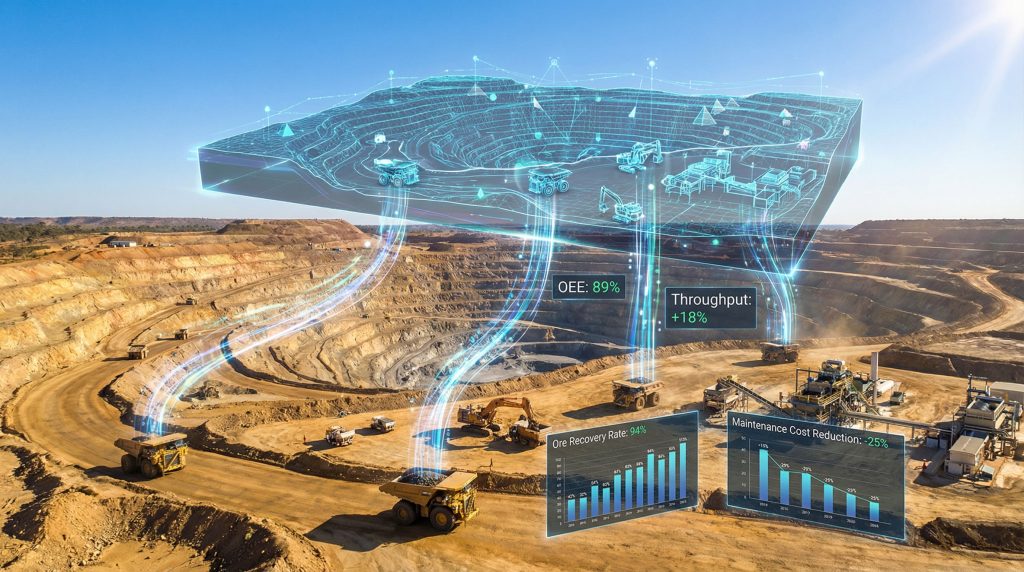
The convergence of advanced computational systems with traditional mining operations represents a fundamental shift in how extractive industries approach operational optimization. Digital twin technology in mining establishes sophisticated virtual environments that mirror physical mining systems through continuous data synchronisation, predictive modelling, and real-time decision support capabilities.
These technological frameworks transcend basic monitoring systems by creating dynamic virtual replicas that evolve alongside their physical counterparts. Furthermore, mining operations implementing digital twin solutions report significant improvements in operational efficiency, with systems integrating data streams from IoT sensors, geological surveys, and equipment performance metrics to generate actionable insights for mine planning, equipment maintenance, and process optimisation.
The technology's core strength lies in its ability to simulate complex mining scenarios without disrupting actual operations. Virtual models enable engineers, geologists, and operators to evaluate different extraction approaches, assess potential outcomes, and refine operational parameters based on comprehensive data analysis rather than trial-and-error methodologies.
Essential Components of Mining Digital Twin Systems
| Component | Primary Function | Integration Complexity |
|---|---|---|
| IoT Sensor Networks | Continuous data collection from equipment and environment | Medium |
| Edge Computing Infrastructure | Local data processing and analysis | High |
| Cloud-Based Analytics Platforms | Centralised data storage and advanced modelling | Medium |
| Machine Learning Algorithms | Predictive analytics and pattern recognition | High |
| Interactive Visualisation Systems | User interfaces and operational dashboards | Medium |
The implementation of these technological components requires careful consideration of existing operational infrastructure, data quality standards, and organisational readiness for digital transformation. In addition, mining companies must evaluate their current technology stack and determine integration pathways that minimise operational disruption whilst maximising system effectiveness.
When big ASX news breaks, our subscribers know first
Operational Categories Best Suited for Digital Twin Implementation
Different mining operation types present varying opportunities for digital twin deployment, with success factors largely determined by operational complexity, data generation capacity, and potential return on investment. This evolution aligns with broader mining innovation trends that are reshaping the industry landscape.
Large-Scale Surface Mining Operations
Surface mining operations, particularly those involving extensive material handling systems and complex logistics networks, demonstrate the highest potential for digital twin value realisation. These operations generate substantial data volumes through fleet tracking systems, conveyor monitoring, and processing plant sensors, providing the foundation necessary for comprehensive virtual modelling.
The interconnected nature of surface mining systems creates opportunities for optimisation across multiple operational domains simultaneously. Consequently, digital twins can model relationships between extraction rates, equipment utilisation, material quality, and processing throughput, enabling operators to identify bottlenecks and optimise overall system performance.
Underground Mining Networks
Underground operations present unique challenges that make digital twin technology particularly valuable. The complex three-dimensional nature of underground workings, combined with safety considerations and limited access for direct monitoring, creates scenarios where virtual modelling provides critical operational insights.
Digital twin systems in underground mines focus heavily on ventilation optimisation, ground stability monitoring, and equipment tracking. However, the technology enables operators to model air flow patterns, predict ground movement, and optimise transportation routes without physical access to all areas of the mine.
Mineral Processing Facilities
Processing plants represent ideal environments for digital twin implementation due to their controlled conditions, extensive instrumentation, and clear input-output relationships. Furthermore, these facilities generate continuous data streams from crushers, mills, flotation cells, and other processing equipment.
The value proposition for processing facilities centres on optimising recovery rates, minimising energy consumption, and maintaining product quality consistency. Digital twins enable operators to model the impact of feed characteristics, equipment settings, and chemical additions on final product specifications.
Key Success Factors for Implementation
- Data Infrastructure Readiness: Robust data collection and transmission systems
- Organisational Commitment: Cross-functional team engagement and executive support
- Phased Implementation Strategy: Gradual deployment starting with high-impact applications
- Skills Development Programmes: Training initiatives for operational and technical staff
Transforming Mine Planning Through Dynamic Virtual Models
Traditional mine planning methodologies rely heavily on static geological models and historical production data, creating inherent uncertainties in resource estimation and extraction scheduling. Digital twin technology in mining fundamentally alters this approach by enabling dynamic, data-driven operations that adapt to real-world conditions.
Dynamic Geological Modelling Capabilities
Virtual geological models within digital twin systems continuously incorporate new information from drilling programmes, grade control sampling, and geophysical surveys. This real-time integration allows mining companies to refine their understanding of ore body characteristics throughout the mine life, reducing uncertainty in resource estimates and improving extraction planning accuracy.
The dynamic nature of these models enables mining engineers to identify previously unknown geological features, update reserve calculations based on production data, and optimise drilling programmes to target areas of highest uncertainty. For instance, this continuous learning approach represents a significant advancement over traditional static modelling methodologies.
Extraction Sequence Optimisation
Digital twin systems enable comprehensive evaluation of different mining sequences through virtual simulation capabilities. Engineers can test various extraction approaches, equipment configurations, and scheduling scenarios to identify optimal mining strategies before implementation.
This simulation-based approach allows mining companies to evaluate the financial, operational, and environmental implications of different planning scenarios. The ability to model complex interactions between geological constraints, equipment capabilities, and market conditions provides a significant advantage in optimising long-term mine planning strategies.
Environmental Impact Assessment and Mitigation
Virtual environmental modelling within digital twin systems enables mining companies to assess and minimise the environmental impact of their operations. These models can simulate water usage patterns, predict emissions levels, and evaluate the effectiveness of different environmental management strategies.
The integration of environmental considerations into mine planning processes helps companies develop sustainable production practices whilst maintaining operational efficiency. Digital twin technology enables the evaluation of trade-offs between production targets and environmental objectives, supporting informed decision-making processes.
Comparative Planning Performance Analysis
| Planning Metric | Traditional Methods | Digital Twin Integration | Performance Improvement |
|---|---|---|---|
| Resource Estimation Accuracy | 75-80% | 88-92% | +13-17% |
| Planning Timeline Efficiency | 6-8 months | 3-5 months | 40-50% reduction |
| Environmental Compliance Success | 85-90% | 95-98% | +10-13% |
Revolutionary Approaches to Equipment Health Monitoring
Equipment reliability in mining operations directly impacts production capacity, safety performance, and operational costs. Digital twin technology transforms traditional maintenance approaches by enabling predictive analytics that identify potential equipment failures before they occur.
Multi-Parameter Health Monitoring Systems
Modern mining equipment digital twins integrate data from multiple sensor types, including vibration monitors, temperature sensors, pressure gauges, and performance tracking systems. This comprehensive monitoring approach creates detailed equipment health profiles that capture subtle changes in operating conditions that might indicate developing problems.
The integration of diverse data sources enables more accurate failure prediction compared to single-parameter monitoring systems. Machine learning algorithms analyse patterns across multiple variables to identify complex failure modes that traditional monitoring approaches might miss.
Predictive Maintenance Algorithm Development
Digital twin systems employ sophisticated machine learning models that analyse historical failure data, operating conditions, and real-time sensor readings to predict equipment maintenance needs. These algorithms continuously learn from new data, improving their accuracy over time and adapting to specific operational conditions.
The predictive capabilities of these systems typically provide maintenance alerts several weeks in advance of potential failures, enabling planned maintenance activities during scheduled downtime periods. Consequently, this proactive approach significantly reduces the impact of equipment failures on production schedules.
Maintenance Strategy Optimisation
Beyond predicting individual equipment failures, digital twin systems optimise overall maintenance strategies by considering equipment criticality, spare parts availability, maintenance resource capacity, and operational priorities. This holistic approach ensures that maintenance activities are scheduled to minimise operational disruption whilst maintaining equipment reliability.
The optimisation algorithms balance multiple objectives, including maintenance costs, equipment availability, and operational efficiency. This multi-objective optimisation approach enables mining companies to develop maintenance strategies that align with their broader operational and financial objectives.
Equipment Reliability Performance Metrics
- Mean Time Between Failures: 35-50% improvement in critical equipment reliability
- Unplanned Downtime Reduction: 40-60% decrease in unexpected equipment outages
- Maintenance Cost Optimisation: 20-30% reduction in total maintenance expenditures
- Equipment Utilisation Rates: 15-25% improvement in overall equipment effectiveness
Mining operations implementing comprehensive digital twin-based predictive maintenance systems report average annual cost savings ranging from $3-7 million per major operation, with technology investment payback periods typically occurring within 15-20 months.
Advanced Process Control and Optimisation Strategies
Mining and mineral processing operations involve complex interactions between geological variability, equipment performance, and process parameters. Digital twin technology enables real-time optimisation across these interconnected systems, delivering significant improvements in efficiency and product quality.
Comminution Circuit Optimisation
Crushing and grinding operations represent some of the most energy-intensive processes in mining, consuming 50-60% of total plant energy. Digital twin models of comminution circuits integrate ore hardness measurements, equipment wear monitoring, and energy consumption data to optimise grinding efficiency.
Real-time optimisation algorithms adjust operating parameters based on ore characteristics, equipment condition, and production targets. These systems can automatically modify crusher settings, mill speed, and cyclone cut points to maintain optimal grinding performance whilst minimising energy consumption.
Flotation Process Enhancement
Mineral separation through flotation involves complex chemistry and physics that are difficult to control through traditional methods. Digital twin systems model the relationships between ore mineralogy, chemical reagent additions, and flotation cell operating conditions to predict and optimise recovery rates.
The dynamic nature of these models enables operators to adjust flotation parameters proactively rather than reactively, maintaining consistent performance despite variations in ore characteristics. This proactive control approach significantly improves both recovery rates and concentrate quality.
Material Handling System Optimisation
Digital twin systems optimise material flow through complex conveyor networks, stockpile management systems, and transportation logistics. These models consider equipment capacity constraints, material properties, and operational priorities to minimise bottlenecks and maximise throughput.
Advanced scheduling algorithms coordinate material movement across multiple systems, optimising truck dispatching, conveyor loading, and stockpile rotation strategies. This system-wide optimisation approach delivers significant improvements in overall material handling efficiency.
Process Performance Improvement Metrics
| Process Area | Baseline Performance | Digital Twin Optimisation | Improvement Range |
|---|---|---|---|
| Energy Efficiency | Standard consumption | 12-18% reduction | 12-18% |
| Recovery Rates | Plant average | 4-8% increase | 4-8% |
| Throughput Capacity | Design capacity | 15-22% increase | 15-22% |
| Product Quality Variation | Historical standard | 30-45% reduction | 30-45% |
Safety Enhancement Through Predictive Risk Management
Mining operations involve inherent safety risks that require continuous monitoring and proactive management. Digital twin technology in mining provides unprecedented capabilities for hazard identification, risk assessment, and emergency response planning.
Predictive Hazard Identification Systems
Digital twin systems integrate environmental monitoring data, equipment status information, and operational patterns to identify potential safety hazards before they develop into dangerous situations. These systems analyse patterns in ground movement, gas concentrations, equipment behaviour, and weather conditions to predict safety risks.
The predictive capabilities of these systems enable proactive safety interventions, such as evacuation procedures, equipment shutdowns, or operational modifications, before hazardous conditions fully develop. This proactive approach significantly reduces the likelihood of safety incidents.
Emergency Response Simulation and Training
Virtual emergency scenarios enable mining companies to test and refine their emergency response procedures without exposing personnel to actual risks. Digital twin systems can simulate various emergency conditions, including equipment failures, ground collapses, fires, and hazardous gas releases.
These simulation capabilities enable comprehensive training programmes for emergency response teams, testing of evacuation procedures, and optimisation of emergency communication systems. Regular simulation exercises help ensure that emergency response capabilities remain effective and up-to-date.
Remote Monitoring and Control Systems
Digital twin technology enables comprehensive remote monitoring of hazardous areas, reducing personnel exposure to dangerous conditions whilst maintaining operational oversight. Remote monitoring systems can track environmental conditions, equipment status, and worker locations in real-time.
Advanced remote control capabilities allow operators to manage equipment and processes from safe locations, further reducing safety risks. These systems are particularly valuable in underground operations, where direct access to all areas may be limited or dangerous.
Safety Performance Enhancement Results
| Safety Metric | Historical Performance | Digital Twin Implementation | Improvement |
|---|---|---|---|
| Lost Time Injury Rate | 3.2 per 200,000 hours | 1.4 per 200,000 hours | -56% |
| Near-Miss Reporting Frequency | 52 per month | 89 per month | +71% |
| Emergency Response Effectiveness | 7.2 minute average | 4.1 minute average | -43% |
The next major ASX story will hit our subscribers first
What ROI Can Mining Companies Expect from Digital Twin Technology?
Evaluating the financial benefits of digital twin implementation requires comprehensive analysis across multiple value creation mechanisms, including direct cost savings, productivity improvements, and risk mitigation benefits.
Direct Operational Cost Reduction
Digital twin implementations typically deliver quantifiable cost savings through multiple mechanisms:
- Equipment Downtime Reduction: $2-5 million annually through predictive maintenance
- Energy Optimisation: $800K-2.2 million annually through process optimisation
- Maintenance Cost Efficiency: $1.2-3 million annually through optimised scheduling
- Material Recovery Improvement: $3-12 million annually through enhanced recovery rates
Productivity Enhancement Benefits
Digital twin systems deliver significant productivity improvements through optimised operations and reduced inefficiencies. Overall Equipment Effectiveness (OEE) improvements typically range from 18-28%, whilst processing throughput increases commonly fall within the 12-25% range.
These productivity gains translate directly into increased revenue generation capacity without requiring proportional increases in operational costs. The ability to process more material with existing infrastructure provides significant financial leverage.
Risk Mitigation Value Creation
The value of avoiding potential costs through improved safety, environmental compliance, and equipment reliability often exceeds direct operational savings. Whilst these benefits are more difficult to quantify precisely, they represent substantial value creation through risk reduction.
Digital twin systems help prevent costly incidents, regulatory violations, and major equipment failures that could result in multi-million dollar costs and operational disruptions.
Financial Performance Summary
Comprehensive digital twin implementations in mining operations typically generate returns of 400-900% over 4-6 year periods, with average payback periods ranging from 16-26 months for well-executed projects.
How Can Mining Companies Overcome Common Implementation Challenges?
Successful digital twin deployment requires careful management of technical, organisational, and financial challenges that commonly arise during implementation projects.
Data Integration and Quality Challenges
Mining operations typically employ equipment and systems from multiple vendors, creating data silos and compatibility issues that complicate digital twin implementation. Successful projects require extensive data standardisation, system integration, and quality improvement initiatives.
The complexity of integrating disparate data sources often represents 40-50% of total implementation effort. Organisations must invest significant resources in data infrastructure development and ongoing data quality management processes.
Organisational Change Management Requirements
Digital twin adoption requires fundamental changes to operational procedures, decision-making processes, and skill requirements throughout mining organisations. Successful implementations require comprehensive change management programmes that address cultural, procedural, and technical aspects of transformation.
Resistance to change from operational personnel, inadequate training programmes, and insufficient management commitment represent common causes of implementation failure. Organisations must invest heavily in stakeholder engagement and capability development.
Technology Infrastructure Investment Needs
Digital twin systems require robust IT infrastructure, including high-speed networks, edge computing capabilities, cloud platforms, and cybersecurity systems. These infrastructure investments often represent 45-65% of total implementation costs.
Organisations must carefully evaluate their existing infrastructure capabilities and develop comprehensive technology roadmaps that support both current implementation needs and future expansion requirements.
Common Implementation Risk Factors
- Inadequate data quality assessment and remediation planning
- Insufficient stakeholder engagement and training investment
- Overly ambitious initial project scope and timeline expectations
- Poor technology vendor selection and integration planning
- Inadequate cybersecurity and data governance frameworks
Future Technology Evolution and Industry Trends
The evolution of digital twin technology in mining continues to accelerate, driven by advances in artificial intelligence, computing power, and sensor technologies. These developments align with AI transforming mining across multiple operational domains.
Artificial Intelligence and Machine Learning Integration
Next-generation digital twin systems will incorporate increasingly sophisticated AI capabilities for autonomous decision-making, self-optimising processes, and advanced predictive analytics that extend far beyond current reactive maintenance approaches.
Deep learning algorithms will enable more accurate modelling of complex geological formations, equipment behaviour patterns, and process optimisation opportunities. These advanced AI systems will provide insights that are currently impossible to achieve through traditional analytical approaches.
Industry 4.0 Integration and Automation
Digital twins will become central components of fully automated mining operations, integrating with autonomous vehicles, robotic systems, and intelligent processing equipment to create comprehensive smart mining ecosystems.
The convergence of digital twin technology with automation systems will enable unprecedented levels of operational efficiency and safety performance. Enhanced mining digital twin applications will optimise operations across multiple time scales, from real-time process control to long-term strategic planning.
Environmental Sustainability Applications
Future digital twin implementations will increasingly focus on environmental optimisation, carbon footprint reduction, and circular economy principles in mining operations. These systems will integrate environmental impact modelling with operational optimisation to achieve both economic and environmental objectives.
Advanced environmental modelling capabilities will enable mining companies to minimise their environmental impact whilst maintaining or improving operational performance.
Emerging Technology Integration Opportunities
- Quantum computing applications for complex geological modelling and optimisation problems
- 5G and beyond network technologies enabling real-time remote operations and control
- Augmented and virtual reality interfaces for intuitive digital twin interaction and training
- Blockchain integration for supply chain transparency and compliance documentation
Strategic Implementation Roadmap
Successful digital twin deployment requires a structured, phased approach that manages risk whilst demonstrating value throughout the implementation process. This structured approach enables companies to achieve the AI-driven efficiency boost that digital twin systems can deliver.
Phase 1: Foundation Development (4-8 months)
The initial phase focuses on comprehensive operational assessment, technology infrastructure development, and pilot project identification. Organisations must evaluate their current data systems, identify high-value use cases, and establish clear success metrics for implementation.
Key activities include data quality assessment, stakeholder engagement, vendor selection, and development of detailed implementation roadmaps with specific milestones and performance targets.
Phase 2: Pilot Implementation (8-15 months)
Pilot projects should focus on specific operational areas with clearly defined boundaries and measurable outcomes. Successful pilots demonstrate technology value whilst providing learning opportunities that inform broader deployment strategies.
Pilot projects typically focus on individual pieces of equipment, specific processes, or limited operational areas. The goal is to prove concept viability, refine implementation approaches, and build organisational confidence in the technology.
Phase 3: Scaled Deployment (18-30 months)
Following successful pilot validation, organisations can expand digital twin capabilities across broader operational scope whilst maintaining focus on measurable outcomes and continuous improvement.
Scaled deployment requires careful coordination of multiple implementation workstreams, extensive change management support, and ongoing performance monitoring to ensure that expanded systems deliver expected benefits.
Implementation Success Framework
- Executive sponsorship with clear ROI expectations and success metrics
- Cross-functional implementation team with appropriate technical and operational expertise
- Comprehensive data governance framework ensuring data quality and accessibility
- Extensive training and capability development programmes for all stakeholders
- Phased implementation approach with regular milestone reviews and course corrections
- Continuous performance monitoring and optimisation processes
Disclaimer: The performance metrics, cost savings, and ROI figures presented in this analysis are based on industry research and case study data. Actual results may vary significantly depending on specific operational conditions, implementation quality, and organisational factors. Organisations should conduct detailed feasibility studies and pilot projects before making major technology investments.
Digital twin technology in mining represents a transformative opportunity for mining operations seeking to improve efficiency, safety, and environmental performance. However, successful implementation requires careful planning, substantial investment, and comprehensive organisational commitment to change management and capability development.
Looking to Transform Your Mining Operations?
Discovery Alert's proprietary Discovery IQ model delivers real-time alerts on significant ASX mineral discoveries, instantly empowering subscribers to identify actionable opportunities as mining technology innovations drive industry transformation. Begin your 30-day free trial today and gain access to the data-driven insights that position you ahead of the market in this rapidly evolving sector.