June 14, 2026
Complex chemical interactions within petroleum infrastructure systems often reveal unexpected pathways for energy transition. While conventional wisdom focuses on wholesale replacement of existing systems, emerging molecular engineering approaches suggest that strategic molecular compatibility could offer more gradual transformation routes. The infrastructure compatibility principle, where new fuel molecules can integrate with existing distribution networks without requiring complete system overhaul, represents a paradigm shift from traditional energy transition models that typically demand extensive capital redeployment. Furthermore, the development of critical minerals transition technologies continues reshaping global energy markets, creating new opportunities for alternative fuel adoption.
Understanding Dimethyl Ether's Molecular Framework and Alternative Fuel Positioning
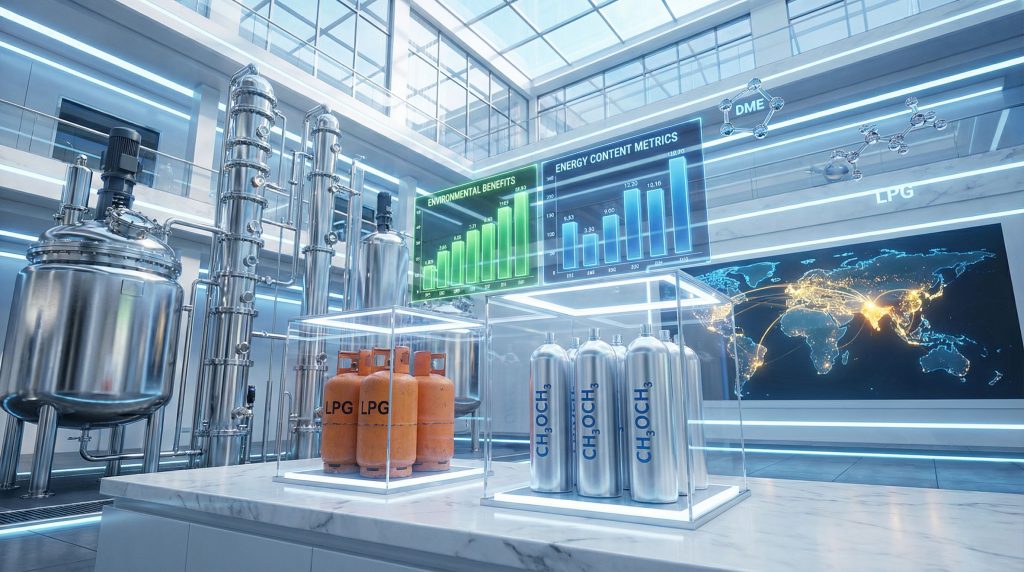
Dimethyl ether as LPG alternative represents a significant advancement in synthetic fuel chemistry, offering a molecular structure that closely mimics conventional liquefied petroleum gas while providing enhanced environmental characteristics. The compound, with its CH₃OCH₃ molecular arrangement, demonstrates remarkable physical properties that align closely with existing LPG infrastructure requirements. However, global energy markets continue experiencing volatility, with recent oil price crash scenarios highlighting the importance of diversified energy sources.
Chemical Architecture and Physical Properties
The molecular design of dimethyl ether creates unique advantages in pressure vessel applications. Unlike conventional LPG components, DME operates at lower liquefaction pressures while maintaining similar energy density characteristics. This pressure differential creates opportunities for existing cylinder infrastructure to accommodate the alternative fuel without requiring complete replacement of storage systems.
Key molecular characteristics include:
• Lower operating pressures compared to propane-based systems
• Similar density profiles enabling existing metering equipment compatibility
• Oxygen content within the molecular structure enhancing combustion efficiency
• Temperature stability ranges compatible with existing appliance designs
The synthetic nature of DME production enables multiple feedstock pathways, creating supply chain flexibility that conventional petroleum-based LPG cannot match. Production methodologies span from renewable biomass processing to carbon capture utilization, offering diverse economic models for different regional contexts.
Production Pathway Diversification
According to the Economic Times Bureau (March 14, 2026), DME functions as a synthetic fuel produced from methanol, which can be derived from dry biomass, coal or captured carbon dioxide. This production flexibility creates strategic advantages for energy security planning, as it reduces dependence on specific feedstock sources or geographic supply concentrations.
Primary production routes encompass:
- Methanol-to-DME conversion through catalytic dehydration processes
- Biomass gasification followed by methanol synthesis and DME production
- Municipal waste processing systems integrated with DME production facilities
- Carbon capture and utilization systems converting CO₂ directly to DME
- Coal gasification pathways in regions with abundant coal resources
The modularity of DME production systems enables distributed manufacturing models, potentially reducing transportation costs and supply chain vulnerabilities compared to centralized petroleum refining operations. In addition, market dynamics continue evolving with recent OPEC production impact decisions affecting global energy strategies.
When big ASX news breaks, our subscribers know first
Performance Characteristics and Combustion Analysis
Energy density considerations reveal both advantages and challenges when comparing dimethyl ether as LPG alternative in real-world applications. The combustion characteristics of DME demonstrate unique properties that affect both performance metrics and environmental impact profiles across different usage scenarios.
Energy Content and Flow Rate Implications
The volumetric energy density of DME creates specific performance considerations for end-users transitioning from conventional LPG systems. While mass-based energy content differs from LPG, the practical implications vary significantly depending on application type and usage patterns.
Performance comparison framework:
| Metric | Impact on User Experience |
|---|---|
| Combustion Temperature | Similar flame temperatures to conventional LPG |
| Flow Rate Requirements | Modified flow patterns requiring appliance calibration |
| Storage Efficiency | Comparable storage density in pressure vessel systems |
| Seasonal Performance | Enhanced cold-weather operation characteristics |
The oxygen content within DME molecules creates cleaner combustion profiles, reducing particulate formation and potentially lowering maintenance requirements for appliance systems. This characteristic becomes particularly significant in indoor air quality considerations for residential cooking applications.
Environmental Performance Advantages
Emission reduction potential represents a primary driver for DME adoption in air quality management strategies. The complete combustion characteristics enabled by the oxygen-containing molecular structure create measurable improvements in local air quality metrics.
Environmental benefits include:
• Elimination of particulate matter formation during combustion processes
• Reduced nitrogen oxide production compared to conventional hydrocarbon fuels
• Lower carbon monoxide emissions in sub-optimal combustion conditions
• Enhanced combustion efficiency reducing overall fuel consumption rates
The lifecycle carbon intensity of DME varies significantly based on production pathway selection, creating opportunities for carbon-negative fuel systems when integrated with renewable feedstock sources and carbon capture technologies. Moreover, research from ScienceDirect demonstrates the technical feasibility of DME as a sustainable fuel alternative.
Infrastructure Integration and Compatibility Assessment
The compatibility of dimethyl ether as LPG alternative with existing distribution infrastructure represents a critical factor in adoption feasibility. Infrastructure compatibility eliminates the primary barrier to alternative fuel adoption, namely the requirement for complete system replacement during energy transition periods. Furthermore, countries face ongoing energy exports challenges that make domestic alternative fuel development increasingly attractive.
System Compatibility Framework
Research from CSIR-National Chemical Laboratory indicates that infrastructure compatibility extends across multiple system components. As reported by the Economic Times Bureau, scientists determined that substituting LPG with DME would not require changes to existing infrastructure, including cylinders, gaskets, regulators, hoses or burners.
Compatible infrastructure elements:
- Storage cylinders: Existing pressure vessel designs accommodate DME operating pressures
- Distribution networks: Current pipeline and delivery systems function with DME
- Regulator systems: Existing pressure reduction equipment operates effectively
- Appliance connections: Standard fittings and hose systems maintain compatibility
- Safety systems: Current leak detection and emergency protocols remain effective
The Bureau of Indian Standards has established standards for blending DME with LPG for domestic, commercial and industrial use, providing regulatory framework for gradual implementation strategies.
Blending Strategies and Implementation Approaches
The flexibility of DME-LPG blending creates multiple implementation pathways, enabling gradual transition strategies rather than immediate wholesale replacement. This approach reduces economic disruption while maintaining system reliability throughout transition periods.
Implementation approaches include:
• Low-ratio blending: Initial introduction at minimal percentage ratios
• Progressive concentration: Gradual increase in DME content over time
• Dedicated systems: Pure DME applications with specifically designed equipment
• Hybrid infrastructure: Dual-fuel systems capable of handling various blend ratios
The Economic Times Bureau notes that DME can also be used independently with stoves specifically designed for it, providing flexibility for both retrofit and new installation scenarios.
Global Development Landscape and Regional Initiatives
International development of dimethyl ether as LPG alternative reveals varying approaches based on regional energy security priorities and feedstock availability. Each geographic region demonstrates unique implementation strategies reflecting local economic conditions and policy frameworks. Consequently, strategic partnerships like the energy fuels strategy initiatives continue emerging to address global energy transition challenges.
India's Strategic Development Program
The CSIR-National Chemical Laboratory pilot plant initiative represents India's primary effort to establish domestic DME production capabilities. Located in Pune, this central government facility demonstrates the scale-up potential for indigenous alternative fuel production.
According to the Economic Times Bureau (March 14, 2026), CSIR-NCL is looking to scale up its recently set up pilot plant for dimethyl ether, which scientists say could serve as an indigenous alternative to LPG amid supply disruptions. This positioning reflects broader energy security concerns as LPG has experienced sharp price escalation following recent disruptions in global supply chains.
India's development priorities:
- Energy independence: Reducing reliance on imported LPG supplies
- Price stability: Creating domestic production to buffer against global price volatility
- Rural development: Utilizing agricultural waste streams for DME production
- Employment creation: Establishing distributed production facilities
- Technology development: Building indigenous technical capabilities
Director Ashish Lele of NCL emphasized that substituting LPG with DME does not require any change in the existing infrastructure such as cylinders, gaskets, regulators, hoses or burners, highlighting the practical advantages of the transition strategy.
Regional Production Models
Different geographic regions demonstrate varying approaches to DME development based on local resource availability and economic priorities. These diverse models provide insights into optimal development strategies for different contexts.
Regional development characteristics:
| Region | Primary Focus | Key Advantages |
|---|---|---|
| Asia-Pacific | Supply security | Large domestic markets, policy support |
| Europe | Carbon reduction | Advanced renewable integration capabilities |
| Middle East | Export potential | Abundant energy resources for production |
| North America | Technology development | Advanced research infrastructure |
The diversity of regional approaches creates opportunities for technology transfer and best practice sharing across different economic and regulatory environments.
Economic Framework and Market Dynamics
The economic implications of adopting dimethyl ether as LPG alternative extend beyond simple fuel cost comparisons to encompass broader supply chain transformation and energy security benefits. Market dynamics reveal complex interactions between production costs, infrastructure investments, and long-term price stability considerations.
Production Economics and Cost Structure
DME production economics vary significantly based on feedstock selection and production scale. The synthetic nature of DME enables cost optimization through feedstock flexibility, creating competitive advantages in volatile petroleum markets.
Cost structure considerations:
• Feedstock flexibility: Multiple input sources reduce supply chain risks
• Production scale: Modular plant designs enable incremental capacity expansion
• Distribution efficiency: Compatibility with existing infrastructure reduces delivery costs
• Price stability: Domestic production reduces exposure to global market volatility
The capital expenditure requirements for DME facilities demonstrate favorable economics compared to equivalent petroleum refining capacity, particularly when utilizing renewable feedstock sources with available government incentives.
Market Disruption and Supply Chain Benefits
The introduction of DME creates fundamental changes in energy supply chain structures, shifting from import-dependent models to potentially domestically-controlled production systems. This transformation affects multiple economic sectors beyond direct fuel costs.
Economic impact areas:
- Import substitution: Reduced foreign exchange expenditure on LPG imports
- Employment generation: Local manufacturing and maintenance job creation
- Agricultural integration: Value-added processing for agricultural waste streams
- Technology sector development: Indigenous equipment manufacturing capabilities
- Regional development: Distributed production supporting rural economies
The Economic Times Bureau reports that LPG has seen sharp price escalation following recent disruptions in global supply chains, highlighting the economic vulnerability that domestic DME production could address.
Safety Profile and Risk Assessment
Safety considerations for dimethyl ether as LPG alternative require comprehensive analysis of handling, storage, and emergency response protocols. The safety profile of DME demonstrates both similarities and differences compared to conventional LPG systems, affecting training requirements and operational procedures.
Comparative Safety Characteristics
DME safety properties align closely with existing LPG safety protocols while offering some enhanced characteristics in specific scenarios. The molecular structure of DME creates predictable safety behaviors that integrate well with established safety management systems.
Safety profile elements:
• Flammability characteristics: Similar ignition properties to conventional LPG
• Leak behavior: Comparable dispersion patterns in outdoor environments
• Storage safety: Compatible with existing pressure vessel safety standards
• Emergency response: Existing LPG emergency protocols remain applicable
• Detection systems: Current leak detection equipment functions effectively
The infrastructure compatibility noted by CSIR-NCL scientists extends to safety systems, ensuring that existing safety investments remain valuable throughout the transition process.
Regulatory Framework and Standards Development
The regulatory environment for DME continues evolving as adoption expands globally. Standards development focuses on ensuring safety while enabling innovation in application areas and blending strategies.
Regulatory development areas:
- Blending specifications: Safe mixture ratios and quality control parameters
- Equipment certification: Appliance testing and approval processes for DME compatibility
- Transportation regulations: Safe handling protocols for distribution systems
- Installation standards: Professional training and certification requirements
- Consumer protection: Information disclosure and safety education programs
The Bureau of Indian Standards establishment of DME-LPG blending standards provides a framework for safe implementation while enabling market development.
The next major ASX story will hit our subscribers first
Implementation Challenges and Strategic Solutions
The transition to dimethyl ether as LPG alternative faces both technical and market-based challenges that require systematic approaches for successful implementation. Understanding these challenges enables development of strategic solutions that facilitate smooth adoption processes.
Technical Implementation Hurdles
Despite infrastructure compatibility advantages, specific technical considerations require attention during implementation phases. These challenges affect both producers and end-users throughout the adoption process.
Primary technical challenges:
• Quality assurance: Maintaining consistent fuel quality across different production facilities
• Seasonal performance: Optimizing performance across varying climatic conditions
• Equipment calibration: Fine-tuning appliances for optimal DME combustion
• Monitoring systems: Developing quality control protocols for blended fuels
• Maintenance procedures: Training technicians on DME-specific service requirements
The Economic Times Bureau notes that DME has properties similar to LPG and can be blended with liquefied petroleum gas over a wide range, providing flexibility in addressing these technical considerations through gradual implementation strategies.
Market Acceptance and Consumer Education
Consumer acceptance represents a critical factor in successful DME implementation. Education strategies must address performance expectations while building confidence in safety and reliability characteristics.
Consumer education priorities:
- Performance equivalence: Demonstrating cooking and heating performance parity
- Safety assurance: Communicating safety characteristics and proper handling
- Economic benefits: Explaining cost advantages and price stability potential
- Environmental advantages: Highlighting air quality and emissions improvements
- Transition support: Providing technical assistance during initial adoption periods
The compatibility with existing infrastructure, as confirmed by CSIR-NCL research, simplifies consumer education by eliminating concerns about equipment replacement costs and technical complexity.
Future Development Pathways and Innovation Opportunities
The evolution of dimethyl ether as LPG alternative continues advancing through technological innovation and market development initiatives. Future pathways encompass both production technology improvements and application area expansion beyond traditional LPG uses.
Technology Advancement Roadmap
Research and development priorities focus on enhancing production efficiency while expanding application possibilities. Technology advancement creates opportunities for improved economic competitiveness and broader market adoption.
Innovation focus areas:
• Production efficiency: Advanced catalytic processes reducing production costs
• Renewable integration: Enhanced biomass and waste processing technologies
• Carbon utilization: Direct CO₂ conversion technologies for carbon-negative production
• Application development: New uses beyond traditional LPG replacement markets
• Quality enhancement: Improved purity and consistency in production processes
The pilot plant scale-up initiative at CSIR-NCL represents practical progress toward commercial implementation, providing real-world data for further optimization efforts.
Market Evolution and Investment Landscape
Investment opportunities in DME development span multiple sectors, from production facilities to supporting infrastructure and technology development. Market evolution creates value opportunities across the entire supply chain.
Investment opportunity categories:
- Production facilities: DME manufacturing plants using various feedstock sources
- Technology development: Advanced production processes and equipment manufacturing
- Infrastructure enhancement: Distribution systems and storage facility upgrades
- Application development: DME-optimized appliances and industrial equipment
- Integration services: Technical support and transition management services
The Economic Times Bureau indicates that the pilot plant represents looking to scale up operations, suggesting near-term commercial opportunities in India's developing DME sector.
Practical Implementation Considerations
Successfully implementing dimethyl ether as LPG alternative requires attention to practical details affecting both suppliers and consumers. Implementation considerations encompass technical, economic, and operational factors that determine adoption success rates.
Consumer Transition Management
The transition process from conventional LPG to DME blends requires careful management to ensure customer satisfaction and safety compliance. Practical considerations address both technical performance and user experience factors.
Transition management elements:
• Performance optimization: Appliance adjustment for optimal DME combustion
• User training: Basic handling and safety information for consumers
• Technical support: Available assistance during initial adoption periods
• Quality assurance: Consistent fuel quality throughout distribution networks
• Feedback systems: Monitoring customer experience and addressing concerns
The infrastructure compatibility confirmed by CSIR-NCL scientists simplifies transition management by eliminating major equipment replacement requirements.
Economic Impact Assessment
Long-term economic impacts extend beyond direct fuel costs to encompass broader economic development benefits. Assessment frameworks consider multiple economic factors affecting different stakeholder groups.
Economic assessment categories:
| Impact Area | Stakeholder Benefits |
|---|---|
| Consumers | Price stability, reduced fuel costs |
| Industry | New business opportunities, technology development |
| Government | Reduced import dependence, energy security |
| Environment | Improved air quality, reduced emissions |
| Employment | Manufacturing jobs, technical services |
The potential for indigenous production, as demonstrated by the CSIR-NCL initiative, creates multiplier effects throughout regional economies while addressing energy security concerns highlighted by recent global supply chain disruptions.
Please note that this analysis is based on currently available information and may not reflect the most recent developments in DME technology and implementation. Market conditions, regulatory frameworks, and technical specifications may evolve as the industry develops. Readers should consult current industry sources and regulatory authorities for the most up-to-date information regarding DME implementation in their specific regions.
Looking to Capitalise on Alternative Energy Market Developments?
Discovery Alert's proprietary Discovery IQ model delivers instant notifications on significant mineral discoveries powering the renewable energy transition, including critical minerals essential for alternative fuel infrastructure development. Begin your 14-day free trial today to position yourself ahead of emerging energy market opportunities and secure your competitive advantage in this rapidly evolving sector.