
August 5, 2026
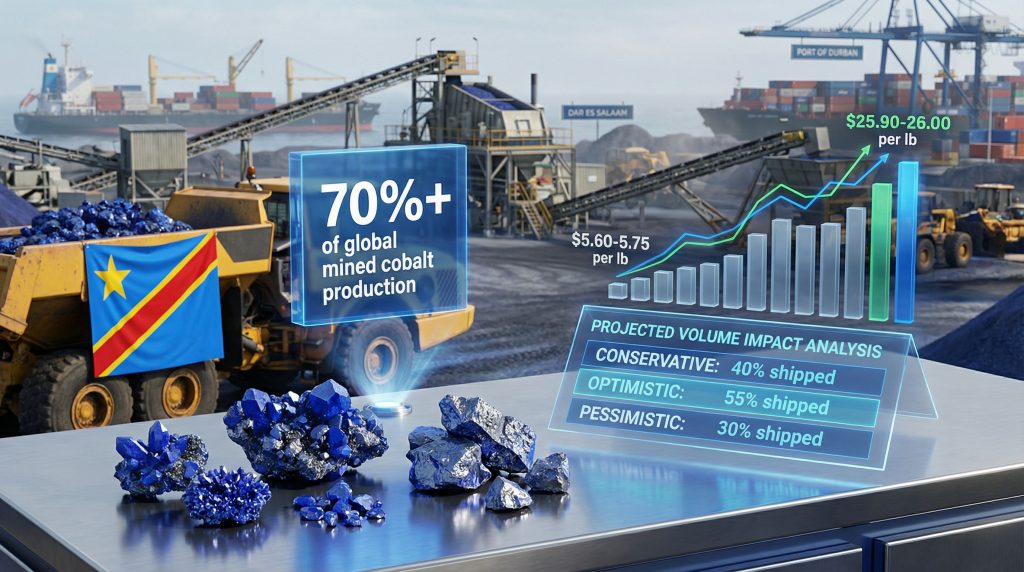
The cobalt market operates within a complex web of geopolitical dependencies that have fundamentally reshaped how critical mineral supply chains function in the modern economy. Unlike traditional commodities where diversified supply sources provide market stability, cobalt presents a unique scenario where single-nation dominance creates systemic vulnerabilities across multiple industrial sectors. Understanding these dynamics requires examining both the structural foundations of current supply arrangements and the emerging pressures that threaten established trading patterns. This situation directly affects how the DRC cobalt export quota extension impacts global markets.
Understanding the DRC's Strategic Position in Global Cobalt Markets
The Democratic Republic of Congo maintains an unprecedented 70% share of global mined cobalt production, creating a concentration level rarely seen in critical mineral markets. This dominance extends beyond simple resource availability, encompassing the infrastructure networks, processing capabilities, and logistical frameworks that determine actual market supply.
Economic leverage through export control mechanisms has become increasingly sophisticated, moving beyond traditional taxation models toward quota-based allocation systems. The current framework allocates 7,250 tonnes monthly as base quotas, with an additional 9,600 tonnes annually reserved for national priority projects. This structure provides the DRC government with precise tools for market intervention while maintaining revenue streams from approved exports.
Infrastructure bottlenecks represent the critical constraint between policy allocation and actual supply delivery:
- Port capacity limitations at Durban and Dar es Salaam affect loading schedules
- Testing protocol coordination between government and private facilities creates processing delays
- Transportation network capacity constrains inland movement from mining regions
- Documentation requirements add administrative timeline extensions
The testing protocol discrepancies have emerged as particularly complex operational challenges. Private facility testing protocols often produce different cobalt content measurements compared to government testing procedures, requiring reconciliation processes that extend export timelines. These differences particularly impact hydroxide and intermediate products requiring 30% cobalt minimum content verification for export qualification.
CMOC Group, representing the world's largest cobalt producer, demonstrated the practical implications of these constraints by confirming that the recent 30-day extension would enable completion of full Q4 2025 allocated volumes. This timeline adjustment reflects the gap between theoretical quota capacity and operational execution capabilities.
When big ASX news breaks, our subscribers know first
Current Market Dynamics and the DRC Cobalt Export Quota Extension
The 30-day extension announced for Q4 2025 allocations represents a significant policy adjustment affecting global supply calculations. Market participants initially anticipated this extension would consolidate three quarters of potential exports into a single execution window, creating theoretical access to Q4 2025, Q1 2026, and Q2 2026 allocations simultaneously.
Export performance reality has proven substantially different from policy allocations. Less than 50% of Q4 2025 volumes allocated under the quota system were actually exported by the original deadline, highlighting the persistent gap between regulatory approval and physical shipment execution.
| Supply Scenario | Q4 2025 Utilization | Q1 2026 Potential | Market Impact Assessment |
|---|---|---|---|
| Conservative Case | 40% quota shipped | 60% quota shipped | Limited relief |
| Base Case | 50% quota shipped | 70% quota shipped | Moderate improvement |
| Optimistic Case | 65% quota shipped | 85% quota shipped | Significant easing |
Logistics constraints continue to dominate actual supply delivery regardless of policy flexibility. A smelter source characterised the practical limitations succinctly, noting that whilst Q2 exports may appear substantial from a policy perspective, actual materialisation remains uncertain given persistent operational bottlenecks.
The consolidation effect creates unique market dynamics where three quarters of allocated volumes theoretically become available within a compressed timeframe. However, shipping capacity, port throughput limitations, and documentation processing requirements prevent rapid quota utilisation even when regulatory approval exists.
Testing facility capacity represents another critical bottleneck affecting the DRC cobalt export quota extension implementation. The delayed setup of government testing systems for cobalt content verification has contributed to slower export pace, requiring policy adjustments to prevent further supply tightening.
Market Psychology and Subdued Price Responses
Despite the significant policy adjustment represented by the DRC cobalt export quota extension, market reactions have remained notably muted. Cobalt hydroxide prices reached $25.90-26.00 per lb by April 9, 2026, representing a 350% increase from $5.60-5.75 per lb recorded on February 18, 2025, before export restrictions began.
This price trajectory reflects the cumulative impact of nine months of export restrictions (February 2025 through October 2025) followed by quota system implementation. However, the extension announcement failed to generate immediate downward pressure despite theoretical supply increases.
Market sentiment indicators reveal complex psychological factors affecting trader behaviour:
"Market participants express scepticism about practical impact given historical execution gaps between allocated quotas and actual shipments. Uncertainty over arrival timelines in key consumption centres dominates pricing considerations."
Downstream demand weakness has emerged as the primary constraint on price recovery, regardless of supply policy adjustments. Industrial consumers in electric vehicle manufacturing and consumer electronics sectors have reduced procurement activity, creating a demand-side ceiling that limits price responsiveness to supply policy changes.
China's cobalt metal futures on the Wuxi Zhonglianjin Exchange experienced slight declines following the extension announcement, reflecting trader assessment that increased theoretical supply availability would eventually translate to physical market pressure. However, the magnitude of price movement remained limited compared to the scale of potential supply additions.
Physical trading activity has stagnated due to arrival uncertainty in major consumption centres. Traders report hesitation to commit to forward purchases given unclear timelines for when DRC material will actually reach processing facilities in China and other key markets.
The credibility gap between policy announcements and execution capabilities has created a market dynamic where participants discount regulatory changes until physical supply improvements materialise. This psychological framework explains why the DRC cobalt export quota extension generated limited immediate market impact despite its significant theoretical implications.
Historical Context and Structural Supply Changes
Pre-2025 cobalt trade patterns established a baseline of 15,000-18,000 tonnes monthly exports from the DRC under unrestricted market conditions. The transition to quota-controlled exports represents a 55-60% reduction in theoretical supply availability, fundamentally altering global market dynamics.
The export ban period from February 2025 through October 2025 created the initial supply shock that drove prices from approximately $5.60 per lb to current levels exceeding $25.90 per lb. This nine-month restriction period eliminated the DRC's contribution to global supply entirely, forcing industrial consumers to exhaust existing inventories and seek alternative sources.
Quota system implementation in October 2025 marked a strategic shift from binary export control (banned vs. unrestricted) toward managed supply release. The monthly base allocation of 7,250 tonnes provides predictable supply floors whilst enabling policy flexibility through quota adjustments and deadline extensions.
| Period | Export Mechanism | Monthly Volume | Supply Predictability |
|---|---|---|---|
| Pre-2025 | Unrestricted | 15,000-18,000 tonnes | Market-driven |
| Feb-Oct 2025 | Export ban | 0 tonnes | Policy-controlled |
| Post-Oct 2025 | Quota system | 7,250 tonnes base | Government-managed |
The actual vs. allocated shipment gap has become a defining characteristic of the current system. With less than 50% quota utilisation in Q4 2025, the operational constraints have proven more binding than regulatory allocations. This execution gap suggests that infrastructure capacity, rather than policy approval, represents the primary supply constraint.
Strategic reserves of 9,600 tonnes annually for national priority projects provide additional policy flexibility whilst ensuring domestic industrial development receives adequate raw material access. This dual-track approach balances export revenue generation with national economic development objectives.
The extension pattern demonstrates government recognition that strict quota enforcement without operational flexibility could create unintended market disruptions. By providing additional time for quota utilisation, the DRC cobalt export quota extension reflects pragmatic policy adjustment rather than fundamental system restructuring. Furthermore, these developments have broader implications for the mining industry evolution.
Long-Term Strategic Implications for Industrial Consumers
Battery manufacturers face unprecedented supply chain risk concentration given the DRC's market dominance and evolving export control mechanisms. The quota system introduction signals a permanent shift toward managed supply release rather than market-driven availability, requiring fundamental procurement strategy adjustments.
Supply chain diversification imperatives have intensified following the export restrictions and subsequent quota implementation:
- Australian cobalt project development acceleration
- Canadian mining investment increases targeting cobalt resources
- Recycling capacity expansion to reduce primary material dependence
- Alternative chemistry research intensification for reduced cobalt content
Technology adaptation strategies have gained strategic priority as companies seek to reduce exposure to single-source supply risks. Low-cobalt battery chemistry development programmes have received increased funding and research focus, though commercial implementation timelines remain extended given technical complexity and performance requirements.
Vertical integration considerations have emerged as potential risk mitigation strategies, though implementation faces significant capital and operational challenges. Direct investment in DRC mining operations provides greater supply security but requires substantial financial commitments and political risk tolerance.
Electric vehicle manufacturers confront particular vulnerability given battery pack cost sensitivity to cobalt price volatility. The 350% price increase since early 2025 has created substantial input cost pressures affecting vehicle pricing strategies and profit margin calculations.
Consumer electronics manufacturers experience similar pressures affecting smartphone, laptop, and tablet production costs. Unlike automotive applications where consumers may accept price increases, electronics markets demonstrate greater price sensitivity, potentially constraining demand if cobalt costs remain elevated.
The DRC cobalt export quota extension provides temporary relief but does not address fundamental supply concentration risks. Industrial consumers increasingly recognise that long-term planning must assume continued supply volatility and policy uncertainty as endemic features of cobalt procurement. In addition, these challenges are influencing broader critical minerals policies globally.
Testing Protocols and Quality Control Challenges
Cobalt content verification processes have emerged as critical bottlenecks affecting the DRC cobalt export quota extension implementation. Discrepancies between private facility testing protocols and government testing procedures create systematic delays that extend beyond simple administrative processing.
Government testing facility coordination requires specific procedural compliance that differs from established private sector practices:
- Sample collection according to government-specified methodologies
- Content analysis using approved testing equipment and procedures
- Certification documentation meeting export approval requirements
- Quality assurance verification through independent confirmation processes
- Export authorisation following successful testing completion
The delayed setup of government testing systems contributed significantly to slower export pace during initial quota system implementation. Testing capacity limitations create processing queues that extend timeline requirements beyond policy deadlines, necessitating extensions like the current 30-day adjustment.
Hydroxide and intermediate product testing presents particular complexity given the 30% cobalt minimum content requirements for export qualification. Variations in testing methodologies can produce different cobalt content measurements, requiring reconciliation processes that add administrative overhead to export procedures.
Private facility testing protocols often utilise different analytical approaches compared to government standards, creating potential discrepancies that must be resolved before export approval. These technical differences require case-by-case evaluation and may necessitate retesting using government-approved procedures.
Operational efficiency improvements focus on streamlining coordination between private producers and government testing facilities. Standardised sample preparation procedures and expedited documentation processing could reduce timeline requirements, though implementation faces bureaucratic and technical challenges.
The testing bottleneck demonstrates how technical administrative requirements can constrain supply delivery independent of policy allocation decisions. Even with adequate quota availability, actual exports depend on testing facility capacity and procedural efficiency. Consequently, European CRM facility developments are accelerating to reduce dependency.
The next major ASX story will hit our subscribers first
Investment Positioning and Risk Management Strategies
The DRC cobalt export quota extension creates complex investment scenarios requiring careful risk assessment across multiple timeframes. CMOC Group's confirmed ability to ship full Q4 2025 volumes within the revised timeline provides a benchmark for evaluating other producers' operational capabilities.
Producer positioning varies significantly based on operational efficiency and infrastructure access:
- Major integrated producers benefit from established logistics networks and government relationship management
- Mid-tier operators face greater challenges coordinating testing protocols and shipping arrangements
- Smaller producers experience disproportionate impact from fixed administrative costs and procedural complexity
Investment implications extend beyond direct mining exposure toward companies with cobalt supply chain integration. Battery manufacturers with secured supply agreements may benefit relative to competitors relying on spot market procurement during periods of constrained availability.
Risk management strategies must address both supply availability and price volatility:
"Forward contract hedging becomes critical for industrial consumers given the potential for continued supply disruptions and policy adjustments affecting market dynamics."
Alternative supply source development represents long-term risk mitigation, though implementation timelines extend beyond immediate market pressures. Australian and Canadian cobalt projects require multi-year development periods before contributing meaningful production volumes to global supply.
Recycling capacity expansion offers medium-term supply diversification opportunities, particularly for consumer electronics applications where product lifecycle management enables material recovery. However, recycling cannot immediately replace primary supply given current infrastructure limitations.
Scenario planning requirements must incorporate multiple potential outcomes:
- Optimistic case: Improved DRC export efficiency and gradual demand recovery
- Base case: Continued supply constraints with moderate demand growth
- Pessimistic case: Additional policy restrictions combined with accelerated demand recovery
The DRC cobalt export quota extension provides temporary relief but investors must prepare for continued volatility and policy uncertainty affecting long-term supply security. Market positioning should reflect the probability of ongoing supply chain disruptions rather than assuming rapid return to historical trading patterns. Moreover, developments like the Cobalt Blue expansion highlight alternative supply opportunities.
What Are the Market Outlook and Future Supply Chain Evolution?
Global cobalt market dynamics face permanent structural changes following the introduction of export control mechanisms and quota systems. The DRC cobalt export quota extension represents tactical policy adjustment within this new framework rather than return to previous unrestricted trading conditions.
Demand recovery timelines remain uncertain across key end-use sectors. Electric vehicle sales growth has decelerated in major markets, whilst consumer electronics demand shows signs of normalisation following pandemic-driven increases. These demand-side factors limit immediate price responsiveness to supply policy adjustments.
Battery technology development continues progressing toward reduced cobalt content formulations, though commercial implementation faces performance and cost optimisation challenges. Low-cobalt and cobalt-free cathode materials represent long-term threats to cobalt demand, but current technology limitations prevent immediate substitution.
Supply source diversification efforts have accelerated but require extended development timelines. Australian cobalt projects show promise but need years of additional development before contributing significant production volumes. Canadian mining initiatives face similar timeline constraints despite increased investment activity.
The quota system appears likely to persist as a permanent feature of DRC cobalt supply management, providing government control over market dynamics whilst maintaining export revenue streams. Future policy adjustments will probably focus on quota level modifications and deadline flexibility rather than system elimination.
Market participants should anticipate continued supply volatility and policy uncertainty as defining characteristics of cobalt procurement. The DRC cobalt export quota extension demonstrates government willingness to adjust implementation timelines, but underlying supply concentration risks remain unaddressed. Additionally, new mining quota regulations indicate ongoing policy evolution.
Strategic considerations for market participants include:
- Supply chain redundancy development to reduce single-source dependencies
- Technology diversification toward reduced cobalt content applications where feasible
- Inventory management strategies accommodating supply volatility
- Policy monitoring systems for early identification of regulatory changes
The cobalt market evolution reflects broader trends in critical mineral governance where resource-rich nations increasingly utilise export controls as economic and strategic policy tools. Understanding these dynamics becomes essential for effective supply chain management in an environment of persistent geopolitical complexity. These trends align with emerging critical minerals strategy frameworks globally.
This analysis is based on publicly available market information and should not be considered investment advice. Cobalt market conditions remain subject to rapid change based on policy decisions, demand fluctuations, and supply chain developments. Investors should conduct independent research and consult qualified professionals before making investment decisions.
Searching for Your Next Critical Minerals Investment Opportunity?
Discovery Alert's proprietary Discovery IQ model delivers instant notifications on significant ASX mineral discoveries, including critical minerals like cobalt that are reshaping global supply chains. Explore why historic discoveries can generate substantial returns by examining Discovery Alert's dedicated discoveries page, then begin your 14-day free trial today to position yourself ahead of the market.