July 20, 2026
When Production Records Mean Nothing: The DRC's Revenue Capture Crisis
There is a counterintuitive reality at the heart of modern resource economics: a country can extract more mineral wealth than at any point in its history and simultaneously grow poorer from it. This is not a paradox born of poor geology or weak demand. It is a governance failure, one measured not in tonnes of ore but in billions of dollars that exit a country's borders and never return.
The Democratic Republic of Congo is confronting exactly this reality. Its mines are operating at historic capacity. Its copper and cobalt are powering the global clean energy transition. And yet, according to cabinet-level analysis presented to President Felix Tshisekedi, the Congolese state continues to receive a disproportionately small share of the wealth extracted from its own soil, underlining the vast DRC mineral wealth that remains poorly captured.
The Congo copper and cobalt export revenues probe now underway represents the most direct enforcement response in recent DRC mining history. Understanding what triggered it, how it will be executed, and what it means for global critical mineral markets requires looking beyond the surface-level headlines.
When big ASX news breaks, our subscribers know first
Record Volumes, Fractured Revenues
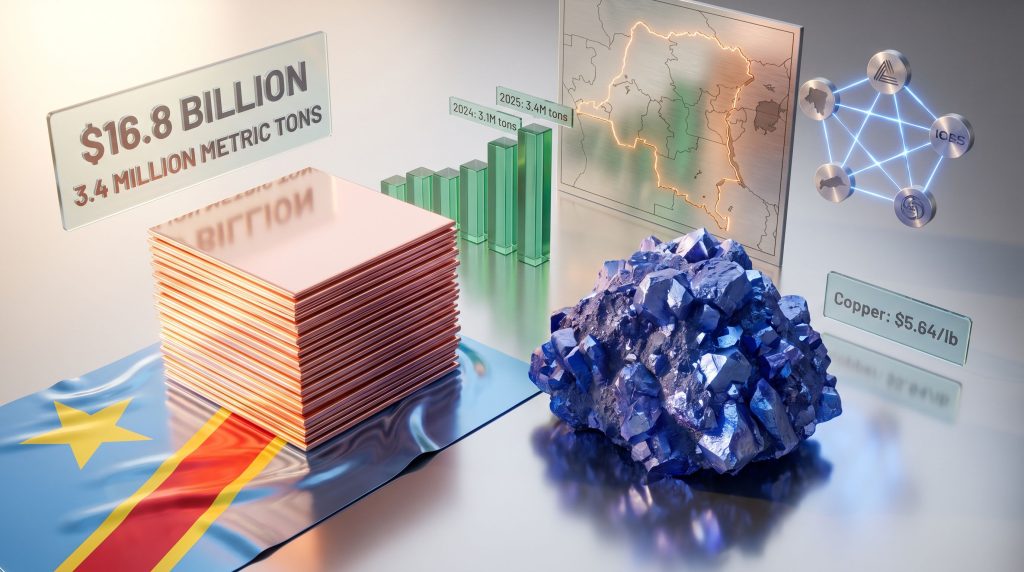
The numbers are striking on their own terms. The DRC exported approximately 3.4 million metric tons of copper in 2025, up from 3.1 million metric tons in 2024, a year-on-year increase of nearly 10%. Cobalt exports reached around 220,000 metric tons over the same period. These figures, cited at a cabinet meeting chaired by President Tshisekedi on April 25, 2026, place Congo firmly among the most consequential mining jurisdictions on the planet.
The DRC accounts for roughly 70% of global cobalt production and ranks among the world's top copper producers by volume. By any commodity metric, it should command significant fiscal leverage over global supply chains.
Yet the revenue picture tells a different story. A prior state audit covering the period from 2018 to 2023 found that major mining operators had underreported revenues by an estimated $16.8 billion across that five-year window, an average of approximately $3.36 billion per year. This is not rounding error. It represents a sustained, systemic diversion of wealth at industrial scale.
The current audit is not a response to a production slowdown. It is a response to a revenue architecture that has failed to capture what production growth should logically deliver.
Four Failure Modes Driving Revenue Leakage
Cabinet documentation identified four distinct mechanisms through which Congolese mineral wealth is escaping state capture:
| Failure Mode | How It Works | Fiscal Consequence |
|---|---|---|
| Weak export oversight | Insufficient monitoring of declared commodity volumes and values at border and port | Undervalued exports pass undetected, reducing royalty and tax bases |
| Opaque joint venture structures | State mining asset partnerships lacking independent financial audits | Revenue allocation between state and private partners cannot be verified |
| Non-repatriation of export earnings | Proceeds from copper and cobalt sales retained in offshore accounts | Foreign currency exits the domestic economy; government loses forex and tax base |
| Capital flight via fraudulent imports | Inflated import invoicing used as a mechanism to transfer capital offshore | Functions as a money laundering channel, diverting funds from state coffers |
Each of these failure modes is well-documented in the academic literature on resource curse economics and extractive industry governance. What makes the DRC case distinctive is that regulatory tools to address all four already exist on paper.
The revised Mining Code mandates a tiered repatriation framework: operators in the investment recovery phase must return 60% of export revenues to domestic accounts while retaining up to 40% offshore, with 100% repatriation required once capital investment has been fully recovered. The Central Bank of Congo requires all export transactions to be registered and monitored through licensed commercial banking institutions.
The problem is not the absence of rules. It is the absence of enforcement. Furthermore, these challenges are compounded by the broader cobalt export ban impacts that have already reshaped global supply dynamics.
The 30-Day Audit and What It Must Deliver
President Tshisekedi's directive, issued at the April 25, 2026 cabinet meeting, mandated a comprehensive audit of mining export revenues and state assets within 30 days, with initial findings due by June 15, 2026. The audit targets two primary domains: export revenue repatriation compliance, and the financial transparency of joint ventures involving state-owned mining assets.
The directive also instructed authorities to construct an integrated monitoring chain linking five institutional actors:
- OGEFREM (Office de Gestion du Fret Multimodal) for freight and logistics documentation
- OCC (Office Congolais de Contrôle) for quality and conformity inspection at point of export
- DGDA (Direction Générale des Douanes et Accises) for customs and excise duty enforcement
- Central Bank of Congo for foreign exchange registration and repatriation verification
- Commercial banks for transaction-level settlement and domestic fund transfer confirmation
The conceptual architecture is sound. Each institution serves as a verification checkpoint in a sequential chain. A mineral shipment originating at a mine site would need to pass through OGEFREM freight documentation, OCC quality inspection, DGDA duty clearance, Central Bank FX registration, and finally commercial bank settlement, with no transaction capable of bypassing any node in the chain.
The integrity of this system depends entirely on real-time data sharing between institutions that have historically operated in silos. Technical synchronisation across five distinct agencies with varying IT infrastructure represents a significant implementation challenge that the audit directive does not yet address in detail.
International precedents suggest integrated systems can deliver material improvements in revenue capture. Indonesia's deployment of enhanced traceability mechanisms for mineral exports following its 2020 nickel ore export restrictions demonstrated that enforcement architecture can shift compliance rates substantially when backed by institutional coordination.
The Q1 2026 Warning Signal
Adding urgency to the revenue capture agenda is a troubling shift in export volumes. The DRC shipped approximately 955,000 metric tons of copper in the first quarter of 2026, compared to roughly 1.09 million metric tons in Q1 2025, a decline of nearly 15% year on year, as reported by Reuters in April 2026.
Cobalt exports partially recovered in the same period, providing some offset. However, the copper decline matters for a specific reason: if export volumes are contracting at the same time that repatriation compliance remains structurally weak, the fiscal pressure on the Congolese state compounds. Fewer tonnes exported through leaky accounting channels means even less revenue reaching government coffers.
This dynamic may have accelerated the political timeline for the audit. A government managing simultaneous volume contraction and revenue leakage faces a narrowing fiscal runway that demands urgent corrective action.
Resource Nationalism and the Strategic Cobalt Reserve
The audit does not exist in isolation. It is the latest layer in a deepening reform agenda that reflects a deliberate shift toward resource nationalism in the DRC, a policy orientation in which mineral-rich states seek to convert raw extraction volumes into genuine fiscal sovereignty.
The DRC has separately moved to establish a strategic cobalt reserve, designed to give the state greater influence over global cobalt supply volumes and pricing dynamics. This reserve mechanism positions the government not merely as a passive royalty collector but as an active participant in commodity markets. In addition, the DRC cobalt export ban has further demonstrated Kinshasa's willingness to use supply-side levers as instruments of economic policy.
When considered alongside the revenue audit, the traceability mandate, and the $100 million US-backed mine security force announced April 27, 2026, a coherent strategic architecture emerges:
- Physical supply security through enhanced mine protection
- Financial capture through repatriation enforcement and audit
- Market influence through strategic reserve management
- Governance credibility through joint venture transparency reform
Each element reinforces the others. A mine that is physically secure but financially opaque still leaks wealth. A transparent accounting system without enforcement infrastructure is a document exercise. The DRC appears to be attempting, for the first time in a structured way, to address all four dimensions simultaneously.
The next major ASX story will hit our subscribers first
Geopolitical Stakes: Positioned Between Washington and Beijing
The DRC has signed separate mineral supply agreements with both the United States and China, positioning itself as a critical node in two competing clean energy and battery electric vehicle supply chains. The broader Congolese cobalt rivalry between these two superpowers continues to shape how Kinshasa navigates its mineral diplomacy, with Congo holding dominant reserves not only in copper and cobalt but also in lithium, gold, and coltan.
For Washington, greater governance transparency in DRC mining operations would strengthen confidence in the reliability of critical mineral supply chains underpinning American battery manufacturing and grid infrastructure ambitions.
For Beijing, which has maintained deep mining investment relationships in the DRC since the mid-2000s through entities including CMOC Group, enhanced audit scrutiny introduces compliance risk but also creates a more stable operating environment if enforcement is applied uniformly.
The audit's outcome may directly shape how both superpowers assess DRC as a long-term supply partner. A credible enforcement result could strengthen Congo's negotiating leverage in future minerals diplomacy. Conversely, a failed or superficial audit would likely reinforce existing concerns about institutional reliability.
Market Implications: Copper, Cobalt, and Battery Supply Chain Risk
For commodity markets and downstream manufacturers, the Congo copper and cobalt export revenues probe introduces a new category of supply chain governance risk that sits alongside traditional operational and geopolitical considerations.
What Does This Mean for Copper Markets?
- Copper was trading at approximately $5.64 per pound at the time of this report, reflecting broader supply-side sensitivity across critical mineral markets
- DRC copper represents a meaningful share of global refined copper supply; governance uncertainty adds a political risk premium to pricing models
- The Q1 2026 export decline of approximately 15% year on year has already drawn attention from commodity analysts tracking supply-side dynamics
How Exposed Is the Cobalt and Battery Supply Chain?
- With the DRC accounting for roughly 70% of global cobalt production, any governance-driven disruption to export flows would propagate rapidly through battery cathode supply chains
- Major lithium-ion battery manufacturers dependent on DRC cobalt are already accelerating investment in cobalt-free cathode chemistries, including lithium iron phosphate (LFP) formulations, partly as a hedge against exactly this kind of sourcing risk
- If audit findings reveal systematic underreporting by specific operators, offtake agreement renegotiations and reputational exposure for named companies could follow
The Artisanal Mining Blind Spot
The integrated traceability system targets formal sector operators. Yet artisanal and small-scale mining (ASM) is estimated to account for 20 to 25% of DRC cobalt production, according to World Bank commodity analyses. This informal sector operates largely outside the five-agency monitoring framework. Furthermore, detailed cobalt suspension analysis highlights the persistent governance gap that the current audit architecture does not fully address.
How the DRC Compares to Other Resource Nationalism Case Studies
| Country | Reform Mechanism | Outcome |
|---|---|---|
| Zambia | Windfall tax and royalty restructuring | Increased fiscal take but heightened investor tension |
| Chile | Lithium nationalisation framework | State control expansion with mixed foreign investment signals |
| Indonesia | Nickel ore export ban | Domestic processing growth; WTO dispute initiated |
| Guinea | Bauxite revenue audit and transfer pricing crackdown | Partial recovery of diverted revenues; ongoing compliance challenges |
| DRC (current) | Audit, traceability integration, security enforcement, cobalt reserve | Outcome pending; June 2026 findings expected |
The DRC's approach is notable for attempting to address revenue leakage through institutional integration rather than blunt instruments such as export bans or nationalisation. Whether that institutional sophistication can be operationalised within a 30-day audit window, however, remains the central open question. Independent observers, including those who have tracked DRC mining governance closely, note that execution capacity will ultimately determine whether the framework delivers meaningful results.
Frequently Asked Questions
What triggered the DRC copper and cobalt export revenues probe?
President Tshisekedi ordered the audit after cabinet-level analysis revealed that record export volumes were not translating into proportional government revenue. Structural failures in oversight, repatriation compliance, and joint venture governance were identified as the primary drivers.
How much copper and cobalt does the DRC export annually?
The DRC exported approximately 3.4 million metric tons of copper and 220,000 metric tons of cobalt in 2025, making it one of the world's largest suppliers of both commodities.
What is the DRC's repatriation rule for mining revenues?
Under the revised Mining Code, operators must repatriate 60% of export revenues during the investment recovery phase and 100% once capital investment has been fully recovered. The Central Bank of Congo oversees compliance through licensed commercial banks.
When will the audit findings be released?
Initial findings are expected by June 15, 2026.
What was the scale of previous revenue underreporting?
A prior state audit found that mining operators underreported approximately $16.8 billion in revenues between 2018 and 2023, averaging roughly $3.36 billion per year across the five-year period.
What happens if the audit identifies significant violations?
Potential outcomes include regulatory penalties against specific operators, renegotiation of joint venture terms involving state assets, expanded banking compliance requirements, and accelerated enforcement actions against illegal mining operations.
Disclaimer: This article is intended for informational purposes only and does not constitute financial advice. Commodity price figures, export volume data, and regulatory timelines are based on publicly available reporting as of April 2026. Forward-looking statements regarding audit outcomes, market impacts, and policy implementation involve inherent uncertainty and should not be relied upon as predictions of future events. Investors should conduct independent due diligence before making any investment decisions related to DRC-linked mining assets or commodity markets.
Want to Track the Next Major Mineral Discovery Before the Market Does?
Discovery Alert's proprietary Discovery IQ model scans ASX announcements in real time, instantly identifying significant mineral discoveries across copper, cobalt, and more than 30 other commodities — translating complex data into actionable investment insights the moment they emerge. Explore historic discoveries and their extraordinary returns, then start your 14-day free trial at Discovery Alert to position yourself ahead of the broader market.