June 6, 2026
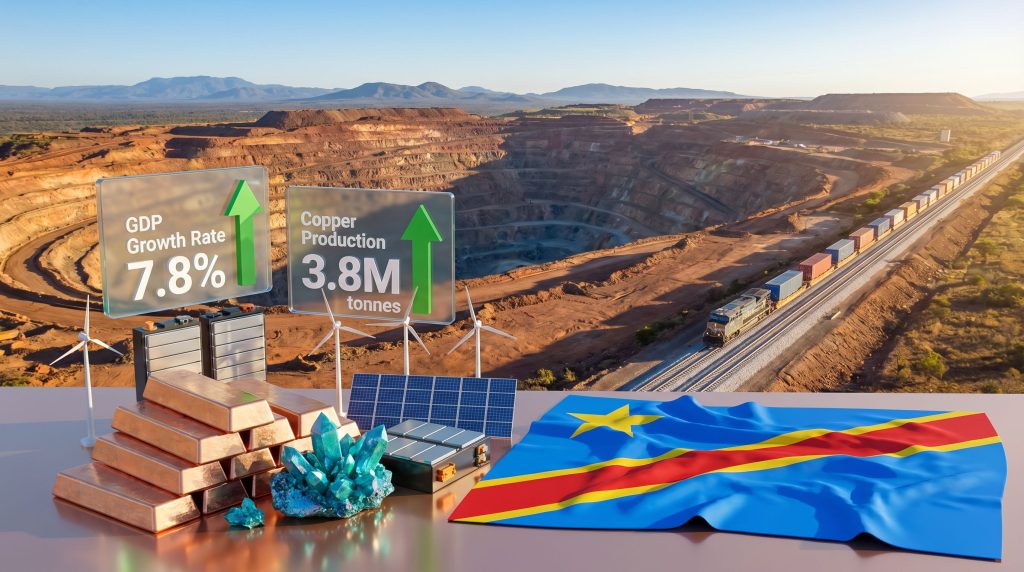
The Democratic Republic of Congo exemplifies this phenomenon, leveraging its position as the world's dominant cobalt supplier and a major copper producer to achieve sustained DRC economic growth through cobalt and copper exports. Recent projections indicate the nation's GDP reaching $123 billion in 2026, positioning it as Sub-Saharan Africa's fifth-largest economy and demonstrating how strategic mineral endowments can drive macroeconomic transformation when aligned with global megatrends.
Critical Minerals Drive Continental Economic Hierarchy Shifts
The intersection of electrification demand and mineral geography has created a new economic paradigm across Africa. Countries with substantial cobalt and copper reserves now occupy strategic positions in global supply chains, translating geological advantages into measurable economic outcomes. This dynamic extends beyond traditional commodity cycles, establishing long-term structural relationships between resource-rich nations and technology-dependent economies.
| Economic Performance Indicators | 2024 | 2025 | 2026 Projection |
|---|---|---|---|
| GDP Growth Rate | 6.5% | 7.2% | 7.8% |
| Copper Production (Million Tonnes) | 3.2 | 3.5 | 3.8 |
| Export Revenue Growth | 15% | 22% | 28% |
| Critical Minerals Share of GDP | 24% | 27% | 31% |
The DRC's ascension reflects broader continental dynamics where resource endowments increasingly determine economic positioning. Unlike previous commodity booms driven by infrastructure development or industrial expansion, current demand patterns stem from technological transitions requiring specific mineral inputs with limited substitution possibilities. This creates sustained pricing power for suppliers while establishing long-term supply relationships with consuming nations.
Furthermore, International Energy Agency projections indicate cobalt demand will increase by over 200% through 2040, while copper requirements are expected to double within the same timeframe. These forecasts assume continued electrification of transportation systems, expansion of renewable energy infrastructure, and growth in energy storage applications – trends with multi-decade sustainability.
The strategic importance of these minerals extends beyond economic metrics. Cobalt's role in lithium-ion battery cathodes makes it irreplaceable in current electric vehicle technology, while copper's conductivity properties are essential for electrical systems across all electrification applications. This technological dependence creates supply chain vulnerabilities that consuming nations actively seek to manage through diversified sourcing strategies. Consequently, critical minerals energy security has become a paramount concern for developed economies seeking to maintain their energy transition timelines.
When big ASX news breaks, our subscribers know first
Infrastructure Development Enables Resource Monetisation
Strategic infrastructure investments have transformed the economics of mineral extraction and export across central Africa. The Lobito Corridor project, connecting the DRC's Copperbelt region to Angola's Atlantic coast, represents a fundamental shift in regional logistics capabilities and global supply chain geography.
This $5 billion rail infrastructure initiative provides Western markets with alternatives to existing export routes, reducing dependence on traditional shipping lanes and offering enhanced supply chain resilience. The corridor's operationalisation in early 2026 marked a significant milestone, with initial copper shipments demonstrating the project's commercial viability and strategic importance.
Infrastructure Timeline and Capabilities:
- Q1 2026: First commercial copper shipments via Lobito port
- 2026-2030: $5 billion corridor expansion and capacity enhancement
- 2027: Integration of Zambian copper mines into transport network
- 2028: Achievement of full operational capacity
The corridor's significance extends beyond transportation efficiency. By providing Atlantic access for landlocked mineral producers, it creates competitive pressure on existing export routes while offering geopolitical alternatives for international buyers seeking supply chain diversification. This infrastructure development directly supports DRC economic growth through cobalt and copper by reducing logistics costs and improving market access.
Cost reduction analysis indicates the Lobito route can decrease transportation expenses by 15-25% compared to traditional routes through southern African ports. These savings translate into improved mining project economics and enhanced competitiveness in global markets, supporting sustained production growth and export revenue expansion.
The project's broader implications include regional economic integration, as the corridor connects multiple producing nations to international markets through a single logistics network. This creates economies of scale in transportation while establishing Angola's Lobito port as a critical gateway for African mineral exports to Atlantic markets.
Resource Revenue Management and Institutional Development
The establishment of strategic revenue management mechanisms represents a crucial evolution in African resource governance. The creation of the Fonds d'Investissement Stratégique (FIS RDC) in March 2026 signals institutional maturation and long-term economic planning capabilities within the DRC's fiscal framework.
This sovereign wealth fund mechanism aims to channel mineral export earnings into sustainable development priorities rather than immediate consumption or debt service. Such institutional innovations reflect growing awareness among resource-rich nations that effective wealth management requires structured approaches to revenue allocation and investment prioritisation.
Strategic Revenue Allocation Framework:
- 40% Infrastructure Development: Transportation networks, energy systems, water resources
- 25% Human Capital Investment: Education, healthcare, skills training programmes
- 20% Economic Diversification: Manufacturing, agriculture, financial services
- 15% Strategic Reserves: Foreign exchange stabilisation, emergency funds
The fund's design incorporates lessons from both successful and failed sovereign wealth fund implementations globally. Norway's Government Pension Fund Global serves as a positive example, having successfully converted oil wealth into diversified international investments generating sustainable returns. Conversely, resource-rich nations with weak governance frameworks have often struggled to effectively manage commodity revenues.
Governance quality and institutional capacity remain critical determinants of fund performance and economic impact distribution. For instance, effective management requires transparent investment policies, professional fund administration, and political insulation from short-term fiscal pressures. The DRC's ability to maintain these standards will significantly influence the fund's contribution to long-term economic development.
Revenue management success depends on several factors: investment policy clarity, operational transparency, political independence, and performance measurement frameworks. International best practices suggest that funds with clear mandates, professional management, and robust oversight mechanisms achieve superior outcomes compared to those subject to political interference or unclear objectives.
Geopolitical Competition and Strategic Mineral Access
Global competition for critical minerals has transformed Africa into a strategic battleground between major powers, with the DRC occupying a central position due to its cobalt and copper reserves. This geopolitical attention creates both opportunities and risks for mineral-producing nations, as they navigate relationships with competing international partners. The recent DRC cobalt export ban discussions highlight the strategic importance of these resources in global supply chains.
US engagement strategies focus on supply chain diversification and reducing dependence on single-source suppliers. The State Department's support for over 60 deals worth more than $25 billion across Africa demonstrates sustained American interest in continental mineral resources. This engagement encompasses infrastructure investment, technical assistance, and diplomatic support for projects enhancing Western access to critical materials.
Chinese involvement in African mining reflects different strategic priorities, emphasising vertical integration and long-term supply security. Chinese companies have established significant positions across the DRC's mining sector, creating established relationships and operational expertise that provide competitive advantages in project development and execution.
European Union initiatives focus on sustainable sourcing and responsible mining practices, reflecting regulatory requirements and consumer preferences in European markets. The EU's critical minerals partnerships emphasise environmental standards, labour conditions, and governance improvements as conditions for market access and investment support. Moreover, recent critical minerals policy developments have accelerated the need for diversified supply chains.
Investment Flow Analysis:
- US Development Finance Corporation: $2.5 billion committed to African mining projects
- Chinese Belt and Road Initiative: $15 billion in African infrastructure and mining investments
- European Investment Bank: $1.8 billion in sustainable mining and infrastructure projects
- Regional Development Banks: $3.2 billion in cross-border infrastructure and trade facilitation
This multi-polar competition creates leverage for African governments while requiring sophisticated diplomatic management to maximise benefits from competing offers. Countries must balance immediate investment needs against long-term strategic autonomy, ensuring that mineral wealth translates into sustainable development rather than economic dependence.
Supply chain weaponisation risks emerge when geopolitical tensions affect commodity flows, potentially disrupting global technology production and energy transition timelines. Recent events have highlighted the vulnerability of single-source supply chains, encouraging consuming nations to diversify suppliers and invest in alternative sources.
Security Dynamics and Investment Climate Factors
Regional security conditions significantly influence mining investment decisions and operational viability across central Africa. The M23 conflict resolution process represents a potential inflection point for eastern DRC's economic development, with ceasefire agreements in Switzerland offering cautious optimism for stability improvements.
Eastern Congo mineral wealth includes substantial deposits of coltan, tin, tungsten, and gold that have remained largely inaccessible due to ongoing conflict. Security stabilisation could unlock significant additional resource investment, particularly in artisanal mining formalisation and industrial-scale extraction operations.
Conflict minerals regulation in international markets creates additional complexity for eastern DRC operations. The Rubaya mine in Masisi, which supplies approximately 15% of global coltan, has been central to conflict dynamics while representing enormous economic potential under stable conditions. Resolution of security issues would enable formal investment and production scaling.
Risk Assessment Framework:
- Security incidents: Monthly conflict tracking and operational disruption analysis
- Investment insurance: Political risk coverage and security-related business interruption
- Operational protocols: Mine security, personnel protection, and emergency response planning
- Community engagement: Local stakeholder relationships and conflict prevention measures
International peacekeeping efforts and diplomatic initiatives provide external support for conflict resolution, though long-term stability depends on addressing underlying political and economic grievances. The multiplicity of armed groups and competing interests creates persistent challenges for comprehensive peace agreements.
Military drone deployment and advanced surveillance technologies have escalated conflict dynamics while providing government forces with operational advantages. However, technological solutions alone cannot address fundamental political issues requiring negotiated settlements and sustainable peace agreements.
Macroeconomic Vulnerabilities and Risk Mitigation
Despite impressive growth trajectories, DRC economic growth through cobalt and copper remains vulnerable to external shocks and structural limitations that could significantly impact future performance. Understanding these risks is essential for investors and policymakers assessing the sustainability of current economic expansion.
Commodity price volatility represents the primary macroeconomic risk, with cobalt and copper price fluctuations directly impacting fiscal revenues and foreign exchange earnings. Unlike diversified economies with multiple revenue sources, the DRC's extreme dependence on mineral exports creates limited buffers during market downturns.
Primary Risk Categories:
- Price volatility: Copper prices ranging from $6,000-$15,000 per tonne over recent cycles
- Governance challenges: Transparency International ranking and institutional effectiveness
- Infrastructure bottlenecks: Limited transportation capacity outside mining corridors
- Currency depreciation: Exchange rate volatility affecting import costs and debt service
- Regulatory uncertainty: Mining code changes and taxation policy adjustments
Export concentration analysis reveals that mineral exports account for over 95% of foreign exchange earnings, making the economy extremely sensitive to global commodity cycles. This concentration contrasts with more diversified economies that can maintain growth during specific sector downturns.
Fiscal dependency metrics show that mining-related revenues comprise approximately 60% of government income, creating direct linkages between commodity prices and public sector capacity. During price downturns, governments face difficult choices between maintaining essential services and fiscal sustainability.
Dutch disease effects may emerge as mineral exports drive currency appreciation, potentially undermining competitiveness in other tradeable sectors such as agriculture and manufacturing. This phenomenon has affected numerous resource-rich economies, leading to economic imbalances and reduced diversification.
Institutional weaknesses in governance, judiciary independence, and regulatory consistency create additional investment risks that affect country risk premiums and capital costs. Addressing these structural issues requires long-term institutional development that extends beyond immediate economic performance metrics.
The next major ASX story will hit our subscribers first
Human Development and Inclusive Growth Challenges
The paradox of mineral wealth amid persistent poverty represents the DRC's central development challenge, highlighting the disconnect between macroeconomic performance and human development outcomes. Despite achieving significant economic expansion, poverty rates remain at 72.9% of the population below $2.15 daily, indicating severe income distribution inequalities.
Human Development Indicators:
- Poverty Rate: 72.9% below international poverty line
- GDP Per Capita: $1,850 (2026 estimated)
- Human Development Index: 0.479 (Low category)
- Youth Unemployment: 43% of working-age population
- Primary Education Enrollment: 81% (with significant quality concerns)
This disconnect reflects limited economic linkages between extractive industries and broader economic sectors. Mining operations remain largely enclave-based, with minimal local content requirements or value-addition mandates that would create employment opportunities and skills transfer for local populations.
Employment analysis indicates that mining directly employs fewer than 200,000 people in formal positions, despite generating the majority of export revenues. This employment intensity contrasts sharply with labour-intensive sectors such as agriculture, which employs over 60% of the workforce but receives limited investment and policy attention.
Regional development disparities are pronounced, with mining regions receiving infrastructure investment while other areas remain severely underdeveloped. This geographic concentration creates internal migration pressures and regional tensions that could affect long-term stability. The broader mining industry evolution shows similar patterns across resource-rich African nations.
Social investment requirements include education system expansion, healthcare infrastructure development, and skills training programmes aligned with economic diversification objectives. Current public expenditure levels in these areas remain insufficient to address historical deficits and support inclusive growth.
Local content policies in mining operations could enhance economic linkages through procurement requirements, technology transfer, and skills development programmes. However, implementation requires regulatory frameworks and monitoring capabilities that may exceed current institutional capacity.
Investment Strategies and Market Access Opportunities
The DRC's economic transformation creates multiple investment themes across sectors and asset classes, offering opportunities for investors with appropriate risk tolerance and strategic patience. Direct mining investments benefit from sustained commodity demand while infrastructure development offers opportunities in transportation, energy, and telecommunications sectors.
Primary Investment Themes:
- Mining Sector Expansion: Copper and cobalt production scaling with established operators
- Infrastructure Development: Transportation corridors, energy systems, telecommunications networks
- Financial Services: Banking penetration expansion in underserved markets
- Agricultural Value Chains: Food processing, logistics, and export development
- Manufacturing Development: Import substitution and export-oriented production
Financial sector development represents a particularly underexplored opportunity, as banking penetration remains below 15% despite economic growth and increasing commercial activity. Mobile money platforms and digital financial services could capture significant market share while supporting economic inclusion.
Agricultural modernisation offers value-addition opportunities from mineral export revenues while supporting economic diversification. The DRC possesses substantial agricultural potential with favourable climate conditions and available land resources that could support both domestic food security and export development.
Furthermore, manufacturing investments could capitalise on regional market access through the African Continental Free Trade Agreement while leveraging competitive energy costs from hydroelectric potential. However, such investments require significant infrastructure development and regulatory improvements. The success of gold and copper exploration in other regions provides valuable lessons for diversified investment approaches.
Risk-adjusted return analysis indicates that successful investments typically require: local partnerships with established operators, comprehensive due diligence processes, political risk insurance coverage, and flexible operational strategies accommodating regulatory changes.
Market entry strategies vary significantly across sectors, with mining requiring substantial capital commitments and long development timelines, while service sectors may offer more rapid market entry with lower initial investment requirements.
Regional Economic Integration and Continental Dynamics
The DRC's emergence as Sub-Saharan Africa's fifth-largest economy reshapes regional economic hierarchies and integration patterns across central and eastern Africa. This positioning influences trade flows, investment patterns, and political dynamics within regional organisations including SADC, COMESA, and the African Union.
Economic rankings transformation reflects different growth models across the continent. The DRC's resource-driven expansion contrasts with Ethiopia's diversified industrial development approach, highlighting alternative pathways for achieving economic scale and development outcomes.
Regional Trade Analysis:
- Intra-African Trade: 15% of total trade volume (growing to 20% by 2030)
- Cross-Border Infrastructure: $45 billion in planned regional connectivity projects
- Currency Integration: Limited adoption of common currency mechanisms
- Regulatory Harmonisation: Gradual alignment of mining and trade policies
Continental Free Trade Agreement implementation creates opportunities for increased intra-African trade while potentially affecting existing trade relationships with external partners. The DRC's mineral exports could support regional manufacturing development through supply chain integration.
Political influence expansion accompanies economic growth, with the DRC's increased economic weight translating to enhanced influence in continental affairs and regional integration initiatives. This political capital affects resource allocation decisions and policy coordination across regional bodies.
Infrastructure connectivity through projects like the Lobito Corridor creates physical integration networks that support increased trade volumes and economic coordination. These developments could establish the foundation for deeper regional economic integration over time.
Competitive dynamics with established regional powers require diplomatic management to ensure that economic growth translates into constructive regional relationships rather than zero-sum competition for influence and resources.
Global Market Implications and Supply Chain Security
The DRC's economic transformation has implications extending far beyond African regional dynamics, directly affecting global supply chain security for electric vehicles, renewable energy systems, and consumer electronics manufacturing. As a critical minerals supplier, the nation's economic stability influences global decarbonisation timelines and technology deployment strategies.
Global Supply Chain Dependencies:
- Electric Vehicle Production: 70% of battery cobalt sourced from DRC operations
- Consumer Electronics: Significant copper and cobalt content in devices
- Renewable Energy: Wind turbines and solar systems requiring substantial copper inputs
- Grid Storage Systems: Battery technologies dependent on DRC mineral supplies
Market participants increasingly monitor DRC economic indicators as leading signals for critical minerals availability and pricing trends. The country's fiscal stability, currency performance, and political developments directly affect global commodity markets and technology sector planning processes.
Strategic stockpiling initiatives by major consuming nations reflect concerns about supply chain vulnerability and the concentration of critical mineral production in specific geographic regions. These stockpiles provide some buffer against supply disruptions but cannot fully offset major production shortfalls.
Alternative sourcing strategies include investment in mining development across multiple countries, recycling technology advancement, and battery chemistry diversification to reduce dependence on specific minerals. However, these alternatives require substantial time and investment to achieve meaningful scale. A comprehensive analysis of DRC mining potential demonstrates the challenges of diversifying away from Congolese sources.
Technology sector implications include potential production delays, cost increases, and strategic planning adjustments for companies dependent on stable mineral supplies. Major technology manufacturers have established direct relationships with mining companies to secure long-term supply agreements.
Geopolitical supply chain management has become a critical consideration for technology companies and consuming nations, with mineral supply security elevated to national security priority status in many developed economies.
The transformation of the DRC from a conflict-affected state to Sub-Saharan Africa's fifth-largest economy represents one of the decade's most significant economic development achievements. While governance challenges and security risks persist, the structural drivers supporting DRC economic growth through cobalt and copper appear durable and aligned with global electrification trends that will define the next two decades of technological and energy development.
Sustainability factors for this economic trajectory include effective resource revenue management, infrastructure development beyond mining corridors, institutional capacity building, and successful navigation of geopolitical competition for mineral access. The DRC's ability to convert mineral wealth into lasting development outcomes will determine whether current growth translates into sustained prosperity for its population.
This analysis is based on publicly available data and projections. Investment decisions should consider comprehensive due diligence, risk assessment, and professional advisory services appropriate to specific circumstances and risk tolerance levels.
Looking to Capitalise on Africa's Mining Boom?
Discovery Alert's proprietary Discovery IQ model delivers instant notifications on significant ASX mineral discoveries, helping subscribers identify actionable opportunities as Africa's resource sector continues driving unprecedented economic growth. Explore historic examples of exceptional mining returns through Discovery Alert's discoveries page and begin your 14-day free trial today to gain a market-leading advantage.