
August 25, 2026
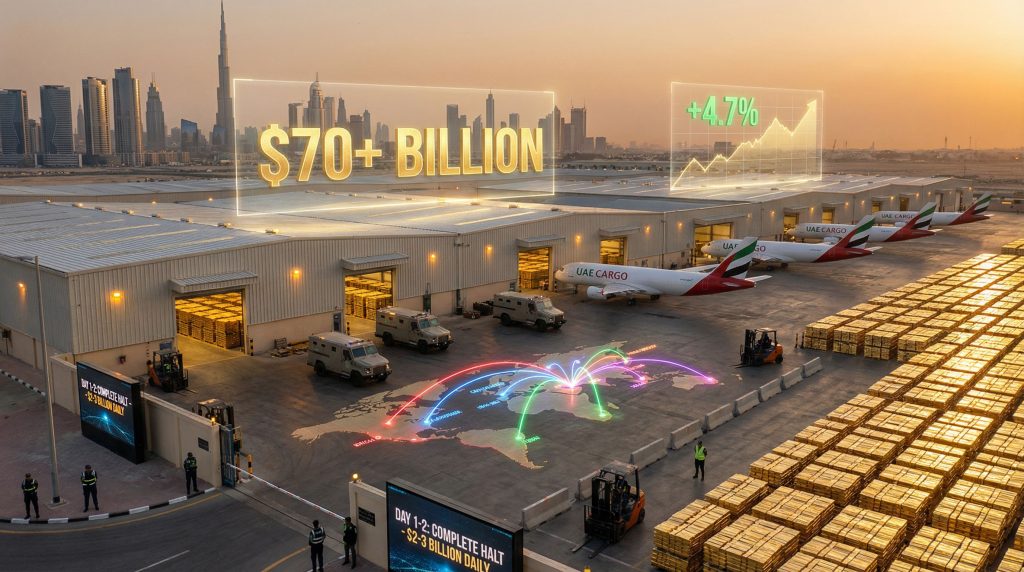
Dubai gold flows curbed due to US-Israeli strikes on Iran have highlighted critical vulnerabilities in global precious metals supply chains that depend heavily on aviation networks. Furthermore, the intricate system connecting refineries, trading hubs, and consumption centres across continents faces significant challenges when geopolitical tensions disrupt key transportation corridors. Recent events demonstrate how Middle Eastern conflicts force traders to reassess risk management strategies and develop alternative routing mechanisms for high-value commodity movements.
Aviation-dependent precious metals flows face unique challenges that distinguish them from other commodities. Moreover, the combination of security protocols, insurance requirements, and regulatory frameworks creates a system where disruptions can cascade rapidly through global markets. Understanding these dynamics becomes crucial as investors navigate periods of heightened geopolitical uncertainty, particularly as the historic gold surge continues to reshape market expectations.
Dubai's Central Role in Global Precious Metals Distribution
Dubai has established itself as a critical node in the international gold trade, processing significant volumes of physical bullion between major consuming and refining regions. Additionally, the emirate's strategic position connects Swiss refineries with Asian consumption centres, particularly India and Hong Kong, through established trade corridors that have developed over decades.
The infrastructure supporting these flows includes specialised free trade zones, minimal taxation frameworks, and banking systems designed to handle large-value transactions. In addition, Dubai's geographic location provides efficient routing between European refining centres and Asian markets, making it an essential waypoint for intercontinental precious metals movements.
Industry estimates suggest Dubai handles substantial portions of global gold trade flows, with the emirate serving as both a physical distribution hub and price discovery centre. Consequently, this concentration creates systemic importance, where disruptions to Dubai operations can affect global market dynamics within days.
Critical Infrastructure Dependencies
The precious metals trade relies on specialised infrastructure that differs significantly from general cargo handling. For instance, secure storage facilities, certified transportation vehicles, and qualified personnel create a narrow pipeline for moving high-value materials. These requirements limit alternative routing options when primary pathways become unavailable.
Insurance protocols for precious metals shipments mandate specific security measures and custody chains that favour aviation transport over maritime alternatives. Furthermore, the weight-to-value ratio of gold makes air freight economically viable despite higher transportation costs per kilogram compared to bulk commodities.
Banking and settlement systems supporting these trades operate through established relationships between financial institutions in key trading centres. However, when physical flows are disrupted, settlement mechanisms can become strained as traders struggle to fulfil delivery obligations.
When big ASX news breaks, our subscribers know first
Aviation-Only Transport Requirements and Market Implications
Physical gold shipments face unique transportation constraints that create dependencies on air cargo networks. Moreover, security considerations, insurance industry standards, and regulatory requirements combine to make aviation the preferred method for moving precious metals between international markets.
The high value-to-weight characteristics of gold make air transportation cost-effective despite premium pricing for cargo space. For instance, a single airline pallet can carry millions of dollars worth of bullion, justifying the additional security and handling costs associated with aviation transport.
Insurance companies typically require specific custody protocols for precious metals shipments, including continuous monitoring, secure facilities, and qualified personnel throughout the transportation chain. In contrast, maritime shipping, while cheaper per unit weight, introduces extended exposure periods that increase insurance costs and security risks.
Supply Chain Bottlenecks During Aviation Disruptions
When flight operations are suspended due to geopolitical events, precious metals traders face immediate constraints on their ability to move inventory between regions. Consequently, unlike commodities that can utilise alternative transportation modes, gold flows become essentially frozen during aviation disruptions. The current gold market surge amplifies these concerns as demand continues to outpace available supply channels.
The impact cascades through trading relationships as dealers struggle to fulfil contractual obligations. Furthermore, physical delivery requirements in many precious metals contracts mean that transportation delays can force cash settlements or contract modifications, affecting market pricing mechanisms.
Central banks and major institutional players typically maintain inventory buffers to manage short-term disruptions. However, extended aviation shutdowns can strain these reserves and force adjustments to trading strategies and risk management protocols.
Economic Transmission Mechanisms from Flight Suspensions to Price Volatility
Geopolitical events that disrupt aviation networks create multiple pathways through which precious metals markets experience volatility. Moreover, the immediate effect involves physical supply constraints, but secondary mechanisms involving risk perception and investment flows often produce larger price impacts. The geopolitical gold forecast suggests these patterns will continue influencing market dynamics throughout the year.
Safe-haven demand typically accelerates during geopolitical tensions, creating additional upward pressure on precious metals prices beyond what supply constraints alone would generate. Consequently, this dual effect can amplify price movements significantly above levels justified by physical market disruptions.
Regional price disparities emerge when transportation links are severed, creating arbitrage opportunities for traders with access to alternative routing. These premium differentials provide market signals about the severity and expected duration of supply chain disruptions.
Timeline of Market Impact Progression
| Phase | Duration | Primary Effects | Secondary Impacts |
|---|---|---|---|
| Immediate | 24-48 hours | Flight cancellations, inventory freeze | Price gaps, trading volume spikes |
| Short-term | 3-7 days | Alternative routing attempts, insurance claims | Premium expansion, ETF flows |
| Medium-term | 1-3 weeks | Inventory redistribution, contract modifications | Market structure changes |
| Recovery | 4-8 weeks | Transportation normalisation | Price convergence, risk premium adjustment |
The progression from physical disruption to market impact follows predictable patterns based on historical precedents. Furthermore, initial price reactions often reflect immediate supply concerns, while sustained effects depend on the duration and scope of transportation disruptions.
Investment flows into precious metals ETFs and futures contracts typically surge during geopolitical events, creating additional demand that compounds supply-side constraints. Additionally, these financial flows can dwarf the economic impact of physical transportation delays.
Geopolitical Risk Premiums and Precious Metals Pricing Dynamics
Precious metals markets incorporate geopolitical risk through multiple pricing mechanisms that extend beyond immediate supply and demand fundamentals. In addition, risk premiums reflect market expectations about conflict duration, escalation potential, and broader economic implications. The mining industry evolution is adapting to these changing dynamics through enhanced risk management strategies.
Historical analysis reveals that geopolitical events affecting Middle Eastern transportation corridors typically generate price premiums of 2-5% above baseline levels, depending on conflict intensity and expected duration. Moreover, these premiums can persist for weeks or months after physical disruptions end.
Currency volatility during geopolitical events creates additional complexity for international precious metals trading. Furthermore, exchange rate fluctuations can amplify or dampen price effects in local currency terms, influencing regional demand patterns.
Multi-Factor Price Impact Assessment
Immediate Price Drivers:
- Physical supply constraints from transportation disruptions
- Safe-haven investment flows from risk-averse capital
- Insurance cost increases affecting trading margins
- Currency volatility impacting international pricing
Secondary Market Effects:
- ETF creation and redemption activities
- Central bank policy responses and communication
- Mining company operational adjustments
- Industrial user inventory management changes
Longer-term Structural Changes:
- Supply chain diversification investments
- Alternative transportation route development
- Insurance industry protocol modifications
- Regulatory framework adaptations
The interaction between these factors creates complex pricing dynamics that can produce sustained effects even after initial disruptions resolve. Additionally, market participants must assess multiple variables simultaneously when evaluating investment strategies during geopolitical events.
Regional Market Segmentation During Crisis Periods
Geopolitical disruptions create temporary fragmentation in global precious metals markets as transportation links between regions become constrained. Consequently, this segmentation produces price differentials that reflect regional supply and demand imbalances.
Unaffected Trading Centres:
- Shanghai Gold Exchange maintains normal operations
- London Bullion Market Association continues settlement functions
- New York COMEX futures trading proceeds without interruption
- Zurich physical gold markets operate through alternative suppliers
Disrupted Supply Corridors:
- Middle East to European refinery shipments delayed
- Gulf state to Asian consumer flows interrupted
- Regional storage facilities experience inventory accumulation
- Alternative routing through Turkey and Mumbai activated
These regional disparities create arbitrage opportunities for traders with access to multiple markets, but also generate risks for participants locked into specific geographic trading relationships.
Alternative Distribution Network Activation
When primary trading hubs experience disruptions, secondary centres typically see increased activity as market participants seek alternative pathways. For instance, Singapore's precious metals infrastructure can absorb some Dubai volume, though capacity constraints limit full substitution.
Hong Kong's role as an Asian precious metals centre becomes more prominent during Middle Eastern disruptions, with trading volumes often increasing 20-30% above normal levels. However, the shift requires relationship adjustments and may involve higher transaction costs.
Swiss refineries maintain direct relationships with mining companies and can adjust shipment patterns to bypass disrupted corridors. Furthermore, this flexibility provides some market stability but cannot fully compensate for major hub shutdowns.
According to Reuters, investors continue seeking safe-haven assets as regional tensions persist, further complicating supply chain dynamics in the precious metals sector.
"Critical infrastructure dependencies in precious metals trading create systemic vulnerabilities. Industry analysis indicates that simultaneous disruptions to Dubai, Singapore, and Hong Kong could affect 60-70% of Asian gold flows, highlighting the need for infrastructure diversification."
Investment Strategy Implications During Transportation Disruptions
Precious metals transportation disruptions create both challenges and opportunities for different categories of investors. Moreover, understanding the mechanics of these effects enables more effective portfolio management during geopolitical events. The gold price outlook remains optimistic despite these operational challenges.
Physical Gold vs. Paper Gold Dynamics:
- Physical premiums typically expand during transportation constraints
- ETF shares may trade at premiums to net asset value
- Futures contracts experience increased volatility and wider spreads
- Regional price differentials create arbitrage opportunities
Mining Equity Considerations:
- Short-term volatility often exceeds underlying commodity price moves
- Operational exposure varies significantly between companies
- Currency hedging effectiveness becomes more important
- Market cap size affects liquidity during stress periods
Portfolio Allocation Adjustments:
- Increased allocation to precious metals during conflict periods
- Geographic diversification of storage and trading relationships
- Hedging strategies for transportation and currency risks
- Liquidity management for potential margin calls
Historical Precedent Analysis
| Event | Duration | Gold Price Impact | Recovery Timeline | Key Lessons |
|---|---|---|---|---|
| 9/11 Aviation Shutdown | 4 days | +3.2% | 2 weeks | Aviation dependency vulnerability |
| Iceland Volcano Ash | 6 days | +1.8% | 3 weeks | European corridor importance |
| COVID Flight Restrictions | 14+ days | +4.7% | 6 weeks | Extended disruption effects |
| Russia-Ukraine Conflict | Ongoing | +8.5% | N/A | Supply chain restructuring |
Historical analysis demonstrates that precious metals markets typically recover from transportation-related disruptions within 2-6 weeks, though structural changes in supply chains can create lasting effects on trading patterns and risk premiums.
The magnitude of price impacts correlates with disruption duration, conflict intensity, and the availability of alternative transportation routes. Furthermore, events affecting multiple transportation corridors simultaneously generate disproportionately large market reactions.
The next major ASX story will hit our subscribers first
Central Bank Response Frameworks and Market Stabilisation
Major central banks maintain various mechanisms to address precious metals market disruptions, though these tools are used selectively and primarily during severe stress periods. Additionally, understanding these frameworks helps investors anticipate potential policy responses.
Federal Reserve Gold Operations:
- Gold lending facilities for authorised dealers experiencing delivery constraints
- Swap arrangements with foreign central banks during currency stress
- Coordination with Treasury Department on strategic reserve utilisation
- Communication strategies to manage market expectations
European Central Bank Mechanisms:
- Precious metals lending operations for Eurosystem banks
- Coordination with national central banks on market stabilisation
- Integration with broader monetary policy communication strategies
- Liaison with London Bullion Market Association on operational issues
Bank of England Market Maker Support:
- Vault services for international precious metals storage
- Settlement system maintenance during operational disruptions
- Coordination with major bullion banks on liquidity provision
- Regulatory guidance for market participants during stress periods
Trade Finance Adaptation During Disruptions
International trade finance systems must adapt rapidly when precious metals shipments face delays or routing changes. Moreover, banks typically modify letter of credit terms, adjust insurance requirements, and implement alternative settlement mechanisms.
Insurance companies often invoke force majeure clauses during geopolitical events, shifting risk allocation between buyers, sellers, and transportation providers. Consequently, these adjustments can affect contract pricing and availability for future shipments.
Digital settlement platforms gain importance during physical disruption periods, enabling continued trading activity even when delivery mechanisms are constrained. However, regulatory frameworks for these alternatives remain evolving in many jurisdictions.
Long-term Structural Evolution in Global Precious Metals Trade
Recurring transportation disruptions are driving structural changes in how precious metals markets organise themselves globally. Furthermore, these adaptations reflect lessons learned from recent crises and preparations for future geopolitical challenges. Dubai gold flows curbed due to US-Israeli strikes on Iran exemplify the kind of disruptions spurring these changes.
Infrastructure Diversification Initiatives:
- Development of alternative air cargo hubs outside conflict-prone regions
- Investment in overland transportation corridors for precious metals
- Expansion of secure storage facilities in multiple geographic locations
- Technology integration for supply chain visibility and risk management
Regulatory Framework Evolution:
- International coordination on precious metals transportation standards
- Updated insurance protocols for geopolitical risk coverage
- Digital settlement system regulatory frameworks
- Enhanced reporting requirements for large-value transactions
Market Structure Adaptations:
- Geographic distribution of major trading relationships
- Redundant supply chain pathway development
- Enhanced inventory management systems
- Risk management tool sophistication improvements
Technology Integration and Supply Chain Transparency
Advanced tracking systems and blockchain technology are increasingly deployed to provide real-time visibility into precious metals supply chains. Moreover, these systems help market participants anticipate disruptions and implement alternative strategies more quickly.
Digital platforms for precious metals trading and settlement are gaining adoption as backup systems for physical delivery markets. Although regulatory frameworks remain incomplete, these alternatives provide operational resilience during transportation crises.
Artificial intelligence and machine learning systems are being developed to analyse geopolitical risk factors and predict transportation disruptions. Furthermore, these tools help traders and investors adjust positions proactively rather than reactively.
Economic Forecasting and Scenario Analysis
Understanding potential outcomes from extended geopolitical disruptions helps market participants prepare appropriate strategies. Additionally, scenario analysis provides frameworks for evaluating different risk levels and time horizons.
Base Case Scenario (7-14 day disruption):
- Gold price impact: +2.5% to +4.0% above baseline
- Regional premium expansion: 0.5-1.0% in affected corridors
- Trading volume increase: 20-30% above normal levels
- Mining equity volatility: +15-25% relative to spot prices
Stress Case Scenario (30+ day extended disruption):
- Structural supply chain reorganisation requirements
- Permanent alternative transportation route establishment
- Insurance premium normalisation at elevated levels
- Central bank coordination and potential intervention
Recovery Phase Characteristics:
- Inventory rebalancing periods of 4-8 weeks
- Price premium compression over 2-3 months
- Investment flow normalisation requiring 3-6 months
- Infrastructure investment cycles spanning 2-5 years
Market Psychology and Behavioural Factors
Investor behaviour during geopolitical crises follows predictable patterns that amplify fundamental supply and demand effects. Consequently, fear-driven safe-haven flows often exceed rational responses to actual supply constraints.
Institutional Investor Responses:
- Portfolio rebalancing toward defensive assets
- Increased precious metals allocation during uncertainty
- Geographic diversification of holdings and trading relationships
- Enhanced risk management and hedging activities
Retail Investor Behaviour:
- Surge in physical precious metals purchases
- Increased ETF and mining stock trading activity
- Media-driven sentiment amplification effects
- Delayed reaction patterns compared to institutional flows
Understanding these behavioural dynamics helps explain why price movements during geopolitical events often exceed levels justified by fundamental supply and demand changes alone. Furthermore, Dubai gold flows curbed due to US-Israeli strikes on Iran demonstrates how quickly sentiment can shift during crisis periods.
This analysis is for educational purposes and should not be construed as investment advice. Precious metals markets involve significant risks, and past performance does not guarantee future results. Geopolitical events can produce unpredictable market outcomes that differ materially from historical precedents. Investors should consult qualified financial advisors before making investment decisions based on geopolitical risk assessments.
Need to Stay Ahead of Market-Moving Discoveries?
Discovery Alert's proprietary Discovery IQ model delivers real-time alerts on significant ASX mineral discoveries, instantly empowering subscribers to identify actionable opportunities ahead of the broader market whilst geopolitical tensions continue reshaping precious metals dynamics. Begin your 14-day free trial today and secure your market-leading advantage during these volatile times.