June 24, 2026
The Transformation of East Africa's Energy Landscape Through Deepwater Exploration
The emergence of ultra-deepwater drilling operations across East Africa represents a fundamental shift in global energy dynamics, one that extends far beyond individual national boundaries. As maritime technology advances and geological understanding deepens, the western Indian Ocean has become a critical frontier for energy development, fundamentally reshaping economic opportunities across the Horn of Africa region. Somalia offshore oil drilling initiatives exemplify this transformation, highlighting the potential for significant economic development through strategic energy sector investment.
This transformation is occurring at a time when global energy markets face unprecedented pressure from geopolitical tensions, supply chain disruptions, and evolving demand patterns. Furthermore, the technical complexity of deepwater operations, combined with the substantial capital requirements and extended development timelines, creates unique challenges for emerging economies seeking to monetise their offshore hydrocarbon resources.
When big ASX news breaks, our subscribers know first
Understanding the Economic Architecture of Somalia's Offshore Energy Initiative
Capital Investment Frameworks for Ultra-Deepwater Development
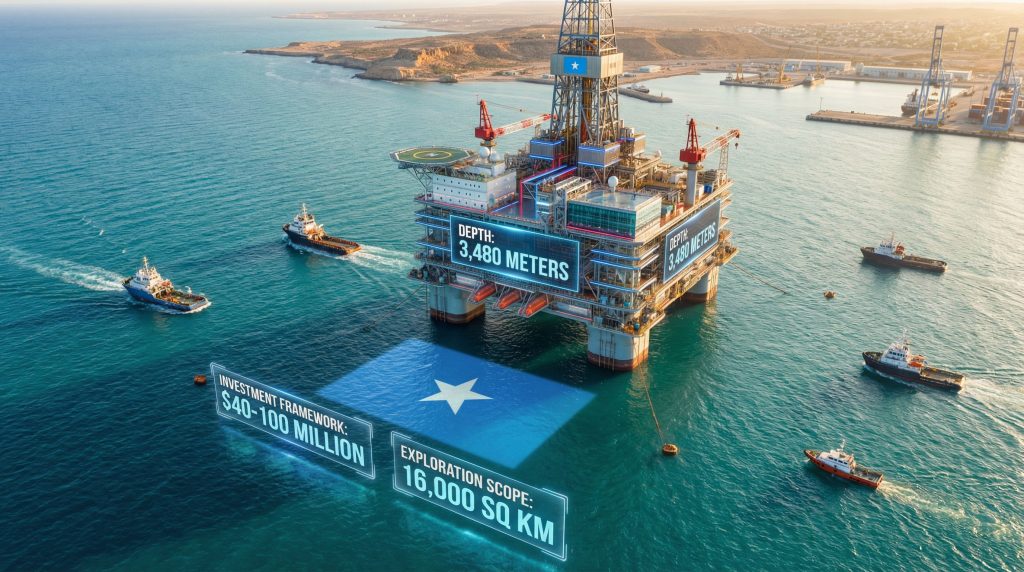
The financial structure underlying Somalia offshore oil drilling operations reflects broader patterns seen across African energy markets, where international partnerships become essential for accessing the technical expertise and capital resources required for complex offshore projects. Industry analysis suggests that deepwater exploration campaigns in similar geological settings typically require initial investment ranges of $40-100 million, depending on water depth, geological complexity, and infrastructure requirements.
These investment levels reflect the specialised nature of offshore drilling equipment, which must operate in challenging marine environments while maintaining precise geological targeting capabilities. In addition, the technical demands of operations at depths exceeding 3,000 metres require advanced drilling platforms, sophisticated seismic interpretation capabilities, and extensive logistical support networks that can maintain operational continuity across extended drilling campaigns.
Recent developments in Somalia's energy sector indicate that Turkish energy companies have established exploration rights covering approximately 16,000 square kilometres of offshore territory, representing one of the most significant foreign investment commitments in Somalia's modern history. This scale of exploration activity suggests confidence in the geological potential of Somalia's offshore basins, which share structural characteristics with proven hydrocarbon provinces elsewhere in the western Indian Ocean. These developments could trigger an oil price rally as markets react to potential new supply sources.
Economic Multiplier Effects of Offshore Energy Development
The economic impact of successful offshore discoveries extends well beyond direct hydrocarbon revenues, creating cascading effects across multiple sectors of the economy. However, infrastructure development requirements alone generate substantial employment opportunities and industrial capacity building, while the establishment of technical service industries creates long-term economic benefits that persist beyond the initial exploration phase.
Deepwater Infrastructure Investment Analysis
| Infrastructure Component | Investment Range | Employment Potential | Development Timeline |
|---|---|---|---|
| Offshore Platform Development | $200-500 million | 800-1,500 positions | 3-5 years |
| Pipeline and Transport Systems | $150-400 million | 400-900 positions | 2-4 years |
| Processing and Refining Facilities | $600 million-1.8 billion | 1,200-3,500 positions | 4-7 years |
| Support Infrastructure | $100-250 million | 300-700 positions | 1-3 years |
Revenue-sharing arrangements between international operators and host governments typically follow production-sharing agreement structures that can provide substantial fiscal benefits to developing nations. In comparable African offshore projects, government revenues have ranged from 60-80% of total project economics, depending on the specific fiscal terms negotiated and the scale of discoveries achieved.
These revenue flows create opportunities for sovereign wealth fund establishment, infrastructure development financing, and human capital investment programs that can accelerate broader economic transformation. Nevertheless, the realisation of these benefits depends critically on the establishment of transparent governance frameworks and effective institutional capacity for revenue management.
Regional Geopolitical Implications of East African Energy Development
Energy Security Dynamics Across the Horn of Africa
The development of Somalia offshore oil drilling operations occurs within a complex regional security environment, where maritime boundaries, shipping lane security, and cross-border infrastructure development create both opportunities and challenges for sustained energy sector growth. The strategic importance of the western Indian Ocean shipping routes adds geopolitical significance to any substantial energy discoveries in Somalia's exclusive economic zone.
Historical analysis of the region reveals that major international energy companies, including Shell and ExxonMobil, have maintained exploration interests in Somalia for decades, though operational activities have been limited by security concerns and institutional capacity constraints. Turkey's decision to proceed with active exploration operations represents a significant departure from the cautious approach adopted by other international operators.
This shift in operational risk tolerance reflects broader changes in global energy markets, where resource scarcity and supply chain vulnerabilities have increased the strategic value of new supply sources, even in challenging operating environments. Consequently, the success or failure of current exploration campaigns in Somalia may establish important precedents for future energy development across conflict-affected regions globally, potentially influencing oil price movements across international markets.
Cross-Border Infrastructure Integration Potential
Regional energy integration frameworks across East Africa create opportunities for Somalia's offshore resources to contribute to broader energy security improvements extending beyond national boundaries. Existing pipeline infrastructure connecting Ethiopia to port facilities in Djibouti demonstrates the feasibility of cross-border energy transport systems, while ongoing discussions of East African energy corridor development suggest potential for coordinated regional energy planning.
The establishment of successful offshore production in Somalia could catalyse similar exploration activities in neighbouring maritime zones, creating opportunities for shared infrastructure development and coordinated export strategies. Such regional cooperation models have proven successful in other parts of Africa, where cross-border pipeline systems and shared processing facilities have reduced development costs and accelerated project timelines.
Comparative Analysis with Successful African Offshore Developments
Learning from Established Production Centres
The trajectory of offshore oil development across Africa provides valuable insights for understanding the potential economic impact of Somalia's energy initiatives. Ghana's Jubilee Field, discovered in 2007 and brought into production by 2010, demonstrates the rapid development timelines possible when geological conditions, institutional capacity, and international partnerships align effectively.
African Offshore Development Comparison
| Country | Discovery Year | Production Start | Peak Output (bpd) | Economic Transformation Period |
|---|---|---|---|---|
| Ghana | 2007 | 2010 | 100,000-120,000 | 2010-2016 |
| Senegal | 2014 | 2023 | 100,000 | 2020-2026 |
| Mozambique | 2010 | 2022 | 50,000 (expanding) | 2018-2025 |
| Somalia | Ongoing exploration | Projected 2028-2030 | To be determined | Projected 2025-2035 |
Ghana's experience with the Jubilee Field illustrates both the opportunities and challenges associated with rapid offshore development. Peak production levels reached approximately 100,000-120,000 barrels per day, generating substantial government revenues while simultaneously creating pressure for rapid institutional development and regulatory framework establishment.
Senegal's more recent experience with the Sangomar project provides insights into modern development approaches that emphasise local content requirements, environmental sustainability, and community benefit-sharing mechanisms. The nine-year timeline from discovery to production in Senegal reflects both the technical complexity of deepwater development and the importance of comprehensive regulatory approval processes. For instance, OPEC decisions regarding new African producers could significantly affect market dynamics and create OPEC production impact scenarios.
Risk Mitigation Strategies from Regional Experience
Analysis of successful African offshore projects reveals several critical success factors that apply directly to Somalia's development challenges. Transparent revenue management systems, exemplified by Ghana's Petroleum Revenue Management Act, provide frameworks for ensuring that hydrocarbon revenues contribute to long-term economic development rather than short-term fiscal relief.
Local content development programmes, successfully implemented in countries like Nigeria and Angola, create opportunities for domestic capacity building while ensuring that international operators contribute to sustainable economic development. These programmes typically require graduated increases in local employment, local procurement, and technology transfer over the life of production operations.
Community benefit-sharing mechanisms have become increasingly important components of offshore development projects, ensuring that coastal communities affected by industrial activities receive direct benefits from energy development. These frameworks help build social acceptance for large-scale industrial projects while contributing to broader development objectives.
Infrastructure Development Requirements for Energy Sector Success
Technical Capacity Building Imperatives
The establishment of a viable offshore energy sector requires substantial investment in human capital development, particularly in specialised technical fields such as petroleum engineering, marine geology, and offshore operations management. Somalia offshore oil drilling initiatives face significant technical capacity constraints that necessitate comprehensive training programmes and international partnership arrangements for skills transfer.
Institutional capacity development represents an equally critical challenge, requiring the establishment of effective regulatory frameworks, environmental oversight mechanisms, and revenue management systems. Moreover, the complexity of offshore operations demands sophisticated regulatory capabilities that can ensure operational safety, environmental protection, and fiscal transparency simultaneously.
International experience suggests that successful capacity building programmes require sustained investment over multiple years, with graduated increases in local responsibility as technical expertise develops. Partnership arrangements with established energy-producing nations can accelerate this process through formal training programmes, technical assistance agreements, and regulatory framework development support.
Financial Architecture for Sustained Growth
The establishment of effective financial management systems becomes critical once hydrocarbon production begins generating substantial government revenues. Sovereign wealth fund models, successfully implemented in countries like Norway and Botswana, provide frameworks for converting finite hydrocarbon resources into permanent financial assets that can support long-term development objectives.
Revenue volatility management represents another crucial consideration, given the cyclical nature of global energy markets and the vulnerability of single-commodity economies to external price shocks. Stabilisation fund mechanisms and diversified investment strategies can help insulate domestic economies from the boom-bust cycles that have affected many resource-dependent developing nations. Such measures become particularly important when considering potential oil price crash analysis scenarios that could affect revenue streams.
Access to international capital markets becomes increasingly important as energy sectors mature and require additional investment for field development, infrastructure expansion, and technology upgrades. Credit rating improvements typically follow successful establishment of transparent governance frameworks and effective revenue management systems.
Global Energy Market Integration and Supply Chain Positioning
East African Energy Export Corridors
The development of Somalia's offshore resources occurs within a broader context of East African energy infrastructure expansion, where several countries are simultaneously developing offshore gas and oil discoveries. This regional development pattern creates both opportunities for shared infrastructure development and challenges related to market access and export capacity.
Existing energy corridor development across East Africa includes major pipeline projects connecting landlocked producing regions to coastal export facilities, demonstrating the feasibility of large-scale energy transport infrastructure. Somalia's coastal location provides natural advantages for export facility development, potentially positioning the country as a regional energy hub if offshore discoveries prove commercially viable.
Regional refining capacity development represents another consideration for long-term energy sector planning. While initial production typically targets export markets, domestic refining capabilities can capture additional value-added opportunities while improving regional energy security.
Market Positioning in the Global Energy Transition
Somalia's potential entry into global energy markets occurs at a time when energy transition dynamics are reshaping demand patterns and investment priorities across the petroleum sector. This context creates both opportunities and challenges for new energy producers, who must balance immediate revenue generation needs with long-term sustainability considerations.
The integration of environmental sustainability requirements into energy project development has become increasingly important for accessing international financing and maintaining market access. Somalia's offshore oil exploration represents a significant step forward in the country's energy sector development. Modern offshore projects typically incorporate advanced environmental monitoring systems, emissions reduction technologies, and biodiversity protection measures from the initial development phase.
Global energy security concerns, heightened by recent geopolitical tensions and supply chain disruptions, have increased the strategic value of diversified energy supply sources. This dynamic potentially enhances the market positioning of new African energy producers, provided they can demonstrate reliable production capabilities and stable operating environments. The global tariffs impact on energy trade flows could further influence market positioning strategies.
The next major ASX story will hit our subscribers first
Long-term Economic Development Scenarios and Risk Assessment
What Are the Optimistic Development Trajectory Analysis Outcomes?
Under favourable geological and operational scenarios, Somalia's offshore energy development could generate transformative economic impacts comparable to those observed in other successful African energy-producing nations. GDP growth acceleration, employment generation across multiple economic sectors, and infrastructure development financing represent potential positive outcomes from sustained hydrocarbon production.
Economic modelling based on comparable African projects suggests that successful offshore development could contribute 15-25% of GDP growth over a 10-15 year development period, assuming effective revenue management and institutional capacity development. These projections depend critically on discovery scale, production timeline achievement, and global energy market conditions during the production phase.
Downstream economic development opportunities include petrochemical industry establishment, energy-intensive manufacturing sector development, and regional energy trading hub positioning. These secondary economic benefits often exceed direct hydrocarbon revenues in their long-term economic impact.
Risk Mitigation and Contingency Planning
Comprehensive risk assessment for Somalia's energy development must address both technical and political risk factors that could affect project viability and economic returns. Technical risks include geological uncertainty, operational challenges in deepwater environments, and infrastructure development delays that could extend project timelines and increase capital requirements.
Critical Success Factors for Sustainable Development
-
Transparent Governance Framework Implementation
- Revenue management system establishment
- Regulatory oversight capacity development
- Public accountability mechanism creation
-
Technical Capacity Building Programmes
- Petroleum engineering education initiatives
- Marine operations training systems
- Environmental management capability development
-
Strategic Partnership Development
- International operator engagement
- Regional cooperation framework establishment
- Technology transfer agreement negotiation
-
Community Engagement and Benefit Sharing
- Local employment opportunity creation
- Infrastructure development prioritisation
- Environmental protection standard implementation
-
Economic Diversification Planning
- Non-oil sector development promotion
- Manufacturing capability enhancement
- Service sector expansion facilitation
Political stability maintenance represents perhaps the most critical risk factor, given the historical challenges associated with governance and security in Somalia. International experience suggests that energy sector success requires sustained political commitment to transparent governance, regulatory consistency, and institutional capacity building over extended time periods.
Environmental risk management has become increasingly important for energy project sustainability, requiring comprehensive environmental impact assessments, community consultation processes, and long-term environmental monitoring systems. These requirements reflect both international best practice standards and practical considerations related to social acceptance and operational sustainability.
Implementation Timeline and Key Milestones
Critical Development Phases
The progression from exploration to commercial production in offshore energy development typically follows established timelines that reflect both technical requirements and regulatory approval processes. Initial exploration phases, currently underway in Somalia's offshore blocks, typically require 12-24 months for completion, depending on geological complexity and operational conditions.
Discovery confirmation and resource assessment phases can extend an additional 18-36 months, during which time detailed geological analysis, reservoir engineering studies, and preliminary economic assessments determine commercial viability. This phase represents a critical decision point where project economics and long-term development strategies are established.
Field development planning and regulatory approval processes typically require 24-48 months, encompassing environmental impact assessments, infrastructure design, financing arrangement completion, and regulatory permit acquisition. The complexity of these processes reflects the substantial capital commitments required for offshore development and the long-term nature of production operations.
How Can Success Be Measured in Somalia's Energy Development?
Effective project monitoring requires establishment of clear performance metrics that track both technical achievement and broader economic development objectives. Production milestone achievement, local employment generation, government revenue collection, and infrastructure development progress represent key indicators of project success.
Regular assessment of regional energy market integration, international partnership effectiveness, and institutional capacity development provides broader context for evaluating the strategic success of Somalia's energy development initiatives. These assessments help ensure that immediate operational objectives align with long-term economic development goals.
Environmental and social impact monitoring has become an integral component of modern energy project assessment, requiring ongoing measurement of ecological effects, community benefit distribution, and social infrastructure development. These monitoring systems help ensure that energy development contributes to sustainable development objectives while maintaining operational viability. According to recent reports, Somalia's energy initiatives represent significant economic and geopolitical developments for the region.
The success of Somalia offshore oil drilling operations will ultimately depend on the alignment of geological potential, technical execution capabilities, institutional capacity development, and global market conditions. While the challenges are substantial, the experience of other African energy-producing nations demonstrates that effective management of these factors can generate transformative economic benefits that extend well beyond the energy sector itself.
The broader implications of Somalia's energy development extend to regional energy security, international partnership models for conflict-affected regions, and the evolution of global energy supply chains in an era of increasing geopolitical complexity. As such, the outcomes of current exploration activities in Somalia's offshore waters will be closely watched by energy industry participants, development organisations, and policymakers across Africa and beyond.
Ready to Capitalise on Africa's Energy Transformation?
Discovery Alert's proprietary Discovery IQ model delivers real-time alerts on significant energy and resource discoveries across ASX-listed companies, instantly empowering subscribers to identify actionable opportunities ahead of the broader market. Understand why major mineral and energy discoveries can lead to substantial market returns by exploring Discovery Alert's dedicated discoveries page, showcasing historic examples of exceptional outcomes, and begin your 14-day free trial today to position yourself ahead of the market.