June 5, 2026
The Economics of Energy-Intensive Metallurgy Drive Industrial Collapse
South Africa's last manganese smelter stands on the precipice of closure, exemplifying how energy pricing mechanisms can systematically dismantle entire industrial value chains despite abundant natural resources. This crisis demonstrates the broader challenges facing government intervention mining policies across emerging economies where regulatory frameworks often determine competitive viability more than geological endowments or technical expertise.
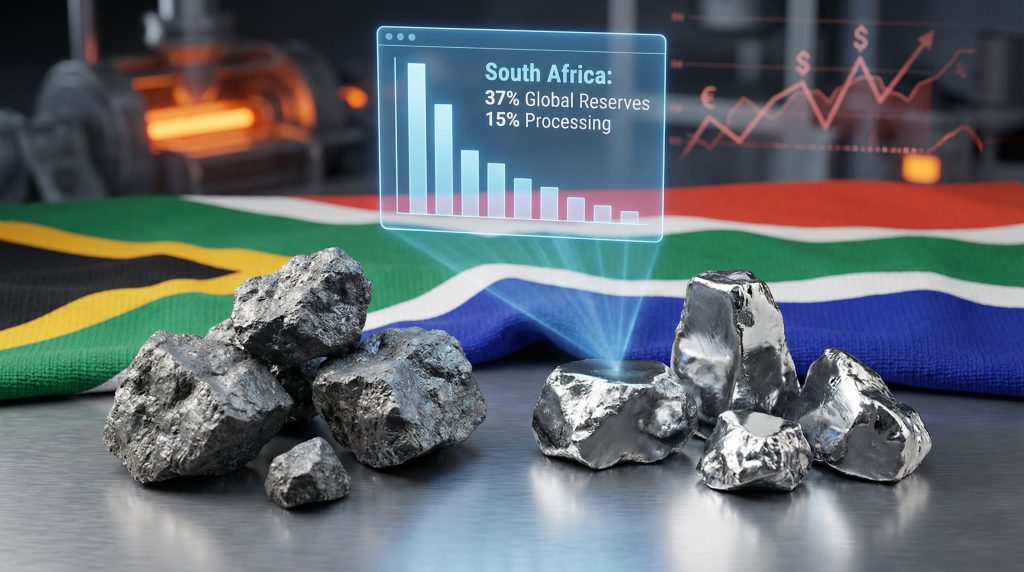
The nation controls approximately 37% of global manganese reserves yet processes minimal quantities domestically. Furthermore, processing capacity approaches zero as facilities face closure due to electricity cost structures that render operations financially unsustainable.
When big ASX news breaks, our subscribers know first
Critical Financial Threshold Analysis
Energy costs constitute nearly 40% of total operating expenses for manganese smelting operations, according to Transalloys leadership statements from December 2025. This cost structure creates vulnerability when electricity pricing exceeds competitive benchmarks established by international producers.
Foreign manganese smelting facilities operate with electricity costs approximately 50% lower than South Africa's regulated tariff levels. Consequently, this creates a 2:1 competitive disadvantage that eliminates profit margins regardless of operational efficiency improvements or productivity gains.
| Cost Component | Percentage of Total Expenses | Competitive Impact |
|---|---|---|
| Electricity | 40% | 2:1 disadvantage vs international |
| Raw Materials | 25-30% | Neutral (domestic advantage) |
| Labor | 15-20% | Slight advantage |
| Other Operating | 10-15% | Variable |
Submerged Arc Furnace Energy Requirements
Manganese smelting utilises submerged arc furnace technology requiring 2.5 to 3.5 megawatt-hours per tonne of ferromanganese production. These continuous-operation furnaces maintain temperatures exceeding 1,700°C, demanding stable electrical supply without interruptions that could damage equipment or compromise product quality.
The capital-intensive nature of SAF installations means that electricity price volatility directly translates to unit production cost fluctuations. Moreover, no offsetting economies of scale are available to absorb cost increases through volume adjustments.
"Manganese smelting ranks among the most electricity-demanding metallurgical processes globally, with energy intensity comparable to aluminium production but lacking the long-term contract structures that provide price stability in aluminium smelting."
Regulatory Framework Gaps Create Systematic Disadvantage
South Africa's electricity pricing operates through NERSA's regulated tariff methodology, which applies standardised rates across industrial customers. However, this system lacks differentiation for strategic minerals processing or export-oriented value addition activities.
Ferrochrome Preferential Treatment Analysis
Current regulatory review processes include interim power tariff adjustments specifically targeting struggling ferrochrome smelters. In contrast, South Africa's last manganese smelter remains excluded from similar relief mechanisms despite comparable energy intensity and economic distress indicators.
This preferential treatment reflects implicit policy prioritisation of stainless steel inputs over carbon steel inputs. Consequently, regulatory inconsistency emerges in strategic minerals support frameworks.
Timeline for Resolution Requirements
Industry sources indicate resolution timelines measured in months rather than years, with restructuring decisions scheduled for February 2025 absent immediate intervention. This compressed timeframe reflects the severity of cash flow deterioration and limited financial reserves available to sustain loss-making operations.
Global Reserve Ownership Versus Processing Capacity
South Africa's position as controller of the world's largest manganese reserves creates a fundamental economic paradox. This situation combines with minimal domestic processing capacity, inverting conventional resource economics where proximity to raw materials typically confers production cost advantages.
Export Profile Analysis
The nation exports most manganese production in raw ore form due to limited smelting capacity. This represents a commodity-class product with minimal value addition rather than specialty ferroalloy products commanding premium pricing.
Raw manganese ore trades at substantial discounts compared to ferromanganese. For instance, processed material typically commands 20-30% price premiums that remain insufficient to offset South Africa's electricity cost disadvantage.
Processing Capacity Erosion Timeline
More than a dozen smelting facilities have ceased operations in recent years. Each closure represents permanent infrastructure loss and technical expertise migration. The cumulative effect approaches complete domestic processing capacity elimination across the sector.
| Processing Stage | South African Capacity | Global Market Share |
|---|---|---|
| Raw Ore Production | Dominant | 37% of reserves |
| Smelting Operations | Near Zero | <2% of processing |
| Ferroalloy Export | Minimal | Negligible |
Employment and Regional Economic Devastation
Transalloys directly employs 600 workers currently at risk, with closure decisions affecting approximately 7,000 livelihoods in the eMalahleni municipality economic ecosystem. This 1:11.67 employment multiplier indicates substantial indirect dependency through supplier networks, logistics providers, and local service sectors.
Municipal Revenue Impact Assessment
Smelter operations generate corporate income taxes, payroll taxes, property taxes, and business fees across multiple government levels. Furthermore, facility closure reduces municipal revenue available for infrastructure maintenance and local economic development initiatives, creating cascading fiscal impacts.
Technical Skills Loss Analysis
Manganese smelting requires specialised workforce capabilities including:
• Furnace operation and maintenance technicians
• Electrical systems specialists for high-voltage operations
• Metallurgical engineers for process optimisation
• Environmental compliance specialists
• Quality control and materials testing personnel
Facility closure leads to permanent emigration of these technical competencies as workers relocate to international opportunities. Consequently, South Africa loses institutional knowledge in manganese processing technologies.
Historical Context of Industrial Decline
The closure of 12+ smelting facilities over recent years represents cumulative employment losses potentially exceeding 10,000-15,000 direct positions. Additionally, proportional indirect impacts affect surrounding regions. Each closure broke supplier relationships and reduced the critical mass necessary to maintain supporting industries.
International Energy Pricing Mechanisms for Strategic Industries
Multiple jurisdictions employ differentiated electricity pricing structures specifically supporting mineral processing and heavy industrial operations. However, this contrasts sharply with South Africa's standardised regulatory approach.
Norwegian Hydroelectric Model
Norway utilises abundant hydroelectric generation capacity to provide cost-competitive electricity rates for aluminium smelting and other energy-intensive industries. Long-term contracts provide price certainty spanning 3-5 year periods, enabling capital investment planning and operational stability.
Chinese Strategic Pricing Framework
China implements strategic pricing mechanisms for critical mineral processing, including preferential rates for domestic smelting operations. These policies maintain processing capacity despite higher baseline energy costs in certain regions, supporting downstream steel industry requirements.
Industrial Load Management Programs
Advanced electricity markets increasingly incorporate time-of-use pricing and demand response programs. These allow industrial customers to optimise consumption during off-peak periods, reducing average electricity costs through operational flexibility.
| Country | Support Mechanism | Price Certainty | Strategic Focus |
|---|---|---|---|
| Norway | Hydroelectric rates | 3-5 years | Aluminium/smelting |
| China | Strategic pricing | Variable | Critical minerals |
| India | Industrial tariffs | 2-3 years | Mining beneficiation |
| South Africa | Regulated rates | Annual | No differentiation |
The next major ASX story will hit our subscribers first
Policy Solutions for Competitive Positioning
Emergency Tariff Relief Mechanisms
Immediate regulatory interventions could include emergency tariff adjustments similar to those under consideration for ferrochrome operations. Implementation requires NERSA regulatory approval and potentially legislative authorisation for differentiated pricing structures.
The existing ferrochrome relief framework provides a precedent for sector-specific electricity pricing support. Furthermore, this requires expansion rather than creation of entirely new regulatory mechanisms.
Long-Term Strategic Mineral Classification
Treating manganese as a strategic mineral comparable to ferrochrome would justify inclusion in specialised pricing frameworks. Additionally, this classification requires government designation and regulatory implementation to support long-term industrial policy structures.
Public-Private Energy Infrastructure Development
Renewable energy solutions specifically for mining operations could reduce dependence on regulated grid electricity whilst providing cost-competitive power sources. Solar and wind installations dedicated to smelting operations offer potential long-term solutions, highlighting the decarbonisation mining benefits.
Step-by-Step Implementation Framework:
- Immediate Relief: Include manganese in existing ferrochrome tariff review process
- Classification: Designate manganese as strategic mineral requiring processing support
- Rate Structure: Develop time-of-use pricing for energy-intensive operations
- Investment Incentives: Create tax advantages for renewable energy infrastructure
- Long-term Contracts: Enable 3-5 year electricity price certainty agreements
Global Supply Chain Vulnerability and Strategic Implications
China currently processes approximately 95% of global manganese ore into ferroalloys, creating extreme concentration risk in international steel production supply chains. South Africa's processing capacity loss further intensifies this dependency, reflecting broader challenges in the mining industry evolution.
Price Volatility and Market Control
Chinese dominance in manganese processing enables significant influence over ferroalloy pricing and availability for international steel producers. Supply disruptions or policy changes in China directly impact global steel industry input costs.
Infrastructure Development Implications
Manganese serves as a critical input for carbon steel production, making reliable ferroalloy supplies essential for construction, automotive, and infrastructure development across developing economies. Processing capacity concentration creates systemic vulnerability for these sectors, particularly given the surge in critical minerals demand.
"The combination of Chinese processing dominance and South African raw material exports creates a single-point-of-failure risk for global manganese supply chains, particularly impacting steel-intensive infrastructure projects."
Investment and Market Psychology Analysis
Currency and Logistics Disadvantages
Beyond electricity costs, South African manganese operations face rand volatility, transportation expenses to international markets, and regulatory complexity. These factors compound competitive disadvantages relative to integrated operations in consumer markets.
Capital Flight and Disinvestment Patterns
The systematic closure of energy-intensive operations signals broader capital flight from South African manufacturing sectors. Furthermore, investors prioritise regulatory environments providing cost predictability and policy support for industrial development.
Risk Premium Adjustments
Manganese processing investments in South Africa now require substantially higher returns to compensate for electricity cost volatility and policy uncertainty. Consequently, this effectively prices most projects out of competitive consideration relative to international alternatives.
Technical Economics of Manganese Processing Recovery
Capital Requirements for Restart
Restarting mothballed smelting capacity requires substantial capital investment for equipment refurbishment, workforce retraining, and supply chain reestablishment. Closure decisions often become permanent due to these restart costs and ongoing operational uncertainties.
Minimum Scale Economics
Manganese smelting requires minimum operational scales to achieve unit cost competitiveness. Individual facility closures reduce the critical mass supporting supplier industries, making remaining operations increasingly uneconomical.
Technology Migration Risks
Extended operational pauses result in technology obsolescence and loss of process optimisation knowledge. This requires additional investment to restore competitive operational parameters even with favourable policy changes.
Future Scenarios and Path Dependencies
Complete Deindustrialisation Pathway
Without immediate policy intervention, South Africa faces complete elimination of manganese processing capacity. This would result in permanent dependence on raw ore exports and loss of all technical expertise in this sector.
Partial Recovery Requirements
Restoring competitive manganese processing requires electricity cost reductions of approximately 40-50% relative to current regulated levels. This is achievable through either direct subsidies or renewable energy integration programmes.
Regional Economic Implications
The eMalahleni municipality and surrounding regions face permanent economic restructuring away from industrial activities toward service and agricultural sectors. However, this transition involves substantially lower employment densities and wage levels.
According to industry reports, the crisis reflects broader challenges documented across South Africa's mining sector. Additionally, concerns about job losses highlight the immediate human impact of these structural economic challenges.
Policy Decision Timeline
| Timeline | Decision Point | Outcome |
|---|---|---|
| Next 2 months | Emergency relief implementation | Operational continuation |
| February 2025 | Restructuring decision | 600 job losses confirmed |
| 2025-2026 | Long-term policy framework | Industry viability determination |
| Beyond 2026 | Recovery possibility | Technology and expertise retention |
Disclaimer: This analysis contains forward-looking assessments based on current policy frameworks and market conditions. Actual outcomes may vary significantly based on regulatory decisions, global market developments, and technological changes in the manganese processing sector. Investment decisions should incorporate comprehensive risk assessments and current market data.
Want to Stay Ahead of the Next Mining Turnaround?
Discovery Alert's proprietary Discovery IQ model delivers real-time notifications on significant ASX mineral discoveries, helping investors identify opportunities across commodities facing structural challenges like manganese processing. Begin your 30-day free trial today and position yourself ahead of market movements when industrial sectors pivot towards recovery.