
May 17, 2026
Edge Computing Revolution in Industrial Equipment Operations
Modern industrial equipment operations face unprecedented challenges as autonomous systems require real-time decision-making capabilities without relying on constant network connectivity. The emergence of edge artificial intelligence processors specifically designed for industrial applications represents a fundamental shift in how heavy machinery processes operational data and delivers intelligent responses to operators and fleet managers.
The integration of conversational AI platforms with established telematics infrastructure creates new possibilities for equipment interaction that transcends traditional menu-driven interfaces. Rather than navigating complex digital dashboards during critical operations, equipment operators can now access diagnostic information, maintenance guidance, and performance optimization recommendations through natural language interactions that complement their operational workflow.
When big ASX news breaks, our subscribers know first
Revolutionary Architecture Behind Conversational Equipment Management
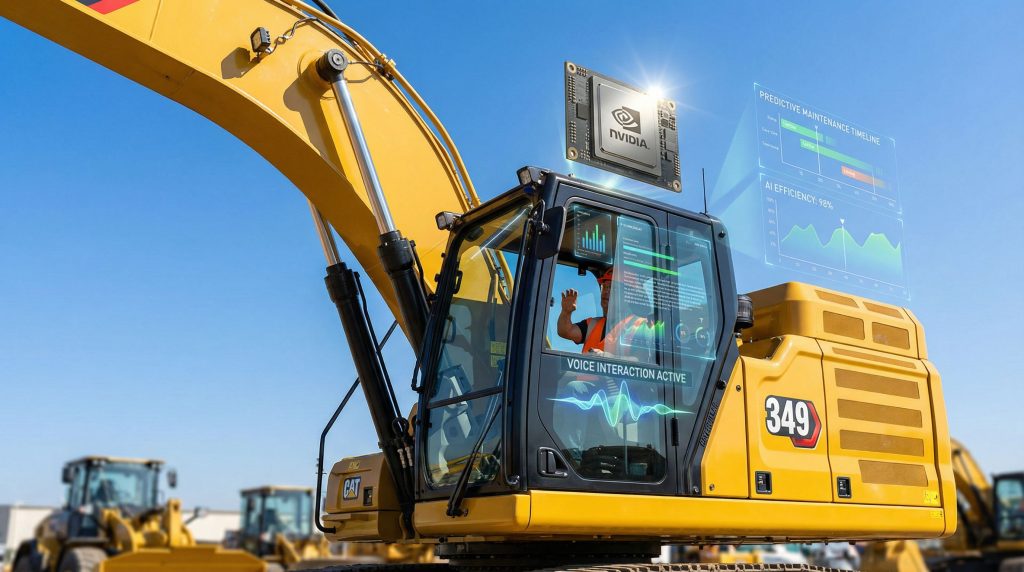
The Cat AI Assistant represents a significant departure from conventional equipment management systems through its comprehensive integration of edge computing capabilities with decades of accumulated operational data. This platform leverages NVIDIA's Jetson Thor edge AI processor to enable local processing of voice commands and equipment diagnostics without dependence on external network infrastructure.
Furthermore, this advancement directly supports data-driven mining operations by providing real-time analytics capabilities at the equipment level. Key technical differentiators include:
• On-device speech recognition eliminating latency associated with cloud-based processing
• Integration with over 16 petabytes of historical equipment performance data through the Helios platform
• Machine learning models trained on century-spanning datasets of equipment operational patterns
• Multi-stakeholder interface design serving operators, technicians, and fleet managers simultaneously
The conversational framework addresses critical challenges in high-noise industrial environments where traditional visual interfaces prove inadequate during equipment operation. Voice-activated systems must overcome acoustic challenges ranging from 85-130+ decibels typical in mining and construction operations while maintaining accuracy for safety-critical communications.
Advanced noise filtering algorithms integrated with the edge processing capabilities ensure reliable speech recognition even in the demanding acoustic conditions common to heavy equipment operations. This technical achievement enables hands-free access to equipment diagnostics, maintenance protocols, and operational guidance without requiring operators to divert attention from primary operational tasks.
Transforming Operational Efficiency Through Voice-Activated Systems
Implementation of voice-activated equipment management delivers measurable improvements in operational efficiency by eliminating the cognitive load associated with manual interface navigation during equipment operation. Research in industrial ergonomics demonstrates that hands-free operation reduces operator cognitive load and fatigue, particularly during extended operational periods requiring sustained attention to equipment performance and environmental conditions.
In addition, these advancements complement the broader mining industry evolution towards intelligent automated systems. Real-time operational coaching provided through conversational AI enables immediate performance optimization without interrupting workflow continuity.
The system analyzes ongoing equipment performance parameters and delivers contextual recommendations through voice prompts, allowing operators to implement efficiency improvements without manual data interpretation or interface manipulation. For instance, AI-powered mining efficiency solutions demonstrate significant productivity gains in operational environments.
Predictive maintenance capabilities integrated with voice interaction protocols provide proactive alerts regarding component condition and recommended maintenance intervals. This approach shifts maintenance strategies from reactive repairs to predictive interventions, with industry studies indicating potential for:
• 25-30% reduction in maintenance costs through condition-based scheduling
• 40-50% decrease in unplanned downtime via predictive failure prevention
• 60% faster problem resolution through AI-guided troubleshooting protocols
• 25% extension in component lifespan via optimized maintenance timing
The multi-role accessibility of voice-activated systems addresses different operational perspectives simultaneously. Fleet managers access portfolio-wide performance analytics, technicians receive step-by-step diagnostic guidance, and operators benefit from real-time performance coaching tailored to individual skill levels and operational experience.
Edge AI Processing Capabilities in Heavy Equipment Applications
Edge computing implementation through NVIDIA Jetson Thor processors enables autonomous decision-making capabilities at the equipment level, reducing dependence on network connectivity for critical operational functions. This architecture proves essential for remote operations where consistent network availability cannot be guaranteed and real-time responses are necessary for safety and operational efficiency.
Local processing advantages in industrial settings include:
• Immediate response times for safety-critical applications requiring sub-second reaction capabilities
• Reduced bandwidth requirements for remote equipment fleets operating in connectivity-limited environments
• Enhanced data security through local processing that minimizes transmission of sensitive operational information
• Operational continuity during network outages or connectivity disruptions
The global edge AI market, valued at approximately $8.4 billion in 2023 and projected to reach $21.9 billion by 2030, reflects growing industrial adoption of distributed processing capabilities. This market expansion indicates broad industry recognition of edge computing advantages for time-sensitive industrial applications.
However, the integration of AI technologies extends beyond processing capabilities to include exploration activities, where AI for mineral exploration demonstrates significant improvements in resource identification accuracy.
Machine vision analysis, sensor data processing, and equipment control adjustments can be executed locally without network dependencies, enabling autonomous equipment functions in remote locations. This capability proves particularly valuable in mining operations where equipment often operates beyond reliable cellular coverage areas.
Data residency compliance becomes simplified through edge processing, as operational data can be processed locally to meet jurisdictional requirements while maintaining system functionality. This addresses regulatory concerns in regions with strict data sovereignty requirements without compromising operational capabilities.
Predictive Maintenance Evolution Through AI-Driven Analytics
Traditional maintenance approaches based on fixed scheduling intervals are being replaced by condition-based maintenance strategies that monitor actual equipment performance parameters to determine optimal maintenance timing. Organizations implementing predictive maintenance report 25-30% reduction in maintenance costs compared to reactive maintenance approaches, with 40-50% reduction in unplanned downtime.
Pattern recognition algorithms trained on extensive historical datasets can identify subtle performance degradation patterns that precede component failures. Caterpillar's partnership with NVIDIA demonstrates how century-spanning equipment performance data provides substantial training material for machine learning models designed to predict component failure probabilities based on operational parameters including temperature, pressure, vibration signatures, and acoustic patterns.
| Maintenance Approach | Traditional Method | AI-Enhanced Strategy | Performance Impact |
|---|---|---|---|
| Scheduling Basis | Fixed time intervals | Condition-based triggers | 20-30% cost reduction |
| Failure Response | Reactive repairs | Predictive interventions | 40-50% downtime decrease |
| Diagnostic Process | Manual procedures | AI-guided troubleshooting | 60% faster resolution |
| Component Management | Generic protocols | Equipment-specific optimization | 25% lifespan extension |
Automated parts ordering triggered by predictive algorithms ensures maintenance components are available when needed without excessive inventory carrying costs. Supply chain integration with predictive maintenance systems enables just-in-time parts delivery based on failure probability calculations rather than emergency ordering following equipment failures.
Maintenance scheduling optimization balances predictive maintenance needs against operational schedules to minimize production disruption. Advanced algorithms consider operational priorities, equipment availability, and maintenance resource allocation to determine optimal maintenance windows that preserve operational continuity while addressing equipment condition requirements.
How Does AI Improve Equipment Maintenance Accuracy?
AI systems analyze multiple data streams simultaneously to identify subtle patterns that indicate potential component failures before they occur. Consequently, this enables maintenance teams to address issues during planned downtime rather than responding to unexpected equipment failures during critical operations.
Machine learning algorithms trained on decades of equipment performance data can recognize failure signatures with 85-95% accuracy, significantly improving upon traditional maintenance approaches that rely on fixed schedules or operator observations.
Multi-User Platform Design for Diverse Operational Roles
Role-based system architecture enables customized interfaces and functionality appropriate to different user types while maintaining data security and operational efficiency. Industrial systems with role-specific design show 35-40% faster adoption rates when interfaces are optimized for specific user workflows and decision-making requirements.
Fleet Manager Capabilities:
• Portfolio-wide performance analytics enabling data-driven resource allocation decisions
• Equipment utilization optimization based on historical performance patterns and operational costs
• Strategic planning support through predictive modeling of equipment lifecycle costs
• Benchmarking capabilities comparing equipment performance across operational sites
Technician Support Systems:
• Voice-activated access to technical documentation and repair procedures
• Step-by-step diagnostic guidance with visual confirmation protocols
• Parts identification and automated ordering assistance
• Success rate tracking for common issue resolution procedures
Operator Training and Development:
• Personalised skill development pathways adapted to individual performance patterns
• Real-time performance feedback with specific improvement recommendations
• Safety protocol reinforcement through conversational reminders during operations
• Experience-based coaching that adapts to operator skill levels and equipment familiarity
The construction and mining industries face significant skilled operator shortages, with the United States experiencing an estimated 40,000+ annual shortage of construction equipment operators. This skills gap creates operational challenges that AI-assisted training programs are designed to address through accelerated competency development and standardised training delivery.
The next major ASX story will hit our subscribers first
Addressing Industry Skills Gap Through AI-Enhanced Training
Equipment operator training traditionally requires 200-500 hours of supervised instruction to achieve operational competency, depending on equipment complexity and individual aptitude. AI-enhanced training systems can potentially reduce time-to-competency by 20-35% through personalised instruction that adapts to individual learning patterns and skill development needs.
Moreover, these capabilities support broader initiatives in AI transforming drilling operations by ensuring operators are prepared for intelligent equipment interfaces.
Institutional knowledge preservation becomes critical as experienced operators approach retirement, taking decades of operational expertise with them. AI systems can capture and systematise best practices from experienced operators, ensuring this knowledge remains available for training new operators and maintaining operational consistency across equipment fleets.
Knowledge Transfer Mechanisms:
• Systematic capture of operational best practices from experienced operators
• Standardised procedure development based on proven operational techniques
• Scenario-based training that simulates real-world operational challenges
• Performance-based learning adaptation that adjusts instruction to individual progress rates
Consistency in training delivery ensures standardised instruction regardless of instructor availability or expertise variation. This addresses challenges in remote operations where experienced trainers may not be consistently available while maintaining training quality and safety standards across diverse operational locations.
Research in educational psychology demonstrates that personalised, scenario-based training improves retention by 35-50% compared to generic classroom instruction. AI-powered training systems can implement this personalisation at scale, providing customised instruction that addresses individual operator strengths and areas requiring development.
Implementation Timeline and Deployment Strategy
The Cat AI Assistant rollout follows a phased approach designed to validate functionality and gather user feedback before full-scale deployment across Caterpillar's equipment portfolio. This staged implementation allows for iterative improvements based on real-world operational experience while maintaining system reliability and user adoption rates.
Phase 1: Off-Board Applications (Q1 2026)
• Web-based and mobile application integration providing remote access to AI capabilities
• Fleet management dashboard enhancements with conversational query capabilities
• Remote diagnostic functionality enabling off-site troubleshooting assistance
• Initial user training programmes and adoption support systems
Phase 2: In-Cab Integration (Validation Stage)
• Hardware installation protocols for existing equipment incorporating edge processing capabilities
• Software integration with established Cat Connect telematics systems
• Operator interface customisation options tailored to specific equipment types and operational requirements
• Safety certification and regulatory compliance verification for voice-activated systems in industrial environments
The validation stage addresses critical safety and regulatory requirements for voice-activated systems in industrial operations. OSHA and similar regulatory bodies maintain specific requirements for operator attention and equipment control that must be preserved while implementing conversational AI interfaces.
What Safety Measures Are Implemented?
Safety protocols for the Cat AI Assistant include fail-safe mechanisms that ensure operators maintain primary control over equipment functions. Voice commands are designed to supplement rather than replace traditional controls, with emergency procedures accessible through both voice and manual interfaces.
Furthermore, the system includes attention monitoring capabilities that ensure operators remain focused on primary operational tasks while accessing AI assistance.
Industry Transformation and Competitive Implications
Implementation of conversational AI in heavy equipment represents a fundamental shift from reactive to predictive operational models that may establish new industry standards for equipment intelligence and operator interaction. This technological advancement creates competitive pressure for similar AI adoption across equipment manufacturers while providing differentiation opportunities for early adopters.
Market Transformation Indicators:
• Evolution of operator skill requirements toward AI collaboration rather than purely manual equipment operation
• Integration of conversational interfaces as standard equipment features rather than optional technology
• Data-driven service revenue opportunities through predictive analytics and operational optimisation consulting
• Industry-wide acceleration of AI adoption timelines as competitive responses emerge
Enhanced customer retention becomes possible through improved operational efficiency and reduced total cost of ownership enabled by predictive maintenance and operational optimisation capabilities. Equipment purchasers increasingly evaluate total lifecycle costs rather than initial acquisition prices, making AI-enhanced efficiency a significant competitive advantage.
The differentiation potential in commodity equipment markets increases as AI capabilities provide measurable operational benefits that justify premium pricing or preferential selection in competitive procurement processes. Data-driven insights into equipment performance and operational optimisation create additional value propositions beyond traditional equipment specifications.
Privacy, Security, and Data Governance Considerations
Edge processing architecture minimises data transmission requirements while maintaining AI functionality, addressing privacy concerns associated with sensitive operational information. Local data processing reduces external data exposure while preserving the analytical capabilities necessary for predictive maintenance and operational optimisation.
Data Protection Protocols:
• Encrypted communication channels for sensitive operational data transmission when network connectivity is required
• User authentication systems enabling multi-level access control appropriate to organisational hierarchies
• Compliance with industrial data security standards including sector-specific regulatory requirements
• Selective data sharing permissions allowing customers to control information used for benchmarking or system improvement
Operational data ownership remains with customers while enabling AI model improvement through anonymised aggregate data analysis. This approach balances customer data control requirements with the system learning capabilities necessary for continuous AI performance enhancement.
Data residency compliance becomes simplified through local processing capabilities that can meet jurisdictional requirements without compromising system functionality. This proves particularly important for international operations where data sovereignty regulations vary significantly between regions.
How Is Customer Data Protected?
Customer data protection follows industry-leading encryption standards with AES-256 encryption for data at rest and in transit. Access controls implement role-based permissions with multi-factor authentication for sensitive operational information.
The Caterpillar AI Assistant announcement emphasises data security as a fundamental design principle rather than an afterthought in system architecture.
Future Implications and Industry Evolution
The integration of conversational AI with heavy equipment operations signals a broader transformation in human-machine interaction patterns within industrial environments. As AI capabilities continue advancing, the relationship between equipment operators and machinery will likely evolve from pure manual control toward collaborative intelligence where human judgement combines with AI analytics for optimal operational outcomes.
Equipment lifecycle management will increasingly incorporate AI-driven insights from initial procurement decisions through operational optimisation to end-of-life planning. This comprehensive approach enables total cost of ownership optimisation through data-driven decision-making at every stage of equipment utilisation.
The success of AI implementation in heavy equipment operations may accelerate adoption across related industrial sectors, creating new expectations for intelligent equipment behaviour and operational support capabilities. This technological evolution represents a fundamental shift toward predictive, data-driven industrial operations that optimise performance while reducing costs and improving safety outcomes.
Consequently, the Cat AI Assistant establishes a precedent for human-AI collaboration in industrial settings that may influence equipment design standards across multiple industries. The integration of voice interfaces with predictive analytics creates new operational paradigms that prioritise efficiency and safety through intelligent automation.
Disclaimer: The performance improvements and cost reduction estimates referenced in this analysis are based on industry research and early implementation data. Actual results may vary depending on specific operational conditions, equipment types, and implementation approaches. Organisations considering AI-enhanced equipment management should conduct pilot programmes to validate expected benefits within their specific operational contexts.
Are You Searching for Investment Opportunities in AI-Enhanced Industrial Equipment?
Discovery Alert's proprietary Discovery IQ model delivers real-time alerts on significant ASX mineral discoveries, instantly empowering subscribers to identify actionable opportunities ahead of the broader market. Begin your 30-day free trial today and secure your market-leading advantage with Discovery Alert.