May 12, 2026
When One Smelter Goes Dark, the Strategic Map Rewrites Itself
The global aluminium industry has spent decades treating geographic concentration as a manageable risk rather than an existential one. Production clusters formed around cheap energy, favourable trade routes, and industrial policy, and for the most part, that model held. The Gulf region, blessed with subsidised natural gas and proximity to Asian and European demand centres, became one of the most cost-competitive aluminium production zones on earth. That calculus was overturned in late March 2026, when Iranian strikes forced the shutdown of one of the world's largest primary aluminium smelters and threw global supply chains into a period of intense recalibration around EGA aluminium investment plans despite Iran war pressures.
What followed was not a retreat by the affected producer. It was an acceleration.
Emirates Global Aluminium's response to active conflict on its doorstep, maintaining all existing investment commitments while simultaneously managing one of the most complex smelter restarts in the industry's recent history, offers a masterclass in how industrial strategy and operational crisis management can run on entirely separate tracks.
When big ASX news breaks, our subscribers know first
The Al Taweelah Shutdown and What It Means for Global Supply
EGA occupies a structurally significant position in the global aluminium market. The Al Taweelah smelter, located in the UAE, is among the largest primary aluminium facilities anywhere in the world, with a production capacity widely cited at approximately 1.6 million tonnes per year. To place that in context, global primary aluminium production runs at roughly 70 million tonnes annually, meaning a single facility of this scale represents a meaningful share of world supply.
The Iranian missile and drone strikes in late March 2026 forced an unplanned shutdown of the Al Taweelah facility, triggering force majeure declarations on certain customer contracts. The operational consequence of an uncontrolled smelter shutdown is severe: aluminium metal freezes inside the electrolytic reduction cells, creating a technically demanding and time-consuming recovery process. Repair and restart timelines in comparable incidents have historically stretched across many months, with estimates for the Al Taweelah recovery reaching up to 12 months.
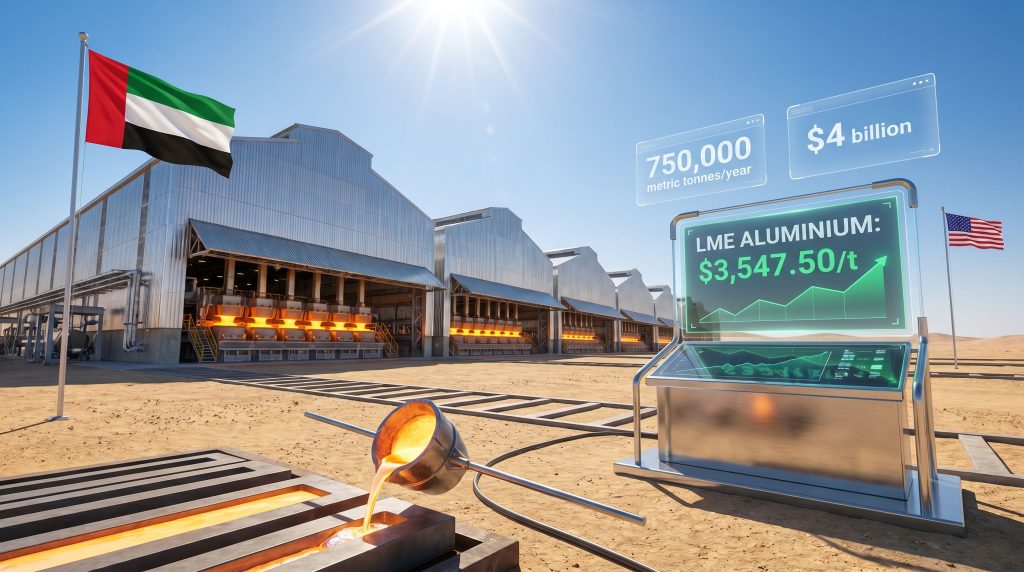
The market's reaction was swift. London Metal Exchange aluminium prices surged to approximately $3,547.50 per tonne, a level not seen in roughly four years, reflecting the market's recognition that a single Gulf producer can move global commodity benchmarks when its scale is large enough.
Critically, EGA's second UAE facility at Jebel Ali has continued operating normally throughout the conflict, providing customers with partial supply continuity and serving as a stabilising signal to global markets.
EGA exports approximately 90% of its production to international customers, as confirmed by the company's chief marketing officer Adel Abubakar at the CRU World Aluminium Conference in London in May 2026. That export dependency makes supply continuity not a preference but a structural imperative. Customers across automotive manufacturing, aerospace, packaging, construction, and renewable energy infrastructure depend on EGA material flowing reliably through international trade routes.
Strategic Intent Versus Operational Disruption: Understanding the Difference
One of the more analytically important distinctions in industrial strategy is the separation between tactical disruptions, which are temporary and recoverable, and strategic direction, which reflects long-term capital allocation decisions. Conflating the two is a common error in how markets interpret crisis events.
EGA's leadership has been explicit in drawing that line. At the CRU World Aluminium Conference in May 2026, Abubakar communicated that from an investment standpoint, the company's trajectory remains unchanged. Furthermore, the focus on restarting UAE operations and the parallel momentum on growth projects are not competing priorities; they are running simultaneously.
This kind of dual-track execution, managing a complex industrial emergency while continuing to advance multi-billion-dollar capital commitments, is rare and significant. It signals to capital markets, joint venture partners, and customers that EGA aluminium investment plans despite Iran war conditions are not contingent on short-term operational stability in any single facility.
The investment programme moves forward on two fronts: primary production expansion through a major new North American smelter, and parallel development of recycling capacity to diversify output and reduce energy intensity. Notably, EGA's commitment to its investment plans has been consistent across all public communications since the conflict began.
The Oklahoma Smelter: Remaking US Primary Aluminium Production
The centrepiece of EGA's growth strategy outside the Gulf is a proposed primary aluminium smelter in Oklahoma, developed in a joint venture with Century Aluminum. EGA holds a 60% controlling stake in the project, with Century Aluminum contributing its US operational expertise and regulatory knowledge as the minority partner.
The scale of the project is significant by any measure. The Oklahoma facility is projected to produce 750,000 metric tonnes of primary aluminium per year, which the Oklahoma Department of Commerce estimates will cost approximately $4 billion USD to build. That single figure would, according to publicly available assessments, more than double current US primary aluminium production capacity.
| Project Metric | Detail |
|---|---|
| EGA Ownership Stake | 60% |
| Joint Venture Partner | Century Aluminum |
| Estimated Total Cost | $4 billion USD |
| Projected Annual Capacity | 750,000 metric tonnes |
| Impact on US Production | More than doubles current US primary output |
| Expected Groundbreaking | 2026 |
| Context | First new US primary aluminium smelter in approximately 50 years |
Abubakar confirmed at the May 2026 CRU conference that groundbreaking on the Oklahoma project is expected in 2026, with the conflict in the UAE having no bearing on that timeline. This commitment is also reinforced by the broader context of US aluminium tariffs, which have made domestic production increasingly attractive.
Why Oklahoma and Why Now?
The US Midwest offers a combination of industrial infrastructure, workforce availability, and logistical connectivity to automotive and manufacturing demand centres that makes it a practical location for large-scale primary metals production. Oklahoma's economic development framework has been active in competing for large industrial investment, though the specific incentive package associated with this project has not been fully disclosed in public sources to date.
Aluminium's classification as a critical material in US defence and energy transition supply chains adds a policy dimension to the project's rationale. The role of energy transition minerals in reshaping industrial investment priorities cannot be understated, even if formal government support has not been confirmed for this specific project. The broader reshoring conversation around primary metals has been building in Washington for years, and the Oklahoma project arrives at a moment when domestic production arguments carry more political and commercial weight than at any point in recent memory.
The Security Premium: Reconsidering Gulf Production Risk
The Iranian strikes on Al Taweelah represent more than a single operational event. They introduce what might be described as a structural recalibration in how the global aluminium industry prices and plans around Gulf production.
For decades, the dominant analytical framework treated Gulf aluminium facilities as low-risk operations in a politically complex but broadly stable environment. The energy cost advantage, typically derived from subsidised natural gas feedstock, was understood to more than offset any geopolitical risk premium. That assumption has now been stress-tested under live conditions.
The concept of a security premium, whereby buyers and producers assign an additional cost burden to supply chains that pass through geopolitically exposed regions, is not new in energy markets. In commodity metal markets it has historically been less formalised. The Al Taweelah incident may represent the point at which that informality ends.
The broader aluminium industry is likely to reassess its exposure to single-region concentration with a rigour that was previously theoretical. The question of whether Gulf energy cost advantages fully compensate for supply disruption risk is no longer abstract.
Near-shoring as a supply chain strategy has been accelerating across multiple industries since 2020. Within primary aluminium, the conversation about geographic diversification has been ongoing for roughly a decade. However, what the Iranian strikes have done is compress the timeline on decisions that producers and their customers might otherwise have deferred for years.
How the Price Shock Flows Through Downstream Industries
When a producer accounting for a substantial share of global primary aluminium output declares force majeure and suspends deliveries, the effects radiate through an extensive network of downstream industries. The LME price movement to approximately $3,547.50 per tonne is the most visible signal, but the supply chain consequences are more complex and longer-lasting.
The following downstream sectors face the most concentrated exposure to an EGA supply disruption:
- Automotive manufacturing: Modern vehicles use aluminium extensively across body panels, engine components, and battery enclosures in electric vehicles. OEMs operating on just-in-time procurement models are particularly vulnerable to primary feedstock gaps.
- Aerospace and defence: Aerospace-grade aluminium alloys require consistent, high-purity primary feedstock. Defence supply chains, many of which already operate under sourcing constraints, face added pressure when Gulf supply is interrupted.
- Packaging and consumer goods: Beverage can production and food packaging rely on aluminium rolled products that trace back to primary metal. Even partial supply substitution involves significant lead times.
- Renewable energy infrastructure: Solar panel frames, wind turbine housings, and transmission infrastructure for grid-scale renewables all depend on reliable primary aluminium supply chains. The energy transition's material demands are themselves at risk when primary production is disrupted.
Force majeure declarations do not simply pause deliveries. They trigger contract renegotiations, spot market purchases at elevated prices, and in some cases, long-term sourcing strategy reviews by procurement teams across all of the above industries.
The 12-month repair estimate for frozen reduction cells at Al Taweelah means that the supply gap extends well into 2027 under the most conservative scenarios, placing sustained upward pressure on contracted volumes and spot pricing throughout that period.
The next major ASX story will hit our subscribers first
The Recycling Dimension: Why Secondary Aluminium Is No Longer Optional
Aluminium recycling carries a technical advantage that has become strategically central in the current environment. Producing aluminium from recycled scrap requires approximately 5% of the energy consumed in primary smelting from bauxite ore. In an era of energy price volatility and supply chain disruption, that efficiency differential is not merely an environmental credential. It is a commercial and operational hedge.
EGA's parallel investment in recycling capacity reflects a sophisticated understanding of where the aluminium market is heading. In addition, the growing cohort of automotive OEMs and construction companies with formal decarbonisation commitments are increasingly specifying low-carbon aluminium in procurement requirements. The Alcoa recycling venture illustrates how major producers are embracing this strategic shift at scale, and EGA's trajectory reflects comparable thinking.
The recycling strategy also serves a geographic diversification function. Recycling facilities can be sited closer to end-use markets, reducing logistical exposure and allowing EGA to serve customers with production assets that do not depend on Gulf operational continuity.
Secondary aluminium is no longer a complement to primary production strategy. For producers with the scale and ambition of EGA, it is becoming a core pillar of the business model.
Benchmarking EGA Against Global Competitors
EGA's dual-geography expansion strategy, Gulf primary production combined with US-based capacity and growing recycling investment, positions it differently from most major global aluminium producers. Among the leading aluminium producers globally, few are undertaking geographic diversification at this pace and scale simultaneously.
| Producer | Primary Strategy | Geographic Diversification | Recycling Investment | Geopolitical Exposure |
|---|---|---|---|---|
| EGA | Gulf + US expansion | High (UAE + Oklahoma) | Growing | Moderate-High (active UAE conflict) |
| Alcoa | North America + Australia | High | Moderate | Low-Moderate |
| Rio Tinto | Australia + Canada | High | Moderate | Low |
| Rusal | Russia-centric | Low | Low | Very High |
| Century Aluminum | US-focused | Moderate | Low | Low |
The joint venture structure between EGA and Century Aluminum is itself a study in complementary competencies. EGA brings proven large-scale primary smelter operations and capital capacity. Century Aluminum contributes US market knowledge, regulatory experience, and existing customer relationships. Together, the partnership addresses barriers that neither could as efficiently overcome independently.
What the Oklahoma Project Signals for US Industrial Policy
The absence of new primary aluminium smelter construction in the United States for approximately five decades reflects structural economics rather than lack of demand. Energy costs, environmental permitting complexity, and competition from lower-cost international producers combined to make domestic greenfield investment financially prohibitive for most of that period.
The EGA-Century Aluminum Oklahoma project is not simply a private investment decision. It represents the intersection of shifting global economics, heightened supply chain security concerns, and a domestic policy environment that has become increasingly receptive to critical metals reshoring. Furthermore, the mining decarbonisation benefits associated with newer smelter technology add another layer of strategic rationale for domestic investment at this scale.
Several converging forces are making this project viable now when it was not viable a decade ago:
- Geopolitical risk repricing: The Iranian strikes have made the cost of Gulf supply concentration visible in ways that theoretical risk assessments never fully captured.
- Energy cost convergence: Natural gas pricing in the US has become more competitive relative to Gulf benchmarks than at any point in the past 20 years.
- Demand growth for domestic supply: US automotive, aerospace, and defence industries have expressed growing preference for domestically sourced primary materials.
- State-level economic competition: Oklahoma and other Midwest states are actively competing for large industrial investments through economic development frameworks that can meaningfully alter project economics.
- Critical material classification: Aluminium's recognition as strategically important to defence and energy transition manufacturing has elevated the political rationale for domestic capacity expansion.
Frequently Asked Questions: EGA Aluminium Investment and the Iran War
What is EGA and why does it matter to global aluminium markets?
Emirates Global Aluminium is the largest aluminium producer in the Gulf region and one of the largest globally. The company exports roughly 90% of its output, making it a critical node in international supply chains serving industries from automotive manufacturing to renewable energy infrastructure.
Was the Al Taweelah smelter permanently damaged?
The smelter sustained significant damage requiring shutdown following Iranian strikes in late March 2026. EGA declared force majeure on certain contracts as a result. Repair timelines for frozen metal in reduction cells are technically complex and estimated at up to 12 months. The separate Jebel Ali smelter has continued operating normally.
Is the Oklahoma smelter project still proceeding?
EGA confirmed at the CRU World Aluminium Conference in May 2026 that the EGA aluminium investment plans despite Iran war conditions remain firmly on schedule. EGA holds 60% of the joint venture with Century Aluminum. The facility is projected to produce 750,000 metric tonnes annually at an estimated total cost of $4 billion, with groundbreaking targeted in 2026.
What does "force majeure" mean in this context?
Force majeure is a contractual provision allowing a supplier to suspend delivery obligations when extraordinary and unforeseeable events make fulfilment impossible. In commodity markets, it triggers downstream supply gaps, spot market purchases at elevated prices, and often long-term sourcing reviews by affected buyers.
How does aluminium recycling reduce energy intensity?
Producing aluminium from recycled scrap requires approximately 5% of the energy consumed in primary smelting from raw bauxite ore. This energy efficiency advantage makes recycled aluminium both more cost-competitive in energy-intensive environments and more attractive to buyers with decarbonisation commitments.
Key Takeaways: What EGA's Investment Decision Tells the Broader Market
The EGA story is not primarily about one company managing a crisis. It is a case study in how the global aluminium industry's strategic geography is being redrawn by forces that were building long before the first Iranian strike landed.
Several structural themes emerge from this episode:
- Geopolitical resilience has become a capital allocation criterion, not merely an operational checklist item. Where production is located now carries risk-adjusted implications that affect long-term returns.
- Geographic diversification of primary aluminium production is accelerating. The Oklahoma project is a leading indicator of a broader trend, not an isolated decision.
- Recycling investment is transitioning from optional to essential. For large-scale producers, the energy efficiency, carbon profile, and geographic flexibility of secondary aluminium have become strategic assets.
- The security premium concept is moving from theory to practice. Buyers and producers are beginning to formally incorporate supply disruption risk into cost-benefit models for production location decisions.
- US primary metals reshoring has moved from policy aspiration to funded project reality. The Oklahoma smelter, if completed as planned, will be the most significant structural shift in US primary aluminium production in half a century.
EGA's decision to maintain and expand its investment programme while simultaneously managing one of the most operationally complex smelter shutdowns in recent industry memory represents a level of strategic clarity that is genuinely uncommon in capital-intensive industrial sectors. Whether it proves prescient will depend on how the broader geopolitical environment evolves, but the directional logic is difficult to argue against.
Disclaimer: This article contains forward-looking statements, projections, and market analysis based on publicly available information as of May 2026. Commodity price movements, project timelines, and geopolitical developments are subject to significant uncertainty. This content does not constitute financial or investment advice. Readers should conduct independent research and consult qualified financial professionals before making investment decisions.
Want To Stay Ahead of Major Commodity Market Shifts Like This One?
Discovery Alert's proprietary Discovery IQ model delivers real-time alerts on significant ASX mineral discoveries the moment they hit the exchange, transforming complex commodity data into clear, actionable investment insights for traders and long-term investors alike. Explore how historic discoveries have generated substantial market returns on Discovery Alert's dedicated discoveries page, and begin your 14-day free trial today to position yourself ahead of the next major market-moving event.