July 8, 2026
When Patience Becomes Strategy: The Economics Behind Egypt's EgyptAlum Ownership Decision
Across emerging markets, the decision of when to sell a state-owned industrial asset is rarely straightforward. Sell too early, and a government locks in value before expansion catalysts materialise. Sell too late, and investor appetite may have cooled, or currency conditions may have shifted unfavourably. Egypt's handling of EgyptAlum sits squarely inside this tension, and the country's current approach offers a revealing case study in how resource-rich nations are increasingly choosing to sequence privatisation around value creation rather than fiscal urgency.
Understanding why Egypt delays decision on EgyptAlum stake sale requires examining not just the immediate financial calculus, but the industrial logic underpinning one of the most ambitious aluminium expansion programmes currently underway in North Africa.
When big ASX news breaks, our subscribers know first
The Valuation Gap: Why EGP 118 Billion Is Not Enough
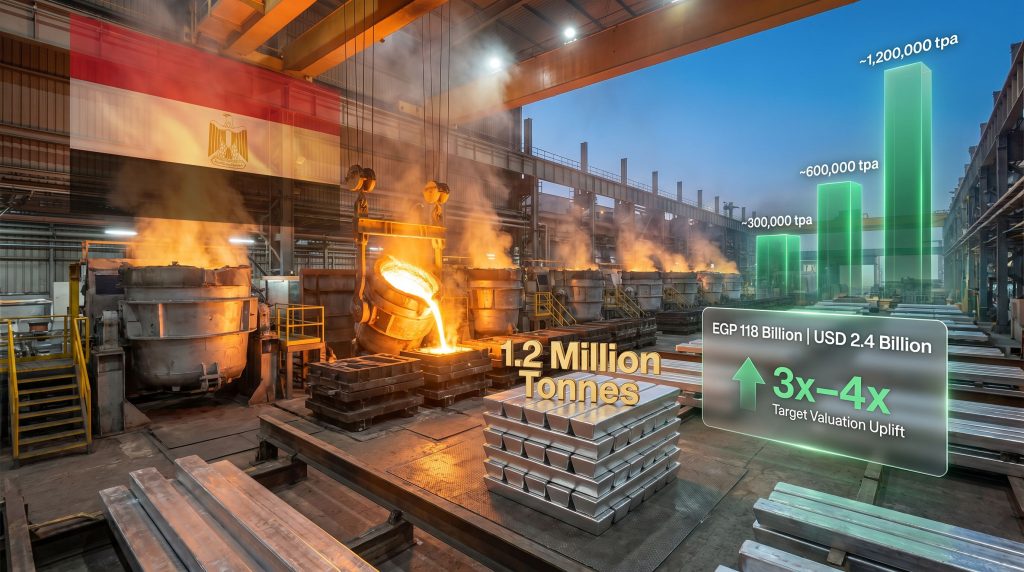
EgyptAlum is currently listed on the Egyptian Exchange (EGX) with a market capitalisation of approximately EGP 118 billion (roughly USD 2.4 billion). By any measure, this is a substantial industrial asset. Yet Egyptian authorities have determined that this figure significantly underrepresents the company's potential worth once its expansion pipeline is fully priced in.
The government is targeting a three to four times uplift on the current market capitalisation before committing to any ownership restructure. Translated into approximate figures, that implies an eventual valuation target in the range of USD 7.2 to USD 9.6 billion at current exchange rates.
This is not a failed privatisation process. It is a deliberate sequencing strategy in which asset value creation precedes ownership transfer, a model increasingly favoured by sovereign wealth practitioners across the Gulf and Southeast Asia.
This approach also needs to be understood in the context of Egypt's broader asset sale programme. The country set a target of raising approximately USD 2 billion through state asset sales in 2023, a goal that was not fully achieved. Rather than repeating a rushed divestiture under suboptimal conditions, authorities appear to have drawn a sharper distinction between assets that can be sold quickly and those that warrant a longer incubation period. EgyptAlum has clearly been placed in the second category.
Two Pathways, One Objective: Maximising State Returns
Egyptian authorities are weighing two structurally different routes for EgyptAlum's ownership future. Each carries distinct implications for timing, capital formation, and market signalling.
Pathway One: Strategic or Public Market Sale After Valuation Reset
The first option involves reassessing the company's fair value as a prerequisite to any free float expansion. This would be followed by either a direct entry from a strategic investor or a public offering on the EGX. Confirmed acquisition interest has already been received from one Gulf-based company and two European firms, though no binding agreements have been announced.
The presence of Gulf capital is particularly noteworthy. Gulf sovereign wealth funds and industrial conglomerates have been systematically building positions in African industrial infrastructure throughout the 2020s, and an aluminium smelter with significant capacity expansion underway represents an attractive combination of hard asset exposure and industrial upside. Furthermore, the aluminium market tariffs environment is prompting investors to seek more geographically diversified production exposure.
Pathway Two: Transfer to the Sovereign Fund of Egypt
The second option involves transferring EgyptAlum to the Sovereign Fund of Egypt (SFE), which would act as a value-holding mechanism. Under this structure, the state retains full control while the asset appreciates, with a future sale decision deferred until conditions are considered optimal.
This approach mirrors precedents seen in Gulf sovereign fund architecture, where state-owned enterprises are parked within sovereign vehicle structures during capital-intensive transformation phases before being partially floated or sold to strategic partners.
Comparison: Strategic Sale vs. SFE Transfer
| Dimension | Strategic or Public Sale | SFE Transfer |
|---|---|---|
| Timing | Post-valuation reset | Open-ended, deferred |
| Value capture | Immediate capital raise | Long-term appreciation |
| State control | Partially diluted | Fully retained |
| Market signal | Bullish privatisation signal | Cautious, value-protective |
| Interested parties | Gulf and European investors | Egyptian state institutions |
The Expansion Projects Driving the Revaluation Thesis
The case for a three to four times valuation uplift rests on a concrete pipeline of industrial projects. Each adds a different dimension to EgyptAlum's earnings potential and strategic positioning.
Trafigura Partnership: Doubling Smelter Capacity at Naga Hammadi
The most advanced project involves commodity trading giant Trafigura, which has already acquired a minority stake in EgyptAlum's Naga Hammadi smelter expansion. The partnership centres on developing an integrated industrial complex at the Naga Hammadi site, with the goal of adding approximately 300,000 tonnes of annual aluminium production capacity. This aluminium joint venture model — pairing a commodity trader with a state-owned smelter — is gaining traction globally as a financing and off-take structure.
This would effectively double EgyptAlum's total output to around 600,000 tonnes per year. Foreign financing agreements for the project are targeted for completion before the end of the current calendar year, and the company has committed EGP 3.5 billion in capital expenditure for the current financial year.
Trafigura's involvement is more than a capital injection. Commodity traders taking equity positions in smelter infrastructure typically bring structured off-take agreements with them, which serve as a de-risking mechanism for lenders. The bankability of a project rises materially when a globally active commodities trader with an existing trading relationship is sitting on the equity register.
The Alba–EgyptAlum Alumina Refinery at Safaga
Ongoing discussions with Aluminium Bahrain (Alba) concern a proposed alumina refinery at Safaga with a projected development cost of USD 3 billion. International lenders are reportedly competing to provide financing for this project.
The strategic rationale is compelling. Egypt currently imports alumina, the primary feedstock for aluminium smelting, making the country exposed to global alumina price volatility and logistics costs. A domestic refinery would deliver vertical integration, reduce foreign currency outflows, and materially improve smelter economics over the long term.
Alumina typically accounts for 30 to 40 percent of primary aluminium production costs, making upstream integration one of the most powerful levers available to a smelter operator seeking to improve margins. In addition, the broader shift toward green metals pricing is placing upstream integration at the centre of long-term competitiveness strategies.
Greenfield Aluminium Project in East Al Tafreeh
Negotiations are also progressing on a new greenfield aluminium project in East Al Tafreeh, targeting a production capacity of 600,000 tonnes per year. Gulf and international investors are being courted for this facility.
If constructed, this single project would more than double Egypt's current total aluminium capacity on its own, representing a transformational shift in the country's industrial footprint.
Pharmaceutical Aluminium Packaging: A Downstream Diversification Signal
A new pharmaceutical aluminium packaging facility at Naga Hammadi is scheduled to commence production in September, with an initial monthly capacity of 300 tonnes. Output will be split equally between domestic supply and exports, with Saudi Arabia, Italy, and broader European markets identified as export destinations.
This facility formed part of EgyptAlum's EGP 6 billion investment programme from the previous financial year. Its significance extends beyond its modest capacity: it demonstrates that EgyptAlum is moving beyond commodity-grade primary metal production toward higher-margin, specification-driven downstream products.
Pharmaceutical-grade aluminium packaging is a technically demanding product category requiring tight tolerances on alloy composition, surface quality, and dimensional consistency. Entering this market signals a meaningful step up in manufacturing sophistication.
Egypt's Aluminium Capacity Trajectory: A Four-Stage Projection
| Project | Incremental Capacity (tpa) | Cumulative Total (tpa) |
|---|---|---|
| Current EgyptAlum baseline | ~300,000 | ~300,000 |
| Trafigura Naga Hammadi expansion | +300,000 | ~600,000 |
| East Al Tafreeh greenfield | +600,000 | ~1,200,000 |
| Alba alumina refinery (Safaga) | Upstream enabler | Supports full pipeline |
EgyptAlum's Managing Director Mahmoud Agour has indicated that if the combined project pipeline is fully executed, Egypt's total aluminium production capacity could reach approximately 1.2 million tonnes annually. To put this in perspective, that would represent a four-fold increase from current output levels and position Egypt among the more significant aluminium producers in the broader Middle East and North Africa region.
Financing the Transformation: Banking Commitments and Capital Structure
EgyptAlum's expansion ambitions are not being pursued without financial backing. Both the National Bank of Egypt and Emirates NBD have committed financing support for the company's investment programme. The combination of a leading domestic bank and a major UAE-based international lender reflects both the national importance of the project and its appeal to cross-border capital.
The involvement of Emirates NBD is particularly interesting from a regional capital flows perspective. UAE-based financial institutions have been active intermediaries in financing Egyptian industrial projects throughout the post-2022 economic stabilisation period, and their participation in EgyptAlum's programme signals confidence in the project's credit profile and strategic viability.
Capital expenditure of EGP 3.5 billion is planned for the current financial year alone, with the broader multi-project pipeline carrying a combined development cost that includes the USD 3 billion Safaga alumina refinery as its single largest component.
The next major ASX story will hit our subscribers first
What Investors Should Be Watching
For investors tracking the EGX-listed EgyptAlum or monitoring potential privatisation opportunities in Egypt's industrial sector, several dynamics are worth monitoring closely.
Reading the Delay as a Value Signal
A government deliberately deferring a stake sale while simultaneously accelerating expansion investment is sending a structurally different signal than one delaying due to lack of investor interest or regulatory obstacles. The former implies that the state believes current market pricing undervalues the asset's intrinsic potential. Investors who can identify the gap between current traded value and the government's internal valuation target may find meaningful opportunity in EGX-listed shares ahead of any eventual ownership restructure announcement.
Key Risk Factors to Monitor
Several variables could complicate or delay the timeline:
- Regulatory approval processes for large-scale industrial projects in Egypt can be protracted, particularly for projects requiring environmental assessments and land use clearances
- Egypt's foreign currency availability and EGP exchange rate dynamics remain a structural consideration for any foreign investor evaluating an asset priced in local currency
- Geopolitical factors affecting Gulf and European investor appetite can shift quickly, and confirmed interest from unnamed parties does not constitute a binding commitment
- Egypt's track record on privatisation timelines, including the missed 2023 asset sale targets, warrants realistic expectations around announced schedules
- Global aluminium prices on the London Metal Exchange directly affect the earnings multiple investors are willing to assign to a smelter asset, adding commodity cycle risk to the investment case
What Strategic Investors Are Evaluating
Any serious acquirer will be conducting due diligence across several dimensions:
- Smelter age and technology: Older potline technology carries higher energy consumption per tonne and greater capital reinvestment risk
- Energy contract terms: Aluminium smelting is extraordinarily energy-intensive, and the economics of any Egyptian smelter depend heavily on long-term electricity pricing agreements
- Upstream integration progress: The Safaga alumina refinery discussions, if converted to a binding commitment, would materially alter the investment thesis
- Export market access: Egypt's location offers proximity to European and Gulf markets, reducing freight costs relative to more distant producers
- EGP hedging complexity: Foreign investors acquiring EGP-denominated equity must factor in currency risk management costs
North Africa's Aluminium Ambitions in a Global Context
Egypt's expansion programme does not exist in isolation. Across the broader MENA region, aluminium production is growing as countries leverage relatively low energy costs, proximity to European demand centres, and industrial diversification mandates. Consequently, the top aluminium companies globally are watching North Africa's capacity growth with considerable attention.
European industrial buyers are also increasingly scrutinising the carbon intensity of their aluminium supply chains, driven by the EU's Carbon Border Adjustment Mechanism (CBAM), which places a carbon cost on imported aluminium from higher-emission producers. North African smelters that can credibly demonstrate lower-carbon production credentials may benefit from a structural preference shift among European purchasers seeking to manage their Scope 3 emissions exposure.
The aluminium power transition occurring at major smelters worldwide underscores just how central energy sourcing has become to long-term competitiveness. If EgyptAlum's expansion is accompanied by investment in cleaner energy sources, this dimension could become a meaningful competitive differentiator over a five to ten year horizon.
Disclaimer: This article is intended for informational purposes only and does not constitute financial or investment advice. All forward-looking statements, capacity projections, and valuation targets referenced herein involve inherent uncertainty. Readers should conduct independent due diligence before making investment decisions. Past performance of state-owned enterprise privatisation programmes is not indicative of future outcomes.
Frequently Asked Questions: EgyptAlum Stake Sale
What is EgyptAlum's current market value?
EgyptAlum is listed on the Egyptian Exchange with a market capitalisation of approximately EGP 118 billion (USD 2.4 billion) as of the time of reporting.
Why has Egypt delayed the EgyptAlum stake sale?
The government is pursuing a series of capacity expansion and vertical integration projects intended to increase the company's valuation by three to four times before proceeding with any ownership restructure.
Who has expressed interest in acquiring a stake?
Confirmed acquisition interest has been received from one Gulf-based company and two European firms. No binding agreements have been announced.
What role could the Sovereign Fund of Egypt play?
One option under review would transfer EgyptAlum to the Sovereign Fund of Egypt, allowing the state to retain full ownership while the asset appreciates ahead of a future sale decision.
What is EgyptAlum's total planned investment?
The company has committed EGP 3.5 billion in capital expenditure for the current financial year. The broader pipeline includes the Trafigura smelter expansion, the proposed USD 3 billion Alba alumina refinery at Safaga, and a new greenfield smelter in East Al Tafreeh.
How large could Egypt's aluminium sector become?
If all planned projects are executed, Egypt's total aluminium production capacity could reach approximately 1.2 million tonnes per annum, according to company management projections.
Want to Identify the Next Major Resource Opportunity Before the Market Does?
Discovery Alert's proprietary Discovery IQ model delivers real-time alerts on significant ASX mineral discoveries, transforming complex resource data into actionable investment insights for both short-term traders and long-term investors. Explore historic examples of exceptional discovery returns and begin your 14-day free trial today to position yourself ahead of the broader market.