July 18, 2026
The Hidden Economics Behind Egypt's Fuel Pricing Freeze
Energy pricing in import-dependent economies rarely reflects a single variable. It is instead the product of layered pressures: currency dynamics, geopolitical risk exposure, international lending conditions, and the ever-present tension between fiscal discipline and social stability. Egypt's decision to hold domestic fuel prices unchanged through at least mid-2027, even as global oil benchmarks experienced significant swings, offers a revealing window into how governments with complex economic vulnerabilities must think beyond the short-term price cycle.
Understanding why Egypt fuel prices unchanged has become a deliberate policy outcome, rather than an oversight or a political gift, requires examining the structural forces that make reactive pricing genuinely dangerous in an economy of Egypt's profile.
When big ASX news breaks, our subscribers know first
Egypt's Current Fuel Prices and What Changed in March 2026
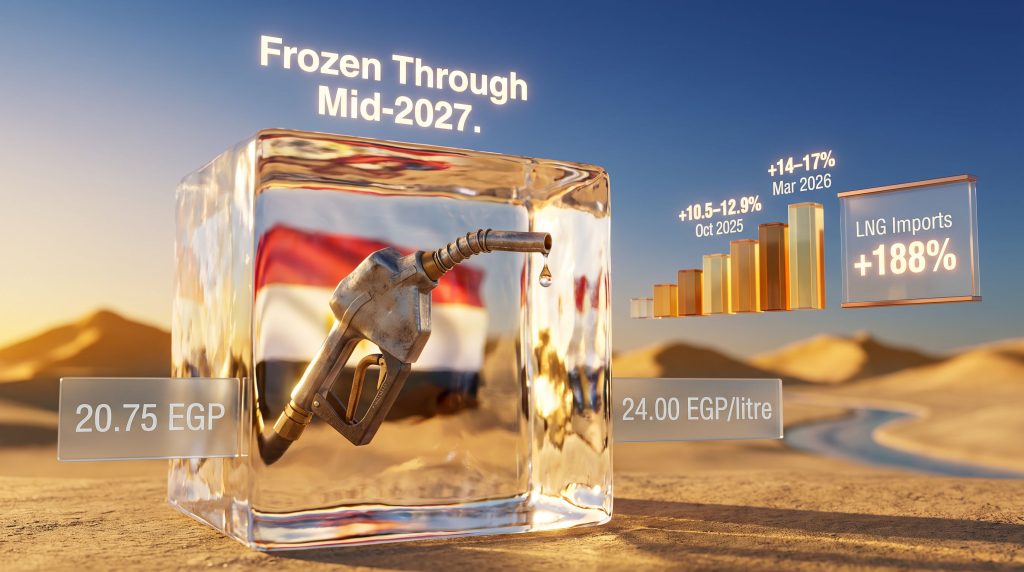
The last formal revision to Egypt's domestic petroleum prices took place on March 10, 2026, when the government lifted prices by 14 to 17 percent across all major fuel categories. This followed an earlier October 2025 increase of 10.5 to 12.9 percent, meaning consumers absorbed two consecutive hikes within roughly six months.
The current price schedule, which the government has committed to maintaining through at least mid-2027, is as follows:
| Fuel Type | Previous Price (EGP/litre) | Current Price (EGP/litre) | Change |
|---|---|---|---|
| 80-Octane Gasoline | ~17.75 | 20.75 | +17% |
| 92-Octane Gasoline | ~19.00 | 22.25 | +17% |
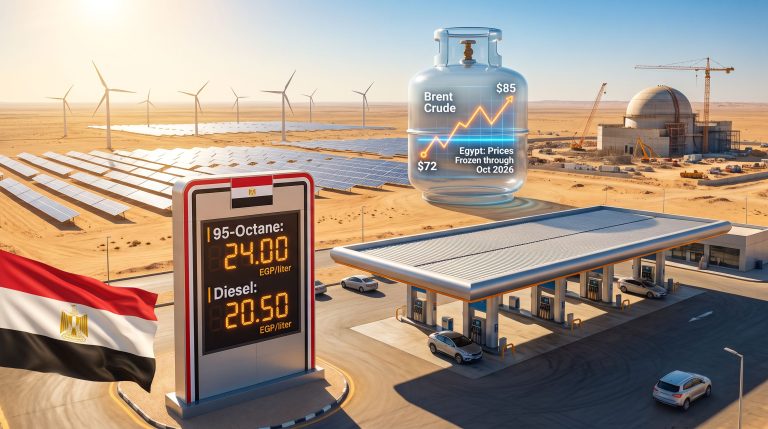
| 95-Octane Gasoline | ~20.50 | 24.00 | +17% |
| Diesel | 17.50 | 20.50 | +17% |
When global oil prices dipped briefly in mid-2026, public pressure mounted for a downward adjustment. Prime Minister Mostafa Madbouly publicly defended the government's position, arguing that policymakers must avoid reflexive responses to short-term volatility without conducting rigorous assessments of broader market conditions.
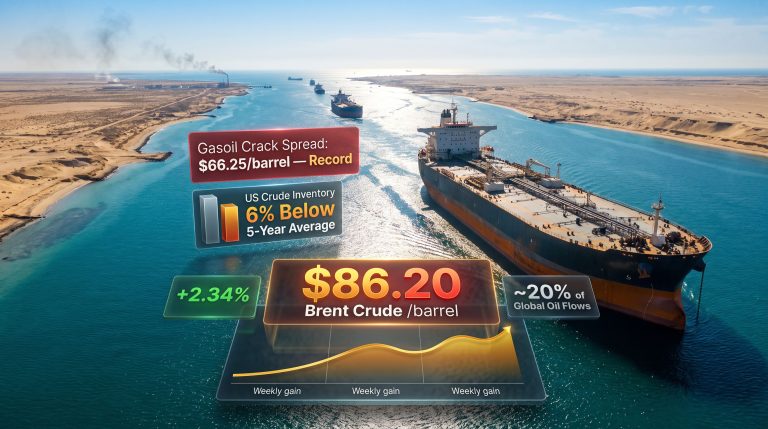
The rebound in Brent crude, which climbed back to approximately $85 per barrel after falling to around $72 per barrel, according to Trading Economics, appeared to validate the government's caution. This oil price rally illustrated precisely the kind of volatility that makes reactive domestic pricing reform counterproductive, with a $13 swing in the global benchmark occurring within a compressed timeframe.
Why Reactive Fuel Pricing Is Dangerous in Emerging Markets
There is a well-documented pattern in emerging market energy policy: governments that adjust fuel prices in direct response to global benchmark movements often create amplified domestic inflation cycles rather than alleviating consumer pressure.
The mechanics are straightforward. When prices are cut during a global dip and then must be raised again as benchmarks recover, the second increase carries compounding political and economic costs. Consumer expectations become anchored to the lower price, subsidy expenditures surge during the trough, and the government's credibility as a fiscal reformer erodes with international lenders.
Egypt's approach reflects an attempt to break this cycle by anchoring domestic prices to defined review windows rather than market movements. The key risks of abandoning this approach include:
- Inflationary spikes triggered by repeated price signal reversals
- Erosion of IMF reform credibility, potentially jeopardising programme disbursements
- Expanded subsidy expenditure during periods of artificially low domestic prices
- Reduced ability to plan government budgets with predictable energy cost assumptions
- Consumer and business uncertainty from unpredictable price trajectories
The Egyptian government reinforced this position by strengthening coordination between the Central Bank of Egypt, the Finance Ministry, and the Petroleum Ministry specifically to manage fuel supply continuity through the peak summer demand season.
Egypt's IMF Framework and the Subsidy Reform Roadmap
Egypt's domestic fuel pricing structure cannot be read in isolation from its broader relationship with the International Monetary Fund. The country's ongoing IMF-backed economic programme targets a gradual but sustained reduction in fuel subsidies as a core component of fiscal consolidation.
The two price increases implemented between October 2025 and March 2026 represent compliance with subsidy reform benchmarks embedded in this programme. However, the subsequent one-year price freeze signals a deliberate pause in the reform trajectory, suggesting the government believes social stability considerations require a stabilisation interval before further adjustments can be introduced without significant public backlash.
| Period | Event | Price Impact |
|---|---|---|
| October 2025 | First adjustment | +10.5 to 12.9% across products |
| March 10, 2026 | Second adjustment | +14 to 17% across products |
| March 2026 to Mid-2027 | Government-mandated freeze | No change planned |
| Mid-2027 (projected) | Next potential review window | Subject to market conditions |
The cumulative price increase across the two adjustments amounts to roughly 25 to 30 percent over a six-month period for all major petroleum categories. Introducing a third hike without a pause would have risked crossing the social tolerance threshold observed in previous MENA-region subsidy reform attempts, where rapid removal of fuel support has historically contributed to public unrest.
The phased reform model, with defined freeze periods between hikes, attempts to maintain reform credibility with external lenders while managing the pace of adjustment that the domestic population can absorb.
Furthermore, understanding global oil price dynamics is essential context here, as Egypt's pricing decisions are inevitably shaped by movements in international energy benchmarks even when the domestic freeze policy insulates consumers from short-term fluctuations.
The Zohr Field Decline: Egypt's Structural Energy Problem
The most consequential and least widely understood driver of Egypt's fuel pricing challenge is not global oil price volatility. It is the structural decline of the Zohr natural gas field, Egypt's largest domestic gas reserve and the anchor of what was once a self-sufficiency story.
Zohr, located in the Eastern Mediterranean and discovered in 2015, was heralded as a transformative find. For several years, it enabled Egypt to reduce LNG imports dramatically and even position itself as a potential gas exporter. Output peaked in 2021, according to Enerdata, and has declined sharply since then.
The consequences have been severe and compounding:
- Egypt transitioned from a net natural gas exporter to a net importer
- LNG import volumes surged by 188 percent during the first eleven months of 2025, according to Egypt Oil & Gas
- Every cargo of imported LNG is priced in US dollars, amplifying Egypt's exposure to both global gas prices and Egyptian pound depreciation
- The import bill expansion directly competes with other fiscal priorities, including subsidies, infrastructure spending, and debt service
The 188% surge in LNG imports during 2025 is not a demand shock. It is the direct consequence of declining domestic supply from a single field whose output trajectory was not matched by sufficient new gas development to fill the gap.
This shift from exporter to importer represents one of the most significant structural changes in Egypt's energy economy within a decade, and it fundamentally reshapes the cost calculus behind every domestic fuel pricing decision the government makes.
Geopolitical Risk Vectors Compounding Egypt's Energy Exposure
Egypt occupies an unusually complex position in the global energy risk landscape. As both a net energy importer and the operator of the Suez Canal, one of the world's most strategically significant maritime trade routes, geopolitical escalation in the Middle East hits Egypt through multiple channels simultaneously.
The renewed hostilities between the United States and Iran that contributed to Brent crude's rebound in mid-2026 illustrate this dual exposure clearly. Prime Minister Madbouly acknowledged that Egypt continues to monitor these geopolitical trade risks carefully given their direct impact on the country's economic position.
| Risk Factor | Direct Impact on Egypt | Severity |
|---|---|---|
| US-Iran hostilities | Global oil price spike, LNG supply tightening | High |
| Suez Canal disruption | Transit revenue loss, import cost increase | High |
| Egyptian pound depreciation | Higher cost of dollar-denominated imports | Medium-High |
| Regional LNG supply constraints | Increased competition for spot LNG cargoes | Medium |
The compounding nature of this exposure is critical. Most emerging market economies face either higher import costs or reduced export revenues when geopolitical risk escalates. Egypt can face both simultaneously, making its fiscal position more sensitive to regional conflict than the headline figures often suggest.
The next major ASX story will hit our subscribers first
Long-Term Energy Diversification: The Nuclear and Renewables Response
Recognising that short-term price management alone cannot resolve a structural import dependency problem, Egypt has intensified its long-term energy diversification programme across two primary tracks.
Track One: Renewable Energy Acceleration
Madbouly holds weekly ministerial-level meetings with the electricity minister to accelerate the integration of solar and wind capacity into Egypt's national power grid. The strategic logic is direct: every megawatt-hour of electricity generated from domestic renewables displaces an equivalent volume of LNG or petroleum products that would otherwise need to be imported at dollar-denominated global prices.
Egypt has natural advantages in this area. Its solar irradiance levels are among the highest in the world, particularly in the Western Desert and Upper Egypt regions, making utility-scale solar cost-competitive at current technology prices. The broader African energy transition provides additional context for how regional economies are approaching renewable integration as a structural solution to import dependency.
Track Two: Nuclear Baseload at El Dabaa
The El Dabaa nuclear power plant on Egypt's Mediterranean coast represents the country's most significant long-term energy infrastructure investment. This Russia-backed nuclear energy model, which involves four reactor units scheduled to come online in a phased sequence, reflects a wider pattern of Russian nuclear engineering partnerships across emerging markets.
| Reactor Unit | Development Status | Expected Online Date |
|---|---|---|
| Reactor 1 | Pressure vessel installation completed | End of 2028 |
| Reactor 2 | Under construction | Post-2028 (phased) |
| Reactor 3 | Under construction | Post-2028 (phased) |
| Reactor 4 | Under construction | Post-2028 (phased) |
The completion of the pressure vessel installation for the second reactor was confirmed by Madbouly as a concrete engineering milestone. According to Egypt Independent, the first reactor is expected to begin generating electricity by the end of 2028, with the remaining units following in a phased sequence thereafter.
Nuclear baseload power carries a fundamentally different cost profile from LNG-fired thermal generation. Once construction debt is serviced, nuclear generation costs are largely fixed and insulated from global commodity price movements, offering precisely the kind of price stability that Egypt's current energy import dependency denies it.
Over a 10 to 15-year horizon, successful delivery of both the renewables acceleration programme and the El Dabaa plant could structurally reduce Egypt's LNG import volumes, lowering the government's exposure to the global energy price swings that currently complicate every domestic fuel pricing decision.
Frequently Asked Questions: Egypt Fuel Prices 2026
What are Egypt's current fuel prices in 2026?
Following the March 10, 2026 adjustment, prices are set at 20.75 EGP/litre for 80-octane gasoline, 22.25 EGP/litre for 92-octane, 24.00 EGP/litre for 95-octane, and 20.50 EGP/litre for diesel. These levels are frozen through at least mid-2027.
Will Egypt reduce fuel prices if global oil prices fall further?
The government has explicitly stated it will not make reactive adjustments based on short-term benchmark movements. The one-year freeze policy reflects a deliberate commitment to pricing stability regardless of temporary fluctuations.
Why did Egypt increase fuel prices in March 2026?
The March 2026 hike was driven by rising global oil and gas prices, surging LNG import costs following the Zohr field's output decline, and Egypt's obligations under its IMF-backed economic reform programme targeting progressive subsidy reduction.
What is the cumulative fuel price increase since October 2025?
The two consecutive adjustments represent a combined increase of approximately 25 to 30 percent across all petroleum product categories within a six-month window, making Egypt fuel prices unchanged from that elevated baseline through mid-2027.
What is Egypt doing to reduce fuel import dependency?
Egypt is pursuing accelerated solar and wind deployment in the electricity sector alongside the phased construction of the El Dabaa nuclear power plant, with its first reactor expected to generate electricity by the end of 2028.
Key Takeaways at a Glance
- Current status: Fuel prices frozen at March 2026 levels through at least mid-2027, with no reactive adjustments planned
- Policy logic: Stability over short-term optics, anchored to IMF subsidy reform commitments
- Market context: Brent crude swung from $72 to $85 per barrel in mid-2026, validating the government's resistance to reactive price cuts
- Structural challenge: LNG imports surged 188 percent in the first 11 months of 2025 as Zohr field output fell sharply after its 2021 peak
- Geopolitical overlay: US-Iran tensions create compounded fiscal risk through both import cost escalation and potential Suez Canal revenue pressure
- Long-term response: El Dabaa nuclear plant targeting first power by end-2028 and accelerated renewables deployment to systematically reduce import dependency
Further coverage of Egypt's energy sector and African economic policy developments is available through Ecofin Agency at ecofinagency.com, which provides ongoing reporting across energy, finance, and public policy in African markets.
Want to Stay Ahead of the Next Major Resource Discovery?
Egypt's structural shift from gas exporter to importer underscores how swiftly the global energy landscape can reshape investment opportunities — and Discovery Alert's proprietary Discovery IQ model ensures subscribers receive real-time alerts the moment significant ASX mineral discoveries are announced, turning complex resource data into actionable insights. Explore the historic returns major discoveries have delivered and begin your 14-day free trial today to position yourself ahead of the broader market.