May 15, 2026
The Hidden Architecture of Sovereign Commodity Finance
When global commodity market tariffs fracture under geopolitical pressure, the countries most exposed are rarely those making headlines for conflict. They are the ones quietly absorbing the price shocks downstream. Egypt sits at the intersection of two of the world's most critical import dependencies: food and energy. Understanding how a nation of more than 105 million people manages that exposure reveals something far more instructive than any single financing transaction.
The Egypt $1.5 billion ITFC financing deal announced in May 2026 is not simply a response to elevated market volatility. It is a visible data point within a financing architecture that has been methodically constructed over nearly two decades, one that places Egypt among the most strategically significant sovereign borrowers in the Islamic multilateral finance system.
When big ASX news breaks, our subscribers know first
What the $1.5 Billion Deal Actually Represents
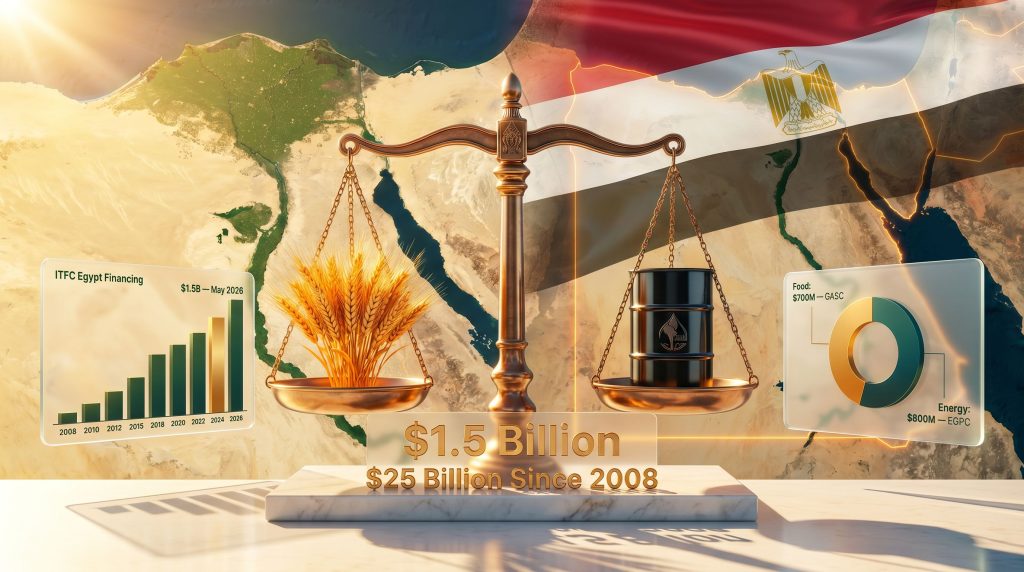
At the surface level, the agreement is straightforward. Egypt signed a $1.5 billion financing package with the International Islamic Trade Finance Corporation (ITFC) in May 2026, structured across two distinct tranches:
| Tranche | Recipient Agency | Allocated Value |
|---|---|---|
| Food Commodities | General Authority for Supply Commodities (GASC) | $700 million |
| Energy Imports | Egyptian General Petroleum Corporation (EGPC) | $800 million |
| Total | Dual-agency framework | $1.5 billion |
The ITFC is a Jeddah-based multilateral institution operating under the Islamic Development Bank Group. Since establishing its financing relationship with Egypt in 2008, the institution has approved approximately $25 billion in cumulative financing, of which roughly $9 billion has been directed specifically toward food commodity imports, with wheat representing the primary focus. These figures were confirmed by ITFC chief executive Adib Youssef Al Aama, as reported by Reuters.
This is not a one-off emergency measure. Egypt and the ITFC operate through an annual framework agreement structure, meaning the 2026 deal is the latest iteration of a recurring sovereign financing commitment rather than a crisis-driven intervention.
Planning Minister Ahmed Rostom indicated that the financing is designed to reinforce Egypt's capacity to sustain strategic reserves of critical commodities during periods of elevated market uncertainty. That framing positions the deal within a proactive policy posture rather than a reactive one.
How Islamic Trade Finance Actually Works
To understand why Egypt consistently chooses ITFC financing over conventional bilateral loans or IMF programme support, it is necessary to understand the mechanics of Shariah-compliant trade finance instruments.
Murabaha: Cost-Plus Commodity Financing
The most widely used structure in Islamic trade finance is Murabaha. Under this arrangement, the financing institution purchases a specified commodity on behalf of the borrowing entity at the prevailing market cost, then sells that commodity to the borrower at a pre-agreed marked-up price with deferred payment terms. The critical distinction from conventional lending is that the transaction is asset-backed.
The financing institution takes legal ownership of the commodity during the transaction, creating a commercial sale rather than a loan with interest. For Egypt's GASC, a Murabaha structure applied to wheat procurement means the ITFC effectively becomes the buyer of record for a wheat cargo, then transfers that cargo to GASC at a cost-plus margin. This keeps the transaction Shariah-compliant while achieving the same practical outcome as import financing.
Istisna'a: Procurement-Based Financing
Istisna'a structures are procurement-oriented and particularly suited to energy imports. Under this instrument, the financing institution agrees to procure specified goods to exact specifications and deliver them to the borrower within an agreed timeline. For EGPC's petroleum imports, this mechanism allows Egypt to secure fuel supply with delivery certainty while managing payment obligations through a structured deferred settlement.
Why This Classification Matters for Egypt's Balance Sheet
Trade finance instruments structured through Murabaha and Istisna'a mechanisms are generally classified differently from sovereign debt on a nation's balance sheet. Because the underlying transactions involve the purchase and sale of physical commodities rather than the disbursement of cash, the financing does not accumulate in the same way as direct budget support loans.
This distinction has material implications for Egypt's debt-to-GDP optics and its compliance metrics under ongoing IMF programme arrangements. Furthermore, the classification of Islamic trade finance instruments as commodity-linked commercial transactions rather than pure sovereign debt is a structural advantage that Egypt has consistently leveraged to manage its external financing profile without deteriorating headline debt ratios.
The Geopolitical Pressure Layer Driving 2026 Urgency
The timing of the Egypt $1.5 billion ITFC financing deal cannot be understood in isolation from the geopolitical environment that surrounds it. Three converging pressure points define Egypt's 2026 commodity import risk landscape, and the broader trade war impacts rippling through emerging markets have only added to that complexity.
The Strait of Hormuz Risk Premium
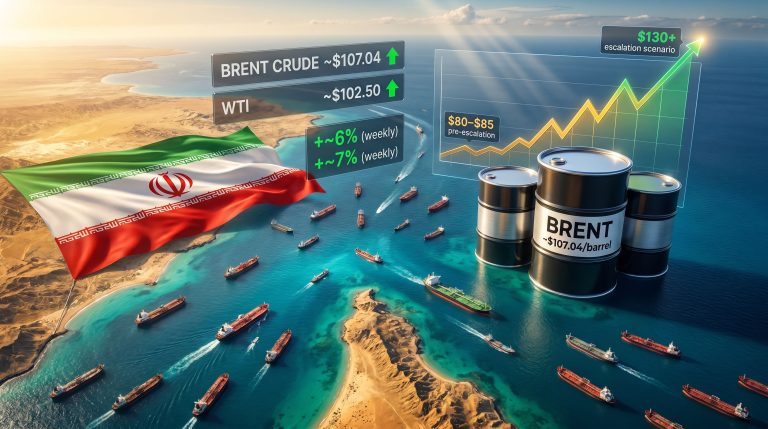
Roughly 21% of global petroleum liquids transit the Strait of Hormuz, making it the single most critical maritime chokepoint for global energy markets. Escalating tensions linked to the Iran conflict have elevated shipping insurance premiums and created persistent uncertainty around cargo transit timelines. For a net-importing nation like Egypt, even partial disruptions to Hormuz transit routes translate directly into higher fuel procurement costs and longer supply lead times for EGPC.
The same geopolitical risk environment affects fertiliser supply chains. Key precursor chemicals and finished fertiliser products from Middle Eastern producers rely on Hormuz transit. When risk premiums rise, fertiliser input costs increase, which cascades into global food production costs and ultimately into the prices Egypt's GASC must pay for wheat on international markets. These geopolitical oil price pressures have consequently made energy import financing a more urgent policy priority for Cairo.
Agricultural Supply Chain Stress
Beyond the immediate geopolitical factor, analysts have identified a convergence of agricultural supply-side pressures in 2025 and 2026. These include:
- Adverse weather patterns affecting crop yields in key wheat-exporting regions
- Fertiliser shortages reducing agricultural productivity in multiple growing zones
- Reduced harvest volumes in countries that historically supply Egypt's bulk wheat requirements
- Rising global food cost indices reflecting the cumulative impact of these supply constraints
Egypt is historically one of the world's largest single buyers of wheat on international commodity markets. Its dependence on imported grain is structural rather than cyclical, meaning these supply-side pressures are not temporary inconveniences but persistent vulnerabilities requiring consistent financing coverage.
Why Egypt's Bread Subsidy System Amplifies the Stakes
Egypt maintains one of the most extensive bread subsidy systems of any nation on earth. The government pegs subsidised bread prices well below global market rates, making GASC's procurement capacity a direct determinant of household food affordability for tens of millions of Egyptians.
When GASC's ability to procure wheat at scale is disrupted, the downstream effect on domestic bread prices is immediate. The political consequences of bread price inflation in Egypt are well-documented historically, which means the government treats GASC financing as a core sovereign policy instrument rather than a discretionary budget line.
Egypt's Dual-Channel Financing Strategy in 2026
What distinguishes Egypt's 2026 approach is the simultaneous pursuit of financing across two distinct channels. Alongside the ITFC deal, Egypt has been engaged in separate negotiations with a consortium of Gulf commercial banks to secure up to an additional $1.4 billion specifically for food imports.
| Financing Channel | Value | Purpose | Status (May 2026) |
|---|---|---|---|
| ITFC Annual Framework | $1.5 billion | Food + Energy | Confirmed |
| Gulf Bank Consortium | Up to $1.4 billion | Food imports | Negotiations ongoing |
| Combined potential | Up to $2.9 billion | Food + Energy | Partial confirmation |
The Gulf consortium includes three institutions:
- First Abu Dhabi Bank (FAB) — the UAE's largest bank by total assets
- Emirates NBD — a major UAE-headquartered commercial bank with regional reach
- Arab Banking Corporation — a MENA-focused commercial and investment banking institution
According to Asharq Business reporting, talks with this consortium were expected to conclude during the third quarter of 2026. The involvement of three separate institutions suggests a syndicated lending structure, in which financing risk and capital requirements are distributed across the consortium rather than concentrated with a single counterparty.
The logic behind this dual-channel approach reflects deliberate risk management. If either the multilateral Islamic finance channel or the Gulf commercial banking channel encounters constraints, whether capital-related, regulatory, or political, Egypt retains access to the alternative. This financing redundancy strategy mirrors the portfolio management principles that sophisticated institutional borrowers apply across capital markets.
Egypt's Long-Term Position Within the ITFC Ecosystem
The scale of Egypt's cumulative ITFC relationship deserves closer examination. $25 billion in financing since 2008 across an 18-year period represents an average annual commitment of approximately $1.4 billion. The May 2026 deal at $1.5 billion sits marginally above this historical average, suggesting a modest upward trajectory in annual commitment size rather than a dramatic escalation.
Of the cumulative $25 billion, approximately $9 billion has been food-specific, representing roughly 36% of total ITFC-Egypt financing directed toward commodity imports. The remaining 64% has covered broader trade finance requirements, including the energy component that now explicitly forms part of the annual framework structure.
A notable evolution in the 2026 deal structure is the explicit energy tranche. The $800 million EGPC allocation represents a formalisation of energy import financing within the annual framework, reflecting a shift from a food-dominant approach to a dual food-energy mandate. This structural evolution mirrors Egypt's increasingly complex import risk profile, in which energy supply disruptions now carry comparable strategic weight to food security concerns.
The "Financing Normalisation" Risk
One of the least discussed dynamics in Egypt's recurring ITFC relationship is what could be termed financing normalisation: the gradual transformation of what were originally conceived as temporary or cyclical financing mechanisms into permanent structural features of the sovereign financing architecture.
When a bilateral financing relationship persists for 18 consecutive years at an average of $1.4 billion annually, it ceases to function as a buffer and begins to function as a load-bearing element of the national import financing system. Policymakers and analysts who track Egypt's fiscal trajectory should assess whether this normalisation represents a manageable long-term financing dependency or whether it signals that structural economic reforms to reduce import dependency have not been implemented at the pace required.
The next major ASX story will hit our subscribers first
Macro-Economic Implications Beyond the Headlines
The Debt Optics Question
Because Islamic trade finance instruments are structured as commodity-backed commercial transactions rather than direct budget support loans, they interact differently with standard sovereign debt metrics. For Egypt's IMF programme compliance purposes, this distinction can reduce the visible accumulation of sovereign debt even as the financing obligations grow in absolute terms, creating a nuanced picture for external debt sustainability analysis.
Analysts monitoring Egypt's external financial position should consequently factor in the full spectrum of commodity financing obligations alongside formal sovereign debt when assessing long-term sustainability. The favourable accounting treatment of Islamic trade finance instruments is a structural feature, not an indication that underlying obligations are smaller than they appear.
Energy Subsidy Sustainability Under Geopolitical Stress
The $800 million EGPC tranche raises a parallel question about energy subsidy sustainability. Egypt maintains domestic fuel subsidies that require EGPC to procure petroleum products at global market prices while selling domestically at subsidised rates. When oil price movements are elevated by geopolitical risk premiums, as is the case during periods of Hormuz tension, the fiscal cost of maintaining those subsidies increases proportionally.
External trade financing for fuel procurement helps bridge the gap between import costs and domestic subsidy pricing, but it defers rather than resolves the underlying fiscal tension. The long-term sustainability of this approach depends on either a reduction in global energy prices, a gradual reform of Egypt's subsidy structure, or a sustained increase in domestic energy production capacity.
What This Signals for the Broader MENA and African Financing Landscape
Egypt's financing model is being observed carefully by other net-importing economies across North Africa and Sub-Saharan Africa. The combination of Islamic multilateral financing through the ITFC and Gulf commercial bank syndication represents a template that other commodity-dependent sovereign borrowers may seek to replicate. In addition, the global supply chain impacts of ongoing trade disruptions have made this kind of structured approach increasingly relevant for import-dependent nations.
Several dynamics make Egypt's approach particularly instructive:
- The ITFC's positioning within the Islamic Development Bank Group provides political insulation that Western-linked financing instruments do not offer in the current geopolitical environment
- The annual framework structure reduces transaction costs compared to negotiating standalone financing arrangements each year
- The dual food-energy mandate within a single framework agreement demonstrates how commodity financing can be consolidated without creating a single-source dependency
- The parallel Gulf bank consortium engagement diversifies counterparty risk across both multilateral and commercial channels
For analysts and policymakers tracking sovereign financing trends across MENA and Africa, the Egypt $1.5 billion ITFC financing deal is less a news event than a diagnostic window into how large import-dependent economies are structuring their commodity security infrastructure in an era of persistent geopolitical uncertainty.
Disclaimer: This article contains forward-looking analysis and references to ongoing financing negotiations. Information regarding the Gulf bank consortium arrangement reflects reporting as of May 2026 and has not been independently confirmed as finalised. This content is for informational purposes only and does not constitute financial or investment advice.
Want to Stay Ahead of the Next Major Commodity-Driven Market Opportunity?
While sovereign commodity financing deals reshape global trade flows, Discovery Alert's proprietary Discovery IQ model scans ASX announcements in real time, delivering instant alerts on significant mineral discoveries across more than 30 commodities — from energy to agricultural inputs — so subscribers can identify actionable investment opportunities before the broader market reacts. Explore how historic mineral discoveries have generated substantial returns and begin your 14-day free trial today to position yourself ahead of the next major find.