July 18, 2026
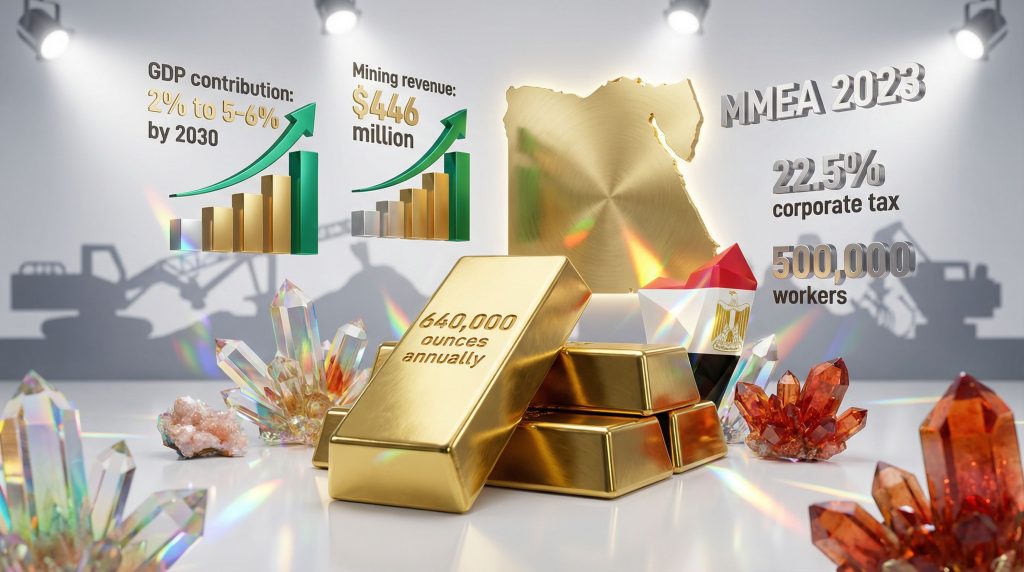
Egypt's mining sector development has emerged as a cornerstone of the nation's economic diversification strategy, demonstrating sophisticated integration of environmental compliance, technological advancement, and international partnership frameworks. The convergence of environmental regulations, technological advancement, and supply chain diversification has created conditions favouring nations that can adapt their mining frameworks to international competitiveness standards. This systemic shift toward value-added production and downstream processing represents more than regulatory reform; it signals fundamental changes in how emerging economies position themselves within global resource networks.
Egypt's Strategic Mining Sector Development Framework
Egypt's approach to mining sector modernisation demonstrates sophisticated economic planning that extends beyond traditional extraction models. The nation's mineral resource strategy emphasises comprehensive value chain integration while maintaining competitiveness within international investment rankings. This transformation reflects broader regional trends toward resource sector sophistication and local content maximisation.
Current policy initiatives focus on environmental compliance mechanisms aligned with global sustainability standards. Minister Khaled Hashem's April 2026 discussions with the Federation of Egyptian Industries highlighted the integration of Carbon Border Adjustment Mechanism (CBAM) requirements into mineral processing operations. Furthermore, these energy transition insights indicate regulatory frameworks designed to maintain European and global market access competitiveness.
Strategic Development Priorities:
- Enhanced value-added production capabilities
- Environmental compliance system implementation
- Alternative fuel integration for energy-intensive operations
- Cross-ministerial coordination for emissions tracking
- Industrial zone energy optimisation planning
The establishment of environmental registries for measuring and verifying carbon emissions across industrial activities represents institutional capacity building that supports long-term Egypt's mining sector development. This infrastructure enables real-time compliance monitoring while facilitating access to international carbon markets and green financing mechanisms.
Technical Infrastructure and Support Systems
Egypt's mineral development leverages existing technical infrastructure through specialised institutions like the Mining and Marble Technology Center, which provides research and technical support to industry chambers. This institutional approach ensures knowledge transfer and technology adoption aligned with international best practices.
Energy Service Companies (ESCOs) play increasingly important roles in optimising industrial energy consumption and recommending efficiency improvements. Government initiatives enable private sector development, installation, and operation of renewable energy systems within industrial zones. However, understanding mining permitting basics remains essential for successful project implementation.
Identified Technical Challenges:
- Mineral exploration licence duration constraints (currently one-year terms)
- Limited exploration area allocations
- Quality concerns regarding domestic Refuse-Derived Fuel (RDF) implementation
- Coordination requirements across multiple regulatory ministries
These technical considerations indicate ongoing regulatory evolution as mining sector development adapts to international competitiveness requirements while addressing domestic infrastructure limitations.
When big ASX news breaks, our subscribers know first
Regulatory Innovation and Investment Climate Enhancement
Environmental Compliance Integration
Modern mining operations in Egypt incorporate sophisticated environmental management systems that extend beyond basic compliance requirements. The Federation of Egyptian Industries' Environmental Compliance Office provides comprehensive support services including revolving loan programmes for industrial firms. In addition, this includes access to environmentally compliant technologies and waste management system implementation.
This institutional support structure enables mining companies to meet Egypt's sustainable development goals while maintaining operational efficiency. The integration of renewable energy integration and energy efficiency solutions into mining operations creates competitive advantages in global markets increasingly focused on environmental, social, and governance (ESG) criteria.
"The mining sector holds strong potential to attract new investments, generate higher value-added output, and support local manufacturing as part of efforts to reduce imports and boost exports."
Environmental Registry System Benefits:
- Real-time emissions monitoring capabilities
- Verification processes for carbon emission claims
- Enhanced access to green financing mechanisms
- Improved competitiveness in European markets
- Alignment with global sustainability standards
Institutional Coordination Mechanisms
Cross-ministerial coordination between the ministries of Industry, Local Development, and Environment creates comprehensive oversight for Egypt's mining sector development. This institutional approach ensures regulatory consistency while enabling specialised expertise application across different aspects of mining operations.
Energy mapping initiatives for industrial zones identify optimal renewable energy sources for specific geographical areas. Consequently, this reduces reliance on national grid infrastructure while creating cost advantages for mining operations. Solar and wind energy integration potential varies significantly across Egypt's diverse geological regions, requiring customised energy solutions for different mining projects.
The government's emphasis on private sector renewable energy development within industrial zones creates opportunities for mining companies to achieve energy independence. This approach supports long-term competitiveness while addressing global supply chain demands for sustainable production methods.
Commodity Sector Diversification and Production Enhancement
Gold Mining Operations and International Partnerships
Egypt's gold mining sector represents the cornerstone of mineral production strategy, with established international partnerships providing technological expertise and capital investment. The Sukari Gold Mine continues operating as the flagship production facility, demonstrating the viability of large-scale gold mining operations in Egypt's geological environment.
International joint ventures with major mining companies create technology transfer opportunities while providing access to global marketing networks. These partnerships enable Egyptian mining operations to achieve production standards compatible with international commodity markets. Furthermore, they build domestic technical expertise essential for sustainable sector growth.
Production Enhancement Strategies:
- Advanced exploration technology implementation
- Processing facility modernisation projects
- Infrastructure development coordination
- Supply chain optimisation initiatives
- Quality control system improvements
The focus on downstream processing capabilities enables Egyptian gold production to capture higher margins through refined product exports rather than raw ore sales. This value addition strategy aligns with broader economic diversification objectives while creating additional employment opportunities in technical and processing roles.
Industrial Mineral Development Initiatives
Egypt's mineral diversification extends significantly beyond precious metals into industrial minerals essential for manufacturing and construction sectors. Black sands processing for titanium-bearing minerals represents substantial economic potential, given global demand for titanium in aerospace and manufacturing applications.
Phosphate and potash development initiatives support agricultural sector requirements while creating export opportunities for processed fertiliser products. The integration of phosphate processing with existing chemical industry infrastructure enables efficient production scaling. However, understanding rare earth insights remains crucial for strategic mineral development.
Industrial Mineral Opportunities:
- Zircon extraction and beneficiation processes
- Titanium-bearing mineral processing capabilities
- Phosphate rock processing enhancement projects
- Potash development for agricultural applications
- Rare earth element exploration potential
The emphasis on local manufacturing integration ensures that industrial mineral development supports broader economic objectives rather than simply raw material exports. This approach creates multiplier effects throughout Egypt's economy while building technical expertise in mineral processing technologies.
Value Addition Strategies and Local Content Development
Downstream Processing Integration
Egypt's value addition strategy leverages established petrochemical infrastructure while developing specialised processing capabilities for mineral resources. The integration of mining operations with existing industrial zones creates synergies that reduce infrastructure development costs. In addition, this enables efficient resource utilisation for Egypt's mining sector development.
Local content requirements drive employment creation in technical and manufacturing roles, supporting Egypt's broader economic development objectives. The emphasis on domestic content levels between 60-80% ensures that mining sector development contributes meaningfully to local economic growth while building sustainable industrial capabilities.
Value Addition Mechanisms:
- Processing facility development within existing industrial zones
- Technology transfer through international partnerships
- Skills development programmes aligned with industry requirements
- Supply chain integration with domestic manufacturing
- Quality certification systems for processed products
The coordination with the General Union of Mines and Quarries facilitates workforce development initiatives that ensure adequate technical expertise for expanding mining operations. This institutional approach enables sustainable sector growth while maintaining international competitiveness standards.
Employment Generation and Skills Development
Mining sector expansion creates employment opportunities that extend well beyond direct mining operations into supporting industries, logistics, technical services, and processing facilities. The multiplier effect of mining investment supports regional economic development while building technical expertise that benefits other industrial sectors.
International partnership agreements include technology transfer provisions that enable Egyptian workers to develop expertise in modern mining techniques. Furthermore, these partnerships provide access to processing technologies essential for competitive operations. This knowledge transfer creates long-term competitive advantages while reducing dependence on foreign technical expertise.
Skills Development Focus Areas:
- Modern mining equipment operation and maintenance
- Environmental compliance and monitoring systems
- Processing technology and quality control
- Logistics and supply chain management
- Safety protocols and emergency response procedures
The integration of renewable energy systems into mining operations creates additional employment opportunities in energy system installation, operation, and maintenance. This diversification supports Egypt's broader renewable energy objectives while creating specialised technical roles.
International Partnership Models and Capital Investment
BRICS Cooperation and Knowledge Sharing
Egypt's participation in BRICS geological platforms facilitates knowledge sharing and strategic mineral exploration coordination with other emerging economies. These partnerships provide access to advanced exploration technologies while establishing frameworks for cross-border mineral trade development.
Knowledge transfer initiatives through BRICS cooperation include geological survey techniques, environmental management systems, and processing technology development. This multilateral approach enables Egypt to access diverse technical expertise. Additionally, it enables the country to contribute to regional mineral resource development aligned with critical minerals strategy frameworks.
BRICS Cooperation Benefits:
- Advanced geological exploration technology access
- Environmental management best practices sharing
- Processing technology development programmes
- Regional mineral trade framework establishment
- Investment coordination for large-scale projects
The emphasis on South-South cooperation creates opportunities for technology transfer that may be more appropriate for emerging economy conditions compared to traditional Western mining technology approaches. This diversification of technology sources enhances Egypt's strategic flexibility in mining sector development.
Regional Investment Flows and Infrastructure Development
Strategic partnerships with Chinese, Saudi Arabian, and South African mining companies provide essential capital investment and technical expertise for large-scale project development. Recent licensing agreements demonstrate growing international confidence in Egypt's regulatory environment and geological potential.
Regional investment coordination enables Egypt to access diverse financing sources while maintaining strategic autonomy in resource development decisions. The geographic position of Egypt provides efficient access to European, African, and Asian markets through established trade corridors.
Investment Climate Advantages:
- Strategic geographic location for global market access
- Established infrastructure for international trade
- Diversified partnership opportunities across multiple regions
- Regulatory framework evolution toward international standards
- Political stability supporting long-term investment planning
The focus on joint venture structures enables risk sharing while ensuring technology transfer and local capacity building. This approach balances international expertise requirements with domestic economic development objectives.
Global Market Integration and Supply Chain Development
Supply Chain Positioning and Export Market Development
Egypt's mining development strategy aligns closely with global supply chain requirements, particularly in critical minerals and industrial commodities essential for manufacturing and energy transition technologies. The country's strategic geographic position enables efficient logistics connections to major consumption markets. Consequently, this maintains competitive production costs for Egypt's mining sector development.
Regional supply chain integration creates opportunities for Egypt to serve as a mineral processing and distribution hub for North African and Middle Eastern markets. This positioning leverages existing infrastructure while creating economies of scale for processing operations.
Market Access Advantages:
- Established shipping routes to European markets
- Regional trade agreement benefits with African markets
- Logistics infrastructure supporting bulk commodity exports
- Quality certification systems recognised internationally
- Currency stability supporting long-term contract arrangements
The emphasis on processed product exports rather than raw mineral sales enables Egypt to capture higher margins while building long-term customer relationships. This value-added approach supports sustainable economic development while reducing vulnerability to commodity price volatility.
Investment Climate Competitiveness
Egypt's evolving fiscal framework positions the country competitively within global mining investment rankings while maintaining appropriate government revenue optimisation. The balance between attractive investment terms and domestic economic benefits reflects sophisticated policy development aligned with international best practices.
Regulatory transparency improvements and streamlined licensing procedures reduce investment risks while enabling efficient project development timelines. These institutional improvements demonstrate Egypt's commitment to creating sustainable competitive advantages in global mining investment markets.
Competitive Framework Elements:
- Transparent licensing and regulatory procedures
- Environmental compliance systems aligned with international standards
- Infrastructure development supporting mining operations
- Skilled workforce development programmes
- Political stability and investment protection mechanisms
The integration of environmental and social governance requirements into mining regulations ensures that Egypt's mining sector development meets international sustainability standards while attracting responsible investment capital.
The next major ASX story will hit our subscribers first
Sustainability Considerations and Environmental Management
Modern mining operations throughout Egypt incorporate comprehensive environmental management systems that exceed basic regulatory compliance requirements. Carbon emission reduction initiatives and water resource optimisation protocols ensure long-term operational sustainability. However, these must meet global ESG investment criteria increasingly demanded by international capital markets.
The implementation of environmental impact assessment protocols provides systematic evaluation of mining project environmental effects while identifying mitigation strategies. These assessment processes enable informed decision-making that balances economic development with environmental protection objectives.
Sustainability Framework Components:
- Comprehensive environmental impact assessment systems
- Water resource conservation and recycling technologies
- Carbon footprint reduction through renewable energy integration
- Biodiversity protection and habitat restoration programmes
- Community development and social impact management
Water resource management systems incorporate advanced recycling and conservation technologies that reduce freshwater consumption while maintaining operational efficiency. These systems provide competitive advantages in water-scarce regions while demonstrating environmental responsibility to international stakeholders.
Community development integration ensures that mining operations contribute positively to local economic development while addressing potential social impacts. This approach creates sustainable social licence to operate while building long-term community support for mining activities.
Regional Development Model Comparisons
Egypt's mining sector modernisation reflects broader Middle Eastern and African resource development trends that emphasise regulatory transparency, international partnership facilitation, and value-added production enhancement. This regional approach creates competitive dynamics while enabling knowledge sharing and best practice adoption.
Comparative analysis with other emerging mining jurisdictions demonstrates Egypt's strategic positioning within competitive regional investment markets. The emphasis on infrastructure development and regulatory modernisation creates sustainable competitive advantages. Furthermore, this maintains flexibility for future adaptation aligned with global resource sector trends.
Regional Competitive Positioning:
- Regulatory framework competitiveness with established mining jurisdictions
- Infrastructure advantages over many emerging market competitors
- Geographic positioning for multiple market access
- Technical expertise development through international partnerships
- Political stability supporting long-term investment planning
The balance between international competitiveness and domestic economic development objectives positions Egypt favourably within regional mining investment comparisons while maintaining strategic autonomy in resource development decisions.
Future Development Opportunities and Emerging Technologies
The transformation of Egypt's mining landscape creates substantial opportunities for technology innovation, regional hub development, and supply chain integration that extend beyond traditional mining operations. Future growth potential includes expansion into battery minerals, rare earth elements, and advanced materials processing aligned with global energy transition requirements.
Battery mineral exploration and development represents significant economic potential as global electric vehicle adoption accelerates demand for lithium, cobalt, and nickel resources. Egypt's geological diversity provides exploration opportunities for these strategic minerals while existing processing infrastructure enables efficient development.
Emerging Development Opportunities:
- Battery mineral exploration and processing capabilities
- Rare earth element development for technology applications
- Advanced materials manufacturing for aerospace and electronics
- Regional mining services hub development
- Renewable energy integration with mining operations
Rare earth element processing capabilities would position Egypt within global technology supply chains while creating high-value manufacturing opportunities. The technical expertise required for rare earth processing aligns with Egypt's broader industrial development objectives.
Advanced materials manufacturing represents natural progression from basic mineral processing toward high-technology applications that serve aerospace, electronics, and renewable energy sectors. This development pathway creates opportunities for sustained economic growth while building technical expertise.
Regional mining services hub development leverages Egypt's geographic position and technical infrastructure to serve broader Middle Eastern and African mining markets. This service sector approach creates economic opportunities while supporting regional mining development.
Government Reform Initiatives and International Recognition
Egypt's comprehensive mining reforms have attracted significant international attention, with industry experts recognising the country's strategic approach to sector transformation. The government's commitment to boosting mining industry value and expanding green initiatives demonstrates alignment with global sustainability trends while maintaining economic competitiveness.
These reform initiatives establish frameworks that support long-term investment while ensuring environmental compliance and community benefit sharing. The institutional changes reflect sophisticated policy development that balances multiple stakeholder interests while maintaining strategic economic objectives.
Investment and Development Considerations
The analysis presented in this article is based on publicly available information and should not be considered investment advice. Readers should conduct independent research and consult qualified professionals before making investment decisions. Mining sector developments involve inherent risks including commodity price volatility, regulatory changes, and operational challenges that may affect project outcomes and investment returns.
Egypt's mining sector development represents a comprehensive transformation that extends beyond traditional extraction models toward integrated value creation and international competitiveness. The strategic approach to regulatory modernisation, environmental compliance, and international partnership development positions Egypt favourably within global mining investment markets while supporting domestic economic development objectives.
Want to Capitalise on Mining Sector Developments?
Discovery Alert's proprietary Discovery IQ model delivers real-time alerts on significant ASX mineral discoveries, instantly empowering subscribers to identify actionable opportunities ahead of the broader market. Understand why major mineral discoveries can lead to substantial returns by exploring Discovery Alert's dedicated discoveries page, showcasing historic examples of exceptional outcomes, and begin your 14-day free trial today to position yourself ahead of the market.