June 18, 2026
Understanding Electric Arc Furnace Technology in Modern Steel Production
Electric arc furnace technology represents a fundamental shift in how modern steel production operates, leveraging recycled materials and electrical energy to create high-quality steel products. The mechanics of these systems differ substantially from traditional blast furnace operations, utilizing intense electrical arcs to melt scrap steel at temperatures exceeding 1,600°C. Furthermore, this technological approach has positioned certain European markets as leaders in sustainable iron production practices.
Italy's industrial landscape demonstrates how a mature economy can successfully transition toward electrified steel production while maintaining competitive output levels. The country's steel sector operates through a network of specialized facilities that process recycled materials into construction-grade products, supporting both domestic consumption and export markets across the European Union. Moreover, this transformation aligns with broader energy transition pressures affecting European industrial sectors.
When big ASX news breaks, our subscribers know first
Italy's Electric Arc Furnace Network Dominance
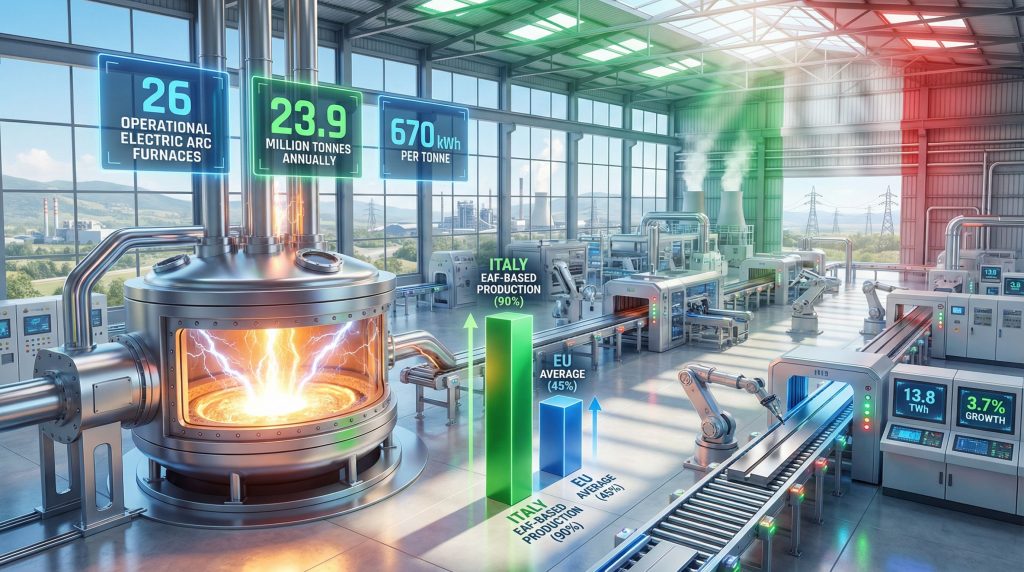
Italy operates as Europe's most electrified steel producer, with 90% of production derived from secondary steelmaking processes that utilise electric arc furnaces. This contrasts significantly with the European Union average of 45% electrification, positioning Italy as a technological leader in sustainable steel manufacturing.
The country's 26 operational electric arc furnaces collectively maintain a capacity of 23.9 million tonnes annually, according to the Global Iron and Steel Tracker. These facilities consume approximately 670 kWh per tonne of steel output, reflecting modern efficiency standards achieved through technological improvements implemented over the past decade.
Italy's position as Europe's second-largest steel producer, trailing only Germany, stems from strategic investments in electric furnace technology that began during the industrial transformation of the 1990s and 2000s. This infrastructure provides operational flexibility that traditional blast furnace systems cannot match, including faster production cycles and reduced capital requirements for capacity expansion. Additionally, these developments reflect broader industry innovation trends driving European manufacturing competitiveness.
Technological Advantages of Electric Steel Production
Electric arc furnaces offer several operational benefits over coal-fired blast furnaces:
• Lower carbon footprint per tonne of finished steel products
• Utilisation of recycled scrap metal as primary feedstock (supporting circular economy principles)
• Rapid production cycles enabling responsive manufacturing schedules
• Reduced infrastructure requirements for furnace replacement and modernisation
• Energy efficiency potential when powered by renewable electricity sources
The transition to electric steel production has enabled Italian manufacturers to reduce their dependence on imported iron ore while capitalising on abundant domestic and European scrap metal supplies. However, this strategic positioning proves particularly valuable during periods of raw material price volatility or supply chain disruptions affecting traditional steelmaking inputs.
Current Production Capacity and Utilisation Patterns
Italy's crude steel output reached 20.7 million tonnes in 2025, representing a 3.6% increase from the previous year, according to Federacciai data. This growth trajectory reflects strong domestic demand and favourable export conditions within European markets, particularly considering current iron ore price trends affecting global steel production costs.
Table: Italy's Steel Production Infrastructure (2025)
| Metric | Value |
|---|---|
| Operational EAF Units | 26 furnaces |
| Combined Annual Capacity | 23.9 million tonnes |
| Energy Consumption Rate | 670 kWh per tonne |
| Actual 2025 Output | 20.7 million tonnes |
| Capacity Utilisation | ~87% |
| Annual Power Demand | 13.8 TWh |
The steel sector accounts for 42.4% of total power demand from energy-intensive industrial sectors, consuming 13.8 TWh annually as reported by Terna, Italy's transmission system operator. This represents a 3.7% increase from the previous year, indicating sustained industrial activity and production growth.
Energy Efficiency Trends and Benchmarks
Italian steel producers achieved significant efficiency improvements between 2015 and 2021, reducing energy consumption from approximately 800 kWh per tonne to below 700 kWh per tonne. However, this efficiency curve has plateaued since 2021, with slight increases in energy consumption per tonne indicating that current technologies may be approaching practical efficiency limits without additional technological innovations.
Monthly power demand patterns show consistent year-over-year growth since July 2025, with February 2026 recording 1.3 TWh in monthly consumption. This represents a 3.7% increase compared to February 2025, closely mirroring the 2.6% increase in crude steel output to 1.9 million tonnes during the same period.
Major Electric Arc Furnace Development Projects
Several significant capacity expansions are scheduled to commence operations between 2026 and 2029, potentially transforming Italy's steel production landscape and substantially increasing industrial power requirements. These new furnaces to support Italian steel power demand will require coordinated infrastructure planning and grid capacity expansion.
Acciaierie Venete Padova Expansion
Acciaierie Venete has announced the installation of a 100-tonne electric arc furnace at its Padova facility, with commissioning expected during summer 2026. The project specifications include:
• Annual production target: 750,000 tonnes of steel
• Projected power consumption: 500 GWh annually
• Expected operational timeline: Production beginning Q3 2026
• Technology focus: Modern efficiency standards targeting <670 kWh per tonne
This expansion represents a substantial investment in secondary steelmaking capacity, supporting the production of long steel products including rebar, wire rod, and structural sections for construction and manufacturing applications.
Metinvest Piombino Development
The Metinvest Piombino project represents the largest planned expansion in Italy's steel sector, featuring a dual electric arc furnace configuration designed to support 2.7 million tonnes of hot-rolling capacity annually. Key project parameters include:
• Construction timeline: Mid-2026 groundbreaking
• Production startup: Targeted for 2029
• Annual power consumption: 1.8 TWh (1,800 GWh)
• Product focus: Low-emissions hot-rolled products for industrial applications
The Metinvest facility's 2.7 million tonne capacity would represent approximately 11% of Italy's current total EAF capacity when operational, positioning it as a transformational project for the sector's growth trajectory.
This dual furnace system provides operational redundancy and production continuity advantages, allowing maintenance on one unit while maintaining output from the second furnace. The configuration also enables optimised material handling procedures and enhanced production scheduling flexibility.
What Challenges Face the Taranto Facility Transformation?
The transformation of Italy's Taranto steel facility represents the country's final step in eliminating coal-based steelmaking operations. However, this transition faces significant regulatory and operational obstacles that could affect implementation timelines.
Phase-Out Requirements and Regulatory Framework
The Taranto facility currently houses Italy's only remaining coal-fired blast furnaces, operating below full capacity for over a decade. The Italian government has authorised 6 million tonnes of annual electric furnace replacement capacity, requiring complete elimination of coal-based operations.
Flacks Group has emerged as the preferred bidder, proposing a 4 million tonnes annual capacity plan. However, the facility was placed under extraordinary administration in February 2024, and court-ordered shutdowns related to health concerns have cast doubt over the transformation timeline originally scheduled for 2027.
The regulatory compliance framework requires:
• Complete dismantling of existing blast furnace infrastructure
• Environmental remediation of historical contamination
• Installation of modern electric arc furnace systems
• Expansion of cooling water infrastructure for increased operations
• Implementation of comprehensive environmental monitoring systems
Environmental and Health Considerations
The Taranto transformation represents a complex case study in industrial transition, balancing economic viability with environmental remediation requirements and regional employment considerations. The facility's proximity to residential areas has resulted in ongoing legal challenges regarding air quality and public health impacts.
Resolution of these issues remains a prerequisite for capital investment and modernisation activities. The transformation timeline depends heavily on regulatory approvals and the successful resolution of outstanding health and environmental concerns.
Projected Power Demand from New Furnace Installations
The combined impact of planned electric arc furnace projects will substantially increase Italy's industrial power consumption, requiring coordinated infrastructure planning and grid capacity expansion. These new furnaces to support Italian steel power demand represent the most significant expansion of electrical load in Italy's industrial sector for decades.
Aggregate Power Consumption Analysis
Combined New Furnace Power Requirements:
| Project | Annual Capacity | Power Consumption | Timeline |
|---|---|---|---|
| Acciaierie Venete | 750,000 tonnes | 500 GWh | 2026 |
| Metinvest Piombino | 2.7 million tonnes | 1,800 GWh | 2029 |
| Combined Total | 3.45 million tonnes | 2,300 GWh | 2026-2029 |
This 2.3 TWh annual increase represents approximately 16.7% growth relative to the current steel sector baseline of 13.8 TWh. The magnitude of this expansion exceeds historical annual growth rates and requires substantial grid infrastructure coordination.
Peak Load Management Considerations
Electric arc furnaces create intermittent high-load demands rather than continuous baseload consumption patterns. During active melting cycles, a typical 100-tonne furnace requires 60-100 MW of instantaneous power, creating potential grid stress during peak industrial operating hours (6 AM to 10 PM).
The projected new furnace installations will impose the following peak load requirements:
• Acciaierie Venete: Up to 100 MW during melting operations
• Metinvest dual furnaces: Up to 200 MW combined peak demand
• Total additional peak load: 300 MW system-wide impact
These peak demand patterns require sophisticated grid management strategies, including real-time load forecasting and potential demand response mechanisms to prevent system instability during high-consumption periods.
The next major ASX story will hit our subscribers first
Grid Infrastructure and Integration Requirements
Italy's electrical grid must accommodate substantial load increases while maintaining system reliability and power quality standards required for industrial steel production. Furthermore, the electric arc furnace advancements in electromagnetic stirring technologies will require grid infrastructure capable of managing increasingly sophisticated electrical demands.
Power Quality and System Stability
Electric arc furnaces generate unique electrical characteristics that differ from conventional industrial loads:
• Harmonic distortion due to non-linear electrical arc behaviour
• Power factor variations during melting and refining cycles
• Voltage fluctuations caused by rapid load changes
• Frequency regulation requirements during furnace startup and shutdown
Grid operators must implement advanced power conditioning equipment and reactive power compensation systems to maintain stable electrical supply for both new steel facilities and existing industrial customers.
Transmission and Distribution Upgrades
The projected 2.3 TWh annual demand increase requires systematic evaluation of transmission capacity and distribution infrastructure. Key upgrade requirements include:
- High-voltage transmission lines capable of delivering peak loads to industrial zones
- Substation capacity expansion to handle concentrated industrial demand
- Protection system upgrades to manage fault conditions and system disturbances
- Smart grid technologies for demand-side management and load optimisation
Coordination between steel producers and grid operator Terna will be essential to ensure infrastructure development aligns with production startup timelines.
Energy Cost Dynamics and Market Pressures
Italy's wholesale electricity prices rank among Europe's highest, creating significant operational cost pressures for energy-intensive steel production. Recent geopolitical developments have further complicated the energy cost environment.
Current Power Pricing Environment
Italian power prices reflect the country's dependence on natural gas-fired generation and strong correlation with gas market volatility. Second and third quarter 2026 power contracts increased by 39% between February and March, driven by escalating Middle East conflicts that pushed Dutch TTF gas prices above €50/MWh.
Comparative European Power Price Analysis:
| Country | Q2-Q3 2026 Price Level | Gas Dependence | Price Volatility |
|---|---|---|---|
| Italy | High (39% increase) | Significant | Elevated |
| Germany | Moderate | Moderate | Moderate |
| France | Lower | Limited | Stable |
| Spain | Moderate | Moderate | Variable |
The correlation between gas prices and electricity costs particularly affects Italian steel producers, as natural gas-fired power plants set marginal electricity prices during peak demand periods.
Government Support Mechanisms
The Italian government has implemented the Energy Release Scheme to provide industrial support during periods of elevated energy costs. This mechanism offers:
• Fixed electricity pricing at €65/MWh for qualifying energy-intensive users
• 20-year renewable capacity development commitments from participating companies
• Power return obligations ensuring equivalent renewable energy contribution
• Industrial competitiveness protection during energy transition period
This support framework aims to insulate domestic steel production from short-term energy price volatility whilst incentivising long-term renewable energy investment.
Carbon Cost Pressures and Regulatory Impacts
European steel producers face increasing carbon-related costs through multiple regulatory mechanisms. Additionally, these developments reflect broader sustainability transformation benefits emerging across industrial sectors.
EU Emissions Trading System (ETS) Evolution:
• Gradual reduction of free allowance allocations for steel producers
• Increased auction volumes requiring direct allowance purchases
• Higher carbon prices affecting production cost calculations
Carbon Border Adjustment Mechanism (CBAM) Implementation:
• Import cost increases for non-EU steel products
• Competitive protection for domestic producers meeting EU standards
• Administrative compliance requirements for import documentation
These regulatory developments create both cost pressures and competitive advantages for Italian steel producers utilising electric furnace technology, which typically generates lower carbon emissions per tonne than traditional blast furnace operations.
How Do Market Demand Patterns Support Production Expansion?
European steel demand forecasts support the planned capacity expansions, though market volatility and international competition continue to influence production decisions.
EU Steel Market Outlook
European steel demand is projected to increase by 1.3% to approximately 134 million tonnes in 2026, according to Eurofer analysis. This growth trajectory provides market support for new production capacity, particularly in construction and manufacturing sectors.
Italy's position as a major importer of flat steel products could benefit from reduced import quotas scheduled for implementation in July 2026. These policy changes may create substitution opportunities for domestic production, supporting utilisation rates at new facilities.
Regional Competitive Dynamics
Italian steel producers compete within European markets characterised by:
• Transportation cost advantages for regional distribution
• Quality standards alignment with EU manufacturing requirements
• Supply chain integration with automotive and construction industries
• Regulatory compliance uniformity across member states
The country's established scrap metal processing infrastructure provides raw material sourcing advantages compared to regions dependent on imported iron ore and coking coal. Consequently, the circular economy principles enabled by electric arc furnaces align with Italy's strategic positioning in European steel markets.
Long-Term Strategic Implications for Italy's Steel Sector
The planned electric arc furnace expansions position Italy for sustained competitiveness within European steel markets while supporting decarbonisation objectives and industrial policy goals. These new furnaces to support Italian steel power demand will fundamentally reshape the country's industrial energy profile.
Technology Leadership and Innovation Potential
Italy's extensive electric furnace network creates opportunities for continued technological advancement, including:
• Hydrogen-based direct reduction integration for lower-carbon production
• Digital process optimisation through artificial intelligence and machine learning
• Energy storage coordination to manage renewable electricity integration
• Circular economy enhancement through advanced scrap sorting and processing
The concentration of electric steel production expertise within Italian industrial zones provides a foundation for next-generation steelmaking technology development and deployment.
Industrial Policy and European Integration
Italy's steel sector transformation aligns with broader European Union industrial strategy priorities:
- REPowerEU objectives for energy independence and renewable integration
- Green Deal implementation targeting industrial decarbonisation
- Strategic autonomy goals reducing dependence on third-country steel imports
- Circular economy principles maximising material recycling and reuse
The new furnaces to support Italian steel power demand support these policy frameworks whilst maintaining industrial employment and regional economic development in traditional steel-producing areas.
Investment Risk Assessment and Market Vulnerabilities
Despite favourable demand projections, several risk factors could affect the success of planned capacity expansions:
Market Risk Factors:
• Energy cost volatility affecting production economics
• International trade policy changes impacting import competition
• Economic recession reducing steel demand growth
• Currency fluctuations affecting export competitiveness
Operational Risk Considerations:
• Grid infrastructure delays affecting production startup timelines
• Regulatory approval processes extending construction schedules
• Skilled workforce availability for advanced furnace operations
• Environmental compliance costs exceeding projected levels
Financial Risk Management:
• Capital expenditure financing during elevated interest rate environments
• Long-term power purchase agreements mitigating energy price exposure
• Demand contract negotiation ensuring capacity utilisation
• Insurance coverage for construction and operational phases
The successful integration of new furnace capacity depends on coordinated planning across multiple stakeholders, including steel producers, grid operators, government agencies, and financial institutions supporting industrial investment in Europe's evolving energy landscape.
This analysis is based on publicly available market data and industry reports. Steel market investments involve significant capital requirements and operational risks that should be evaluated through comprehensive due diligence processes.
Considering Investment in European Steel Innovation?
Discovery Alert's proprietary Discovery IQ model delivers instant notifications on significant ASX mineral discoveries, helping investors identify actionable opportunities in industrial metals and mining companies that supply the global steel sector. Begin your 14-day free trial today to gain market-leading insights into mining discoveries that could benefit from Europe's steel production transformation.