May 14, 2026
Electric motor efficiency and autonomous fleet integration technologies are reshaping industrial operations across multiple sectors, with mining operations experiencing particularly significant transformation. The convergence of battery chemistry advances, infrastructure development requirements, and operational cost optimization strategies has created unprecedented opportunities for mining companies to fundamentally redesign their equipment fleets and operational frameworks. Furthermore, electric vehicles in mining sector deployment delivers measurable operational advantages across diverse mining environments.
What Drives the Mining Industry's Electric Vehicle Revolution?
Operational Efficiency Metrics Behind EV Adoption
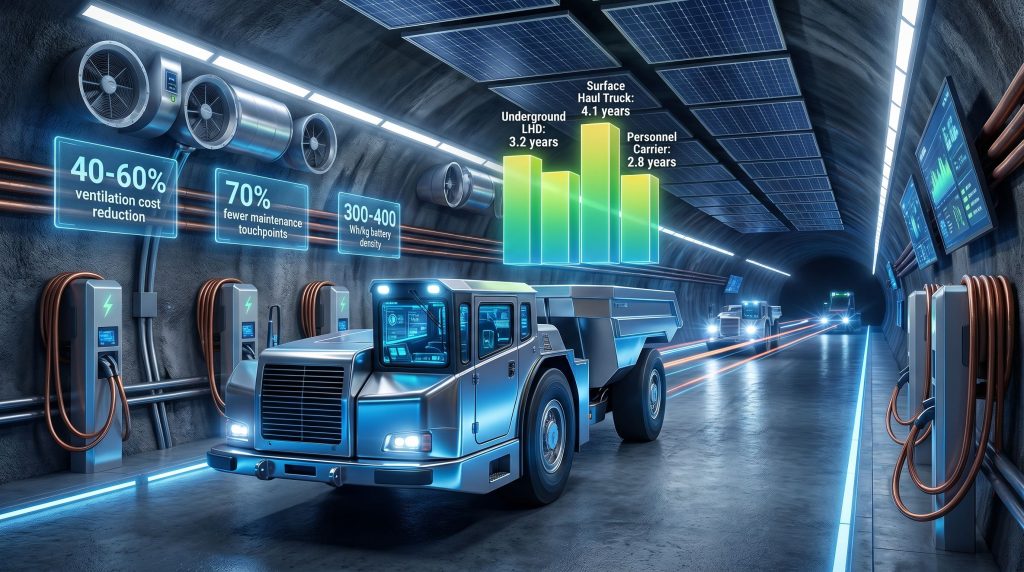
Underground mining operations present unique conditions where electric vehicles in mining sector deployment delivers measurable operational advantages. Modern electric powertrains eliminate combustion-related heat generation, fundamentally altering ventilation requirements and reducing atmospheric management costs. Temperature control systems in underground environments consume substantial energy resources, with air circulation representing 20-40% of total operational electricity demand across hard rock mining facilities.
Electric motor systems operate at 90-97% efficiency compared to diesel engines achieving 30-40% thermal efficiency, creating immediate energy conversion advantages that translate to reduced infrastructure stress. This efficiency differential eliminates the need for extensive exhaust management systems and reduces atmospheric contamination requiring constant air circulation.
Battery energy density specifications for continuous mining cycles currently range from 150-250 Wh/kg at the system level when accounting for thermal management, safety systems, and packaging requirements. Modern lithium iron phosphate (LFP) and nickel cobalt aluminum (NCA) chemistries designed for industrial applications prioritise cycle life and thermal stability over energy density maximisation found in consumer electronics.
Maintenance scheduling advantages emerge from electric drivetrain design, which features fewer moving components than internal combustion systems. Electric motors require no oil changes, spark plug replacements, or exhaust system maintenance, fundamentally altering service interval planning and equipment downtime management.
Productivity Enhancement Through Electrification
Electric motor torque characteristics provide instantaneous power delivery compared to diesel engines requiring warm-up periods and gear shifting sequences. This immediate response capability reduces cycle times in repetitive operations such as load-haul-dump sequences and personnel transport routes throughout underground networks.
Noise reduction from electric propulsion systems significantly improves communication capabilities in confined underground spaces. Diesel equipment typically generates 85-95 decibel operating levels, while electric equivalents operate at 60-70 decibel ranges, creating approximately 20-30 decibel reductions that enhance safety protocols and crew coordination efficiency.
Autonomous integration capabilities represent a strategic advantage for electric platforms, as computerised control systems integrate more effectively with battery-electric architectures than retrofitted diesel systems. Fleet management software can optimise charging schedules, route planning, and predictive maintenance based on real-time battery state monitoring and operational demand forecasting.
When big ASX news breaks, our subscribers know first
Which Mining Applications Show Greatest EV Success Rates?
Underground Operations Leading Adoption
Load-haul-dump (LHD) vehicles represent the most successful electric vehicle implementation in underground mining environments. Equipment manufacturers including Sandvik and Epiroc have developed electric LHD systems ranging from 2-9 ton payload capacity with 4-8 hour battery endurance per charge cycle, specifically designed for underground duty cycles.
Nordic mining regions, particularly Sweden's iron ore operations, demonstrate advanced electric vehicle adoption rates due to abundant renewable energy resources and stringent environmental regulations. LKAB, Sweden's state-owned mining company, operates multiple underground iron ore facilities with ongoing electrification programmes that serve as case studies for international mining operations.
Personnel carriers utilising battery-electric propulsion have achieved consistent reliability metrics in harsh underground conditions. These systems benefit from redundant safety features and simplified maintenance requirements compared to diesel alternatives, though specific availability percentages vary by operational environment and maintenance protocols.
Underground charging infrastructure typically employs battery-swapping mechanisms or fast-charging systems designed to minimise equipment downtime. 45-60 minute charging cycles to 80% capacity represent current industry standards, though charging speeds depend on battery capacity and charger specifications.
Surface Mining Electric Integration
Large-scale haul truck electrification remains in development phases, with equipment manufacturers including Caterpillar and BYD developing prototypes in the 200+ ton capacity range. Commercial deployment timelines for fleet-wide adoption extend into the early 2030s, pending production capacity scaling and charging infrastructure development.
Surface mining presents different challenges than underground applications, including:
- Scale requirements: Massive battery capacity needs for continuous high-intensity operations
- Infrastructure investment: Substantial electrical grid upgrades and charging station networks
- Operational cycles: Extended duty requirements exceeding current battery endurance capabilities
Conveyor belt systems powered by solar installations represent an emerging trend in surface mining electrification. Australian mining operations have piloted solar-powered conveyor networks, though grid dependency reduction percentages vary significantly based on solar resource availability, load profiles, and energy storage capacity.
What Technical Challenges Define Mining EV Implementation?
Battery Management System Requirements
Thermal management systems prevent battery degradation and safety incidents in extreme mining environments. Underground operations may experience ambient temperatures ranging from 15-35°C, while surface mining in desert regions can exceed 50°C ambient temperatures. Advanced cooling systems utilise liquid cooling circuits or forced air circulation to maintain optimal battery operating temperatures.
Lithium-ion batteries operate safely up to approximately 55-60°C, with accelerated degradation above this threshold. Mining-specific battery management systems incorporate multiple temperature sensors throughout battery packs and implement active thermal regulation to prevent thermal runaway conditions.
Charging infrastructure for mining applications balances operational uptime requirements with battery longevity considerations. Fast-charging systems delivering 350+ kW can achieve 80% charge capacity in 20-30 minutes for automotive-scale batteries, though mining equipment requires larger battery systems that extend charging times to 45-60 minutes.
Cycle life specifications for mining batteries target 5,000-10,000+ cycles to 80% capacity retention, depending on battery chemistry selection and operational conditions. Depth-of-discharge management typically cycles between 20-80% state-of-charge rather than full 0-100% cycling to extend battery operational life.
Infrastructure Transformation Demands
Electrical grid capacity upgrades represent substantial capital investments for mining operations transitioning to electric fleets. Underground mines require 25-40% additional electrical infrastructure capacity for comprehensive fleet electrification, including new substations, cable networks, and charging station installations.
| Infrastructure Component | Typical Capacity Requirements | Estimated Cost Range (USD) |
|---|---|---|
| Mine Substation Upgrade | 5-15 MW additional capacity | $2-8 million |
| Underground Cable Network | 600V-1000V distribution | $500-1,500 per meter |
| Fast-Charging Stations | 350-500 kW per unit | $150,000-300,000 |
| Battery Storage Systems | 1-5 MWh capacity | $200,000-800,000 |
Renewable energy integration opportunities include solar installations and wind power systems that reduce charging costs by 30-50% during optimal weather conditions. Mining operations in high solar resource regions can achieve significant operational cost reductions through direct renewable energy utilisation for equipment charging.
Emergency backup systems ensure operational continuity during grid failures or equipment malfunctions. In addition, arena.gov.au showcases innovative charging solutions specifically designed for heavy mining vehicles. Redundant power supplies and backup generators maintain critical operations, though electric vehicle fleets require coordination between charging schedules and backup power capacity.
How Do Mining Companies Calculate EV Investment Returns?
Capital Expenditure Analysis Framework
Initial purchase costs for electric mining equipment typically exceed diesel equivalents by 30-50%, requiring detailed payback period analysis based on operational savings and maintenance cost reductions. Equipment financing options and government incentive programs can reduce effective capital costs in specific jurisdictions.
Operating cost reduction calculations include multiple factors:
- Fuel cost elimination: Diesel replacement saving $0.45-0.65 per operating hour
- Maintenance reduction: 60-70% fewer scheduled service requirements
- Ventilation savings: Underground operations reducing air circulation costs by $2,000-4,000 daily
- Labour efficiency: Simplified maintenance procedures reducing specialised technician requirements
Carbon credit markets provide additional revenue streams for mining operations reducing emissions through electrification. Carbon credit valuations range from $15-25 per ton CO2 equivalent in established markets, though pricing volatility and market access requirements vary by geographic region.
Environmental Compliance Value
Regulatory compliance benefits include avoiding potential carbon taxation liabilities projected at $50-100 per ton CO2 in jurisdictions implementing carbon pricing mechanisms. However, as the mining industry evolution continues to accelerate, mining operations can position ahead of regulatory requirements while building positive stakeholder relationships through proactive sustainability initiatives.
Environmental, Social, and Governance (ESG) reporting improvements enhance investor confidence and access to sustainable finance options. ESG-focused investment funds increasingly prioritise mining operations demonstrating measurable emission reductions and environmental stewardship.
Insurance cost reductions may result from improved safety profiles associated with electric vehicle operation, including reduced fire risk from elimination of diesel fuel storage and combustion systems in underground environments.
What Role Do Critical Minerals Play in Mining EV Adoption?
Supply Chain Circular Economy Opportunities
Mining companies operating lithium, copper, and nickel projects benefit from vertical integration opportunities in electric vehicle supply chains. Direct lithium extraction (DLE) technologies enable mining operators to process lithium brines for battery-grade materials, creating additional revenue streams beyond traditional mineral sales.
Furthermore, Australia lithium innovations showcase advanced processing capabilities that mining companies can leverage for electric vehicle battery production. Electric mining fleets require 3-4 times more copper wiring than diesel equivalents due to electrical distribution systems, motor windings, and charging infrastructure.
Copper mining operations experience increased demand visibility while implementing electric vehicle fleets simultaneously. Nickel processing facilities can develop battery precursor material production capabilities, leveraging existing metallurgical infrastructure for value-added processing rather than concentrate sales to external processors.
Resource Allocation Strategic Implications
Reduced operating costs from electrification enable extraction from lower-grade ore bodies previously considered uneconomical. Moreover, recent developments in battery recycling breakthrough technologies provide mining operations with opportunities to extend project life cycles and expand resource bases.
Exploration budget reallocation becomes possible when electrification savings free capital for advanced geological surveys and resource definition drilling programmes. Enhanced project economics support increased exploration expenditure targeting resource base expansion.
Processing plant electrification integrates with mining fleet electrification as part of comprehensive facility decarbonisation strategies. Solar and wind installations can power both mobile equipment charging and stationary processing operations, creating integrated renewable energy systems.
Which Geographic Regions Lead Mining Electrification?
Regional Adoption Patterns and Drivers
Nordic countries demonstrate advanced electric vehicle adoption rates in mining operations, with Sweden leading underground fleet electrification initiatives. High renewable energy penetration in Nordic grids provides cost-effective electricity for charging operations while stringent environmental regulations incentivise emission reduction investments.
Australian mining operations focus on surface mining electrification pilots, leveraging abundant solar resources for charging infrastructure power supply. Consequently, research from ScienceDirect demonstrates the effectiveness of renewable energy integration in mining electrification strategies. Major Australian mining companies including Rio Tinto, BHP, and Fortescue Metals Group have announced significant electrification commitments with targeted implementation timelines extending through 2030.
Canadian mining operations emphasise cold-weather battery technology development, addressing specific challenges of battery performance in sub-zero temperatures common across Canadian mining regions. Cold-weather battery chemistries and thermal management systems enable year-round electric vehicle operation in harsh climates.
Government Policy Impact Analysis
Subsidy programmes and tax incentives accelerate adoption timelines by reducing effective capital costs for electric vehicle purchases. Mining operations in jurisdictions offering equipment purchase subsidies experience improved project economics and shortened payback periods.
Carbon pricing mechanisms create economic incentives favouring electric alternatives over diesel equipment. Mining companies in regions implementing carbon taxation or cap-and-trade systems benefit from avoided compliance costs through electrification investments.
Infrastructure investment coordination between government agencies and mining companies reduces individual operator capital requirements for electrical grid upgrades and charging infrastructure development through cost-sharing arrangements.
The next major ASX story will hit our subscribers first
What Future Technologies Will Accelerate Mining EV Deployment?
Next-Generation Battery Technologies
Solid-state battery technology development targets commercial availability by 2027-2028 with energy density improvements of 50% compared to current lithium-ion systems. Enhanced energy density enables extended operational range and reduced battery weight for equivalent performance specifications.
Wireless charging systems utilising inductive power transfer technology eliminate charging downtime by enabling continuous operation during material transport cycles. Underground applications particularly benefit from wireless charging capability that reduces electrical connection requirements in harsh environments.
Battery swapping mechanisms provide modular systems reducing equipment downtime to under 10 minutes for battery exchange procedures. Standardised battery module designs enable fleet-wide compatibility and simplified inventory management for maintenance operations.
Autonomous Fleet Integration Capabilities
Artificial intelligence-powered route optimisation systems reduce energy consumption by 15-20% through machine learning algorithms that analyse operational patterns and optimise equipment deployment strategies. Furthermore, data-driven mining operations demonstrate how predictive routing minimises energy waste while maximising productivity metrics.
Predictive maintenance scheduling utilises Internet of Things (IoT) sensors monitoring battery health, motor performance, and component wear patterns. Advanced analytics prevent battery degradation through optimised charging cycles and component replacement scheduling.
Fleet coordination systems provide centralised management platforms maximising equipment utilisation rates while coordinating charging schedules to minimise grid demand peaks and optimise renewable energy utilisation during available generation periods.
How Do Mining Companies Address EV Safety Considerations?
Fire Suppression and Emergency Protocols
Thermal runaway detection systems provide 5-10 minute early warning capabilities through advanced monitoring sensors detecting temperature anomalies, voltage irregularities, and gas emissions indicating battery system failures. Early detection enables evacuation procedures and emergency response coordination.
Specialised firefighting equipment designed for lithium battery incidents includes water mist systems and foam suppression technologies specifically formulated for electrical fires. Underground operations require firefighting systems compatible with confined space requirements and ventilation system integration.
Emergency evacuation procedures account for electric vehicles in mining sector fire characteristics, including toxic gas emissions and extended burning durations compared to conventional equipment fires. Updated safety protocols address unique hazards associated with high-voltage electrical systems and battery chemistry dangers.
Worker Training and Certification Requirements
High-voltage safety certification programmes provide mandatory training for maintenance personnel working on 600V+ electrical systems common in mining electric vehicles. Specialised certification ensures worker safety while maintaining equipment warranty compliance and regulatory requirements.
Emergency response protocol training covers electric vehicle accident procedures, including electrical isolation techniques, battery fire suppression methods, and medical response procedures for electrical injury incidents. Regular training updates address evolving technology and safety procedure improvements.
Hazardous material handling certification addresses battery disposal and recycling safety requirements for end-of-life battery management. Proper handling procedures prevent environmental contamination while ensuring worker safety during battery removal and transport operations.
Disclaimer: This analysis contains forward-looking statements regarding technology development timelines, cost projections, and market adoption rates that are subject to uncertainty and may differ from actual outcomes. Investment decisions should be based on comprehensive due diligence and professional financial advice. Technological specifications and operational performance metrics may vary significantly based on specific operational conditions, equipment specifications, and implementation strategies.
Looking for Investment Opportunities in Mining Electrification?
Discovery Alert's proprietary Discovery IQ model delivers real-time alerts on significant ASX mineral discoveries, including companies developing lithium, copper, and nickel projects essential for electric vehicle battery production. Discover why major mineral discoveries have generated exceptional returns by exploring Discovery Alert's dedicated discoveries page showcasing historic examples, then begin your 14-day free trial to position yourself ahead of the market.