May 21, 2026
The transformation of underground mining operations through advanced electrical systems represents a fundamental shift in how mineral extraction facilities manage energy consumption, equipment performance, and environmental impact. Quebec's gold mining sector has emerged as a testing ground for sophisticated electric vehicles in mining deployments, grid-connected power infrastructure, and automated charging systems that challenge traditional diesel-dependent operations. Furthermore, the electrification of Quebec gold mines demonstrates how modern technology can revolutionise traditional extraction methods.
Underground electrification encompasses far more than simple equipment replacement. The integration requires comprehensive electrical distribution networks, specialised battery management systems, and coordinated power load balancing across multiple operational levels. Moreover, mining companies are discovering that successful electrification demands a systems-thinking approach that considers thermal management, operational continuity, and long-term infrastructure scalability.
What Does Underground Gold Mine Electrification Actually Mean?
Defining Full vs. Partial Electrification Systems
Underground mine electrification involves the systematic replacement of diesel-powered equipment with battery-electric alternatives, supported by robust electrical infrastructure capable of meeting continuous operational demands. This transition extends beyond individual vehicle replacements to encompass complete power management ecosystems. Additionally, the mining industry evolution continues to drive innovation in electrical systems.
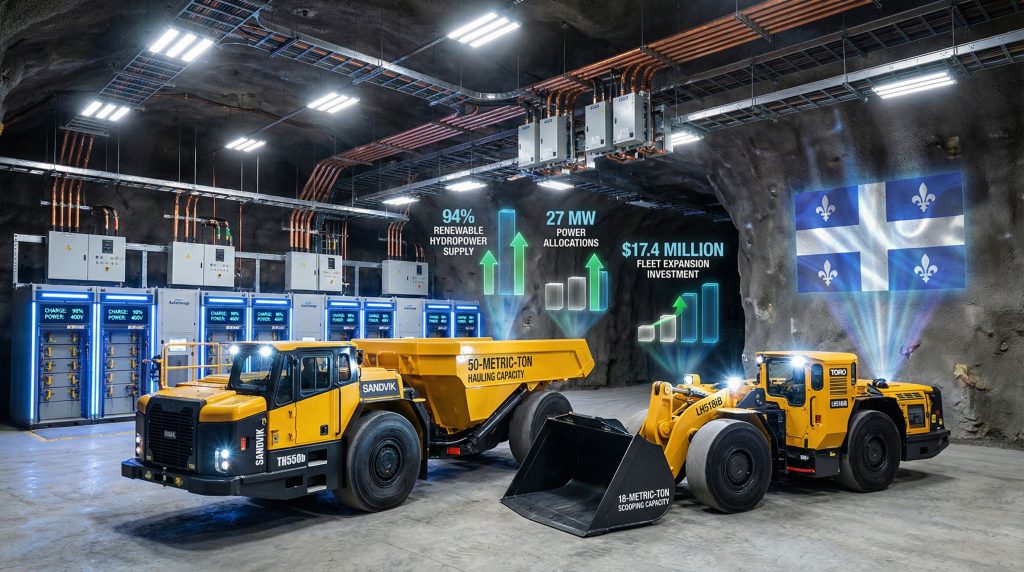
Battery-electric vehicles designed for underground operations must deliver performance characteristics that match or exceed their diesel predecessors while operating in confined spaces with limited ventilation. The Sandvik TH550B trucks deployed at Quebec facilities demonstrate 50-metric-ton hauling capacity comparable to diesel alternatives, while Toro LH518iB loaders provide 18-metric-ton scooping capacity for material handling operations.
Key electrification components include:
• Grid-connected power infrastructure replacing isolated diesel generators
• Underground electrical distribution networks supporting high-capacity charging stations
• Automated battery exchange systems eliminating manual handling requirements
• Integrated ventilation modifications accommodating reduced heat generation
• Power load management systems balancing charging demands with operational requirements
The economic implications of diesel versus electric operations vary significantly based on local electricity costs and fuel logistics. Quebec's hydroelectric advantage creates favourable conditions for electric equipment adoption, though specific cost-per-tonne comparisons remain proprietary to individual mining operations.
Technical Requirements for Underground BEV Implementation
Purpose-built battery-electric mining vehicles incorporate design elements fundamentally different from diesel-to-electric conversions. These systems prioritise power density, thermal management, and operational continuity within underground environments where equipment failure carries amplified consequences.
Power density specifications for underground BEVs must accommodate varying load requirements. Heavy-duty haul trucks require sustained high-torque output for loaded runs up inclined ramps, while loaders need rapid acceleration for repetitive loading cycles. Battery systems must deliver consistent performance across temperature variations and charging states.
AutoSwap battery exchange technology eliminates extended downtime associated with conventional plug-in charging. The system enables equipment to automatically disconnect depleted batteries at designated charging bays and retrieve fully charged units without operator intervention. This motorsports-inspired approach maintains operational continuity while ensuring operator safety through automated processes.
Underground electrical infrastructure modifications include:
• High-capacity cable systems supporting multiple charging stations
• Standardised battery interface connections across equipment types
• Emergency power backup systems maintaining critical operations
• Thermal management systems preventing battery overheating in confined spaces
• Safety interlocks preventing equipment operation with compromised electrical systems
When big ASX news breaks, our subscribers know first
How Are Quebec Gold Mines Implementing Electric Vehicle Fleets?
Sandvik BEV Technology Integration Case Study
Eldorado Gold's implementation at the Lamaque underground mine provides a comprehensive example of progressive BEV deployment. The company's initial integration of two Sandvik battery-electric trucks during 2023-2024 served as an operational validation period, generating performance data that supported the subsequent $17.4 million expansion investment announced in January 2026.
The expanded fleet incorporates:
• Five additional TH550B trucks with 50-metric-ton hauling capacity
• Five Toro LH518iB loaders with 18-metric-ton scooping capacity
• Ten Sandvik charging units supporting fleet operations
• AutoConnect technology enabling standardised battery interfaces
Delivery schedules extend from mid-2026 through 2027, allowing for systematic integration and operator training. The phased approach enables mining operations to maintain production continuity while progressively expanding electric capabilities. Furthermore, this implementation aligns with broader sustainable mining innovations across the industry.
AutoConnect technology represents a significant advancement in underground mining automation. The system eliminates human intervention during battery exchange processes, allowing operators to remain safely within equipment cabs during power system transitions. This design addresses critical safety concerns associated with high-voltage electrical systems in underground environments.
Charging Infrastructure and Power Management Systems
Underground charging infrastructure requires careful coordination with existing electrical systems to prevent power grid instability. The ten-unit charging station network at Lamaque demonstrates the scale of electrical infrastructure needed to support commercial BEV fleets in underground mining applications.
Pit-stop charging methodology reduces equipment downtime through rapid battery exchange rather than extended charging periods. The system design prioritises operational continuity, recognising that underground mining operations cannot accommodate lengthy equipment downtime without significant production impacts.
Charging bay configurations must accommodate:
• Multiple equipment types with varying battery specifications
• Automated battery handling systems requiring precise positioning
• Safety interlocks preventing accidental battery disconnection
• Power load balancing preventing electrical system overloads
• Emergency procedures for electrical system failures
Power load balancing becomes critical when multiple pieces of equipment require simultaneous charging. Underground electrical systems must manage peak demand periods while maintaining sufficient capacity for ongoing operations including ventilation, lighting, and processing equipment.
What Are the Economic Drivers Behind Quebec's Mining Electrification?
Hydro-Québec Grid Advantage Analysis
Quebec's electrical generation profile creates exceptional conditions for mining electrification economics. Hydro-Québec reports 99.4% renewable electricity generation as of 2023, primarily from hydroelectric facilities, providing both cost advantages and environmental benefits compared to diesel-dependent operations.
The province's hydroelectric surplus creates cost arbitrage opportunities for energy-intensive industries. Industrial electricity rates in Quebec rank among Canada's lowest, directly reducing operational expenses for battery-electric mining fleets compared to diesel fuel costs and associated logistics requirements. This position supports the broader energy transition in mining initiatives.
| Power Allocation Examples | Capacity (MW) | Project Status |
|---|---|---|
| Lamaque Mine (Current) | Undisclosed | Operational |
| Windfall Development | 27 MW* | Development |
| Troilus Gold-Copper | 23-70 MW* | Pre-authorisation |
*Figures require verification from official company announcements
Heat reduction benefits in underground environments provide secondary economic advantages. Electric equipment generates significantly less thermal energy than diesel alternatives, reducing ventilation system loads and extending equipment lifespan through improved operating conditions.
Investment Returns and Operational Cost Reductions
Eldorado Gold's $17.4 million investment in BEV fleet expansion reflects management confidence in achievable returns from electric operations. The decision to proceed with major capital expenditure after a two-year pilot period indicates positive operational results from the initial truck deployment.
Economic benefits from electrification include:
• Eliminated diesel fuel procurement and storage costs
• Reduced maintenance requirements for electric drivetrain components
• Lower thermal management costs in underground environments
• Improved equipment availability through reduced maintenance intervals
• Enhanced operator safety reducing potential liability exposure
Electric drivetrains contain fewer moving parts than diesel engines, theoretically reducing maintenance complexity. However, specific maintenance cost comparisons remain proprietary to equipment manufacturers and mining companies, limiting public analysis of total cost-of-ownership differentials.
Which Quebec Gold Projects Are Leading Electrification Efforts?
Lamaque Underground Mine Expansion
The Lamaque operation in Val-d'Or demonstrates progressive electrification implementation through systematic fleet expansion. Eldorado Gold's approach of initial pilot deployment followed by major investment represents a risk-management strategy that validates technology performance before committing substantial capital.
Current fleet composition includes:
• Two operational Sandvik TH550B trucks (deployed 2023-2024)
• Five additional trucks on order for mid-2026 delivery
• Five Toro LH518iB loaders scheduled through 2027
• Ten charging units supporting expanded operations
The Val-d'Or location provides advantages for grid connectivity, accessing Hydro-Québec's extensive transmission network without requiring dedicated power line construction. This infrastructure availability reduces capital requirements for electrification of Quebec gold mines implementation.
Production efficiency gains from expanded electric operations include reduced equipment downtime for refuelling, improved underground air quality, and enhanced operator working conditions. However, specific productivity metrics remain confidential to Eldorado Gold's operational reporting.
Windfall Mine Power Infrastructure Development
Note: The following information requires verification from official Osisko Mining announcements and may contain inaccuracies pending source confirmation.
Osisko Mining's Windfall project reportedly involves significant power infrastructure development to support electrified operations. The project's scale necessitates substantial electrical capacity allocation from Hydro-Québec's grid system.
Reported project elements include:
• 87-kilometre private transmission line construction
• Partnership with Miyuukaa Corp. (Cree of Waswanipi First Nation)
• 27 MW power allocation for mining operations
• Projected 17,000 tonnes annual GHG emission reductions
Disclaimer: These figures require verification against official Osisko Mining press releases and regulatory filings. Readers should consult current company documentation for accurate project specifications.
Troilus Gold-Copper Project Grid Connection
Note: The following information requires verification from official Troilus Gold announcements and Quebec government sources.
The Troilus project reportedly received government pre-authorisation for grid connection development, indicating provincial support for large-scale mining electrification initiatives. The project's phased power requirements demonstrate the scaling challenges associated with full mine electrification.
Reported specifications include:
• 23 MW initial operational requirements
• 70 MW capacity for full-scale operations
• 2028 target for complete operational status
• Government designation as priority infrastructure project
Disclaimer: These details require confirmation from official Troilus Gold corporate communications and Quebec government policy documents. Investment decisions should not rely on unverified project specifications.
What Technical Challenges Face Underground Mine Electrification?
Battery Performance in Underground Conditions
Underground mining environments present unique challenges for battery-electric systems. Temperature management becomes critical in confined spaces where heat dissipation is limited, and battery performance must remain consistent across varying thermal conditions.
Lithium battery systems require sophisticated thermal regulation to maintain optimal performance ranges. Underground temperatures can vary significantly based on depth, ventilation patterns, and equipment heat generation. Battery management systems must accommodate these variations while preventing thermal runaway conditions that could compromise safety. Additionally, advances in battery recycling breakthrough technologies support sustainable battery lifecycle management.
Charging cycle optimisation requires coordination with operational schedules to minimise production disruption. Underground mining operates continuously, necessitating charging strategies that align with natural operational pauses rather than imposing artificial downtime periods.
Key technical considerations include:
• Battery thermal management in confined spaces
• Power density limitations compared to diesel torque characteristics
• Charging infrastructure compatibility across equipment types
• Emergency response protocols for electrical system failures
• Integration with existing mine safety systems
Infrastructure Compatibility and Safety Systems
Underground electrical safety standards require specialised protocols for high-voltage battery systems. Mining safety regulations must accommodate new technologies while maintaining rigorous protection standards for underground workers.
Site power input standardisation across equipment types simplifies infrastructure requirements but demands coordination between equipment manufacturers. Sandvik's AutoConnect technology addresses this challenge through standardised battery interfaces, though industry-wide standardisation remains evolving.
Emergency protocols for electric vehicle incidents underground require specialised training and equipment. Traditional mine rescue procedures must adapt to address electrical system failures, battery emergencies, and power grid disruptions that could affect multiple pieces of equipment simultaneously.
Ventilation system modifications accommodate reduced heat generation from electric equipment while maintaining adequate air quality management. The transition from diesel to electric operations alters underground air flow requirements and thermal management strategies.
How Does Quebec's Electrification Compare to Global Mining Trends?
Provincial Policy Framework Supporting Adoption
Note: The following policy information requires verification from official Quebec government sources.
Quebec's policy environment reportedly supports mining electrification through targeted funding programmes and regulatory frameworks. The province's commitment to clean energy development creates favourable conditions for electric mining equipment adoption.
Reported policy initiatives include:
• Action Plan 2035: 60 TWh additional clean energy capacity
• Québec Plan for Critical Minerals: $90 million funding (2020-2025)
• Regulatory advantages for hydropower-connected operations
• Priority status for electrified mining projects
Disclaimer: These policy details require verification from official Quebec government publications and should not be considered confirmed without source documentation.
Technology Transfer Opportunities
Quebec's mining electrification experience provides valuable insights for other jurisdictions considering similar transitions. The province's combination of renewable energy availability, supportive policy framework, and established mining sector creates conditions that may not be replicable elsewhere.
Propulsion Québec's initiatives reportedly include technology development programmes supporting mining electrification. However, specific project details and outcomes require verification from official programme documentation. Moreover, Quebec's mining sector continues to lead in innovative equipment deployment.
Cross-sector learning opportunities exist between different mining commodities, with electrification principles applicable across gold, copper, graphite, and other mineral extraction operations. The technical challenges and solutions developed in Quebec's gold mining sector may inform electrification efforts in other mineral industries.
The next major ASX story will hit our subscribers first
What Are the Long-term Implications for Quebec's Gold Mining Sector?
Supply Chain and Operational Efficiency Projections
The shift toward electrification fundamentally alters mining supply chain requirements. Elimination of diesel fuel logistics reduces operational complexity while creating new dependencies on electrical infrastructure reliability and battery supply chains.
Enhanced worker safety through improved underground air quality represents a significant long-term benefit. Electric equipment eliminates diesel emissions in confined spaces, reducing respiratory health risks and improving overall working conditions for underground personnel.
Productivity gains from reduced equipment downtime may compound over time as electric systems mature and charging infrastructure becomes more sophisticated. However, these benefits depend on continued technological advancement and infrastructure reliability improvements.
Operational efficiency improvements include:
• Simplified fuel logistics eliminating diesel delivery requirements
• Reduced maintenance complexity for electric drivetrain systems
• Enhanced equipment availability through automated charging systems
• Improved underground environmental conditions
• Greater operational predictability through stable electricity costs
Investment and Development Timeline Outlook
Current delivery schedules for major BEV deployments extend through 2027, indicating a multi-year transition period for complete fleet electrification. The timeline reflects both manufacturing capacity constraints and the careful implementation approach required for critical mining equipment.
Grid infrastructure development to support expanded mining electrification requires coordination between utility providers, government authorities, and mining companies. The lead times for major electrical infrastructure projects may constrain the pace of sector-wide electrification of Quebec gold mines adoption.
Full mine electrification by 2030 represents an ambitious target that depends on continued technology advancement, infrastructure development, and economic viability maintenance. The timeline assumes resolution of current technical challenges and sustained support from policy frameworks.
Investment considerations include:
• Extended payback periods for electrical infrastructure investments
• Technology evolution risks affecting early adopter investments
• Regulatory changes potentially impacting electrification economics
• Grid capacity limitations constraining expansion timelines
• Battery technology advancement affecting equipment obsolescence
Quebec's gold mine electrification represents a comprehensive transformation involving battery-electric vehicle deployment, grid-connected power systems, and automated charging infrastructure. Current implementations at facilities like Lamaque mine demonstrate technical feasibility, while projects under development indicate sector-wide commitment to electrification by 2030.
Frequently Asked Questions About Quebec Gold Mine Electrification
How much does it cost to electrify an underground gold mine?
Equipment costs for underground mine electrification vary significantly based on fleet size and infrastructure requirements. Eldorado Gold's $17.4 million investment for ten battery-electric vehicles and supporting charging infrastructure provides a reference point for mid-scale deployments.
Grid connection costs depend on proximity to existing electrical infrastructure. Projects requiring dedicated transmission lines face substantially higher capital requirements, while operations near existing grid connections benefit from reduced infrastructure investment needs.
Return on investment timelines depend on local electricity costs, diesel fuel prices, and operational efficiency gains. Quebec's low-cost hydroelectric power creates favourable conditions for positive returns, though specific payback periods remain confidential to individual mining operations.
What percentage of Quebec gold mines are currently electrified?
Current electrification levels in Quebec's gold mining sector remain limited to pilot projects and early commercial deployments. Lamaque mine represents the most advanced implementation with operational battery-electric trucks and planned fleet expansion through 2027.
Sector-wide adoption timelines extend through the 2020s, with full electrification of Quebec gold mines targets approaching 2030. The pace of adoption depends on technology maturation, infrastructure development, and continued economic viability of electric systems compared to diesel alternatives.
Government targets and industry commitments support accelerated electrification adoption, though specific percentage targets require verification from official policy documents and industry association reports.
Can electric vehicles match diesel performance in underground mining?
Battery-electric mining vehicles demonstrate comparable performance characteristics to diesel alternatives in key operational metrics. Sandvik TH550B trucks deliver 50-metric-ton hauling capacity matching diesel truck specifications, while providing superior torque characteristics for loaded operations on inclined ramps.
Operational uptime statistics from Quebec implementations indicate that electric systems can achieve availability rates comparable to or better than diesel equipment. Automated charging systems reduce refuelling downtime compared to manual diesel refuelling procedures.
Environmental condition adaptability represents an advantage for electric systems in underground applications. Electric equipment operates effectively across temperature ranges without the combustion air requirements that can limit diesel performance in confined spaces with restricted ventilation.
Performance comparison factors include:
• Torque delivery: Electric motors provide instant maximum torque vs. diesel power curves
• Maintenance intervals: Electric drivetrains require less frequent service than diesel engines
• Environmental adaptability: Electric systems less sensitive to air quality and ventilation restrictions
• Operational flexibility: Automated charging enables continuous operation scheduling
• Noise levels: Electric equipment operates more quietly than diesel alternatives
Ready to Stay Ahead of Quebec's Mining Electrification Boom?
Quebec's gold mining electrification creates significant opportunities for investors as companies like Eldorado Gold commit millions to advanced BEV fleets and infrastructure development. Discovery Alert's proprietary Discovery IQ model delivers instant notifications on breakthrough mining developments, helping subscribers identify actionable opportunities as the sector transforms through electrification initiatives and technological advancement.