May 14, 2026
Revolutionary Electrochemical Processing Methods Transform Resource Recovery Economics
Modern mining operations face mounting pressure to extract valuable metals from increasingly challenging feedstocks while reducing environmental impact and operational costs. Traditional extraction methods often prove uneconomical for processing low-grade ores and complex mineral matrices that could potentially supply critical metals needed for infrastructure development and energy transition initiatives.
The integration of advanced electrochemical systems into conventional mining processes represents a significant departure from established industry practices. These technological innovations enable operators to recover metals from previously uneconomical sources through closed-loop chemical regeneration mechanisms that minimize waste generation and energy consumption.
pH7 Technologies metals extraction technology demonstrates how proprietary organo-electrochemical processes can address fundamental challenges in resource recovery. The company's approach combines electrochemical oxidiser generation with selective ligand chemistry to extract copper, gold and copper extraction from diverse feedstock categories including primary ores, tailings, and secondary materials.
When big ASX news breaks, our subscribers know first
How Electrochemical Module Integration Transforms Conventional Heap Leach Operations
Proprietary In-Situ Oxidiser Generation Mechanisms
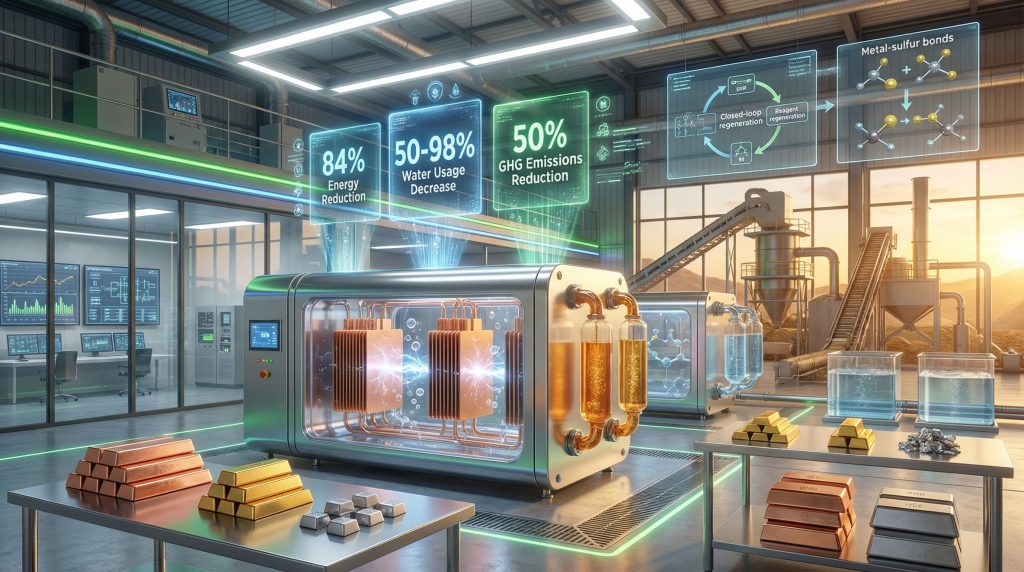
The core innovation centres on an electrochemical module that generates powerful oxidising agents directly within the processing circuit. This system produces oxidisers capable of breaking metal-sulfur bonds in sulfide minerals while eliminating passivation layers that typically impede conventional leaching processes.
According to industry innovation trends, this pH7 Technologies metals extraction technology achieves 84% reduction in energy consumption compared to traditional methods, requiring 2.5 MWh less energy per ton of material processed. The system also demonstrates substantial water optimisation, reducing usage by 50-98% relative to conventional operations.
The electrochemical approach addresses a fundamental limitation in heap leach processing where metal recovery rates decline due to passivation layer formation on mineral surfaces. Traditional acidic leaching often creates protective oxide films that prevent further metal dissolution, particularly in sulfide ore processing.
Key Performance Metrics:
- Energy consumption reduction: 84% versus conventional methods
- Water usage optimisation: 50-98% decrease from baseline operations
- Greenhouse gas emissions: 50% reduction per ton processed
- Zero NOx/SOx emissions during operation
- Elimination of tailings generation
Closed-Loop Reagent Regeneration Systems
The technology employs a regenerative process where barren solutions pass through the electrochemical unit multiple times, continuously regenerating oxidising agents before returning to ore irrigation cycles. This closed-loop design minimises chemical consumption and eliminates the need for continuous reagent addition.
Mohammad Doostmohammadi, CEO of pH7 Technologies, emphasised that the company is accelerating the transition from pilot to commercial deployments, enabling operators to produce copper and other critical minerals directly on-site. The technology provides new pathways for nations to secure resilient, domestic sources of metals that underpin modern infrastructure and energy transition initiatives.
The integration occurs without modifying existing heap leach flowsheets, allowing retrofitting into operational mining facilities without complete process redesign. This compatibility factor significantly reduces capital expenditure requirements for technology adoption.
Critical Metal Recovery Applications and Feedstock Categories
Primary Target Metals and Extraction Pathways
The pH7 Technologies metals extraction technology specifically targets copper extraction from oxide, transition, and sulfide ore types, representing the complete mineralogical spectrum found in primary copper deposits. The process handles each ore category through different mechanistic approaches while maintaining consistent operational parameters.
Copper Processing Applications:
- Oxide ores: Direct oxidation of copper-bearing minerals
- Sulfide ores: Metal-sulfur bond breaking through electrochemical oxidation
- Transition zones: Intermediate reaction pathways for mixed mineralogy
- Final product: Copper cathode through on-site electrowinning
Gold recovery applications focus on complex matrices where traditional cyanidation or gravity separation proves ineffective. The technology's ability to eliminate passivation layers enhances gold liberation from refractory ore assemblages and associated sulfide minerals.
Platinum group metals represent a specialised application demonstrated at the company's Vancouver facility, where spent automotive catalysts undergo processing for PGM recovery. This secondary resource application showcases the technology's versatility beyond primary mining operations.
Low-Grade Ore and Tailings Reprocessing Opportunities
Laurel Buckner, Vice President of Ventures at BHP, characterised the electrochemical process as unlocking significant opportunities through extraction of critical minerals from low-grade ores and tailings. This capability could transform how critical minerals are sourced and help provide more of the critical minerals the world urgently needs.
The technology enables processing of feedstocks that have historically been uneconomic or technically challenging, including:
- Complex sulfide-carbonate ore assemblages
- Heterogeneous waste rock containing disseminated metals
- Historical tailings with recoverable metal content
- Mixed electronic waste streams requiring metal separation
Resource expansion potential extends to marginal deposits where traditional processing economics prove unfavourable. The reduced energy and water requirements, combined with on-site production capabilities, enable development of remote or environmentally sensitive locations previously considered unviable.
Technical Architecture and Chemical Process Engineering
Organic Ligand Chemistry and Metal Recovery Mechanisms
The extraction process employs organic ligands that selectively bond with oxidised metal species, forming stable coordination complexes that facilitate separation from non-target elements. These ligand-metal complexes exhibit enhanced solubility characteristics in subsequent solvent extraction or ion exchange operations.
The specific chemistry involves:
- Electrochemical oxidation of target metals from their native mineral state
- Ligand coordination forming stable metal-organic complexes
- Selective extraction through solvent extraction or ion exchange
- Electrowinning for final metal recovery
- Ligand regeneration through closed-loop solution recycling
"The proprietary electrochemical module integrates directly into existing heap leach operations without requiring flow sheet modifications, generating oxidisers strong enough to break metal-sulfur bonds while maintaining closed-loop efficiency."
Low-temperature processing advantages reduce thermodynamic energy requirements compared to pyrometallurgical approaches. The ambient temperature operation also minimises thermal stress on processing equipment and reduces cooling requirements.
Integration Compatibility and Operational Parameters
The modular design enables installation within existing mining infrastructure without extensive capital modifications. Processing facilities can retrofit the electrochemical units into current heap leach circuits while maintaining existing operational procedures and safety protocols.
Technical Specifications:
| Parameter | Traditional Method | pH7 Process | Performance Gain |
|---|---|---|---|
| Energy Usage | Baseline consumption | 84% reduction | 2.5 MWh savings/ton |
| Water Requirements | 100% baseline | 2-50% of baseline | Up to 98% reduction |
| Emissions | Standard NOx/SOx output | Zero process emissions | 100% elimination |
| Waste Generation | Tailings production | Zero liquid waste | Complete elimination |
Furthermore, the electrochemical module operates through standard electrical connections, eliminating the need for specialised high-temperature or high-pressure process conditions that typically complicate mining operations.
Economic Benefits and Capital Expenditure Optimisation
Operational Cost Structure Improvements
The pH7 Technologies metals extraction technology eliminates several traditional cost centres in mineral processing operations. On-site metal production reduces transportation expenses for concentrate shipping while eliminating smelter processing fees and associated logistics complexities.
Capital Expenditure Reductions:
- Elimination of mill construction requirements
- Reduced concentrator infrastructure needs
- Simplified materials handling systems
- Lower maintenance requirements for simplified process equipment
The technology enables copper cathode and gold doré production directly at mining sites, eliminating intermediate processing steps and concentrate transportation costs. This on-site production capability particularly benefits remote mining operations where transportation represents a significant operational expense.
Resource Base Expansion and Economic Viability Enhancement
Processing economics improve substantially for marginal deposits and low-grade resources through reduced energy and chemical consumption. The technology's ability to handle complex feedstocks enables development of ore bodies that traditional processing methods cannot economically exploit.
Geographic deployment advantages include reduced infrastructure requirements for remote locations and simplified supply chain logistics. In addition, operations can achieve greater autonomy from external processing facilities while maintaining product quality standards required for metal markets.
Investment Considerations:
The company raised $25.6 million in Series B funding specifically to advance scaling and commercialisation efforts. These proceeds target commercial deployments and on-site demonstrations at mining operations globally, with initial focus on copper extraction applications.
Scaling Challenges and Commercial Implementation Pathways
Technology Development Status and Deployment Timeline
The Vancouver facility represents the company's commercial-scale application for platinum group metal extraction from spent automotive catalysts. This operation demonstrates technology readiness for secondary material processing while pilot-scale mining applications advance toward commercial deployment.
Current development priorities focus on copper extraction applications as the primary commercialisation pathway. The company has advanced its mining-sector technology to pilot scale, positioning for commercial growth phases through 2026 and beyond.
Development Milestones:
- Commercialised PGM recovery facility in Vancouver
- Pilot-scale mining technology validation completed
- Commercial copper extraction deployment preparation underway
- Global demonstration project pipeline development
Engineering Scaling Considerations and Implementation Requirements
Module standardisation becomes critical for commercial deployment across diverse mining operations. The technology must accommodate varying ore characteristics, processing scales, and site-specific operational requirements while maintaining consistent performance metrics.
Integration complexity varies with existing operational configurations. Newer heap leach facilities may accommodate electrochemical modules more easily than older installations requiring electrical infrastructure upgrades or process flow modifications.
However, operator training represents a significant implementation consideration as electrochemical processing requires different skill sets compared to traditional heap leach operations. Chemical handling procedures, electrochemical system maintenance, and process optimisation techniques require specialised knowledge development.
The next major ASX story will hit our subscribers first
Environmental Impact Reduction and Regulatory Compliance Advantages
Emission Elimination and Waste Stream Reduction
The closed-loop design eliminates liquid waste generation while preventing air emissions typically associated with conventional metal extraction processes. Zero NOx and SOx emissions during operation address air quality compliance requirements increasingly important for mining project permitting.
Mine reclamation innovation represents a transformative environmental benefit, removing one of the mining industry's most significant waste management challenges. Traditional mining operations generate substantial tailings volumes requiring long-term storage and monitoring infrastructure.
Environmental Performance Benefits:
- Zero liquid waste discharge
- Elimination of tailings generation
- 50% reduction in greenhouse gas emissions per ton
- Reduced water contamination risks
- Lower overall carbon footprint per unit of metal produced
Circular Economy Integration and Resource Recovery Optimisation
The technology's application to secondary materials and waste streams aligns with circular economy principles increasingly emphasised in resource policy frameworks. Processing spent catalysts, electronic waste, and historical tailings converts waste streams into valuable resource inputs.
Secondary material processing capabilities address supply chain resilience concerns by enabling domestic metal recovery from previously discarded resources. This capability reduces dependence on imported metals while creating economic value from waste materials.
Consequently, regulatory advantages include simplified environmental permitting processes due to reduced waste generation and emissions elimination. Compliance with increasingly stringent environmental regulations becomes more manageable through cleaner processing technology adoption.
Market Positioning and Competitive Technology Analysis
Primary Market Applications and Growth Potential
Copper mining operations seeking efficiency improvements represent the immediate target market, particularly facilities processing sulfide ores where traditional leaching faces technical limitations. The technology's ability to break metal-sulfur bonds addresses fundamental chemical constraints in conventional processing.
Gold extraction from complex ores provides secondary market opportunities where cyanidation proves insufficient or environmentally problematic. Refractory gold deposits and those with associated sulfide minerals could benefit from electrochemical oxidation enhancement.
Market Opportunity Segments:
- Primary copper mining operations requiring efficiency enhancement
- Complex gold ore processing applications
- PGM recovery from automotive catalyst recycling
- Battery recycling facility metal extraction integration
- Urban mining and electronic waste processing
Technology Differentiation and Alternative Method Comparisons
Bioleaching represents one alternative approach for processing challenging sulfide ores through bacterial oxidation mechanisms. However, biological processes require specific environmental conditions and longer processing times compared to electrochemical methods.
Advanced flotation techniques offer alternative beneficiation approaches but typically require fine grinding and complex chemical conditioning. The pH7 Technologies metals extraction technology operates on coarser material through heap leach applications, reducing grinding energy requirements.
Hydrometallurgical process improvements through enhanced leaching solutions provide comparable goals but often require higher chemical consumption and generate more waste streams. The closed-loop electrochemical approach minimises reagent consumption while eliminating waste generation.
Competitive Advantages:
- Closed-loop system design reduces ongoing chemical costs
- Energy efficiency superiority over conventional approaches
- Environmental impact reduction exceeds alternative technologies
- Capital cost optimisation through existing infrastructure integration
Future Industry Transformation and Long-Term Strategic Implications
Potential Mining Industry Practice Evolution
Widespread adoption of electrochemical extraction technology could fundamentally alter mining industry economics by enabling processing of previously uneconomical resources. This expansion of the resource base would extend mine life cycles and improve project economics across various metal categories.
For instance, decarbonisation benefits become more viable when on-site metal production eliminates transportation and intermediate processing requirements. Remote deposits and smaller operations could achieve economic viability through reduced infrastructure dependencies and operational complexity.
Industry Transformation Potential:
- Resource base expansion through low-grade ore processing
- Mine life extension through tailings reprocessing
- Operational cost structure optimisation across the industry
- Environmental compliance simplification for new projects
Strategic Considerations and Implementation Barriers
Conservative industry adoption patterns may slow technology deployment despite demonstrated technical advantages. Mining operations typically require extensive validation periods and proof of long-term reliability before implementing new processing technologies.
Capital investment decision timelines in mining extend over multiple years, potentially delaying adoption even when technology benefits are established. Project financing and risk assessment procedures must accommodate new technology evaluation criteria.
Furthermore, regulatory approval processes for new mining technologies vary significantly across jurisdictions. Some regions may expedite approval for environmentally beneficial technologies while others maintain standard approval timelines regardless of environmental advantages.
Implementation Challenges:
- Technical validation requirements for conservative industry practices
- Capital investment decision timeline complexities
- Regulatory approval process variations across jurisdictions
- Integration complexity with existing operational systems
- Operator training and skill development requirements
Data-driven mining operations represent a significant advancement in resource recovery methods that could reshape mining industry practices through improved economics and environmental performance. Success in commercial deployment will depend on continued technical validation and strategic partnership development with major mining operators seeking sustainable processing solutions.
According to Global Mining Review, the company's innovative approach addresses critical supply chain challenges while providing enhanced economic returns for mining operations globally.
This analysis is based on publicly available information and industry reports. Potential investors should conduct independent due diligence and consult with qualified financial advisors before making investment decisions. Technology performance claims should be verified through independent testing and validation processes appropriate to specific operational requirements.
Looking to Capitalise on Mining Technology Breakthroughs?
Discovery Alert's proprietary Discovery IQ model delivers instant notifications when ASX-listed companies announce significant technological advancements and mineral discoveries, helping investors identify breakthrough opportunities like electrochemical processing innovations before the broader market responds. Explore Discovery Alert's track record of major discovery alerts and begin your 14-day free trial today to position yourself ahead of transformative mining sector developments.