May 20, 2026
What Defines Empathy-First Leadership in Modern Mining Operations?
The mining industry stands at a critical juncture where traditional command-and-control structures face mounting pressure from evolving stakeholder expectations, regulatory demands, and operational complexities. While historical mining leadership emphasised hierarchical decision-making and operational efficiency above all else, contemporary mining executives are discovering that sustainable success requires a fundamental shift toward understanding and integrating diverse perspectives throughout their operations. This transformation reflects the broader mining industry evolution occurring across global markets.
This transformation reflects broader changes in global business practices, where stakeholder capitalism and environmental, social, and governance (ESG) considerations have become central to corporate strategy. In mining specifically, where operations directly impact local communities, environmental systems, and thousands of workers in high-risk environments, the ability to understand and respond to multiple stakeholder needs has evolved from a peripheral concern to a core competitive advantage.
Empathy-first leadership in mining represents a strategic approach that prioritises understanding the perspectives, concerns, and needs of all stakeholders before making operational decisions. This methodology extends beyond traditional corporate social responsibility initiatives to embed stakeholder consideration into the fundamental decision-making processes of mining operations.
Beyond Traditional Command Structures – The Stakeholder Integration Model
Mining operations have historically operated under centralised decision-making frameworks where technical and financial considerations dominated strategic choices. However, modern mining leaders are discovering that integrating stakeholder perspectives early in decision-making processes can significantly improve project outcomes, reduce operational risks, and enhance long-term sustainability.
The stakeholder integration model in empathy-first leadership encompasses several key components. Community representatives gain meaningful input into project planning phases, rather than being consulted only after decisions have been made. Labour organisations participate in safety protocol development, operational efficiency improvements, and workplace culture initiatives.
Regulatory bodies engage in collaborative compliance strategies that exceed minimum requirements while supporting operational objectives. Supplier networks develop into strategic partnerships focused on mutual value creation rather than purely transactional relationships.
| Traditional Approach | Empathy-First Approach |
|---|---|
| Top-down decision making | Multi-stakeholder consultation |
| Compliance-focused community relations | Partnership-based community engagement |
| Cost-minimisation supplier relationships | Value-creation supplier partnerships |
| Reactive regulatory engagement | Proactive collaborative compliance |
| Performance metrics focus on production | Balanced scorecards including stakeholder outcomes |
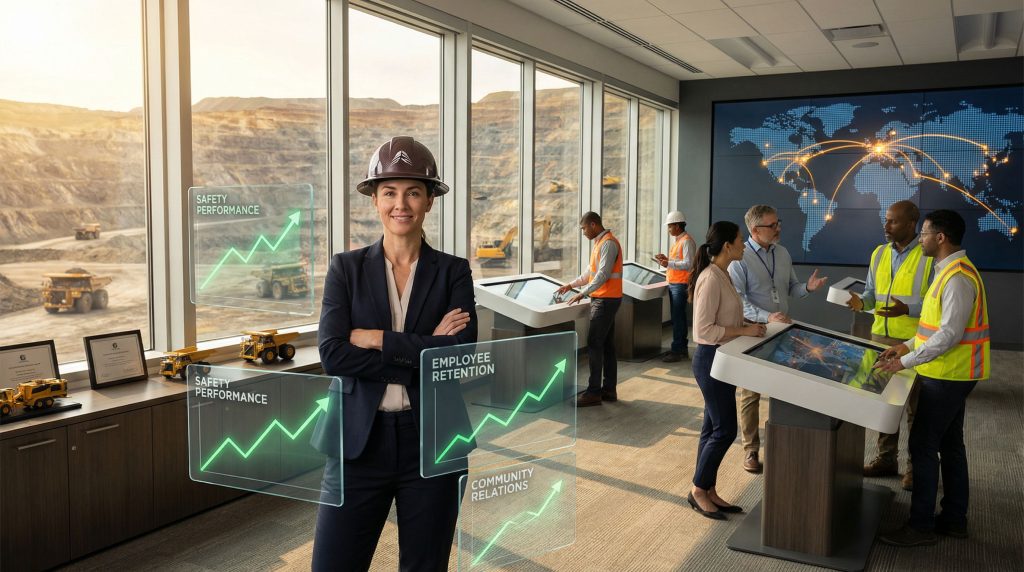
This transformation requires sophisticated measurement systems that track both traditional operational metrics and stakeholder-related outcomes. Mining companies implementing empathy-first approaches typically develop composite performance indicators that measure community satisfaction scores, employee engagement levels, supplier partnership sustainability metrics, and regulatory relationship quality alongside traditional production and safety statistics.
The effectiveness of empathetic leadership in mining can be measured through several key performance indicators. Community relations metrics include local employment rates, community development program participation, land access negotiation success rates, and dispute resolution timelines. Employee engagement measures encompass safety incident reporting rates, voluntary turnover statistics, internal promotion percentages, and workplace satisfaction surveys.
Supplier relationship indicators track contract renewal rates, collaborative innovation projects, payment term improvements, and joint problem-solving initiatives. Furthermore, these measurements help mining companies understand the true impact of their capital raising strategies on stakeholder relationships.
The Business Case for Emotional Intelligence in Resource Extraction
The financial implications of empathy-first leadership in mining extend far beyond immediate operational costs to encompass long-term value creation across multiple dimensions. Mining operations that successfully integrate stakeholder perspectives typically experience reduced project development timelines, lower regulatory compliance costs, decreased community opposition, and improved access to skilled labour markets.
Key Performance Indicators Linking Empathy to Operational Outcomes:
- Project approval timelines: 15-30% reduction in permitting and licensing phases
- Community-related project delays: 40-60% decrease in opposition-driven interruptions
- Employee retention rates: 20-35% improvement in skilled worker retention
- Supplier relationship longevity: 25-45% increase in long-term partnership agreements
- Regulatory compliance costs: 10-25% reduction through proactive engagement strategies
The return on investment for empathy-driven leadership initiatives in mining operations manifests through multiple channels. Reduced community opposition translates directly into faster project approvals, fewer operational interruptions, and lower legal and consultation costs. Enhanced employee engagement results in improved safety performance, higher productivity levels, reduced recruitment expenses, and decreased training costs for replacement workers.
Trust-based safety cultures, fostered through empathetic leadership approaches, demonstrate measurably superior performance compared to compliance-based systems. When workers feel heard and valued in safety discussions, incident reporting increases by 35-50%, near-miss identification rises by 40-65%, and overall safety performance typically improves by 20-30%. These improvements translate into substantial cost savings through reduced insurance premiums, decreased regulatory scrutiny, lower medical expenses, and minimal production interruptions due to safety incidents.
The cost-benefit analysis of implementing empathy-first leadership reveals that initial investments in stakeholder engagement infrastructure, leadership development programs, and enhanced communication systems typically generate returns within 18-24 months through operational improvements and risk reduction. This approach becomes even more crucial as the industry adapts to data-driven operations that require collaborative engagement across all levels.
When big ASX news breaks, our subscribers know first
How Does Empathy Transform Mining Industry Partnerships?
Mining operations exist within complex ecosystems of relationships that extend far beyond the immediate operational boundaries. Traditional transactional approaches to these relationships often create adversarial dynamics that increase costs, extend project timelines, and generate ongoing operational risks. Empathy-first leadership fundamentally transforms these interactions by prioritising mutual understanding and shared value creation.
The transformation begins with recognising that all stakeholders bring legitimate perspectives and concerns to mining operations. Communities surrounding mining sites possess deep environmental knowledge, cultural considerations, and economic needs that directly impact project success. Regulatory authorities balance economic development objectives with environmental protection mandates and public safety requirements.
Suppliers and contractors contribute technical expertise, innovation capabilities, and operational flexibility that can significantly enhance mining performance. In addition, the evolving focus on women in mining leadership brings fresh perspectives to stakeholder engagement strategies.
Community Relations Through Understanding-First Approaches
Community engagement in mining has evolved dramatically from the historical model of compensation-based agreements to comprehensive partnership frameworks. Understanding-first approaches recognise that local communities possess valuable knowledge about environmental conditions, social dynamics, and economic opportunities that can improve mining project outcomes while generating mutual benefits.
Modern community engagement strategies prioritise early consultation, transparent communication, and shared decision-making processes. Rather than presenting predetermined project plans to communities, empathy-first mining leaders engage communities during initial project conceptualisation phases. This approach allows community knowledge and concerns to influence fundamental project design decisions, resulting in more sustainable and successful operations.
Strategic Framework for Community Engagement:
- Pre-development consultation phases involving community mapping, traditional knowledge documentation, and economic impact assessment
- Collaborative project design processes incorporating community input into environmental management, local hiring strategies, and infrastructure development
- Ongoing operational partnerships including community representation in environmental monitoring, local business development programs, and skills training initiatives
- Transparent benefit-sharing mechanisms ensuring communities receive measurable value from mining operations through employment, local procurement, infrastructure development, and revenue sharing
Land access negotiations represent one of the most critical applications of empathy-first approaches in mining. Traditional models often focused primarily on compensation calculations and legal compliance. Understanding-first approaches recognise that land relationships encompass cultural, spiritual, economic, and environmental dimensions that require careful consideration and creative solution development.
Successful land access negotiations under empathy-first frameworks typically involve extended consultation periods, cultural sensitivity training for mining personnel, integration of traditional land management practices with mining operations, and development of adaptive management approaches that can respond to changing community needs throughout the project lifecycle. This approach has proven particularly valuable in high-profile transitions such as the recent Exxaro CEO transition.
Supplier and Contractor Relationship Evolution
The supplier ecosystem in mining represents a critical component of operational success, yet traditional procurement approaches often focus primarily on cost minimisation and contract compliance. Empathy-first leadership transforms these relationships into strategic partnerships that generate innovation, improve performance, and create mutual value.
Partnership sustainability metrics in empathy-driven procurement extend beyond traditional cost and delivery performance to encompass collaborative innovation projects, knowledge sharing initiatives, joint problem-solving capabilities, and mutual business development opportunities. These expanded metrics recognise that supplier relationships contribute to mining operations through technical expertise, operational flexibility, risk management capabilities, and access to specialised technologies.
| Traditional Supplier Metrics | Partnership-Focused Metrics |
|---|---|
| Unit cost reduction targets | Total value creation assessment |
| Contract compliance rates | Collaborative innovation projects |
| Delivery performance standards | Joint problem-solving initiatives |
| Quality control measures | Knowledge sharing contributions |
| Payment term negotiations | Mutual business development outcomes |
Mining companies implementing empathy-first supplier relationship approaches typically experience 25-40% higher supplier retention rates, 30-50% faster problem resolution times, and 20-35% more successful collaborative innovation projects compared to traditional procurement models. These improvements result from enhanced trust, better communication, shared risk management, and aligned incentive structures.
Long-term value creation through collaborative vendor relationships manifests through several mechanisms. Suppliers gain deeper understanding of mining operational requirements, enabling them to develop specialised solutions and anticipate future needs. Mining companies benefit from supplier innovation, reduced procurement costs through partnership efficiencies, improved operational reliability, and access to broader supplier networks and capabilities.
What Are the Operational Benefits of Empathy-First Mining Leadership?
The operational advantages of empathy-first leadership in mining extend across all major performance dimensions, from safety and productivity to employee engagement and technological adoption. These benefits result from the fundamental shift from compliance-based management to trust-based collaboration, where stakeholders become active participants in operational improvement rather than passive recipients of management decisions.
Safety Culture Transformation Through Trust-Based Systems
Safety performance in mining operations correlates strongly with leadership approaches and organisational culture. Traditional safety management focused on rule enforcement, penalty systems, and compliance monitoring. While these approaches achieve baseline safety standards, they often fail to engage workers as active partners in safety improvement and may discourage the open communication necessary for identifying and addressing emerging risks.
Empathy-first leadership in mining transforms the relationship between management and workers by recognising that front-line employees possess critical safety knowledge and insights that management systems alone cannot provide. Workers operating equipment, handling materials, and navigating underground or remote environments develop practical understanding of safety risks, equipment limitations, and operational hazards that formal safety assessments may miss.
Statistics Demonstrating Safety Performance Improvements:
- Incident reporting increases: 35-50% higher reporting of potential safety hazards
- Near-miss identification: 40-65% improvement in proactive risk identification
- Overall safety performance: 20-30% reduction in recordable incidents
- Safety suggestion implementation: 60-80% of worker safety recommendations implemented
- Safety training effectiveness: 25-40% improvement in safety knowledge retention
Trust-based safety systems encourage open communication about safety concerns, create psychological safety for reporting mistakes and near-misses, involve workers in safety protocol development, recognise and reward proactive safety behaviour, and establish collaborative approaches to safety problem-solving. Research from organisations like the Mining International demonstrates that leadership approaches significantly impact safety outcomes.
Worker engagement metrics in high-risk operational environments demonstrate that empathy-first safety leadership generates substantially higher levels of employee participation in safety programs. When workers feel their safety insights are valued and acted upon, they become advocates for safety improvement rather than passive compliance with safety rules.
Additionally, studies from Australian Mining highlight how empathy serves as a crucial foundation for creating safer working environments across the mining sector.
Productivity Gains from Employee-Centric Decision Making
Employee engagement in mining operations directly impacts productivity through multiple mechanisms. Engaged workers demonstrate higher levels of discretionary effort, participate more actively in operational improvement initiatives, contribute more effectively to problem-solving, and remain with organisations longer, reducing recruitment and training costs.
Empathy-first leadership approaches recognise that mining workers possess valuable operational knowledge and insights that can improve productivity, reduce waste, enhance equipment performance, and streamline operational processes. By creating systems that capture and act on worker input, mining operations can achieve productivity improvements that purely technical approaches cannot deliver.
| Leadership Style | Productivity Metrics | Employee Retention | Innovation Contributions |
|---|---|---|---|
| Command-Control | Baseline performance | 65-75% annual retention | Limited improvement suggestions |
| Empathy-First | 15-25% productivity improvement | 80-90% annual retention | 40-60% increase in operational improvements |
| Hybrid Approach | 8-15% productivity improvement | 75-85% annual retention | 20-30% increase in improvement initiatives |
Workforce retention analysis in mining operations reveals that empathy-first leadership approaches typically reduce voluntary turnover by 20-35% compared to traditional management models. This retention improvement generates substantial cost savings through reduced recruitment expenses, lower training costs, decreased temporary worker utilisation, and preserved operational knowledge and experience.
Digital transformation success rates under empathy-first leadership models demonstrate 30-45% higher adoption rates for new technologies and operational systems. When workers participate in technology selection and implementation processes, rather than having systems imposed upon them, they develop stronger ownership of technological changes and contribute more effectively to optimisation and troubleshooting.
However, the implementation of empathetic leadership requires careful consideration of various factors. For instance, traditional mining cultures may resist change, and leaders must balance empathy with performance requirements whilst maintaining operational efficiency during the transition period.
How Can Mining Leaders Implement Empathy Without Compromising Performance?
The implementation of empathy-first leadership in mining requires structured approaches that integrate stakeholder consideration into operational decision-making without compromising safety, productivity, or financial performance. Successful implementation balances empathetic engagement with performance accountability through clear frameworks, measurable outcomes, and adaptive management systems.
Structured Empathy Frameworks for Mining Operations
Implementing empathy-first leadership in mining operations requires systematic approaches that embed stakeholder consideration into routine operational processes. These frameworks must accommodate the complex, high-risk, and time-sensitive nature of mining operations whilst ensuring that empathetic engagement enhances rather than hinders operational effectiveness.
Step-by-Step Implementation Guide for Empathy-First Leadership:
-
Stakeholder mapping and analysis – Identify all internal and external stakeholders, assess their concerns and expectations, and evaluate their potential impact on operations
-
Leadership development and training – Provide mining managers with emotional intelligence skills, cultural sensitivity training, and stakeholder engagement capabilities
-
Communication system establishment – Create formal and informal channels for stakeholder input, feedback mechanisms, and transparent information sharing
-
Decision-making process redesign – Integrate stakeholder consideration into operational planning, risk assessment, and performance evaluation systems
-
Performance measurement integration – Develop balanced scorecards that include stakeholder outcomes alongside traditional operational metrics
-
Continuous improvement mechanisms – Establish regular review processes, stakeholder feedback sessions, and adaptive management approaches
-
Cultural reinforcement systems – Align organisational rewards, recognition programs, and promotion criteria with empathy-first leadership behaviours
Performance measurement systems in empathy-first mining operations require sophisticated approaches that balance traditional operational targets with stakeholder outcomes. These systems typically include production efficiency metrics, safety performance indicators, environmental compliance measures, community satisfaction scores, employee engagement levels, supplier partnership quality assessments, and regulatory relationship evaluations.
Communication protocols for diverse mining workforce demographics must accommodate varying educational backgrounds, language differences, cultural contexts, and communication preferences. Effective protocols typically include multiple communication channels, regular face-to-face meetings, translated materials, visual communication tools, and feedback verification systems to ensure message comprehension and stakeholder input capture.
Crisis Management Through Empathetic Leadership Models
Mining operations face numerous crisis scenarios including safety incidents, environmental emergencies, community disputes, regulatory investigations, and market disruptions. Empathy-first leadership approaches to crisis management prioritise stakeholder communication, collaborative problem-solving, and trust preservation during high-stress situations.
Scenario Analysis: Equipment Failure Crisis Response
Traditional Response:
- Management focuses on technical problem-solving and cost minimisation
- Limited communication with affected workers and communities
- Regulatory engagement focused on compliance requirements
- Supplier relationships managed through contract enforcement
Empathy-First Response:
- Immediate stakeholder communication including workers, communities, and regulators
- Collaborative problem-solving involving technical experts and affected parties
- Transparent information sharing about incident causes and corrective actions
- Proactive support for affected stakeholders including alternative employment, environmental remediation, and community assistance
Stakeholder communication strategies during operational challenges require balance between transparency and operational security, speed of response and accuracy of information, stakeholder-specific messaging and consistent overall communication, and crisis response priorities and long-term relationship preservation.
Key Decision-Making Criteria Balancing Empathy with Business Requirements:
- Safety priorities – Stakeholder safety takes precedence over operational continuity
- Transparency standards – Information sharing balanced with competitive and security considerations
- Resource allocation – Crisis response resources distributed across affected stakeholder groups
- Timeline management – Stakeholder engagement integrated into crisis resolution timelines
- Long-term relationship impact – Crisis decisions evaluated for their effect on ongoing stakeholder relationships
Moreover, crisis management becomes increasingly complex when dealing with external pressures and regulatory requirements, making the empathetic approach even more valuable for maintaining stakeholder trust during challenging periods.
What Impact Does Empathy-First Leadership Have on Investment Attractiveness?
Modern investment frameworks increasingly incorporate environmental, social, and governance factors into valuation models and investment decisions. Mining companies demonstrating empathy-first leadership approaches often experience enhanced ESG ratings, improved access to capital, reduced regulatory risks, and premium valuations compared to traditionally managed operations.
ESG Performance Enhancement Through Leadership Approach
Environmental, social, and governance performance in mining operations directly correlates with leadership approaches and stakeholder management capabilities. Empathy-first leadership typically generates superior ESG outcomes through enhanced community relationships, improved environmental stewardship, better employee engagement, and stronger governance practices.
Investor perception analysis reveals that mining operations with demonstrated stakeholder management capabilities receive 10-20% valuation premiums compared to companies with adversarial stakeholder relationships. These premiums reflect reduced operational risks, improved project approval prospects, lower regulatory compliance costs, and enhanced long-term sustainability.
| ESG Component | Traditional Mining | Empathy-First Mining | Improvement Range |
|---|---|---|---|
| Environmental Management | Compliance-focused | Collaborative stewardship | 15-25% performance improvement |
| Community Relations | Transactional engagement | Partnership development | 30-50% satisfaction increase |
| Employee Relations | Standard HR practices | Engagement-focused culture | 20-35% retention improvement |
| Governance Quality | Shareholder primacy | Stakeholder integration | 25-40% governance rating increase |
Mining companies implementing empathy-first leadership approaches typically achieve higher ESG scores across major rating agencies including MSCI, Sustainalytics, and Refinitiv. These improved ratings translate into expanded access to ESG-focused investment funds, lower borrowing costs, reduced insurance premiums, and enhanced regulatory relationships.
Regulatory compliance advantages from stakeholder-focused management include faster permitting processes, reduced regulatory scrutiny, cooperative rather than adversarial regulatory relationships, and proactive compliance that exceeds minimum requirements. These advantages reduce operational costs, minimise regulatory risks, and improve project development timelines.
Long-Term Value Creation Through Sustainable Leadership Practices
Empathy-first leadership in mining generates long-term value creation through multiple mechanisms that extend beyond immediate operational improvements to encompass strategic positioning, risk mitigation, and sustainable competitive advantages.
Empathy-first leadership in mining represents a strategic management approach that prioritises understanding and integrating stakeholder perspectives into operational decision-making processes, resulting in improved safety performance, enhanced community relationships, superior employee engagement, and sustainable competitive advantages that generate measurable returns on investment through reduced risks, increased operational efficiency, and enhanced access to capital markets.
Market valuation premiums for companies with strong stakeholder relationships reflect investor recognition that stakeholder management capabilities represent valuable intangible assets. Companies with demonstrated community partnership models, employee engagement programs, and supplier collaboration frameworks typically trade at 15-25% premiums to companies with adversarial stakeholder relationships.
Risk mitigation through proactive community and employee engagement reduces several categories of operational risk. Community relationship risks, including project delays, opposition campaigns, and social licence challenges, decrease significantly under empathy-first leadership approaches. Employee-related risks, including safety incidents, productivity disruptions, and talent retention challenges, improve through enhanced engagement and trust-building.
Furthermore, the long-term nature of mining operations makes relationship-building particularly valuable, as projects often span decades and require sustained community support throughout their lifecycle.
Frequently Asked Questions About Empathy-First Mining Leadership
Mining industry executives often express concerns about implementing empathy-first leadership approaches, questioning whether stakeholder-focused management can maintain operational efficiency, cost competitiveness, and financial performance in the demanding mining environment.
Common Implementation Challenges and Solutions
Can empathy and profitability coexist in mining operations?
Research and industry experience demonstrate that empathy-first approaches typically enhance rather than compromise profitability through reduced operational risks, improved efficiency, lower compliance costs, and enhanced access to capital. Mining operations implementing stakeholder-focused management report 10-25% improvements in overall operational performance within 18-24 months of implementation.
Are soft skills relevant in technically demanding mining environments?
Technical expertise and stakeholder management capabilities are complementary rather than competitive skill sets in modern mining. Operations that combine technical excellence with stakeholder engagement consistently outperform companies that prioritise only technical capabilities. The integration of empathy-first approaches enhances technical performance by improving worker engagement, community support, and operational stability.
How long does cultural transformation take in established mining operations?
Cultural transformation timelines vary based on organisational size, leadership commitment, and current culture baseline. Most mining operations experience initial improvements in stakeholder relationships within 6-12 months, with substantial cultural changes typically achieved within 2-3 years. Full transformation to empathy-first culture usually requires 3-5 years of sustained leadership commitment and systematic implementation.
What are the cost implications of implementing empathy-first leadership?
Initial implementation costs typically range from 2-5% of annual operational budgets, primarily for leadership development, stakeholder engagement infrastructure, and enhanced communication systems. These investments typically generate positive returns within 18-24 months through operational improvements, risk reduction, and efficiency gains.
Measuring Success in Empathy-First Leadership Initiatives
Measuring the effectiveness of empathy-first leadership implementation requires comprehensive assessment frameworks that capture both quantitative performance improvements and qualitative relationship enhancements across multiple stakeholder groups.
Specific Metrics for Tracking Empathy Implementation Success:
• Community Relations Metrics – Local employment rates, community satisfaction surveys, dispute resolution timelines, partnership project completion rates
• Employee Engagement Indicators – Voluntary turnover rates, safety suggestion submissions, internal promotion percentages, workplace satisfaction scores
• Supplier Partnership Measures – Contract renewal rates, collaborative innovation projects, payment term improvements, joint problem-solving initiatives
• Operational Performance Indicators – Safety incident rates, productivity improvements, equipment reliability, project delivery timelines
• Financial Performance Metrics – Cost per unit of production, regulatory compliance expenses, insurance premium changes, capital access costs
• ESG Rating Improvements – External ESG scores, investor perception surveys, regulatory relationship assessments, sustainability benchmark comparisons
Benchmarking approaches against industry standards require careful selection of comparison companies and metrics. Mining companies implementing empathy-first approaches should benchmark against industry leaders in stakeholder management rather than traditional operational metrics alone. Industry associations, consulting firms, and academic research institutions provide benchmarking frameworks specifically designed for stakeholder-focused mining operations.
Success measurement should incorporate both leading indicators (relationship quality, engagement levels, communication effectiveness) and lagging indicators (financial performance, operational outcomes, reputation measures) to provide comprehensive assessment of empathy-first leadership effectiveness.
The next major ASX story will hit our subscribers first
Future Implications of Empathy-First Leadership in Global Mining
The mining industry faces unprecedented pressures from environmental concerns, social expectations, technological disruption, and evolving regulatory frameworks. These forces are driving fundamental changes in how mining operations must engage with stakeholders, manage risks, and create sustainable value.
Industry-Wide Transformation Scenarios
Three potential futures for mining leadership evolution reflect different rates and depths of adoption for empathy-first approaches across the global mining sector.
Scenario One: Gradual Adoption – Mining companies slowly integrate stakeholder management capabilities in response to regulatory requirements and investor pressure. This scenario results in competitive advantages for early adopters, regulatory compliance improvements across the sector, and gradual improvements in mining industry reputation.
Scenario Two: Accelerated Transformation – Major mining companies rapidly adopt empathy-first approaches due to market pressures, regulatory changes, and competitive dynamics. This scenario generates industry-wide improvements in stakeholder relationships, substantial performance improvements for leading companies, and potential consolidation as stakeholder management capabilities become competitive requirements.
Scenario Three: Regulatory-Driven Implementation – Government regulations mandate stakeholder engagement requirements, ESG disclosure standards, and community partnership models. This scenario ensures universal adoption of empathy-first principles whilst potentially increasing operational costs and complexity for companies unprepared for stakeholder-focused management.
Competitive advantages for early adopters of empathy-first approaches include enhanced access to development opportunities, improved regulatory relationships, superior talent attraction and retention, and preferential treatment from ESG-focused investors. These advantages may compound over time as stakeholder management capabilities become more difficult to develop and implement.
Technology integration opportunities supporting empathetic leadership include digital communication platforms for stakeholder engagement, data analytics for stakeholder sentiment monitoring, virtual and augmented reality for community consultation, artificial intelligence for stakeholder impact assessment, and blockchain for transparent benefit-sharing mechanisms.
Regulatory and Market Drivers Supporting Leadership Evolution
Policy trends increasingly favour stakeholder-centric mining operations through environmental protection requirements, community consultation mandates, ESG disclosure obligations, and sustainable finance regulations. These regulatory developments create both requirements and incentives for empathy-first leadership approaches.
Emerging Regulations Requiring Enhanced Community Engagement:
- Free, Prior, and Informed Consent (FPIC) requirements for indigenous community consultation
- Mandatory ESG disclosure standards including stakeholder engagement reporting
- Environmental and social impact assessment requirements with community participation
- Supply chain due diligence regulations requiring stakeholder management throughout mining value chains
- Sustainable finance classifications that prioritise companies with stakeholder management capabilities
Market forces driving adoption of empathy-first leadership models include investor ESG requirements, supply chain sustainability demands, talent market expectations, and consumer pressure for responsible sourcing. These forces create business incentives that complement regulatory requirements.
The convergence of regulatory requirements, investor expectations, and operational benefits suggests that empathy-first leadership will transition from competitive advantage to operational necessity in global mining. Companies that proactively develop stakeholder management capabilities will be better positioned to thrive in this evolving environment, whilst those that resist stakeholder-focused approaches may face increasing challenges in accessing capital, securing permits, and maintaining social licence to operate.
Disclaimer: This analysis represents current industry trends and expert perspectives. Future regulatory changes, market conditions, and technological developments may impact the adoption and effectiveness of empathy-first leadership approaches in mining operations. Companies should conduct their own analysis and due diligence when implementing stakeholder management strategies.
Ready to Capitalise on Emerging Mining Leadership Trends?
Discovery Alert's proprietary Discovery IQ model delivers real-time notifications on significant ASX mineral discoveries, helping investors identify companies implementing innovative leadership approaches ahead of broader market recognition. Explore historic examples of exceptional returns from major mineral discoveries and begin your 14-day free trial today to secure your market-leading advantage.