August 6, 2026
Understanding Critical Energy Chokepoints in Global Supply Networks
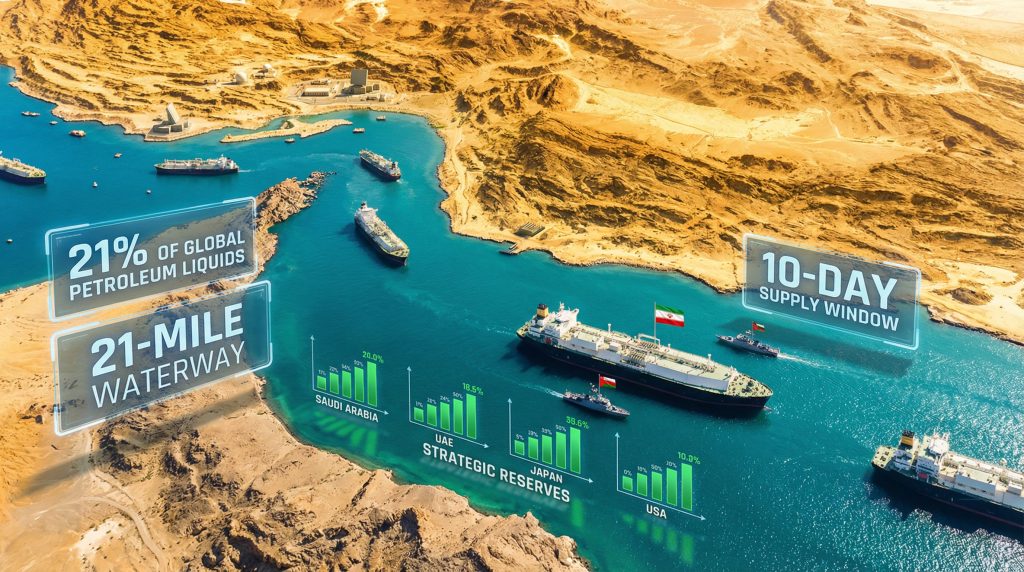
Energy supply chains face unprecedented vulnerability through narrow maritime passages that control massive flows of global trade. These strategic bottlenecks create systemic risks where single points of failure can trigger worldwide shortages within days. Maritime energy transport relies heavily on predictable transit routes through politically sensitive regions, exposing importers to sudden supply disruptions that reshape entire markets.
Furthermore, modern LNG trade flows through concentrated shipping lanes where geopolitical tensions can instantly transform market conditions. Iran amplifies LNG shortage by blocking passages through Hormuz demonstrates the interconnected nature of global energy networks, where regional conflicts rapidly escalate into international crises affecting millions of consumers and industrial operations worldwide.
Critical Infrastructure Dependencies:
- Concentrated shipping routes handling massive energy volumes
- Limited alternative pathways for major suppliers
- Strategic reserve limitations in importing economies
- Vulnerable production facilities within conflict zones
Regional powers increasingly leverage control over these critical passages as tools of international influence. When transit restrictions emerge, energy importers face immediate supply allocation challenges that force emergency procurement strategies and fuel switching programs.
The Iranian blockade of LNG carriers through the Strait of Hormuz since late February 2026 demonstrates how quickly stable energy markets can shift toward critical shortages. Over a dozen loaded LNG tankers currently idle in the Persian Gulf region, denied clearance by Iranian officials, while importing nations scramble to secure alternative supplies.
Escalation Timeline Evidence:
- Late February 2026: US and Israeli strikes trigger Iranian defensive measures
- March 2026: Progressive tightening of vessel clearance protocols
- April 2026: Complete suspension of LNG carrier approvals continues
- Present: Multiple loaded carriers denied transit despite emergency negotiations
When big ASX news breaks, our subscribers know first
Regional Vulnerability Assessment Across Energy Markets
Asian economies demonstrate acute exposure to Strait of Hormuz disruptions due to their concentrated dependence on Middle Eastern energy imports. The supply shock creates immediate market distortions where traditional price mechanisms fail and emergency procurement becomes the dominant force driving allocation decisions.
Qatar's forced shutdown of its Ras Laffan export facility following Iranian attacks has eliminated additional supply capacity just as transit restrictions tighten. This dual constraint amplifies shortage conditions across importing regions that lack adequate strategic reserves or alternative supplier relationships.
Market Response Documentation:
| Region | Emergency Actions | Strategic Impact | Timeline |
|---|---|---|---|
| Japan | Coal substitution deployment | Emissions target delays | Immediate |
| Bangladesh | Fuel switching acceleration | Industrial output constraints | 2-3 weeks |
| Taiwan | Spot cargo procurement | Hundreds of millions spent | Ongoing |
| Thailand | Iranian bilateral negotiations | Supply access agreements | Developing |
The crisis forces energy-dependent nations into competing procurement strategies that drive spot market premiums significantly above contracted pricing. Taiwan's emergency spending of hundreds of millions demonstrates how supply shortages create price-inelastic demand conditions where importers pay extraordinary premiums to maintain energy security.
Global LNG exports dropped to six-month lows in March 2026 while Asian import volumes experienced the steepest decline since 2022. These statistics reflect the magnitude of supply disruption rather than demand destruction, indicating structural shortage conditions that persist until transit restrictions ease.
Supply Allocation Mechanisms:
- Iranian discretionary permit system for select nations
- Bilateral negotiation frameworks bypassing market mechanisms
- Strategic reserve drawdown coordination among allies
- Emergency fuel switching protocols in industrial sectors
Countries including Pakistan, Thailand, and India have negotiated agreements with Iran to secure preferential access for trapped oil tankers. This demonstrates how the crisis fragments traditional multilateral trade frameworks into bilateral arrangements that favor diplomatic over economic relationships.
Alternative Supply Infrastructure and Market Rebalancing
The Hormuz blockade accelerates evaluation of alternative LNG supply corridors that were previously considered economically marginal compared to Middle Eastern sources. US Gulf Coast export facilities, Russian Arctic projects, and Australian expansion capacity now command significant premiums as importers prioritise supply security over cost optimisation.
However, these alternative routes face significant constraints that limit their ability to immediately compensate for Hormuz-related disruptions. The energy transition challenges experienced by major economies highlight the complexity of rapidly shifting supply arrangements.
Alternative Supply Route Analysis:
US Gulf Coast Export Capacity:
- Sabine Pass, Corpus Christi, Cameron LNG facilities operating at maximum utilisation
- Panama Canal transit times of 35-45 days to Asian destinations
- Premium pricing 15-25% above traditional Qatari contract rates
- Limited additional capacity expansion in near term
Russian Arctic LNG Projects:
- Yamal and Arctic LNG facilities offering alternative volumes
- Northern Sea Route seasonal restrictions limiting year-round availability
- Sanctions compliance requirements complicating financial arrangements
- Ice-class vessel requirements increasing transportation costs
Australian East Coast Expansion:
- Existing facilities approaching capacity constraints
- Domestic gas reservation policies limiting export availability
- Infrastructure bottlenecks at loading terminal facilities
- Long-term contract commitments reducing spot market flexibility
The crisis demonstrates how supply chain resilience requires diversified sourcing strategies that accept higher baseline costs in exchange for reduced vulnerability to single-point failures. Energy importers now evaluate supplier portfolios based on geopolitical risk assessment rather than purely economic criteria.
Consequently, supply chain decentralisation involves trade-offs between economic efficiency and security resilience. Alternative supply routes typically involve longer transit times, higher transportation costs, and more complex financing arrangements compared to traditional Middle Eastern suppliers.
Investment Implications and Sector Performance Analysis
The LNG shortage creates asymmetric opportunities across global energy markets where traditional supply-demand relationships no longer determine pricing. Emergency procurement conditions favour suppliers with immediate availability over long-term contract optimisation, reshaping investment valuations across the energy sector.
Furthermore, the crisis impacts broader energy market dynamics, similar to how oil price trade war scenarios affect global commodity pricing patterns. The interconnected nature of energy markets means disruptions in one sector cascade across multiple fuel types.
Sector Performance Impact:
Energy Infrastructure Beneficiaries:
- US LNG export facilities experiencing unprecedented utilisation rates
- Floating storage and regasification units commanding premium charter rates
- Pipeline infrastructure bypassing maritime chokepoints gaining strategic value
- Emergency storage capacity providers securing extended contracts
Industrial Sector Pressures:
- Asian manufacturing facing energy cost inflation pressures
- Coal-dependent power generation experiencing temporary demand resurgence
- Energy-intensive industries implementing production curtailment strategies
- Chemical sector supply chains disrupted by feedstock shortages
The market transition from oversupply conditions to shortage scenarios within weeks demonstrates the sensitivity of LNG valuations to transit disruptions. Geopolitical risk premiums now represent permanent components of energy infrastructure valuations rather than temporary market adjustments.
Japan and Bangladesh's shift back to coal utilisation indicates how energy security concerns override environmental commitments during supply crises. This behavioural response creates temporary demand surges for alternative fuels while accelerating long-term energy transition planning to reduce import dependencies.
Investment Reallocation Patterns:
- Emergency procurement infrastructure receiving immediate capital allocation
- Strategic reserve expansion projects gaining government support
- Renewable energy development timelines experiencing acceleration pressure
- Energy storage technologies commanding enhanced investment premiums
The crisis demonstrates how geopolitical risk assessment becomes central to energy sector investment decisions, requiring evaluation frameworks that incorporate supply chain vulnerability alongside traditional financial metrics.
Long-term Strategic Planning and Energy Security Frameworks
The Strait of Hormuz crisis serves as a catalyst for fundamental restructuring of global energy procurement strategies. The experience exposes the vulnerability of concentrated supply chains and drives systematic changes in how nations approach energy security planning for the next decade.
Additionally, the us natural gas forecasts reveal how domestic production capabilities become increasingly important during international supply disruptions.
Emerging Strategic Frameworks:
Regional Energy Cooperation Models:
- Asian energy security alliance development
- Shared strategic reserve coordination mechanisms
- Joint infrastructure investment in alternative supply routes
- Collective bargaining frameworks to counter supplier concentration
Supply Chain Diversification Strategies:
- Multiple smaller-scale LNG production projects
- Distributed storage and regasification infrastructure
- Enhanced floating storage capacity deployment
- Reduced dependency on single chokepoint transit routes
Accelerated Energy Transition Pathways:
- Hydrogen economy development receiving emergency funding
- Battery storage expansion for grid stability enhancement
- Renewable energy project approval acceleration
- Domestic energy production incentive programmes
US President Trump's statement that reopening the Strait represents a very big priority indicates American strategic preference for restoring traditional supply chains rather than accepting permanent diversification. This approach conflicts with Asian importers' growing focus on supply security through alternative sourcing arrangements.
Moreover, the us oil production decline highlights how even major producers face production constraints that limit their ability to rapidly compensate for international supply disruptions.
The crisis influences energy policy frameworks by demonstrating the strategic importance of domestic production capacity and regional cooperation agreements. Nations are reassessing energy independence policies while balancing economic efficiency with supply security requirements.
Policy Framework Evolution:
- Enhanced strategic petroleum and gas reserve requirements
- Critical infrastructure protection protocols for energy facilities
- International energy cooperation treaty development
- Emergency response coordination mechanisms between allies
The Iranian selective permit system for certain nations creates precedents for future energy diplomacy where transit access becomes contingent on political relationships rather than market mechanisms. This development requires new frameworks for managing energy security in an increasingly fragmented global system.
Market Psychology and Crisis Response Mechanisms
The rapid transformation from LNG oversupply to shortage conditions within the span of weeks reveals fundamental behavioural patterns in energy markets during geopolitical crises. Market participants shift from price optimisation to supply security as the primary decision criteria, creating new dynamics that persist beyond immediate crisis resolution.
In addition, the opec meeting impact demonstrates how coordinated producer responses can influence global energy markets during periods of supply uncertainty.
Crisis Response Behaviours:
- Panic buying in spot markets driving exponential price increases
- Strategic reserve activation to prevent domestic shortages
- Emergency bilateral negotiations bypassing traditional trading mechanisms
- Industrial production curtailment to preserve energy supplies for critical sectors
The documented behaviour of LNG tankers making U-turns after being denied Iranian clearance demonstrates how quickly market confidence erodes when transit uncertainty emerges. Traders report that vessel positioning decisions now incorporate geopolitical risk assessment rather than purely commercial optimisation.
According to industry analysts studying the crisis, the blockade has created unprecedented challenges for global energy supply chains. Furthermore, regional experts have noted that even after the strait reopens, market turmoil could persist for months.
Market Structure Changes:
- Spot market premiums reaching unprecedented levels above contract rates
- Long-term contract renegotiation to include force majeure provisions
- Insurance market pricing in permanent geopolitical risk premiums
- Trading strategies emphasising supply chain resilience over margin optimisation
The crisis establishes new benchmarks for evaluating energy security investments where supply chain reliability commands valuation premiums that fundamentally alter project economics. Infrastructure projects with diversified routing options now justify higher development costs through enhanced strategic value.
Future energy procurement strategies must account for the demonstrated speed at which stable supply chains can face disruption. The experience provides lessons for developing adaptive frameworks that maintain operational flexibility while ensuring adequate supply security buffers.
The next major ASX story will hit our subscribers first
Conclusion: Navigating the New Energy Security Landscape
Iran amplifies LNG shortage by blocking passages through Hormuz represents a transformational moment in global energy security planning. The crisis exposes fundamental vulnerabilities in concentrated supply chains while creating opportunities for alternative energy infrastructure development and supply route diversification strategies.
Strategic decision-makers must balance immediate crisis management requirements with long-term structural reforms that enhance energy system resilience. The ongoing situation demonstrates how geopolitical tensions rapidly reshape global energy markets, requiring adaptive approaches that account for both traditional supply-demand dynamics and emerging security considerations.
In conclusion, iran amplifies LNG shortage by blocking passages through Hormuz serves as a critical case study for understanding the evolution of global energy security frameworks. The experience highlights the necessity for comprehensive risk assessment methodologies that incorporate geopolitical factors alongside traditional economic considerations in an increasingly complex international environment.
Disclaimer: This analysis is based on publicly available information and should not be considered as investment advice. Energy market conditions remain highly volatile during geopolitical crises, and investors should conduct thorough due diligence before making investment decisions.
Ready to Navigate Energy Market Volatility?
Discovery Alert's proprietary Discovery IQ model delivers real-time alerts on significant ASX mineral discoveries, helping investors identify actionable opportunities ahead of broader market movements during times of global energy uncertainty. Start your 14-day free trial today and gain the market-leading advantage needed to capitalise on rapidly changing commodity landscapes.