August 14, 2026
International commodity markets demonstrate unprecedented volatility patterns when energy security transforms from background concern to primary economic driver. The current global energy crisis reveals fundamental weaknesses in economic frameworks optimised for efficiency rather than resilience. Energy import dependencies, previously considered manageable risks, now emerge as primary determinants of national economic stability and competitive positioning.
Understanding Energy Supply Chain Dependencies
Maritime transportation networks carry approximately 60% of global crude oil and 40% of natural gas through critical chokepoints. The Strait of Hormuz alone facilitates passage for roughly 21% of global petroleum liquids, making regional conflicts capable of triggering worldwide economic disruptions. When major shipping corridors face restrictions, alternative routing options prove insufficient to maintain normal flow patterns.
Strategic petroleum reserves across major consuming nations typically provide 90 to 180 days of import coverage under normal consumption patterns. However, during supply disruptions, accelerated drawdowns reduce this timeline significantly. The United States maintains approximately 727 million barrels in strategic reserves, while the International Energy Agency coordinates releases among member countries during emergencies.
Critical Infrastructure Vulnerabilities
Energy infrastructure demonstrates network effects where single-point failures create disproportionate impacts:
- Pipeline capacity limitations restrict ability to reroute supplies quickly
- Refinery specifications limit crude oil grade substitution flexibility
- LNG terminal throughput constrains natural gas supply alternatives
- Tanker availability becomes bottleneck during crisis periods
Transportation fuel costs transmit directly through economic sectors, affecting manufacturing input prices via increased logistics expenses, agricultural commodity costs through fertiliser price increases, and petrochemical feedstock availability and pricing. Consumer inflation rises through energy-intensive goods and services.
When big ASX news breaks, our subscribers know first
Regional Economic Impact Analysis
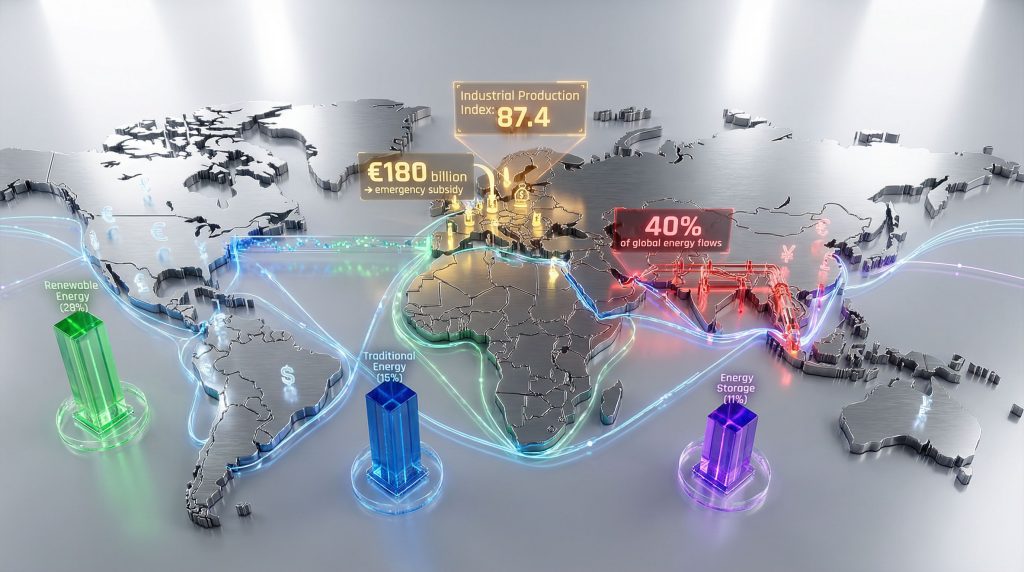
European economies face particular vulnerability due to historical energy import dependencies exceeding 50% of total consumption. Industrial production indices reflect this sensitivity, with energy-intensive sectors experiencing the most severe contractions during supply disruptions.
European Economic Indicators During Energy Crisis:
| Metric Category | Baseline Level | Crisis Impact | Economic Significance |
|---|---|---|---|
| Manufacturing Output | 100.0 | -12.3% | Production curtailments |
| Energy Import Costs | €45B monthly | +165% | Balance of payments pressure |
| Industrial Electricity Prices | €85/MWh | €230/MWh | Competitive disadvantage |
| Currency Volatility | 2.1% daily range | 4.8% daily range | Trade settlement disruption |
European policymakers have allocated over €200 billion in emergency energy support measures across member states. These interventions include direct consumer subsidies, industrial support programs, and emergency lending facilities for energy importers.
Asian Market Adaptation Mechanisms
Asian economies demonstrate different adjustment patterns based on their energy infrastructure and policy frameworks. Countries with diversified supply sources show greater resilience than those heavily dependent on single-region imports.
Emergency response measures across Asia include:
- Demand management protocols – reduced operating hours for non-essential facilities
- Strategic reserve utilisation – coordinated releases to stabilise regional prices
- Alternative supply sourcing – activation of long-term contracts with non-affected producers
- Industrial production scheduling – alignment with energy availability windows
Financial markets reflect regional vulnerabilities through currency movements and sector rotation patterns. Energy-importing currencies face systematic pressure, while equity markets penalise energy-intensive industries and reward efficiency-focused sectors.
Transmission Mechanisms Through Global Economics
Energy price shocks transmit through economic systems via multiple channels simultaneously. Primary transmission occurs through direct input cost increases, while secondary effects emerge through exchange rate adjustments and monetary policy responses.
Dutch Disease effects become inverted during the global energy crisis, where energy-importing nations experience currency depreciation and competitiveness losses. Resource-rich economies benefit from terms-of-trade improvements, but face capacity constraints limiting their ability to increase production quickly.
Network Amplification Effects
Modern supply chains demonstrate extreme sensitivity to energy transition challenges due to just-in-time inventory management and global sourcing strategies. Single disruption points cascade through multiple industries.
Energy security concerns now drive fundamental reassessment of supply chain strategies, with companies prioritising resilience over cost optimisation for the first time in decades.
Financial transmission accelerates through commodity derivatives markets, where price discovery mechanisms amplify volatility during supply uncertainty periods. Energy futures markets experience backwardation – where near-term prices exceed longer-term contracts – indicating immediate scarcity premiums.
Central Bank Policy Responses and Constraints
Monetary authorities face unprecedented challenges when energy-driven inflation combines with supply-side economic disruptions. Traditional policy tools prove less effective against cost-push inflation compared to demand-driven price increases.
Policy Tool Effectiveness Assessment
Central banks employ various instruments with limited success during energy crises. Furthermore, oil price movements complicate monetary policy decisions when geopolitical factors dominate market pricing.
Interest Rate Policy:
- Raising rates cannot increase energy supply
- Higher rates may worsen economic contraction
- Currency support requires significant rate increases
Liquidity Provision:
- Emergency lending facilities for energy importers
- Foreign exchange swap arrangements between central banks
- Special funding programs for affected industries
Forward Guidance:
- Credibility challenges when inflation exceeds targets
- Communication difficulties around temporary vs. permanent shocks
- Market expectations become unanchored during prolonged crises
The Federal Reserve, European Central Bank, and Bank of Japan have activated bilateral swap lines totalling over $500 billion to provide dollar liquidity for energy purchases. These arrangements help prevent currency market disruptions but cannot address underlying supply shortages.
Investment Flow Redirection and Capital Allocation
Energy security concerns drive fundamental shifts in global investment patterns. Capital markets now incorporate energy resilience premiums into asset valuations, favouring companies and countries with diversified energy portfolios.
Investment Sector Reallocation Patterns:
| Investment Category | Pre-Crisis Allocation | Current Allocation | Growth Rate |
|---|---|---|---|
| Renewable Energy Infrastructure | 15% | 32% | +113% |
| Energy Storage Technology | 4% | 13% | +225% |
| Traditional Energy Expansion | 6% | 18% | +200% |
| Energy Efficiency Solutions | 7% | 16% | +129% |
| Alternative Transportation | 3% | 9% | +200% |
Credit Risk Reassessment
Rating agencies incorporate energy security metrics into sovereign and corporate credit assessments. Countries with high energy import dependencies face downgrade pressure, while energy exporters receive positive rating actions despite geopolitical risks.
Corporate credit analysis now emphasises:
- Energy cost exposure as percentage of operating expenses
- Supply chain diversification across multiple energy sources
- Hedging strategies for energy price volatility
- Capital investment in energy efficiency technologies
Energy utilities demonstrate bifurcated performance patterns. Traditional fossil fuel companies benefit from higher margins but face long-term transition risks. Renewable energy developers attract premium valuations despite higher capital requirements and longer payback periods.
Economic Recovery Scenario Framework
Recovery pathways depend heavily on crisis duration and resolution mechanisms. Economic modelling suggests three primary scenarios with distinct characteristics and probability assessments.
Rapid Resolution Scenario (6-12 month duration)
Quick diplomatic or military resolution enables supply restoration within one year. However, the US natural gas forecast indicates continued volatility even after resolution.
- Global GDP impact: -2.8% peak contraction with V-shaped recovery
- Inflation trajectory: 7.2% peak followed by rapid normalisation
- Market recovery: Equity indices recover within 18 months
- Investment patterns: Temporary shift toward energy security investments
This scenario requires successful negotiation or decisive military action to restore shipping access. Historical precedents from the 1990-1991 Gulf War suggest markets recover quickly once supply restoration appears certain.
Extended Crisis Scenario (18-24 month duration)
Prolonged conflict or diplomatic stalemate extends supply disruptions beyond two years. In addition, oil price rally analysis suggests potential complications from trade policy changes.
- Global GDP impact: -5.1% cumulative contraction with L-shaped recovery
- Inflation persistence: 8.9% average over crisis period
- Market adjustment: Permanent repricing of energy-intensive assets
- Structural changes: Accelerated energy transition investment
Extended scenarios trigger fundamental economic restructuring as temporary measures become permanent adaptations. Industrial relocation accelerates, with energy-intensive manufacturing migrating toward regions with secure, lower-cost energy access.
Structural Transformation Scenario (36+ month duration)
Long-term disruption forces permanent changes to global energy systems. Consequently, the causes and effects of prolonged energy disruption require comprehensive policy responses.
- Economic reorganisation: -3.7% GDP with new equilibrium level
- Inflation regime change: Higher structural inflation around 5.2%
- Investment revolution: $2.5 trillion additional energy infrastructure spending
- Geopolitical realignment: New regional energy security alliances
This scenario resembles the oil shocks of the 1970s, where temporary disruptions catalysed permanent shifts toward energy efficiency and alternative sources. Modern economies might adapt more quickly due to existing renewable energy technologies and digital optimisation capabilities.
The next major ASX story will hit our subscribers first
Policy Framework Modernisation Requirements
Economic policy frameworks require fundamental updates to integrate energy security as a core macroeconomic variable. Traditional models treating energy as exogenous input prove inadequate when energy availability becomes the primary economic constraint.
Fiscal Policy Innovation
Governments need new fiscal instruments designed for energy security. Moreover, OPEC production impact decisions increasingly influence national fiscal planning.
Strategic Reserve Optimisation:
- Mathematical models for optimal reserve sizing based on import dependency ratios
- Counter-cyclical reserve accumulation during low-price periods
- International coordination mechanisms to prevent competitive stockpiling
Industrial Policy Integration:
- Tax incentives structured to reward energy efficiency improvements
- Subsidies for domestic energy production capacity expansion
- Trade policy coordination with energy security objectives
Emergency Response Protocols:
- Pre-authorised spending authorities for energy crisis response
- Automatic triggers for demand reduction measures
- Cross-border cooperation agreements for crisis management
Regulatory Framework Adaptation
Energy market regulation requires updating for security-focused objectives:
- Supply diversification requirements for critical industries
- Price volatility management through strategic intervention mechanisms
- Emergency allocation protocols for essential sectors during shortages
- Infrastructure resilience standards for energy transportation networks
Modern energy security policy must balance market efficiency with supply reliability. This requires sophisticated regulatory frameworks capable of maintaining competitive markets while ensuring adequate capacity during crisis periods.
International Institutional Response Evolution
Global economic governance institutions adapt their mandates to address energy security as a systemic risk factor. The International Monetary Fund expands its surveillance framework to include energy vulnerability assessments alongside traditional macroeconomic indicators.
Multilateral Coordination Mechanisms
International cooperation becomes essential for managing energy crises that transcend national boundaries. Furthermore, the global energy crisis requires coordinated responses across multiple institutional frameworks.
Information Sharing Systems:
- Real-time supply disruption monitoring across major energy corridors
- Coordinated assessment of alternative supply route capacities
- Joint intelligence on infrastructure vulnerability and protection needs
Emergency Response Protocols:
- Synchronised strategic reserve releases to maximise market impact
- Coordinated demand reduction measures to minimise economic disruption
- Joint diplomatic initiatives to resolve supply disruption causes
Financial Support Mechanisms:
- IMF special drawing rights allocations for energy import financing
- World Bank emergency lending for energy infrastructure projects
- Regional development bank coordination for alternative supply route development
The World Bank redirects infrastructure financing priorities toward energy security projects, including pipeline capacity expansion, LNG terminal construction, and renewable energy development in import-dependent regions.
Energy security considerations now influence international trade agreement negotiations, with provisions for emergency supply access and crisis cooperation becoming standard elements of bilateral and multilateral trade deals.
Disclaimer: This analysis incorporates forward-looking projections and scenario modelling that involve significant uncertainties. Economic impacts of energy disruptions depend on numerous variables including crisis duration, policy responses, and market adaptation mechanisms. Readers should consult multiple sources and consider their specific circumstances when making decisions based on this analysis. The scenarios presented represent illustrative modelling exercises rather than predictions of specific outcomes.
Looking to Navigate Energy Market Volatility?
Discovery Alert's proprietary Discovery IQ model delivers real-time notifications on significant mineral discoveries across energy and commodity sectors, providing subscribers with immediate insights into market-moving announcements before broader market awareness develops. Visit Discovery Alert's discoveries page to explore how major mineral discoveries have historically generated substantial returns, then begin your 14-day free trial to position yourself ahead of energy transition opportunities.