
August 6, 2026
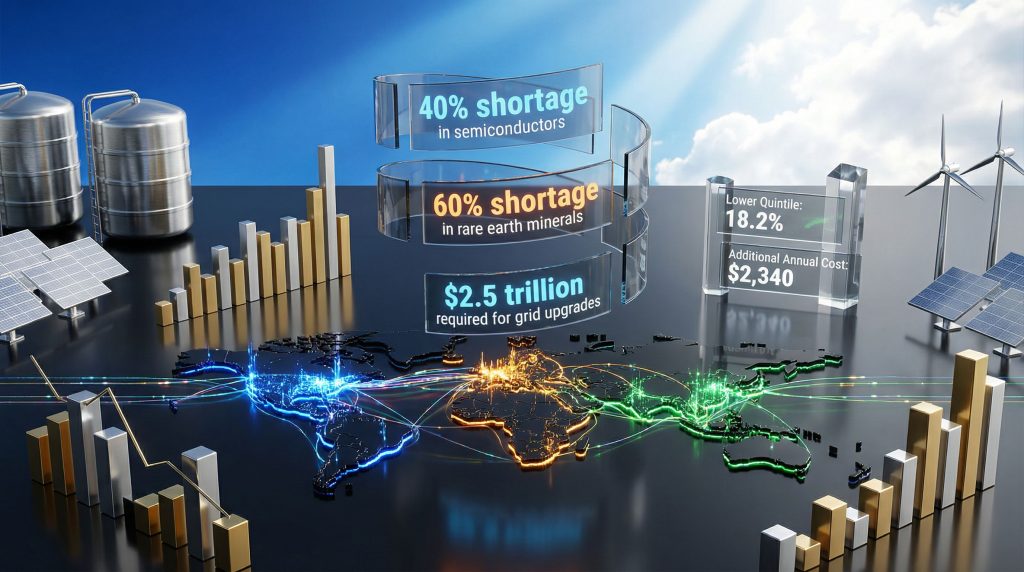
The global financial system faces an unprecedented convergence of structural vulnerabilities that extend far beyond traditional energy market cycles. The current energy crisis represents more than temporary supply disruptions, fundamentally reshaping economic stability and challenging conventional market models. Modern economies have evolved into intricate webs of interdependence where supply chain disruptions, technological transitions, and geopolitical tensions create cascading effects that amplify market volatility.
Understanding the Scale of Current Energy Market Disruption
The contemporary energy landscape reflects a fundamental shift from isolated supply shocks to systemic disruptions affecting global economic foundations. Recent oil price movements demonstrate how interconnected energy systems create vulnerability clusters that traditional risk models failed to anticipate. WTI crude oil prices reaching $115 per barrel during recent Middle Eastern tensions illustrate how geopolitical events immediately translate into global economic pressure.
Current market conditions reveal multiple stress points operating simultaneously across different energy sectors. Furthermore, natural gas trends show prices experiencing 1.92% increases in single trading sessions, while heating oil surged 4.53%, demonstrating how energy volatility spreads across interconnected commodity markets. These price movements reflect deeper structural changes in global energy infrastructure and supply chain resilience.
Key Market Indicators Showing Current Energy Crisis Severity:
• WTI crude oil reaching multi-year highs above $115
• Natural gas price volatility exceeding historical norms
• Heating oil experiencing sudden 4.5% daily increases
• Gasoline price fluctuations affecting consumer markets
• Regional crude oil premiums hitting record levels
The complexity of modern energy markets means that disruptions in one geographic region create immediate global repercussions. When major shipping routes face restrictions, alternative supply chains become strained beyond capacity, forcing rapid price adjustments across energy commodities worldwide.
When big ASX news breaks, our subscribers know first
How Geopolitical Tensions Reshape Global Energy Flows
Strategic chokepoints in global energy transportation have become focal points for geopolitical leverage, fundamentally altering how nations approach energy security. The Strait of Hormuz, through which approximately 20% of global oil production flows, exemplifies how geographic constraints create systemic vulnerabilities in energy markets.
Recent developments have demonstrated the fragility of established energy trade routes. In addition, Qatar's LNG exports faced significant disruptions when shipping routes became contested, with nearly 50 Qatar LNG tankers sitting idle across Asia during peak demand periods. This situation forced importing nations to scramble for alternative suppliers, driving up prices across regional markets.
The impact of trade war oil markets has become increasingly evident in global supply chain adjustments. However, OPEC production impact continues to influence pricing mechanisms across international markets.
The weaponisation of energy infrastructure has transformed traditional supplier-consumer relationships into strategic dependencies that can be rapidly manipulated for political advantage.
Table: Regional Energy Security Disruptions
| Region | Primary Disruption | Supply Impact | Price Effect |
|---|---|---|---|
| Middle East | Shipping route restrictions | 20% global oil flow affected | +15% regional premiums |
| Europe | Russian supply constraints | 40% pipeline capacity reduced | +25% natural gas prices |
| Asia-Pacific | LNG shipping delays | 50+ tankers idle | +30% spot prices |
| North America | Pipeline capacity limits | Domestic distribution issues | +10% regional differentials |
Energy-importing nations are implementing emergency protocols to diversify supply sources and reduce dependence on vulnerable transportation corridors. For instance, India's pivot toward Venezuelan crude imports demonstrates how geopolitical pressures force rapid restructuring of established energy partnerships, often at higher costs but with improved security profiles.
Infrastructure Investment Gaps Creating Market Instability
The transition toward renewable energy systems has created unprecedented infrastructure bottlenecks that amplify current energy crisis conditions. Traditional fossil fuel infrastructure faces planned obsolescence while renewable alternatives struggle to achieve the scale and reliability required for modern economic demands.
Battery storage capacity represents a critical constraint limiting renewable energy integration. Current global storage capabilities require 400% expansion to accommodate planned renewable energy installations, creating a supply-demand imbalance that forces continued reliance on traditional energy sources during peak demand periods.
Transmission grid modernisation presents another significant infrastructure challenge requiring substantial capital investment. Analysts estimate that $2.5 trillion in grid upgrades will be necessary to accommodate distributed renewable energy generation and maintain system reliability across developed economies.
Critical Infrastructure Investment Requirements:
• Battery storage expansion: 400% capacity increase needed
• Grid modernisation: $2.5 trillion investment requirement
• Natural gas pipeline capacity: 30% constraints during peak demand
• Renewable energy installation: Delayed by supply chain shortages
Natural gas pipeline networks face capacity constraints that become apparent during peak demand periods, with systems experiencing 30% capacity limitations when demand surges occur. These constraints force utility companies to implement demand management protocols that can disrupt industrial operations and household energy consumption.
The infrastructure investment gap creates a paradoxical situation where energy abundance exists in certain regions while distribution limitations prevent efficient allocation to areas of highest demand. Consequently, this mismatch generates price volatility that extends beyond normal market mechanisms, according to energy crisis analysis from international energy authorities.
Economic Sectors Most Vulnerable to Energy Price Volatility
Energy-intensive manufacturing sectors face existential challenges as input cost predictability disappears amid ongoing market volatility. Aluminum smelting operations, traditionally requiring stable electricity prices for viable operations, now experience margin compression that threatens long-term facility viability in high-cost energy regions.
Steel production facilities encounter similar pressures as energy costs represent significant portions of total production expenses. Furthermore, chemical manufacturing operations face compound challenges as both energy costs and feedstock prices experience simultaneous volatility, creating operational uncertainty that complicates long-term planning and investment decisions.
The escalating demand for critical minerals demand adds another layer of complexity to industrial operations dependent on raw materials processing.
Table: Household Energy Cost Impact by Income Level
| Income Bracket | Pre-Crisis Energy % of Income | Current Energy % of Income | Additional Annual Cost |
|---|---|---|---|
| Lower Quintile | 8.5% | 18.2% | $2,340 |
| Middle Quintile | 4.2% | 9.8% | $3,120 |
| Upper Quintile | 2.1% | 4.7% | $2,890 |
Household economics across different income levels demonstrate how energy price increases create disproportionate impacts on economic stability. Lower-income households now allocate 18.2% of income toward energy costs, more than doubling from pre-crisis levels and forcing difficult choices between essential expenses.
Transportation sectors experience cascading effects as fuel costs create operational challenges for logistics companies, airlines, and shipping operations. These increased costs ultimately translate into higher prices across consumer goods as transportation expenses embed into final product pricing.
Agricultural operations face particular vulnerability as energy costs affect both direct operational expenses and indirect costs through fertiliser and equipment pricing. Modern agricultural productivity depends heavily on energy-intensive inputs, making farming operations susceptible to margin compression during energy price spikes.
Central Bank Policy Responses to Energy-Driven Inflation
Central banks confront unprecedented policy challenges when addressing inflation driven primarily by supply constraints rather than demand excess. Traditional monetary policy tools prove less effective when price increases stem from physical shortages rather than excessive monetary stimulus, creating policy uncertainty that amplifies market volatility.
Interest rate adjustments, the primary tool for controlling demand-driven inflation, risk triggering broader economic contraction without addressing underlying supply chain constraints. This creates a policy dilemma where central bankers must balance inflation control against economic growth preservation during the current energy crisis.
Monetary Policy Effectiveness Challenges:
• Interest rate tools less effective against supply-driven inflation
• Risk of economic contraction without addressing root causes
• Limited central bank authority over supply chain issues
• International coordination required for global supply problems
Fiscal interventions have included strategic petroleum reserve releases, direct energy subsidies, and emergency funding for infrastructure projects. However, these responses often create moral hazard problems where market participants assume government intervention will continue, potentially prolonging market distortions rather than encouraging market-based solutions.
International coordination becomes essential when addressing global supply chain disruptions that transcend national boundaries. Central banks increasingly recognise that unilateral policy responses may prove insufficient for challenges requiring coordinated international action across multiple economic sectors, as highlighted by Australian energy vulnerability assessments.
The next major ASX story will hit our subscribers first
Emerging Structural Changes in Global Energy Markets
The current energy crisis accelerates fundamental restructuring of global energy market architecture, with traditional commodity trading patterns fragmenting into more regionalised supply chains. This shift reflects both security concerns and physical constraints of renewable energy distribution systems that favour local rather than global optimisation.
Regional energy market development creates opportunities for nations with abundant renewable resources and strategic mineral deposits to emerge as new energy superpowers. Countries controlling lithium, rare earth elements, and other critical materials for renewable energy technology gain strategic influence previously reserved for fossil fuel exporters.
Investment Priority Realignments:
• Domestic energy production capacity expansion
• Strategic mineral reserve accumulation
• Grid resilience and storage infrastructure development
• Energy efficiency technology deployment
• Alternative supply route establishment
Supply chain sovereignty movements gain momentum as nations prioritise domestic control over critical energy inputs, even when these approaches involve higher costs. This trend toward economic nationalism in energy markets may permanently alter international trade patterns and strategic alliance structures.
Energy market regionalisation reflects both technological constraints and geopolitical realities of renewable energy systems. Unlike fossil fuels that can be transported globally through established infrastructure, renewable energy often requires local generation and consumption, limiting the scope of international energy trade.
The transformation of energy geopolitics creates new strategic relationships between resource-rich developing nations and technology-advanced developed economies. These partnerships often involve technology transfer agreements and long-term supply contracts that reshape traditional international economic relationships.
Current energy market disruptions represent more than temporary supply chain adjustments; they signal fundamental shifts in how global energy systems operate and interact with broader economic structures. Understanding these changes provides insight into emerging investment opportunities, policy priorities, and strategic planning requirements for navigating an increasingly complex energy landscape.
Disclaimer: This analysis contains forward-looking statements and market projections that involve inherent uncertainties. Energy market conditions can change rapidly, and past performance does not guarantee future results. Readers should conduct independent research and consult financial advisors before making investment decisions based on energy market trends discussed in this analysis.
Considering Investing in Energy-Sensitive ASX Companies During This Crisis?
Discovery Alert's proprietary Discovery IQ model delivers real-time alerts on significant mineral discoveries that could benefit from current energy market disruptions, helping subscribers identify actionable opportunities in critical minerals and energy-related commodities. Understand why major discoveries in these sectors can lead to substantial returns by exploring Discovery Alert's dedicated discoveries page, then begin your 14-day free trial today to position yourself ahead of the market during these unprecedented conditions.