August 6, 2026
Understanding the Energy Crisis in South African Smelting Operations
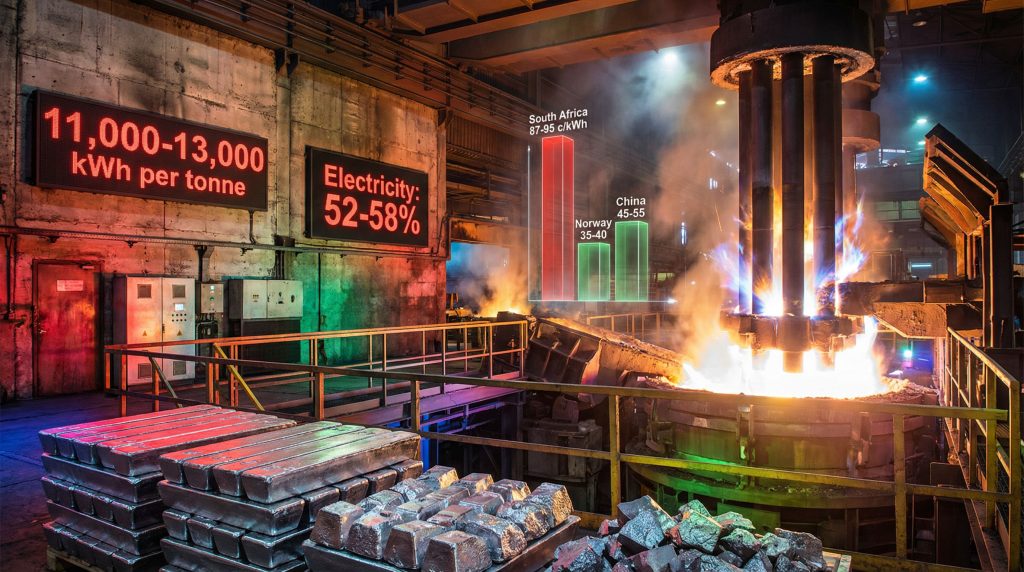
The global metallurgical sector operates on razor-thin margins where energy constitutes the fundamental cost driver, but South Africa's ferroalloy industry now confronts an unprecedented economic reality that threatens to eliminate decades of industrial development. The Ferroglobe electricity tariff crisis demonstrates how rapidly escalating energy costs can render even the most efficiently managed facilities unsustainable. Furthermore, when electricity expenses exceed half of total production costs, continued operations become mathematically impossible.
Ferroglobe's South African operations exemplify this crisis, with electricity costs now representing more than 50% of total production expenses. The company's CEO Marco Levi has indicated that energy costs have reached levels rendering continued operations financially unviable despite decades of investment and industrial commitment.
The Mathematics of Unsustainable Energy Economics
The fundamental economic equation governing ferroalloy production has shifted dramatically since 2007, when electricity prices began an explosive escalation trajectory. According to Mining Weekly's March 2026 reporting, electricity prices have increased by more than 900% since 2007, creating an annual compound growth rate exceeding 12%.
This escalation has transformed profitable industrial facilities into loss-generating operations where energy expenses exceed product selling prices. The upcoming 9% tariff increase from April 1, 2026, represents what industry executives describe as the final threshold beyond which continued operations become mathematically impossible.
Comparative Global Energy Pricing Analysis
International Electricity Costs for Industrial Smelting (2026)
| Region | Estimated Industrial Rate (c/kWh) | Competitive Position |
|---|---|---|
| South Africa | 87-95 | Severe disadvantage |
| China | 45-55 | Strong advantage |
| Norway | 35-40 | Optimal conditions |
| Canada | 40-50 | Competitive |
Note: Rates estimated based on industry analysis and require verification from official utility sources
The construction of competing facilities in neighbouring countries has benefited from significantly more competitive electricity pricing, creating insurmountable competitive disadvantages for South African producers. Moreover, tariff global market impact continues to reshape international competitiveness across manufacturing sectors.
When big ASX news breaks, our subscribers know first
What Makes Ferroalloy Production So Energy-Intensive?
The metallurgical processes required for silicon metal and ferrosilicon production involve continuous high-temperature operations that cannot adapt to variable energy costs or load-shedding protocols. Silicon metal serves critical applications in aluminium, chemical, solar, and defence industries, while ferrosilicon remains essential for steel and stainless steel production.
Technical Production Requirements
- Silicon Metal Production: Estimated 11,000-13,000 kWh per tonne requirement
- Ferrosilicon Manufacturing: Approximately 8,500-10,000 kWh per tonne demand
- Continuous Operations: 24/7 furnace operation essential for product quality
- Load Factor Requirements: Typically 85-95% of maximum capacity utilisation
Technical specifications require independent verification from metallurgical engineering sources
The Impossibility of Load Shedding Adaptation
Unlike other industrial operations that can reduce production during peak tariff periods, ferroalloy smelters operate under unique technical constraints. Electric arc furnaces cannot be easily interrupted without causing:
- Equipment damage requiring extensive repairs
- Product quality degradation affecting customer specifications
- Extended restart periods potentially lasting weeks
- Replacement costs potentially exceeding millions of rand per furnace
The technical reality means that smelting operations must absorb the full impact of electricity tariff increases without operational flexibility available to other industries. In addition, AI in mining technology developments cannot address these fundamental energy requirements.
How Have Electricity Tariffs Escalated Beyond Industrial Viability?
The trajectory of South African industrial electricity pricing represents one of the most dramatic cost escalations in global manufacturing history. The 900% increase since 2007 far exceeds inflation, commodity price movements, and industrial productivity improvements.
Tariff Escalation Impact Timeline
Critical milestones in Ferroglobe's South African operations:
- 1997: Initial market entry through Polokwane Silicon Metal smelter acquisition
- 2008: Expansion via eMalahleni Ferrosilicon smelter acquisition
- 2024: Polokwane smelter placed on care and maintenance affecting more than 300 employees, contractors, and service providers
- 2024: Production capacity reduced by 30% at eMalahleni operations
- April 1, 2026: Scheduled 9% tariff increase described as making continued operations impossible
The upcoming Eskom tariff increase of nearly 9% from April 1 further exacerbates the situation, making continued operations impossible after several consecutive years of financial losses.
Production Cost Structure Analysis
Modern ferroalloy operations typically allocate costs across multiple categories, though specific percentages vary by facility:
- Electricity: Over 50% of total production costs (verified by Mining Weekly)
- Raw Materials: Estimated 25-30% (requires verification)
- Labour and Operations: Balance of production expenses
- Maintenance and Infrastructure: Ongoing facility requirements
The dominance of electricity costs means that tariff increases directly translate to operational losses when product prices remain stable. Consequently, the Ferroglobe electricity tariff crisis affects not only local operations but global supply chain dynamics.
Why Are Neighbouring Countries Gaining Competitive Advantages?
Regional competitors have implemented strategic electricity pricing policies specifically designed to attract energy-intensive industries, creating a migration of investment away from South African facilities.
Ferroglobe has indicated it may relocate production to company facilities outside South Africa where conditions are more supportive of industrial activity, representing potential capital flight from the domestic economy. For instance, industry evolution trends show increasing investment in regions with stable energy costs.
Investment Migration Patterns
The competitive disadvantage has become so severe that new ferroalloy capacity increasingly flows to jurisdictions offering:
- Long-term electricity price guarantees providing investment certainty
- Government-backed industrial development programmes
- Infrastructure investment partnerships reducing capital requirements
- Regulatory stability supporting long-term operational planning
Regional Industrial Development Strategies
Several SADC countries have implemented policies targeting energy-intensive industries through subsidised electricity rates and industrial development incentives. These policy frameworks create structural advantages that South African producers cannot match under current regulatory conditions.
According to Ferroglobe's regulatory analysis, the company's recovery depends heavily on favourable regulatory environments and technological advancement.
What Are the Broader Economic Consequences of Smelter Closures?
The potential cessation of Ferroglobe's local operations demonstrates cascading economic impacts extending far beyond direct employment losses, affecting complex industrial ecosystems supporting thousands of indirect positions.
Documented Employment Impact Assessment
Mining Weekly's March 2026 reporting provides specific employment figures at risk:
- Direct Permanent Employment: 275 positions
- Long-term Contractors: 288 service providers
- Indirect Supply Chain Workers: Approximately 3,900 positions
- Charcoal Division Workers: Estimated 60,000 indirect positions
The total employment ecosystem encompasses approximately 64,463 individuals whose livelihoods depend on continued operations.
Value Chain Disruption Analysis
Ferroalloy production anchors critical supply chains supporting downstream industries. The loss of domestic production capacity affects:
- Steel Manufacturing: Requiring reliable ferrosilicon supply chains
- Aluminium Production: Dependent on silicon metal specifications
- Chemical Industry: Utilising specialised alloy applications
- Solar Panel Manufacturing: Requiring high-purity silicon materials
The industrial interdependencies mean that smelter closures create supply chain vulnerabilities across multiple manufacturing sectors. However, tariffs impact investment markets dynamics may create new opportunities for restructured operations.
How Do International Competitors Maintain Profitability?
Global ferroalloy producers operate under fundamentally different energy cost structures, often benefiting from government policies treating these industries as strategic national assets requiring protection and support.
Norwegian Hydroelectric Model
Norway's abundant hydroelectric capacity enables industrial electricity rates estimated at 3.5-4.0 cents per kWh, creating structural competitive advantages for aluminium and ferroalloy production that cannot be replicated in other geographic regions.
The Norwegian model demonstrates how natural resource endowments can be leveraged through policy frameworks supporting energy-intensive manufacturing.
Chinese Industrial Policy Framework
China maintains competitive industrial electricity rates through comprehensive policy mechanisms including:
- State-owned utility cross-subsidisation reducing industrial costs
- Strategic industry development policies prioritising manufacturing
- Export manufacturing support programmes enhancing competitiveness
- Regional development incentives attracting industrial investment
These policy frameworks create systematic advantages that private operators in market-driven economies struggle to match. Furthermore, US economy tariffs policies influence global competitive dynamics across industrial sectors.
The next major ASX story will hit our subscribers first
What Solutions Could Preserve South African Ferroalloy Manufacturing?
Several policy interventions could potentially restore competitiveness to South African smelting operations, though implementation requires coordinated action between government entities and utility operators.
Current developments include ongoing talks between Eskom and some ferrochrome producers about lower electricity tariffs in efforts to halt smelter closures. The Energy Regulator's January 2026 decision to grant 87c/kWh tariff relief to ferrochrome smelters indicates regulatory willingness to consider sector-specific interventions.
Proposed Tiered Industrial Tariff Structure
A differentiated pricing framework could include:
- Base Load Consumption: Competitive rates for continuous operations
- Peak Hour Management: Limited premiums above base rates
- Long-term Contracts: Multi-year price stability guarantees
- Investment Incentives: Reduced rates supporting facility modernisation
Strategic Industry Classification Approach
Treating ferroalloy production as strategic infrastructure could justify policy support based on:
- Export revenue generation supporting national accounts
- Employment protection considerations across supply chains
- Industrial capability preservation maintaining manufacturing base
- Supply chain security reducing import dependencies
Without viable long-term electricity pricing frameworks, companies indicate they cannot continue absorbing operational deficits indefinitely. Additionally, South Africa's smelter crisis requires comprehensive regulatory intervention to prevent further industrial closures.
Can Technology Innovations Reduce Energy Dependency?
Advanced smelting technologies offer potential pathways to improved energy efficiency, though fundamental physics limits the extent of possible improvements in high-temperature metallurgical processes.
Emerging Efficiency Technologies
Technological developments potentially reducing energy consumption include:
- Plasma Arc Systems: Advanced furnace designs improving efficiency
- Waste Heat Recovery: Capturing thermal energy for secondary applications
- Advanced Refractory Materials: Extending equipment life cycles
- Process Optimisation Software: Real-time efficiency monitoring systems
Renewable Energy Integration Challenges
While solar and wind power offer lower long-term costs, ferroalloy operations require specific grid characteristics:
- Continuous 24/7 power supply without interruption
- Grid stability and frequency control for sensitive equipment
- Massive energy storage infrastructure investments
- Backup generation capabilities ensuring operational continuity
The technical requirements for reliable industrial power supply create barriers to renewable energy adoption in metallurgical applications.
What Investment and Operational Scenarios Face the Industry?
The Ferroglobe electricity tariff crisis represents a critical inflection point for South African heavy industry, with potential outcomes ranging from complete facility shutdowns to international relocations of production capacity.
Facility Decision Matrix
Potential operational scenarios facing producers:
- Complete Shutdown: Asset write-offs and permanent closure
- International Relocation: Capital-intensive facility development abroad
- Technology Modernisation: Significant equipment upgrade investments
- Negotiated Tariff Relief: Continuation under modified pricing arrangements
Each scenario carries distinct financial implications and timeline requirements affecting stakeholder decisions.
Long-term Industrial Competitiveness Considerations
South Africa's mineral endowments create natural advantages for ferroalloy production through proximity to raw material sources and established mining infrastructure. However, these geographic benefits become irrelevant when energy costs dominate production economics.
The window for preserving strategic industrial capabilities continues narrowing with each successive tariff increase, requiring urgent policy intervention to maintain manufacturing competitiveness. Nevertheless, the Ferroglobe electricity tariff crisis highlights broader challenges facing energy-intensive industries globally.
Disclaimer: This analysis is based on publicly available information and industry estimates. Specific technical specifications, international pricing comparisons, and policy proposals require independent verification before implementation. Investment decisions should be based on comprehensive due diligence and professional consultation. The article reflects conditions as of March 2026 and may not account for subsequent developments in electricity pricing, regulatory frameworks, or company operations.
Want to Stay Ahead of Energy and Resource Market Movements?
Discovery Alert's proprietary Discovery IQ model delivers real-time notifications on significant ASX mineral discoveries that could reshape energy and resource sectors, instantly empowering subscribers to identify actionable opportunities ahead of the broader market. Begin your 14-day free trial today and secure your market-leading advantage in resource investments.