
May 10, 2026
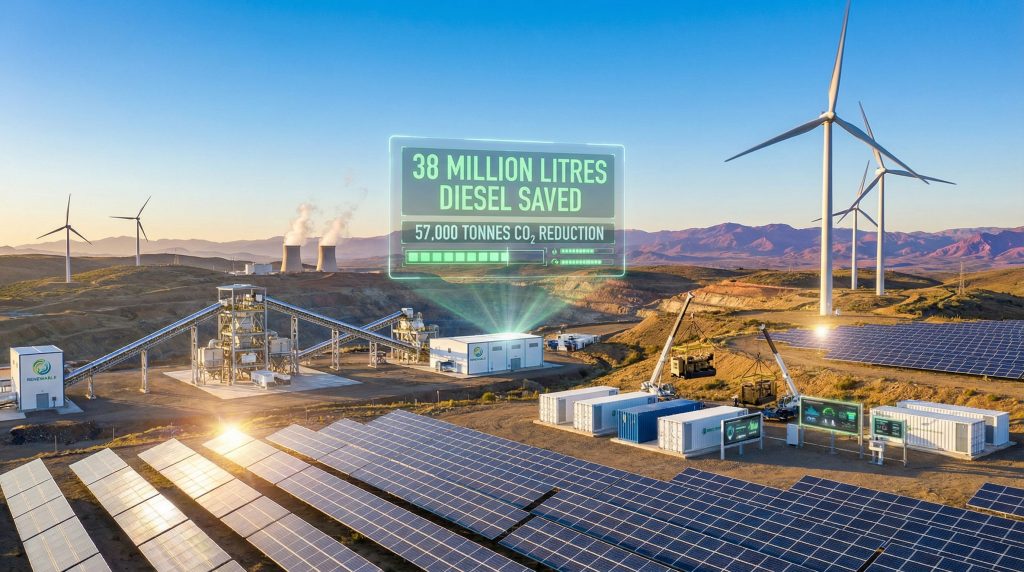
Energy efficiency in modern mining operations represents one of the most significant operational challenges facing resource extraction companies worldwide. As fuel costs continue to impact profit margins and environmental regulations tighten across major mining jurisdictions, operators are exploring innovative approaches to reduce their dependence on traditional diesel-powered systems. The engineering complexity of mining operations, combined with remote locations and demanding operational requirements, creates unique constraints that require sophisticated technical solutions to achieve meaningful fuel consumption reductions. This growing focus on decarbonisation benefits has led companies to pursue comprehensive energy transformation strategies.
What Does "Halving Diesel Consumption" Actually Mean in Modern Mining?
Defining Fuel Reduction Metrics in Mining Operations
Measuring fuel efficiency improvements in mining operations requires understanding baseline consumption patterns across different operational phases. Modern mining companies typically track diesel consumption using multiple metrics including litres per tonne of ore processed, litres per ounce of precious metal produced, and total volumetric consumption across all mining activities.
Industry benchmarking for fuel efficiency varies significantly based on:
- Mining method employed (open pit versus underground operations)
- Equipment fleet composition and operational intensity
- Processing requirements for different ore grades
- Geographic location and associated logistical challenges
- Operational scale and production targets
The transition from traditional diesel-only power systems to hybrid configurations represents a fundamental shift in how mining operations approach energy management. Westgold halved diesel use through systematic implementation of hybrid power systems across multiple operational sites, demonstrating the potential for substantial fuel reduction when engineering solutions are properly deployed.
Why Large-Scale Fuel Savings Represent a Game-Changing Achievement
When mining operations achieve significant volumetric reductions in diesel consumption, the impact extends beyond immediate cost savings. Large-scale fuel reduction programs affect multiple operational dimensions simultaneously, creating compound benefits that enhance overall mining economics.
The conversion of fuel savings to operational cost improvements follows established mining cost accounting principles:
- Direct fuel cost elimination at current diesel market prices
- Reduced logistics and storage requirements for fuel handling
- Lower maintenance costs associated with diesel generator operations
- Improved operational predictability through reduced fuel price volatility exposure
Environmental impact calculations for mining fuel reduction programs use standardised conversion factors. The relationship between diesel consumption and carbon emissions follows the internationally accepted factor of approximately 2.68 kg CO₂-equivalent per litre of diesel consumed. This standardisation allows mining companies to accurately quantify their Scope 1 emissions reductions and report environmental performance improvements to stakeholders.
When big ASX news breaks, our subscribers know first
The Engineering Behind Hybrid Power Station Deployments
Technical Specifications of Modern Mining Hybrid Systems
Contemporary hybrid power systems deployed in mining applications integrate multiple power generation technologies to optimise fuel efficiency while maintaining operational reliability. The engineering challenge involves balancing renewable energy sources with backup diesel generation to ensure continuous power supply for critical mining equipment.
Modern hybrid configurations typically incorporate:
- Solar photovoltaic arrays for primary daytime power generation
- Wind turbines where wind resources justify installation
- Battery energy storage systems for load smoothing and peak demand management
- Smart inverter technology for power conditioning and grid management
- Diesel generators retained for backup power and extended operational periods
The technical implementation of large-scale mining hybrid systems requires sophisticated load management capabilities. Microprocessor-controlled switching systems manage power source prioritisation in real-time, typically following the hierarchy of renewable sources first, battery storage second, and diesel backup third. Furthermore, switching response times operate in milliseconds to seconds, ensuring seamless transitions that do not disrupt mining operations.
Site-Specific Implementation Challenges and Solutions
| Implementation Phase | Technical Requirements | Typical Timeline | Critical Success Factors |
|---|---|---|---|
| Site Assessment | Power demand profiling, renewable resource evaluation | 3-6 months | Accurate load forecasting, environmental baseline |
| Engineering Design | System sizing, integration planning | 6-9 months | Equipment compatibility, redundancy planning |
| Construction | Infrastructure installation, equipment commissioning | 12-18 months | Weather considerations, supply chain management |
| Optimisation | Performance tuning, operational training | 2-4 months | Staff capability development, monitoring protocols |
Remote mining locations present unique engineering challenges for hybrid power deployment. Environmental factors including temperature extremes, dust exposure, and limited maintenance access require specialised equipment specifications and robust system design approaches. Predictive maintenance systems become essential for hybrid power equipment, utilising real-time monitoring and analytics to optimise maintenance schedules and prevent operational disruptions.
How Do Clean Energy Transition Projects Impact Mining Economics?
Capital Investment vs. Operational Savings Analysis
The financial evaluation of mining hybrid power systems requires comprehensive analysis of capital expenditure against long-term operational savings. Mining companies typically evaluate payback periods ranging from three to seven years, depending on diesel price assumptions, renewable resource quality, and project scale.
Capital expenditure considerations include:
- Equipment procurement costs for solar arrays, wind turbines, and battery storage
- Infrastructure development including electrical systems and control equipment
- Site preparation and construction costs specific to mining environments
- Engineering and commissioning expenses for system integration
Operational expenditure reduction potential encompasses multiple cost categories beyond direct fuel savings. Supply chain cost reductions result from decreased diesel transportation requirements, particularly significant for remote mining operations where fuel logistics represent substantial operational expenses.
Risk mitigation benefits associated with energy independence contribute additional economic value. Mining operations with on-site power generation experience improved operational continuity during supply chain disruptions and reduced exposure to diesel price volatility, creating measurable risk-adjusted returns for hybrid power investments.
Supply Chain Resilience Through Energy Independence
Mining operations traditionally face significant logistical challenges associated with diesel fuel supply to remote locations. Hybrid power systems reduce this dependency, creating operational advantages that extend beyond direct cost savings.
Benefits of reduced diesel dependency include:
- Decreased transportation requirements and associated logistics costs
- Reduced fuel storage infrastructure needs and maintenance
- Lower operational risk from fuel supply disruptions
- Improved safety profiles through reduced fuel handling requirements
- Enhanced operational flexibility during extreme weather or transport limitations
The strategic value of energy independence becomes particularly apparent during periods of supply chain stress or extreme weather events that can disrupt traditional fuel supply chains to mining operations. In addition, hydrogen-powered autonomous trucks are emerging as complementary technologies to further reduce diesel dependency.
What Are the Operational Milestones for Large-Scale Fuel Reduction?
Timeline for Full System Implementation
Successful deployment of mining hybrid power systems requires coordinated implementation across multiple operational phases. The transition from traditional diesel-only power generation to hybrid systems involves careful planning to maintain operational continuity throughout the deployment process.
Implementation milestone categories typically include:
- Pre-commissioning activities including site preparation and equipment installation
- System commissioning and testing to validate operational performance
- Parallel operation phases where hybrid and diesel systems operate simultaneously
- Full operational transition with diesel systems relegated to backup status
- Performance optimisation through operational experience and system tuning
Performance Metrics and Validation
Critical Success Indicator:
Mining hybrid power systems demonstrate their effectiveness through measurable operational metrics including fuel consumption reduction, power system reliability, and cost performance against established baselines.
Operational validation requires comprehensive monitoring systems that track:
- Real-time fuel consumption across all power generation sources
- System reliability metrics including uptime and maintenance requirements
- Power quality indicators ensuring compatibility with mining equipment
- Environmental performance tracking emissions reductions and renewable energy utilisation
The achievement of targeted fuel reduction levels typically occurs over several operational quarters as systems are optimised and operational staff develop familiarity with hybrid power management protocols. Consequently, data-driven operations become essential for monitoring and optimising these complex energy systems.
How Do Mining Companies Measure Environmental Impact Reduction?
Carbon Footprint Calculation Methodologies
Mining companies utilise standardised methodologies to quantify environmental benefits from fuel reduction programs. The Greenhouse Gas Protocol Corporate Standard provides the framework for calculating Scope 1 emissions reductions from direct fuel consumption changes.
Emissions calculation methodology involves:
- Baseline fuel consumption measurement across all diesel-powered equipment
- Post-implementation consumption tracking with detailed source attribution
- Emissions factor application using internationally accepted conversion rates
- Verification protocols to ensure accuracy and compliance with reporting standards
Carbon dioxide equivalent calculations use the standard conversion factor of 2.68 kg CO₂e per litre of diesel, allowing companies to translate fuel savings directly into emissions reduction metrics for sustainability reporting purposes. For instance, Westgold halved diesel use translates directly into measurable emissions reductions that can be quantified using these standardised methodologies.
Comparative Analysis: Traditional vs. Hybrid Power Systems
The environmental performance comparison between traditional diesel-only systems and hybrid configurations extends beyond simple fuel consumption metrics. Hybrid systems demonstrate superior environmental performance across multiple impact categories including air quality, noise pollution, and resource utilisation efficiency.
Environmental performance indicators include:
- Direct emissions reduction from decreased diesel consumption
- Particulate matter reduction in local air quality
- Noise level improvements from reduced diesel generator operation
- Resource efficiency gains through renewable energy integration
- Waste reduction from decreased maintenance requirements on diesel equipment
What Technologies Enable Successful Diesel Reduction Programs?
Power Management Systems in Mining Applications
Advanced power management technology forms the foundation of successful mining fuel reduction programs. Smart grid controllers optimise power source utilisation in real-time, automatically switching between renewable sources, battery storage, and diesel backup based on operational demands and system availability.
Key technological components include:
- Load forecasting algorithms that predict power demand patterns
- Automated switching systems for seamless power source transitions
- Battery management systems optimising charge/discharge cycles
- Power quality monitoring ensuring equipment compatibility
- Remote monitoring capabilities for centralised system oversight
SCADA (Supervisory Control and Data Acquisition) systems provide comprehensive monitoring and control capabilities for hybrid power installations. These systems enable mining operators to track performance metrics, identify optimisation opportunities, and maintain operational visibility across distributed power generation assets.
Monitoring and Optimisation Tools
Continuous improvement in hybrid power system performance requires sophisticated monitoring and analytics capabilities. Real-time data collection systems track operational parameters across all power generation sources, providing insights for operational optimisation and maintenance planning.
Advanced monitoring systems typically measure:
- Power generation by source including renewable and conventional generation
- Load demand patterns across different mining operational phases
- System efficiency metrics for each component of the hybrid installation
- Environmental conditions affecting renewable energy generation potential
- Equipment performance indicators for predictive maintenance applications
Machine learning algorithms increasingly support hybrid power optimisation by identifying patterns in operational data and recommending system adjustments to maximise fuel efficiency whilst maintaining operational reliability. However, implementing AI-powered efficiency solutions requires careful integration with existing power management systems.
The next major ASX story will hit our subscribers first
How Can Other Mining Operations Replicate These Results?
Site Assessment Requirements for Hybrid Power Implementation
Successful replication of mining fuel reduction programs requires comprehensive site assessment to evaluate technical feasibility and economic viability. Power demand analysis forms the foundation of hybrid system design, requiring detailed understanding of mining operational patterns and electricity consumption profiles.
Essential assessment components include:
- 24-month power consumption data capturing seasonal variations and operational cycles
- Peak demand identification for system sizing requirements
- Load profile analysis showing power consumption patterns across mining activities
- Future growth projections accounting for planned production increases or operational changes
Renewable resource evaluation requires detailed meteorological analysis specific to mining site locations. Solar irradiance measurements, wind speed data, and seasonal variation patterns determine the optimal renewable technology mix for each location. Furthermore, companies can benefit from studying existing case studies of Australian Mining's sustainability initiatives to understand best practices.
Financial Planning for Clean Energy Transition Projects
The economic evaluation of mining hybrid power projects requires comprehensive financial modelling accounting for capital costs, operational savings, and risk factors specific to mining environments.
Financial planning considerations include:
- Capital expenditure estimation: Hybrid systems typically range from $1.2M-$2.5M per MW installed capacity
- Operational cost reduction: Based on baseline diesel consumption and local fuel pricing
- Project financing options: Including debt-to-equity structures and government incentive programs
- Sensitivity analysis: Evaluating project returns across different diesel price scenarios
- Risk assessment: Quantifying technical, operational, and market risks
Return on investment calculations typically show internal rates of return between 12-25% for well-designed mining hybrid power projects, depending on site-specific conditions and diesel price assumptions.
What Are the Industry-Wide Implications of Successful Fuel Reduction?
Setting New Standards for Mining Sustainability
The successful implementation of large-scale fuel reduction programs creates benchmarks for mining industry sustainability performance. Mining companies demonstrating significant fuel efficiency improvements establish competitive advantages in environmental, social, and governance (ESG) performance metrics increasingly important to investors and stakeholders.
Industry implications include:
- Regulatory compliance advantages as emissions reduction requirements tighten
- Enhanced investor relations through improved ESG performance ratings
- Operational cost competitiveness through reduced energy expenses
- Technology demonstration effects encouraging broader industry adoption
ESG performance leadership becomes increasingly valuable as institutional investors incorporate environmental criteria into investment decisions. Mining companies with demonstrated fuel reduction achievements access improved financing terms and investor interest compared to operations with traditional energy profiles.
Future Trends in Mining Energy Systems
The evolution of mining energy systems continues toward greater renewable energy integration and improved operational efficiency. Technological advances in battery storage, smart grid management, and renewable energy integration create expanding opportunities for mining operations to reduce diesel dependency.
Emerging trends include:
- Advanced battery technologies offering improved energy density and longer operational lifespans
- Artificial intelligence integration for predictive power system optimisation
- Electric vehicle adoption for mining equipment fleets
- Hydrogen fuel cell technology for heavy-duty mining applications
- Grid-scale energy storage enabling greater renewable energy utilisation
Fully electric mining operations represent the long-term trajectory for industry energy systems, with hybrid power serving as a transition technology toward complete decarbonisation of mining power systems. Additionally, innovations such as battery recycling breakthrough technologies will support the circular economy in mining energy systems.
Risk Considerations and Implementation Challenges
Technical and Operational Risk Factors
Mining hybrid power implementations involve technical risks that require careful management throughout project development and operation. Remote location challenges present unique difficulties for equipment maintenance, spare parts availability, and technical support access.
Primary risk categories include:
- Technology performance risks in harsh mining environments
- Integration challenges with existing mining equipment and systems
- Weather dependency for renewable energy sources
- Maintenance complexity for multiple power generation technologies
- Staff training requirements for hybrid system operation and maintenance
Risk mitigation strategies typically include redundant system design, comprehensive maintenance contracts, and extensive operational training programmes to ensure successful long-term operation of hybrid power installations.
Financial and Market Risk Management
The economic performance of mining hybrid power projects depends on multiple variable factors including diesel prices, equipment costs, and operational efficiency achievement. Financial risk management requires careful consideration of these variables and appropriate risk mitigation strategies.
Market risk factors include:
- Diesel price volatility affecting project economics
- Technology cost trends influencing capital expenditure requirements
- Regulatory changes impacting operational requirements or incentive programs
- Equipment performance variations affecting projected savings achievement
- Interest rate fluctuations influencing project financing costs
Scenario analysis and sensitivity testing provide essential tools for evaluating project robustness across different market conditions and operational outcomes. However, successful implementations like Westgold halved diesel use demonstrate that well-planned projects can deliver consistent returns even in volatile market conditions. Companies seeking detailed performance data can reference Westgold's annual sustainability reports for comprehensive operational metrics.
Please note: This analysis is based on publicly available information and industry practices. Readers should verify specific technical and financial details through official company disclosures and conduct independent due diligence before making investment or operational decisions. Past performance and projected savings do not guarantee future results.
Want to capitalise on mining's energy transition opportunities?
Discovery Alert's proprietary Discovery IQ model delivers real-time alerts on significant ASX mineral discoveries, instantly empowering subscribers to identify actionable opportunities ahead of the broader market as companies transform their operations through clean energy initiatives. Begin your 14-day free trial today and secure your market-leading advantage in this evolving sector.