
June 15, 2026
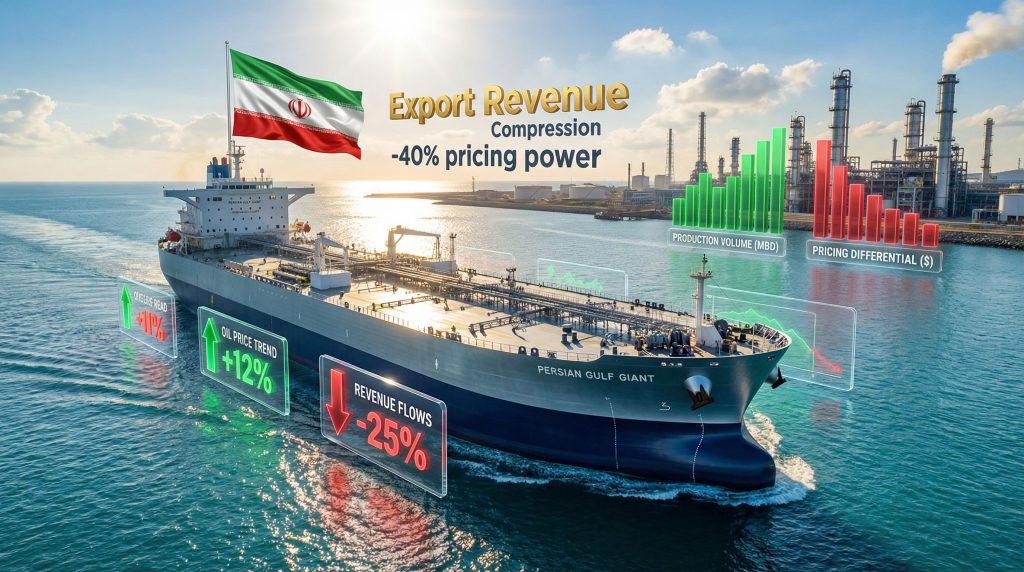
Complex market dynamics extend far beyond production volumes when examining how economic restrictions reshape global energy flows. Understanding revenue mechanics requires analysing multiple layers of cost structures, pricing mechanisms, and operational constraints that emerge when traditional trading relationships face systematic disruption. Moreover, the oil price rally analysis demonstrates how geopolitical tensions can create additional market volatility.
Understanding the Revenue Mechanics Behind Energy Export Restrictions
Traditional oil revenue models depend on transparent price discovery through competitive markets, standardised logistics networks, and efficient payment systems. When sanctions disrupt these foundations, producers face a fundamental restructuring of their entire commercial framework. Revenue compression occurs through multiple simultaneous channels that compound the financial impact beyond simple volume reductions.
The mechanics of sanctions impact on Iranian oil revenues demonstrate how market isolation creates cascading effects throughout the energy value chain. Production capacity may remain intact, but the ability to monetise that capacity becomes severely constrained through buyer concentration, discount requirements, and operational complexity increases.
Furthermore, broader economic policies such as tariffs impact on investments can create additional layers of complexity for global energy markets.
When big ASX news breaks, our subscribers know first
What Are the Primary Revenue Channels Affected by Oil Sanctions?
Direct Export Revenue Compression
Market access restrictions create immediate revenue pressures through reduced buyer competition. When Iran's customer base contracted to primarily China, the fundamental economics of oil sales shifted dramatically. Chinese crude oil imports reached 11.55 million barrels per day in 2025, representing a 4.4% increase from 2024 levels, according to market data. This sustained demand provided a foundation for Iranian production recovery, but eliminated pricing leverage.
The buyer concentration effect manifests through several mechanisms:
- Monopsony pricing power allowing single buyers to dictate terms
- Elimination of competitive bidding reducing price realisation
- Standardised discount requirements built into all transactions
- Limited alternative market access preventing price optimisation
Production capacity constraints operate differently under sanctions than in normal market conditions. While Iran successfully restored crude oil production to pre-sanctions levels, this achievement required accepting substantially reduced per-barrel revenues. The volume-price trade-off became unavoidable as market access limitations prevented normal revenue optimisation.
Secondary Revenue Stream Disruptions
Refined product export limitations represent a significant but often underestimated component of sanctions impact on Iranian oil revenues. Value-added processing typically provides higher margins than crude exports, making downstream product sales crucial for revenue maximisation. Sanctions disrupt these higher-value revenue streams through:
- Restricted access to international product markets
- Limited refining technology imports affecting efficiency
- Reduced blending capabilities limiting product quality premiums
- Constrained storage and distribution networks
Natural gas export complications add another dimension to revenue pressures, particularly as global LNG markets have expanded rapidly. In addition, natural gas trends 2025 show the volatility in this sector that can further impact revenue planning. Iran's substantial natural gas reserves face similar market access constraints, limiting diversification opportunities that could offset crude oil revenue declines.
How Do Sanctions Create Hidden Operational Cost Increases?
Maritime Logistics Cost Escalation
Sanctions avoidance requires fundamental changes to oil export logistics that substantially increase per-barrel costs. Analysis by energy market observers indicates that circumventing restrictions creates multiple cost layers that traditional oil operations do not face. These operational modifications include ship-to-ship transfer expenses, tanker reflagging procedures, and route optimisation costs for sanction-avoiding shipping lanes.
Ship-to-ship transfer operations represent one of the most significant hidden costs. Under normal circumstances, oil moves directly from production facilities to buyers through established shipping routes. Sanctions require intermediate steps that add complexity, risk, and expense:
- Additional vessel positioning costs for transfer coordination
- Extended crew time requirements during transfer operations
- Specialised equipment needs for open-water cargo handling
- Insurance premium increases for high-risk maritime operations
Extended voyage durations create cascading cost impacts beyond fuel consumption. Longer routes to avoid enforcement zones require additional crew compensation, vessel maintenance, and opportunity costs from reduced asset utilisation efficiency.
Financial Transaction Complexities
Alternative payment mechanisms impose substantial hidden costs on sanctioned oil transactions. Standard international banking channels become unavailable, forcing reliance on complex intermediary arrangements that add fees and delays to revenue realisation.
Currency conversion requirements create additional expense layers when traditional dollar-denominated transactions are restricted. However, the broader implications of US tariffs and inflation demonstrate how global financial mechanisms continue to affect international trade flows.
Barter arrangements, while avoiding some banking restrictions, introduce new complexities around valuation, timing, and counterparty risk that translate into effective cost increases.
What Market Dynamics Determine Iran's Oil Pricing Power?
Buyer Concentration Effects
The transformation from global market access to single-buyer dependence fundamentally altered Iran's negotiating position. Market analysis reveals how this concentration dynamic operates:
| Market Condition | Pre-Sanctions | Under Sanctions | Impact |
|---|---|---|---|
| Primary Buyers | Global market | China-dominant | Reduced pricing power |
| Discount Requirements | Market premiums possible | Deep discounts mandatory | Revenue reduction |
| Payment Terms | Standard credit arrangements | Alternative mechanisms | Cash flow strain |
| Price Discovery | Transparent market signals | Bilateral negotiations | Information asymmetry |
China's position as the dominant buyer creates classical monopsony market conditions. With limited alternative purchasers available, Iran faces a binary choice: accept Chinese pricing terms or risk revenue loss through unsold inventory. This dynamic eliminates the competitive tension that normally supports producer pricing power.
Competition from Alternative Suppliers
The emergence of sanction-free alternatives has intensified competitive pressures on Iranian oil sales. Venezuelan oil market re-entry represents a particularly significant development, as noted by industry analysts who observe that buyers now have broader choices of sanction-free crude options.
This competitive landscape creates additional pressure through:
- Lower transaction complexity for alternative suppliers
- Reduced legal and compliance risks for buyers
- Standard payment and shipping arrangements available elsewhere
- Comparable crude quality from competing sources
Russian crude availability, despite its own sanction complications, provides another substitute option that can compete for the same buyer base. Meanwhile, US‑China trade war effects continue to influence broader commodity trading patterns. Middle Eastern producers with unrestricted market access maintain significant advantages in terms of logistics simplicity and payment flexibility.
How Do Revenue Losses Translate to Economic Impact?
Government Budget Implications
Oil revenue reductions create immediate fiscal pressures for resource-dependent economies. When per-barrel realisations decline while operational costs increase, the net revenue impact can exceed simple volume calculations might suggest. Government budgets structured around historical oil revenue assumptions face adjustment pressures across multiple expenditure categories.
Public spending constraints emerge as reduced revenues limit infrastructure investment capacity. Energy sector investments, which typically require substantial capital commitments, become particularly vulnerable when revenue streams face persistent pressure.
Macroeconomic Transmission Mechanisms
Revenue constraints from sanctions impact on Iranian oil revenues transmit through the broader economy via several channels. Currency depreciation cycles often accelerate when export earnings decline, creating inflationary pressures that compound the original revenue loss.
Import capacity limitations affect essential goods access when foreign currency earnings decline. This creates supply chain vulnerabilities that extend beyond the energy sector into general economic activity.
Investment climate deterioration typically follows sustained revenue pressure, as uncertainty about long-term economic conditions reduces both domestic and foreign capital formation. According to international sanctions analysis, these economic transmission mechanisms have been extensively documented across multiple sanction regimes.
What Adaptive Strategies Maintain Revenue Resilience?
Volume Compensation Approaches
When per-barrel revenues decline, producers naturally seek volume increases to maintain total revenue streams. Iran's strategy of production capacity expansion reflects this economic logic, though success depends on sustained buyer demand and operational efficiency improvements.
Export diversification efforts become crucial when traditional markets face restrictions. Developing alternative product streams, including refined products and petrochemicals, can provide revenue sources less susceptible to crude oil-specific sanctions.
Regional pipeline utilisation offers potential routes to market that bypass some maritime restrictions, though geographic and political constraints limit these options for many producers.
Cost Mitigation Techniques
Shadow fleet development represents one approach to reducing third-party logistics expenses. By controlling more of the shipping infrastructure directly, producers can eliminate some intermediary costs while maintaining operational flexibility.
Domestic refining expansion captures value-added processing margins that might otherwise be lost through crude-only exports. This strategy requires substantial capital investment but can improve revenue per barrel of production.
The next major ASX story will hit our subscribers first
How Do Sanctions Affect Long-Term Revenue Sustainability?
Infrastructure Investment Constraints
Field development delays from restricted technology access create long-term production vulnerabilities. Modern oil operations require sophisticated equipment and expertise that may become difficult to access under comprehensive sanctions regimes.
Production decline rates can accelerate without proper maintenance and optimisation. Mature oil fields typically require ongoing investment to maintain output levels, making technology restrictions particularly problematic for sustained production.
Exploration activity reductions limit future reserve replacement opportunities. New field development requires advanced seismic analysis, drilling technology, and reservoir management capabilities that sanctions can restrict.
Market Position Vulnerabilities
Customer relationship dependencies create strategic risks when buyer options become limited. Single-customer concentration reduces negotiating flexibility and increases vulnerability to demand changes from that specific buyer.
Price discovery limitations affect strategic planning when producers cannot access transparent market information. This information asymmetry makes it difficult to optimise production timing, inventory management, and investment decisions.
Quality premium losses can occur when restricted blending capabilities prevent optimisation of crude characteristics for specific market requirements.
What Role Does Geopolitical Risk Play in Revenue Volatility?
Risk Premium Dynamics
Supply disruption expectations can create temporary price benefits for sanctioned producers when markets price in potential supply interruptions. However, these premiums remain volatile and unpredictable, making them unreliable for revenue planning.
Military escalation scenarios potentially affect production facilities directly, creating existential risks that extend beyond normal market volatility. Recent analytical assessments suggest that oil facilities would likely be primary targets in any military confrontation.
Diplomatic negotiation cycles influence market sentiment and pricing expectations. The possibility of sanctions relief or intensification creates ongoing uncertainty that affects buyer behaviour and pricing decisions. Furthermore, political unrest analysis indicates how domestic stability issues can compound revenue challenges.
Market Response Mechanisms
Strategic reserve releases can dampen price volatility benefits that might otherwise accrue to restricted suppliers. When consuming nations release stored oil during supply disruptions, it reduces the price impact that might benefit sanctioned producers.
Alternative supplier activation represents a systematic response to supply restrictions. Other producers often increase output when competitors face sanctions, limiting the price benefits that might otherwise result from reduced availability.
How Do Different Sanction Types Create Varying Revenue Effects?
Sectoral Sanctions Impact Analysis
Different categories of restrictions create distinct patterns of revenue impact with varying timelines and mitigation possibilities:
| Sanction Type | Revenue Effect | Implementation Timeline | Mitigation Difficulty |
|---|---|---|---|
| Banking restrictions | Severe immediate impact | Immediate implementation | Very difficult to circumvent |
| Shipping limitations | Substantial ongoing costs | 3-6 month full effect | Moderate workaround options |
| Technology access blocks | Gradual production decline | 12-24 month manifestation | Extremely difficult long-term |
| Insurance coverage restrictions | Immediate cost increases | Immediate implementation | Moderate alternative options |
Enforcement Intensity Variations
Primary sanction compliance creates direct revenue blocks through legal prohibitions on transactions with designated entities. These restrictions typically have immediate and severe effects on revenue streams.
Secondary sanction threats deter third-party participation by creating legal risks for intermediaries. This enforcement mechanism can be particularly effective at isolating sanctioned entities from global commerce networks.
Enforcement consistency levels affect the success rates of various evasion strategies. Irregular enforcement creates opportunities for circumvention, while consistent application makes sanctions more economically effective.
What Economic Indicators Best Measure Sanction Effectiveness?
Revenue Metrics Framework
Export volume trends provide one measure of physical flow restrictions but may not capture the full economic impact when price discounts are substantial. Volume maintenance despite revenue decline indicates successful production adaptation but ongoing financial pressure.
Price realisation ratios comparing achieved prices to benchmark rates offer insights into the economic cost of market restrictions. These metrics reveal the effective discount rates that sanctioned producers must accept.
Foreign currency earnings track actual revenue conversion rather than nominal sales figures. This measurement captures the impact of payment mechanism restrictions and currency conversion requirements.
Broader Economic Impact Measures
GDP growth correlations linking oil revenue to economic performance demonstrate how sector-specific restrictions transmit to broader economic conditions. Resource-dependent economies typically show strong correlations between oil revenues and overall economic growth.
Current account balances reflect export earning constraints and their impact on international economic relationships. Persistent current account deterioration often indicates successful revenue restriction through sanctions.
Employment sector impacts measure downstream economic effects beyond direct oil industry employment. Reduced government spending and economic activity create multiplier effects throughout the economy.
Disclaimer: This analysis is based on publicly available market data and expert commentary. Economic projections and policy impacts involve significant uncertainties. Readers should conduct independent research and consult qualified advisors before making investment or policy decisions based on this information.
Interested in Mining Discoveries that Create Market-Moving Returns?
Discovery Alert's proprietary Discovery IQ model instantly identifies significant ASX mineral discoveries, transforming complex geological data into actionable trading insights for both short-term opportunities and long-term investment positioning. Explore how historic discoveries have generated exceptional returns and begin your 30-day free trial to gain immediate market advantages when the next major discovery is announced.