
July 25, 2026
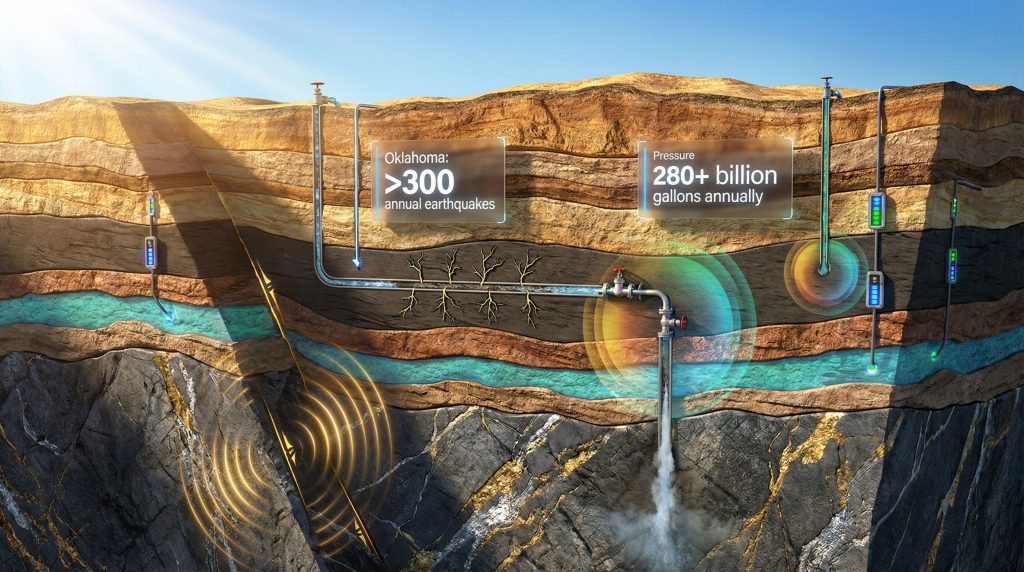
The relationship between energy extraction and seismic activity represents one of the most complex challenges facing modern geological science. While public attention often focuses on hydraulic fracturing operations themselves, the underlying mechanics reveal a more nuanced picture involving massive volumes of industrial wastewater, deep geological formations, and the intricate physics of fault systems buried miles beneath the surface. Furthermore, 3D geological modelling plays a crucial role in understanding these subsurface dynamics.
The Critical Distinction Between Production and Disposal Operations
Understanding induced seismicity requires recognising the fundamental difference between hydraulic fracturing and wastewater disposal operations. Direct fracking activities typically generate minimal seismic events, usually registering below magnitude 3.0 on the Richter scale. These micro-earthquakes occur during the 2-5 day fracturing process when high-pressure fluid creates small cracks in target shale formations.
The real seismic concern emerges from wastewater disposal operations, which handle the billions of gallons of contaminated water produced alongside oil and gas. This distinction proves crucial for both regulators and communities attempting to understand earthquake risks in energy-producing regions.
Volume Differentials and Operational Scale
The scale differential between these operations tells the complete story. Moreover, data-driven mining operations are increasingly being used to analyse these vast datasets:
- Hydraulic fracturing: 2-8 million gallons per well over several days
- Wastewater disposal: Continuous injection of millions of gallons monthly for years
- Industry totals: Over 280 billion gallons of wastewater disposed annually across the United States
This massive volume difference explains why disposal operations, rather than fracking itself, correlate with significant seismic increases in regions like Oklahoma, Texas, and Arkansas.
When big ASX news breaks, our subscribers know first
Geological Mechanisms Behind Pressure-Induced Fault Activation
The physics governing induced earthquakes centres on the effective stress principle, a fundamental concept in rock mechanics. When high-pressure fluids enter subsurface formations, they reduce the normal stress acting on existing fault planes. This reduction in friction allows previously stable faults to slip, generating earthquakes.
Critical Pressure Thresholds and Fault Reactivation
Research indicates that monthly injection rates exceeding 300,000 barrels correlate with 1.5 times higher seismic risk compared to lower-volume operations. However, the relationship between injection volumes and earthquake magnitude remains unpredictable, with some wells triggering significant events while others operate without notable seismic activity.
The depth specifications for disposal wells typically range from 6,000 to 12,000 feet, targeting deep saline formations well below freshwater aquifers. At these depths, sustained high-pressure injection creates regional stress changes that can propagate through interconnected fault networks. Additionally, downhole geophysics techniques are essential for monitoring these deep subsurface conditions.
Geological Conditions That Amplify Risk
Several subsurface factors determine whether injection operations will trigger seismic events:
- Fault proximity: Distance between injection wells and pre-existing fault systems
- Rock permeability: Formation characteristics affecting pressure transmission rates
- Basement geology: Crystalline rock structures that respond differently to pressure changes
- Regional stress fields: Existing tectonic stress orientation and magnitude
The most seismically active regions typically feature combinations of high injection volumes, proximity to basement faults, and favourable stress conditions for fault reactivation.
Regional Patterns and Seismic Transformation
The transformation of seismically quiet regions into earthquake zones provides compelling evidence of the wastewater disposal connection. Oklahoma experienced the most dramatic change, with annual earthquakes above magnitude 3.0 increasing from approximately 21 before 2008 to over 300 after 2010.
State-by-State Seismic Evolution
| Region | Pre-2008 Annual Events (>3.0) | Post-2010 Annual Events (>3.0) | Primary Disposal Formation |
|---|---|---|---|
| Oklahoma | 21 | 300+ | Arbuckle Formation |
| Texas | <50 | 200+ | Ellenburger Group |
| Arkansas | <10 | 100+ | Ozark Plateau |
| Colorado | <25 | 150+ | Dakota Group |
| Ohio | <15 | 80+ | Mount Simon Sandstone |
| Kansas | <20 | 120+ | Arbuckle Formation |
These statistics demonstrate how geological formations respond differently to injection pressures, with some regions experiencing more pronounced seismic increases than others despite similar operational parameters. Consequently, geological logging codes have become increasingly important for tracking these variations.
Regulatory Response and Traffic Light Systems
State regulators have developed increasingly sophisticated approaches to managing induced seismicity risks. Oklahoma's traffic light protocol represents the most comprehensive system, implementing graduated response measures based on earthquake magnitude thresholds.
Automated Response Protocols
Modern regulatory frameworks incorporate real-time monitoring with automatic triggers:
- Yellow alert: Magnitude 2.5+ events trigger injection volume reductions
- Red alert: Magnitude 4.0+ earthquakes mandate immediate well shutdown
- Regional coordination: Multi-well response protocols for widespread seismic activity
However, significant regulatory gaps persist, particularly regarding prediction capabilities and interstate coordination. The absence of reliable pre-injection risk assessment tools means regulators often respond reactively rather than proactively to seismic threats.
Federal Oversight Challenges
The EPA's Underground Injection Control programme delegates primary authority to states, creating inconsistencies in monitoring and response protocols. This decentralised approach complicates regional management of disposal operations that may affect multiple states simultaneously.
Technological Solutions and Monitoring Advances
The industry has responded to seismic concerns with significant technological investments. Real-time seismic arrays now provide continuous monitoring around high-risk injection sites, enabling rapid detection of induced earthquake activity. Seismic monitoring from the USGS provides comprehensive guidance on these monitoring systems.
Advanced Detection and Response Systems
- Dense monitoring networks: Seismic stations positioned within 5-10 kilometres of injection operations
- Continuous pressure monitoring: Downhole sensors tracking injection pressure in real-time
- 3D microseismic mapping: Visualisation of induced fracture networks and fault activation
These technologies enable pressure-managed disposal protocols that adjust injection rates based on real-time seismic feedback, potentially reducing earthquake risks while maintaining operational efficiency.
Operational Modifications and Best Practices
Industry adaptation includes several promising approaches:
- Reduced injection rates: Lower-pressure, extended-duration disposal operations
- Enhanced reservoir characterisation: Pre-injection geological assessment protocols
- Alternative disposal methods: Surface treatment and beneficial reuse programmes
- Regional disposal planning: Coordinated approach to injection well placement
Furthermore, implementing effective wastewater management solutions has become critical for reducing environmental impacts.
Scientific Limitations and Prediction Challenges
Despite technological advances, significant scientific limitations remain in understanding and predicting induced seismicity. Magnitude forecasting proves particularly challenging, with no reliable methods for determining the maximum earthquake size that injection operations might trigger.
Temporal and Spatial Uncertainties
Current science cannot predict:
- When earthquakes will occur following injection activities
- How large induced earthquakes might become in specific geological settings
- Which wells will trigger seismic activity despite similar operational parameters
- How long seismic activity will continue after injection cessation
These uncertainties complicate both regulatory oversight and industry planning, forcing stakeholders to operate under significant geological unknowns. Research from Stanford University highlights the complex relationship between wastewater injection and seismic activity.
The next major ASX story will hit our subscribers first
Economic and Industry Implications
The seismic liability associated with wastewater disposal creates new economic pressures across the energy sector. Disposal costs continue increasing as operators implement enhanced monitoring, reduced injection rates, and alternative treatment technologies.
Market Adaptation Strategies
Energy companies increasingly invest in:
- Water recycling technologies: Treating and reusing produced water for subsequent fracking operations
- Enhanced insurance coverage: Seismic liability protection for induced earthquake damage
- Regional cooperation: Shared monitoring and disposal infrastructure
These adaptations represent both operational challenges and potential competitive advantages for companies that successfully manage seismic risks while maintaining production efficiency.
Future Research and Development Priorities
The scientific community continues expanding research into induced seismicity mechanisms. Machine learning applications show promise for seismic risk assessment, potentially enabling predictive models that could transform regulatory approaches.
Emerging Research Areas
Critical research priorities include:
- Fault system characterisation: Improved mapping of basement geology and stress fields
- Injection parameter optimisation: Determining safe pressure and volume thresholds
- Regional cumulative impact assessment: Understanding combined effects across disposal fields
- Long-term seismic hazard evaluation: Assessing earthquake risks years after injection cessation
The relationship between fracking wastewater earthquakes will likely remain a defining challenge for energy development, requiring continued collaboration between industry, regulators, and the scientific community. In addition, developing sustainable solutions that balance energy production needs with seismic risk management becomes increasingly critical for future operations.
Disclaimer: This analysis discusses complex geological and regulatory topics that continue evolving as new research emerges. Earthquake prediction remains scientifically uncertain, and specific seismic risks vary significantly based on local geological conditions and operational parameters.
Considering Investment in Energy and Mineral Exploration Companies?
Discovery Alert's proprietary Discovery IQ model provides real-time notifications on significant ASX mineral discoveries, delivering instant insights into actionable trading opportunities while the market is still responding to breakthrough announcements. Start your 14-day free trial today to gain the market-leading advantage that successful commodity investors rely on for identifying the next major discovery opportunity.