June 18, 2026
Regional Energy Independence Through Production Technology Modernisation
European energy security has entered a transformative phase where domestic production capacity represents the difference between strategic autonomy and external dependency. This fundamental shift emphasises technological modernisation as the pathway to unlocking previously constrained resources, positioning advanced drilling and completion technologies as critical enablers of energy independence.
The Baker Hughes DTEK Ukraine gas production expansion initiative exemplifies this strategic approach to energy security through technology-driven resource optimisation. Ukraine's substantial natural gas reserves provide the foundation, while international technological expertise creates the operational framework for sustainable production enhancement.
When big ASX news breaks, our subscribers know first
Understanding Ukraine's Strategic Gas Production Partnership Framework
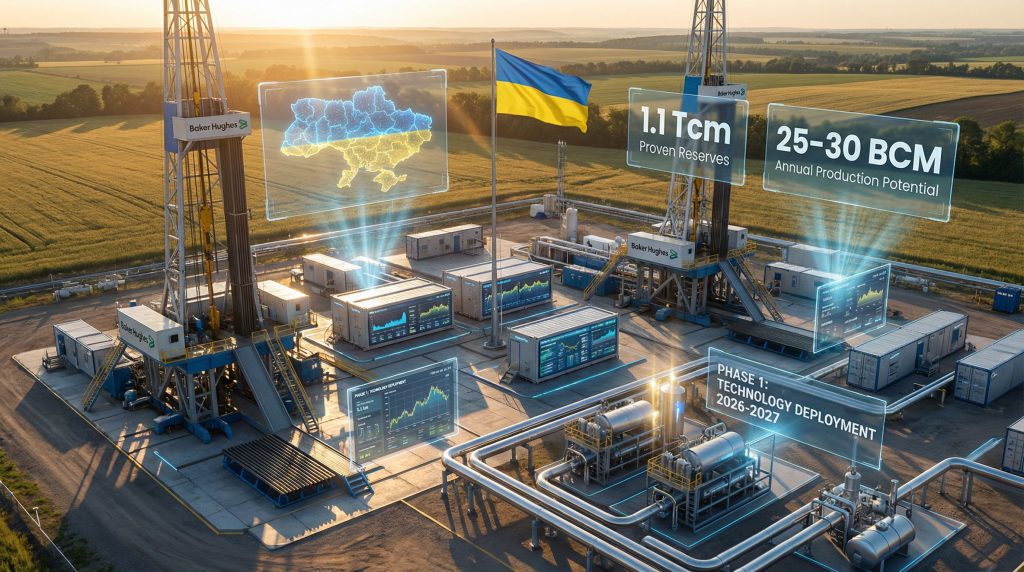
Ukraine's energy sector transformation centres on maximising production from extensive natural gas reserves through international technology partnerships. With proven reserves of 1.1 trillion cubic metres, Ukraine ranks among Europe's three largest reserve holders, yet current production levels remain below technical capacity due to operational and technological constraints.
DTEK Oil&Gas, representing Ukraine's largest private gas producer, has established a comprehensive memorandum of understanding with Baker Hughes to deploy advanced drilling and production technologies across Ukrainian assets. This collaboration builds upon an existing master services agreement covering directional drilling and drill bit services, indicating proven operational compatibility between the partners.
The partnership structure divides responsibilities strategically, with DTEK providing local operational expertise while Baker Hughes supplies technology and services supporting drilling and production activities. Furthermore, this framework ensures indigenous knowledge integration with international technical standards, creating a sustainable technology transfer model.
Key Strategic Elements:
- Technology Transfer Model: International expertise combined with local operational knowledge
- Resource Base Development: Optimisation of 1.1 Tcm proven natural gas reserves
- Infrastructure Enhancement: Modernisation of drilling and production systems
- Operational Efficiency: Advanced technologies reducing time-to-production cycles
Technology Integration Framework for Production Enhancement
The Baker Hughes DTEK Ukraine gas production expansion incorporates multiple advanced technology categories designed to optimise extraction efficiency and operational performance. AI in drilling tech enables access to previously unreachable reserves within complex geological formations, while specialised drill bit technologies maximise drilling efficiency in Ukrainian subsurface conditions.
Digital monitoring and analytics platforms provide real-time production optimisation capabilities, allowing operators to adjust parameters dynamically based on formation behaviour and production data. These systems represent a significant advancement over conventional monitoring approaches, providing predictive capabilities that prevent equipment failures and optimise resource recovery.
Advanced Technology Components:
- Directional Drilling Systems: Multi-lateral well designs accessing bypassed reserves
- High-Performance Drill Bits: Formation-specific designs optimised for Ukrainian geology
- Real-Time Monitoring: Digital platforms providing continuous production optimisation
- Automated Controls: Intelligent systems reducing manual intervention requirements
Smart completion technologies incorporate downhole sensors and control systems enabling remote well management and production optimisation. In addition, these systems provide operators with granular control over production parameters without requiring physical intervention, significantly reducing operational costs while improving safety standards.
Ukrainian Natural Gas Reserve Assessment and Global Positioning
Ukraine's natural gas resource base positions the nation among Europe's most significant hydrocarbon producers, with proven reserves of 1.1 trillion cubic metres representing substantial untapped production potential. This resource base provides the foundation for long-term energy security initiatives and export capacity development.
| Reserve Category | Volume (Tcm) | Development Status | Production Potential (BCM/year) |
|---|---|---|---|
| Proven Reserves | 1.1 | Partially developed | 25-30 |
| Probable Reserves | 0.8 | Exploration phase | 15-20 |
| Undeveloped Fields | Significant | Assessment ongoing | 40+ long-term |
The reserve assessment indicates substantial production expansion opportunities through technology deployment and field development optimisation. Current production levels of approximately 18-21 billion cubic metres annually represent only a fraction of technical capacity, suggesting significant room for growth through the Baker Hughes DTEK partnership.
Comparative Regional Position:
- European Ranking: Top three proven reserve holders
- Production Efficiency: Below optimal extraction rates
- Technology Gap: Modernisation required for full potential realisation
- Export Potential: Surplus capacity available for regional markets
Implementation Strategy for Production Capacity Expansion
The Baker Hughes DTEK Ukraine gas production expansion follows a structured implementation approach designed to maximise production gains while minimising operational disruption. Initial phases focus on technology deployment and personnel training, establishing operational frameworks for subsequent scaling activities.
Phase 1: Technology Deployment and Integration (2026-2027)
- Advanced drilling equipment installation across priority fields
- Digital infrastructure development supporting remote monitoring
- Comprehensive personnel training combining local expertise with international standards
- Pilot project execution in high-potential field locations
Phase 2: Scaled Production Enhancement (2027-2029)
- Full-scale technology deployment across Ukrainian assets
- Production capacity increases targeting 15-20% annual growth
- Infrastructure modernisation including pipeline and processing upgrades
- Environmental compliance systems meeting European Union standards
Phase 3: Market Integration and Export Development (2029-2032)
- Regional supply chain integration with European distribution networks
- Export capacity development for surplus production volumes
- Strategic reserve establishment enhancing energy security
- Technology transfer programmes creating sustainable domestic capabilities
Each implementation phase incorporates specific performance metrics and risk mitigation strategies, ensuring sustainable progress toward production optimisation objectives. However, the structured approach allows for course corrections and technology refinements based on operational experience.
European Energy Security Through Domestic Production Enhancement
The strategic importance of Ukrainian natural gas production extends beyond domestic energy needs to encompass broader European energy security objectives. Increased domestic production reduces import dependency while providing supply diversification benefits for regional energy markets.
Current European energy markets demonstrate significant vulnerability to supply disruptions, with import dependency levels requiring strategic mitigation through domestic production enhancement. Data-driven operations in Ukrainian gas production capacity represent a critical component of European energy security infrastructure, providing geographically stable supply sources.
Supply Chain Resilience Benefits:
- Import Dependency Reduction: Decreased reliance on external suppliers
- Infrastructure Security: Domestic production eliminates cross-border vulnerabilities
- Supply Diversification: Multiple source availability reducing single-point failures
- Strategic Reserves: Local storage capacity for emergency supply situations
The Baker Hughes DTEK partnership contributes directly to these security objectives by increasing sustainable production capacity through technology optimisation rather than resource depletion acceleration. This approach ensures long-term supply sustainability while meeting immediate security needs.
Economic multiplier effects from enhanced domestic production include direct employment creation in energy sector operations, technology transfer benefits for broader industrial development, and export revenue potential from surplus production capacity. Consequently, these benefits extend beyond energy security to encompass economic development and technological advancement objectives.
The next major ASX story will hit our subscribers first
Advanced Drilling and Completion Technologies for Ukrainian Applications
The technological framework supporting the Baker Hughes DTEK initiative incorporates multiple advanced systems designed specifically for Ukrainian geological conditions and operational requirements. Directional drilling capabilities enable operators to access reserves in complex formations while minimising surface footprint impacts.
Horizontal drilling systems provide access to previously unreachable reserves by extending well bores laterally through productive formations. For instance, this technology proves particularly valuable in mature fields where vertical wells have bypassed significant hydrocarbon accumulations, enabling resource recovery without additional surface infrastructure.
Drilling Technology Specifications:
- Multi-Lateral Wells: Single surface location accessing multiple reservoir zones
- Extended Reach Drilling: Horizontal distances exceeding 3,000 metres
- Formation-Specific Bits: Customised designs for Ukrainian rock properties
- Real-Time Steering: Geosteering capabilities optimising wellbore placement
Smart completion technologies integrate downhole sensors, flow control devices, and automated systems enabling real-time production optimisation. These systems provide operators with granular control over production parameters, allowing for selective zone production and enhanced recovery techniques.
Digital transformation components include predictive analytics platforms for equipment maintenance optimisation, remote operations centres reducing on-site personnel requirements, and environmental monitoring networks maintaining compliance standards. Furthermore, these technologies represent significant advances over conventional operational approaches.
Market Impact Analysis for Regional Energy Development
The Baker Hughes DTEK Ukraine gas production expansion generates multiple market impacts across short-term operational improvements and long-term strategic positioning. Increased Ukrainian production capacity contributes to European supply diversity while creating new export opportunities for surplus volumes.
Short-Term Market Effects (2026-2028):
- Reduced import pressure on European natural gas markets
- Price stabilisation through increased supply diversity
- Infrastructure investment stimulating regional economic activity
- Technology demonstration attracting additional international partnerships
Medium-Term Strategic Outcomes (2028-2032):
- Energy transition challenges acceleration for Ukraine and regional partners
- Export capacity development creating new revenue streams
- Regional hub development positioning Ukraine as energy supplier
- Investment attraction for additional energy sector modernisation projects
| Performance Metric | Current Baseline | 2027 Target | 2030 Projection |
|---|---|---|---|
| Annual Production | 18-21 BCM | 25-30 BCM | 35-40 BCM |
| Technology Integration | 30% advanced systems | 70% coverage | 90% deployment |
| Export Capacity | Limited surplus | 5-7 BCM | 10-15 BCM |
| Infrastructure Efficiency | 65% utilisation | 80% optimisation | 90% capacity |
Regional market integration requires coordination with European distribution networks, gas quality standards alignment, and scheduling protocols for cross-border flows. These technical requirements ensure Ukrainian production integrates seamlessly with existing European energy infrastructure.
Implementation Challenges and Risk Mitigation Strategies
The Baker Hughes DTEK partnership faces multiple implementation challenges requiring comprehensive risk mitigation strategies. Technical hurdles include ageing pipeline infrastructure requiring modernisation, processing facility capacity constraints limiting production scaling, and storage infrastructure gaps affecting supply consistency.
Infrastructure Modernisation Requirements:
- Pipeline system upgrades enabling increased throughput capacity
- Processing facility expansion accommodating production growth
- Storage infrastructure development supporting supply flexibility
- Transportation network optimisation ensuring efficient distribution
Regulatory compliance frameworks require alignment with European Union environmental standards, safety protocols meeting international industry requirements, and permitting processes for new field development projects. However, these regulatory considerations influence project timelines and investment requirements.
Investment and Financing Considerations:
- Initial technology deployment: $2-3 billion estimated investment
- Infrastructure modernisation: $1.5-2 billion projected costs
- Operational scaling expenses: $500 million-1 billion annually
- Return timeline: 5-7 years for full cost recovery
Risk mitigation strategies include phased implementation reducing capital exposure, technology performance guarantees ensuring delivery expectations, and diversified financing structures distributing investment risks across multiple stakeholders.
Sustainability Integration and Environmental Compliance
The partnership incorporates comprehensive sustainability measures ensuring environmental compliance while maximising resource recovery efficiency. Renewable energy integration provides real-time environmental impact assessment capabilities, enabling proactive management of operational impacts.
Carbon capture technologies integrated into production facilities reduce greenhouse gas emissions while creating potential revenue streams through carbon credit programmes. Methane emission reduction systems minimise fugitive emissions through improved equipment design and monitoring protocols.
Environmental Technology Integration:
- Emission Monitoring Systems: Continuous atmospheric impact assessment
- Water Management Protocols: Sustainable water usage and treatment systems
- Waste Minimisation Programmes: Circular economy principles in operations
- Ecosystem Protection Measures: Biodiversity conservation during field development
Renewable energy integration for production facility power requirements demonstrates commitment to sustainable operations while reducing operational costs. Solar and wind power systems can provide significant portions of facility energy needs, reducing carbon footprint and operational expenses.
The long-term strategic vision positions natural gas as a bridge fuel supporting renewable energy transition while developing technology hub capabilities for regional energy innovation. This approach ensures sustainable development aligned with broader European energy transition objectives.
Investment Analysis and Strategic Implications
The Baker Hughes DTEK partnership presents multiple investment considerations spanning operational performance improvements, market positioning advantages, and strategic partnership opportunities. Financial analysis indicates positive return potential through increased production efficiency and export capacity development.
Risk Assessment Framework:
- Operational Risks: Technology integration complexity and timeline uncertainties
- Market Risks: Demand fluctuations affecting revenue projections
- Regulatory Risks: Policy changes impacting operational parameters
- Geopolitical Risks: Stability requirements for sustained operations
Investment Opportunity Evaluation:
- Market position strengthening through domestic production capacity enhancement
- Technology leadership development in European energy sector applications
- Strategic partnership expansion opportunities with international energy companies
- Long-term energy security enhancement providing regional stability benefits
The investment strategy guide spans multiple phases with different risk-return profiles, allowing investors to participate in initial technology deployment, scaled production enhancement, or market integration phases based on risk tolerance and return objectives.
Performance monitoring systems provide continuous investment performance assessment through production metrics, technology deployment progress, and market impact measurements. These systems enable dynamic investment strategy adjustments based on operational results and market developments.
Investment decisions should consider multiple risk factors including operational complexity, regulatory requirements, and market conditions. This analysis provides general information and should not substitute for professional financial advice tailored to specific investment objectives and risk tolerance.
Are You Ready to Position Yourself Ahead of Major Energy Market Developments?
Discovery Alert's proprietary Discovery IQ model delivers instant alerts on significant ASX mineral discoveries, including opportunities in the critical minerals and energy sectors that are reshaping global supply chains. Subscribe today for your 14-day free trial and gain the market intelligence needed to identify actionable investment opportunities before they reach mainstream attention.