
August 22, 2026
The Economic Transformation Power of Energy Infrastructure Coordination
Africa's energy landscape stands at a critical juncture where traditional project development approaches have consistently underdelivered on the continent's vast resource potential. While individual nations have pursued isolated energy strategies for decades, a fundamental shift toward interconnected infrastructure networks is reshaping how the continent approaches resource monetisation and energy security. This transformation extends beyond simple cross-border cooperation, representing a complete reimagining of how energy systems can drive continental economic integration.
The concept of regional energy hubs in Africa emerges from recognising that modern energy infrastructure operates most efficiently when designed as interconnected networks rather than standalone national projects. These integrated systems create economic opportunities that transcend traditional borders, enabling resource-rich nations to access broader markets whilst providing energy-importing countries with diversified supply sources and competitive pricing structures.
When big ASX news breaks, our subscribers know first
What Defines Regional Energy Integration in Modern Africa?
Regional energy integration represents a systematic approach to connecting energy infrastructure across national boundaries to create larger, more efficient markets. This integration encompasses multiple infrastructure types working in coordination to optimise resource flows and reduce overall system costs.
Hub-and-Spoke Infrastructure Networks
The hub-and-spoke model centralises major processing and distribution facilities at strategic locations whilst connecting them to smaller feeder networks across the region. This approach reduces per-unit infrastructure costs by concentrating expensive processing equipment at optimised locations rather than duplicating facilities in each nation.
Cross-border pipeline networks create economic multiplier effects by enabling producers to access markets previously unreachable through national infrastructure alone. These networks allow gas producers in landlocked regions to reach coastal export terminals, whilst providing consuming nations with multiple supply sources for enhanced energy security.
LNG export terminals function as continental trade accelerators by converting stranded gas reserves into globally tradeable commodities. When connected to regional pipeline networks, these terminals can aggregate supply from multiple countries, achieving the scale necessary for competitive international marketing.
Power pool interconnections drive industrial development by enabling countries to share generating capacity and optimise their energy mix. The resources innovation expo demonstrates how regional cooperation frameworks are evolving to support such infrastructure integration.
Scale Economics in African Energy Markets
Regional energy hubs in Africa achieve cost reductions through several mechanisms that individual national projects cannot replicate. Shared infrastructure spreads capital costs across larger user bases, reducing per-unit transmission and processing costs. This shared cost structure makes previously uneconomic projects viable when serving regional rather than solely national markets.
Risk distribution across multiple national markets provides investors with portfolio diversification that reduces overall project risk. Rather than depending on a single country's economic conditions, regional projects can maintain viability even if individual member nations experience temporary economic challenges.
Investment threshold optimisation enables major infrastructure projects to achieve minimum economic scales that would be impossible within single national markets. Large-scale LNG facilities, refineries, and power generation projects require substantial capital raising methods that become economically justified only when serving regional demand aggregation.
Regional demand aggregation strategies combine the energy requirements of multiple countries to create market sizes capable of supporting world-class infrastructure investments. This aggregation enables African nations to develop infrastructure comparable to larger global markets.
Why Do Traditional Energy Development Models Fail in Africa?
Historical energy development approaches in Africa have consistently failed to unlock the continent's resource potential due to structural limitations inherent in nationally-focused project design. These limitations create systematic barriers that prevent optimal resource utilisation and economic development.
Infrastructure Fragmentation Challenges
National-level project limitations create stranded asset risks by designing infrastructure to serve markets too small to justify the required capital investments. Many African countries have constructed facilities that operate well below capacity because domestic markets cannot absorb their full output potential.
Import dependency cycles in refined petroleum products persist because national refining capacity remains economically unviable at the scale required to serve individual country markets. Countries continue importing expensive refined products whilst possessing crude oil resources that could be processed domestically if regional markets provided sufficient scale.
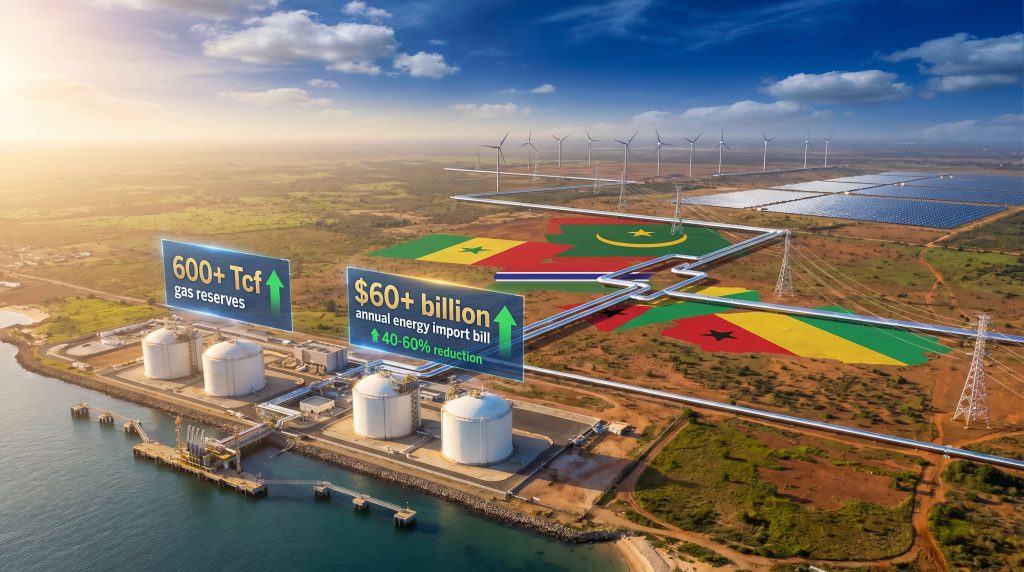
Africa holds more than 600 trillion cubic feet of proven gas reserves, yet infrastructure limitations continue restricting supply growth and export capacity. Many significant gas discoveries remain undeveloped because market access constraints prevent economic monetisation pathways.
Capital efficiency problems in isolated development approaches result from duplicating expensive infrastructure across multiple countries instead of sharing optimised facilities. Each nation attempting to develop complete energy value chains independently creates systematic overcapacity in some areas whilst leaving critical gaps in others.
Market Size and Investment Viability
Minimum economic scale requirements for major energy projects often exceed what individual African nations can support through domestic demand alone. LNG facilities typically require 2-4 million tons per year of sustained demand to achieve competitive economics, a threshold that most African countries cannot meet independently.
Regional market integration serves as an investment de-risking strategy by providing projects with diversified revenue sources and reducing dependence on any single national economy. This diversification enables projects to maintain viability even during temporary economic disruptions in individual member countries.
Currency and regulatory harmonisation benefits emerge when regional approaches standardise technical specifications, licensing procedures, and operational protocols. These standardisations reduce transaction costs and regulatory uncertainty that historically deterred large-scale investments in African energy infrastructure.
Which Regional Energy Corridors Show the Greatest Promise?
Africa's most promising regional energy corridors combine substantial resource endowments with existing cooperation frameworks and strategic geographic positioning for both domestic and export market access.
West African Energy Integration Zone
| Hub Location | Primary Resources | Infrastructure Focus | Market Reach |
|---|---|---|---|
| MSGBC Basin | Natural gas reserves | Cross-border pipelines | Four-nation cooperation bloc |
| Senegal Processing Hub | Sangomar crude development | Regional product distribution | West African coastal supply |
| WAPP Grid Network | Renewable integration capacity | Regional transmission expansion | Multi-national power sharing |
The MSGBC Basin represents one of Africa's most advanced regional integration initiatives, combining significant offshore gas discoveries with established cooperation frameworks among Mauritania, Senegal, Gambia, and Guinea-Bissau. Recent major gas discoveries in this region provide the resource base necessary to support large-scale regional infrastructure investments.
Senegal's emerging position as a regional processing hub builds on the Sangomar crude development and planned refining capacity designed to serve regional markets. This approach transforms Senegal from an energy importer to a potential regional supplier, demonstrating how hub development can reshape national economic positions.
The West African Power Pool demonstrates functional regional integration through its transmission network connecting diverse generation sources across member nations. This network enables countries with surplus generating capacity to supply deficit regions whilst providing participating nations with enhanced energy security through diversified supply sources.
Southern African Power Pool Dynamics
The Southern African Power Pool operates sophisticated mechanisms for sharing hydroelectric resources across borders, enabling optimal utilisation of water resources whilst providing member nations with reliable power supply options. This cooperation demonstrates how regional energy hubs in Africa can address both energy security and water resource management simultaneously.
Coal-to-gas transition coordination within SAPP creates opportunities for regional infrastructure development as countries seek cleaner energy alternatives. Coordinated transition strategies enable shared infrastructure investments and technology transfer between member nations, reflecting broader energy transition challenges affecting global markets.
Cross-border electricity trading platforms facilitate real-time energy exchanges based on supply and demand conditions across the region. These platforms optimise resource utilisation whilst providing participating countries with revenue opportunities through surplus capacity exports.
East African Geothermal Integration
The East African Rift Valley contains substantial geothermal resources distributed across multiple countries, creating opportunities for coordinated development that optimises resource utilisation across borders. Regional cooperation in geothermal development enables shared technical expertise and coordinated investment strategies.
Regional grid stability benefits from diverse generation sources when geothermal capacity is integrated with other renewable and conventional generation across national boundaries. This diversity reduces overall system reliability risks whilst enabling higher renewable energy penetration rates.
Investment cost sharing for geothermal development becomes possible when multiple countries coordinate exploration and development activities. Shared technical expertise and equipment reduces per-country development costs whilst accelerating deployment timelines.
How Do Financing Mechanisms Enable Regional Hub Development?
Regional energy hubs require sophisticated financing structures that address the complexity of multi-national projects whilst providing acceptable risk-return profiles for diverse investor categories.
African Energy Bank Strategic Role
The African Petroleum Producers Organization has supported establishing the African Energy Bank specifically to address funding challenges for regional oil and gas projects. This institution represents a continent-specific approach to energy infrastructure financing that understands regional development priorities and risk profiles.
Project finance structuring for multi-national initiatives requires specialised expertise in managing cross-border legal frameworks, currency exposures, and regulatory coordination. The African Energy Bank's regional focus enables it to develop standardised approaches to these complex structuring challenges.
Risk mitigation through regional government backing provides investors with enhanced security through coordinated sovereign support from multiple participating nations. This coordinated backing reduces political risk premiums that historically made African energy projects prohibitively expensive.
Local currency financing solutions address foreign exchange risks that have historically deterred long-term infrastructure investments in Africa. Regional financing institutions can develop currency hedging strategies and local market expertise that international lenders often lack.
Alternative Investment Structures
| Financing Approach | Implementation Strategy | Timeline | Impact Measure |
|---|---|---|---|
| Blended Finance Models | Public-private capital combination | 3-5 years | Cost of capital reduction |
| Infrastructure Bonds | Regional bond market development | 2-4 years | Capital market depth |
| Revenue Sharing Agreements | Cross-border benefit allocation | 1-3 years | Investment security enhancement |
| Export Credit Facilities | Equipment financing support | 2-3 years | Technology access improvement |
Blended finance models combine public and private capital to achieve risk-return profiles acceptable to commercial investors whilst incorporating development objectives. These structures typically use concessional public capital to reduce overall project risk, enabling commercial investors to participate at acceptable return levels.
Infrastructure bonds for cross-border projects require developing regional capital markets capable of absorbing long-term debt instruments. Regional bond markets enable local savings mobilisation for infrastructure development whilst reducing foreign exchange exposure.
Revenue sharing agreements between participating nations provide frameworks for allocating project benefits equitably across borders. These agreements must address resource ownership, transit compensation, and market access rights to ensure all participating countries benefit from regional development.
What Are the Key Success Factors for Regional Energy Hubs?
Successful regional energy hubs depend on coordinating technical, regulatory, and commercial frameworks across multiple national jurisdictions whilst maintaining long-term political commitment from participating governments.
Regulatory and Policy Harmonisation
Tariff standardisation across regional energy markets requires extensive coordination between national regulatory authorities to establish consistent pricing frameworks. This standardisation typically requires 3-5 years to implement due to the complexity of harmonising existing national regulatory structures.
Cross-border licensing procedures must be streamlined through mutual recognition agreements that reduce duplicative permitting requirements. These agreements typically require 2-3 years to negotiate and implement, but significantly reduce project development timelines once established.
Currency coordination mechanisms become essential for regional projects involving multiple national currencies. Regional payment systems reduce transaction costs and foreign exchange risks, but require 5-7 years to fully implement due to monetary policy coordination requirements.
Technical standards unification ensures equipment interoperability across borders whilst reducing procurement costs through standardised specifications. This unification typically requires 2-4 years but creates substantial long-term savings through reduced technical complexity.
Infrastructure Development Sequencing
Anchor project identification provides the foundation for regional hub development by establishing initial infrastructure that subsequent projects can utilise. These anchor projects must be economically viable independently whilst providing expansion capacity for regional integration.
Feeder network expansion strategies connect smaller markets to hub infrastructure through cost-effective distribution systems. These networks enable progressive regional integration as market conditions justify additional connectivity investments.
Storage and distribution capacity scaling ensures regional hubs can accommodate growing demand whilst maintaining supply reliability. This scaling requires coordinated planning to prevent bottlenecks that could undermine regional integration benefits.
Digital integration and smart grid deployment enable sophisticated regional energy management through real-time monitoring and automated response systems. These technologies optimise resource flows across the regional network whilst maintaining system stability.
The next major ASX story will hit our subscribers first
How Do Regional Hubs Address Energy Security Challenges?
Regional energy hubs in Africa enhance energy security through diversification strategies that reduce individual nation dependencies on single supply sources or supply routes.
Supply Diversification Strategies
Multi-source gas supply networks reduce single-point failure risks by connecting consumers to multiple production sources through interconnected pipeline systems. These networks enable supply continuity even when individual sources experience temporary disruptions.
Renewable energy integration improves grid stability by combining variable renewable generation with conventional baseload capacity across regional networks. This integration enables higher renewable penetration rates whilst maintaining system reliability.
Strategic petroleum reserve coordination enables participating countries to share emergency supply capabilities rather than maintaining duplicate strategic reserves. Coordinated reserves provide enhanced security whilst reducing individual country storage costs.
Emergency supply sharing protocols establish predetermined procedures for mutual assistance during supply disruptions. These protocols ensure rapid response to energy security threats whilst distributing emergency costs across the regional network.
Demand Management Optimisation
Peak load sharing across time zones enables regional networks to optimise generating capacity utilisation by serving demand peaks in different countries using shared generating resources. This sharing reduces overall regional generating capacity requirements.
Industrial demand coordination aligns major industrial energy users with available supply capacity to optimise infrastructure utilisation. Coordinated industrial development can locate energy-intensive industries near abundant energy resources.
Seasonal supply balancing mechanisms account for seasonal variations in energy demand and renewable generation across the region. These mechanisms ensure supply adequacy during peak demand periods whilst optimising resource utilisation during surplus periods.
What Investment Opportunities Emerge from Regional Integration?
Regional energy integration creates multiple categories of investment opportunities across the energy value chain, from upstream resource development to downstream market expansion.
Upstream Development Acceleration
Shared exploration and development costs enable smaller countries to participate in upstream projects that would otherwise exceed their individual capacity. Regional cooperation spreads geological risks across multiple participants whilst sharing exploration expertise.
Enhanced project economics through regional markets make previously marginal resources economically viable by providing access to larger demand bases. Projects that cannot justify development for single national markets become attractive when serving regional demand, particularly as exploration licenses impact global resource development strategies.
Technology and expertise pooling benefits emerge when countries coordinate upstream development activities. Shared technical capabilities reduce individual country development costs whilst accelerating learning curves.
Reduced political and commercial risks result from diversified revenue sources across multiple countries. Regional projects maintain viability even if individual member countries experience temporary economic challenges.
Midstream Infrastructure Expansion
Cross-border pipeline investment opportunities multiply as regional integration creates demand for enhanced connectivity between resource sources and markets. These pipelines serve multiple functions simultaneously, reducing per-unit transportation costs.
Regional processing facility development becomes economically viable when serving regional rather than purely national markets. Shared processing infrastructure achieves scale economies impossible within individual national markets.
Storage and distribution network growth accompanies regional hub development as increased infrastructure utilisation justifies expanded capacity investments. These networks enable more sophisticated supply management and enhanced reliability.
Digital infrastructure and automation systems optimise regional energy flows through sophisticated monitoring and control technologies. Investment opportunities emerge in smart grid technologies, automated trading platforms, and predictive maintenance systems.
Downstream Market Development
Regional refining capacity optimisation enables strategic placement of processing facilities to serve multiple national markets efficiently. Optimised refining reduces regional import dependencies whilst creating export opportunities.
Petrochemical industry cluster formation becomes possible when regional markets provide sufficient scale to support value-added manufacturing. These clusters create additional revenue streams beyond basic energy supply, aligning with broader industry transformation trends affecting resource sectors globally.
Retail network expansion strategies coordinate market development across borders to optimise distribution systems and reduce consumer costs. Regional retail coordination eliminates duplicative infrastructure whilst enhancing service quality.
How Do Regional Hubs Impact Continental Energy Independence?
Regional energy hubs contribute to continental energy independence by reducing import dependencies and optimising domestic resource utilisation across Africa.
Import Substitution Potential
Regional energy hubs could potentially reduce Africa's substantial annual energy import expenditures by 40-60% through coordinated domestic resource development and cross-border supply optimisation, according to continental energy planning assessments.
Coordinated domestic resource development enables African countries to substitute expensive energy imports with locally produced alternatives. Regional integration makes domestic production economically viable by providing sufficient market scale to justify required infrastructure investments.
Cross-border supply optimisation reduces transportation costs and supply chain inefficiencies that have historically made African energy expensive compared to imports. Optimised regional supply chains compete effectively with international suppliers.
Export Revenue Optimisation
Coordinated LNG export strategies enable African producers to present unified market positions that command premium pricing in international markets. Regional coordination prevents price competition between African suppliers whilst optimising global market penetration.
Premium market access through scale allows regional hubs to serve high-value markets that require consistent supply volumes exceeding individual country capabilities. Scale enables African suppliers to compete for long-term contracts with premium pricing.
Value-added product export development creates opportunities for regional processing that transforms basic resources into higher-value products for international markets. Regional processing capabilities reduce Africa's role as a raw material exporter.
Regional brand building for African energy establishes market recognition for reliable, high-quality energy supplies from the continent. Furthermore, coordinated marketing enhances Africa's competitive position in global energy markets, particularly as highlighted by recent cross-border energy investments initiatives.
What Challenges Must Regional Hub Developers Navigate?
Regional hub development faces substantial coordination challenges that require sustained political commitment and sophisticated technical management across multiple national jurisdictions.
Political and Regulatory Complexities
Multi-national agreement negotiation processes require extensive coordination between governments with different political systems, priorities, and decision-making timelines. These negotiations typically require several years to complete due to their complexity and political sensitivity.
Sovereignty concerns over strategic resources create tensions between national resource ownership rights and regional cooperation benefits. Successful regional energy hubs in Africa must balance national sovereignty with integration advantages in ways that satisfy all participating governments.
Revenue sharing dispute resolution mechanisms must be established before projects commence to prevent conflicts that could undermine regional cooperation. These mechanisms require neutral arbitration processes and enforcement capabilities.
Long-term political stability requirements mean regional hub success depends on sustained political commitment across multiple government transitions in participating countries. Projects spanning decades must survive potential political changes in member nations.
Technical Integration Challenges
Equipment standardisation across borders requires coordinating technical specifications, maintenance protocols, and operational procedures between countries with different existing infrastructure. This standardisation process can require extensive retrofitting of existing systems.
Grid synchronisation and stability management becomes complex when connecting electrical systems designed for independent operation. Regional grid integration requires sophisticated control systems and extensive testing to ensure reliability.
Quality control and safety standard harmonisation ensures consistent operational standards across the regional network whilst meeting international best practices. Harmonised standards require extensive training and certification programmes.
Skills development and technology transfer programmes ensure all participating countries develop necessary technical capabilities for regional hub operations. These programmes require sustained investment in education and training infrastructure.
How Can Investors Evaluate Regional Hub Opportunities?
Investor evaluation of regional energy hubs requires sophisticated risk assessment frameworks that account for multi-national project complexity whilst identifying attractive return potential.
Risk Assessment Framework
Political risk evaluation across multiple jurisdictions requires analysing stability trends, policy consistency, and interstate relations among participating countries. Investors must assess risks from both individual countries and regional cooperation breakdown.
Currency and regulatory stability analysis evaluates foreign exchange risks and regulatory change potential across all participating jurisdictions. Regional projects face multiplied regulatory risks compared to single-country investments.
Market demand growth projections must account for economic development trends across multiple countries whilst considering regional integration effects on demand patterns. Regional demand forecasting requires sophisticated economic modelling.
Infrastructure development timeline assessment evaluates realistic implementation schedules given coordination requirements and technical complexity. Multi-national projects typically require longer development periods than single-country projects.
Return Optimisation Strategies
Phased investment approaches reduce initial capital requirements by staging development to match market growth and risk reduction milestones. Phased development enables investors to optimise timing whilst reducing overall risk exposure.
Revenue diversification across multiple markets provides portfolio benefits that reduce overall project risk whilst potentially enhancing returns through market optimisation. Diversified revenue sources improve project resilience.
Exit strategy planning and asset liquidity considerations become complex in regional projects due to multi-national ownership structures and regulatory frameworks. Investors require clear exit pathways before committing capital.
ESG compliance and sustainability integration increasingly influence investor decisions and project approval processes. Regional hubs must demonstrate environmental and social benefits whilst meeting international sustainability standards.
What Does the Future Hold for African Regional Energy Integration?
The future of regional energy hubs in Africa depends on technological advancement, political commitment, and financial innovation that enables increasingly sophisticated continental integration.
Technology-Enabled Integration
Smart grid technologies enable efficient cross-border trade through real-time monitoring and automated response systems that optimise energy flows across regional networks. These technologies reduce operational costs whilst enhancing system reliability.
Blockchain-based energy trading platforms facilitate transparent, automated energy transactions between regional participants. These platforms reduce transaction costs whilst providing secure, verifiable trading mechanisms.
AI-optimised supply and demand matching improves regional energy system efficiency through predictive analytics and automated optimisation. Artificial intelligence enables more sophisticated regional energy management than traditional approaches.
Renewable energy forecasting and integration systems enable higher renewable penetration rates through improved prediction and grid management capabilities. Advanced forecasting enables regional networks to optimise variable renewable generation.
Expansion Pathway Scenarios
Continental energy market integration represents the ultimate extension of regional hub development, potentially creating a unified African energy market that optimises resource utilisation across the entire continent. This integration timeline could span 20-30 years given current cooperation progress.
Technology leapfrogging opportunities enable Africa to deploy advanced energy technologies without building conventional infrastructure first. Digital technologies and distributed generation could accelerate regional integration timelines.
Climate finance integration strategies align regional hub development with international climate goals whilst accessing specialised financing for clean energy infrastructure. Climate finance could accelerate regional integration through targeted funding, as demonstrated by World Bank regional energy initiatives.
Industrial development acceleration potential emerges as reliable regional energy supplies enable energy-intensive industrial development across Africa. Regional energy hubs could catalyse continental industrialisation by providing competitive energy costs.
Investment Outlook and Strategic Considerations
Regional energy hubs in Africa represent transformational infrastructure investments that could reshape the continent's economic landscape over the coming decades. Success requires sustained coordination between multiple stakeholders including governments, investors, and technical operators across national boundaries.
The scale of opportunity reflects Africa's vast energy resources combined with substantial unmet demand across the continent. Regional integration approaches offer pathways to unlock this potential through infrastructure investments that achieve scale economies impossible within individual national markets.
However, successful implementation requires navigating complex political, technical, and financial challenges that have historically limited continental integration efforts. Future progress depends on maintaining political commitment whilst developing financial mechanisms capable of supporting long-term, multi-national infrastructure development.
This analysis is based on publicly available information and industry assessments. Investment decisions should consider comprehensive due diligence including current market conditions, regulatory frameworks, and project-specific risk factors. Energy infrastructure investments involve substantial risks including political, technical, and market risks that could result in significant losses.
Want to Capitalise on Africa's Energy Infrastructure Revolution?
Discovery Alert's proprietary Discovery IQ model delivers instant notifications on significant ASX mineral discoveries, including companies developing critical infrastructure projects across emerging markets. Explore Discovery Alert's discoveries page to see how major infrastructure-related discoveries have generated exceptional returns for early investors, then begin your 14-day free trial to position yourself ahead of the market.