June 16, 2026
Energy Infrastructure Defense: The Strategic Evolution of Persian Gulf Security Architecture
Modern energy security challenges extend far beyond traditional supply-demand dynamics, encompassing sophisticated defensive technologies, geopolitical leverage mechanisms, and regional power projection capabilities. The Persian Gulf's complex security landscape reflects decades of evolving military doctrine, where critical infrastructure protection has become central to energy security transition strategies. Understanding these dynamics requires examining how defensive preparations, technological capabilities, and strategic positioning intersect to shape global energy markets.
Contemporary conflicts have demonstrated that energy infrastructure represents both economic lifelines and strategic vulnerabilities, prompting nations to develop comprehensive protection frameworks that blend conventional military assets with asymmetric warfare capabilities.
When big ASX news breaks, our subscribers know first
Critical Energy Chokepoints and Global Supply Dependencies
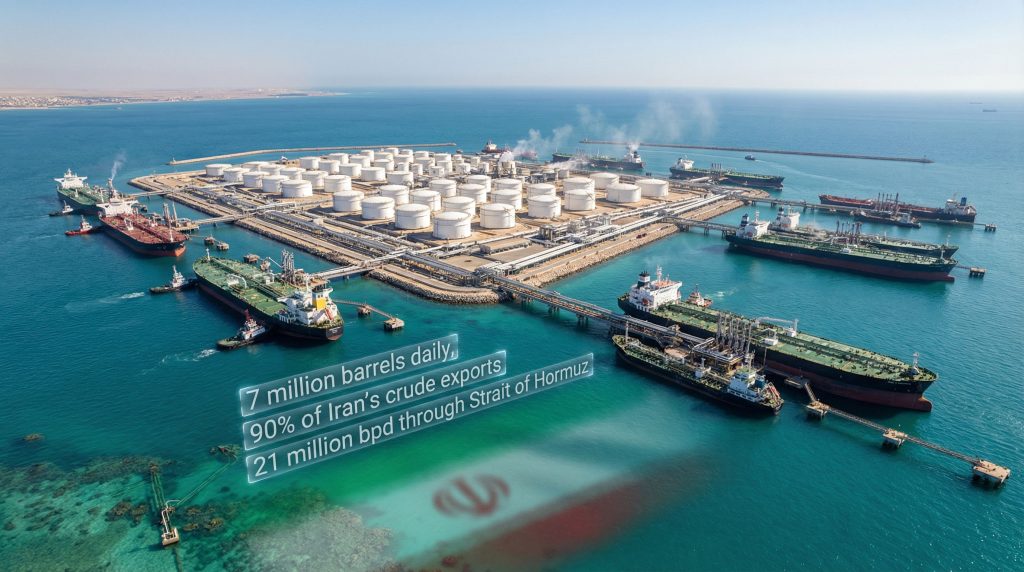
Iran fortifies oil lifeline on Kharg Island, a facility that handles approximately 90% of the nation's crude oil exports, making it one of the world's most strategically concentrated energy assets. This artificial island terminal can simultaneously load multiple Very Large Crude Carriers (VLCCs) and processes roughly 7 million barrels daily, generating an estimated $139 million in daily revenue under current market conditions.
Strategic Infrastructure Capacity Analysis
| Facility Component | Capacity | Strategic Impact |
|---|---|---|
| Simultaneous VLCC Loading | 10 supertankers | Maximum export efficiency |
| Daily Processing Volume | 7 million barrels | 90% of national exports |
| Revenue Generation | $139 million/day | Critical economic dependence |
| Geographic Position | 25km offshore | Defensive advantage/vulnerability |
The facility's strategic importance stems from its irreplaceable role in Iran's economic infrastructure. Unlike diversified export systems found in Saudi Arabia or Iraq, Iran's vital Kharg Island oil hub creates both operational efficiency and systemic vulnerability. Current market volatility has elevated crude prices significantly, with WTI trading at $94.19 and Brent at $107.50, contributing to the broader oil price rally reflecting regional tensions and supply security concerns.
Global Energy Transit Vulnerability Assessment
Critical chokepoints throughout the Persian Gulf create cascading dependencies that extend far beyond regional boundaries:
- Strait of Hormuz: Handles 21 million barrels per day, representing approximately 20% of global oil transit
- Persian Gulf Shipping Lanes: Process 18 million barrels per day of critical Asian supply routes
- Limited Alternative Routes: Suez Canal and Cape of Good Hope provide only partial substitution capacity
- Strategic Reserve Implications: Current tensions have prompted International Energy Agency emergency release preparations
Advanced Defensive Technologies Reshaping Regional Security
Contemporary asymmetric warfare capabilities have fundamentally transformed how regional powers approach territorial defense, particularly around critical energy infrastructure. Modern anti-access/area-denial (A2/AD) strategies incorporate multiple technological layers designed to maximize defensive effectiveness while minimising resource requirements.
Integrated Defense System Architecture
Surface-to-Air Missile Networks:
- Portable SAM systems providing flexible air defence coverage
- Mobile deployment capabilities enabling rapid repositioning
- Integration with existing radar networks for comprehensive threat detection
- Layered defence protocols maximising engagement opportunities
Maritime Security Measures:
- Strategic mine deployment around potential amphibious landing zones
- Underwater barriers designed to channel maritime approaches
- Coastal defence positions with overlapping fields of fire
- Fast attack craft coordination for asymmetric naval warfare
Surveillance and Detection Systems:
- Multi-spectrum sensor networks monitoring regional military movements
- Real-time intelligence gathering and threat assessment capabilities
- Integrated command and control systems coordinating defensive responses
- Electronic warfare capabilities disrupting hostile communications
Drone Warfare Integration
Unmanned aerial vehicle capabilities have evolved beyond traditional reconnaissance roles to encompass offensive operations and swarm tactics:
- Autonomous swarm coordination enabling multiple simultaneous threats
- Extended operational range allowing mainland-based defensive operations
- Precision targeting capabilities focusing on high-value military assets
- Cost-effective force multiplication maximising defensive resource efficiency
Infrastructure Attack Patterns and Market Response Mechanisms
Recent military operations targeting energy facilities demonstrate the sophisticated planning and precision execution required for effective infrastructure warfare. The March 2026 strikes against Iranian military installations illustrate coordinated campaigns designed to degrade defensive capabilities while preserving economic assets for potential future control.
Supply Chain Disruption Analysis
Contemporary energy infrastructure attacks create predictable cascading effects throughout global markets, with trade war impacts extending beyond bilateral tensions:
Immediate Market Responses:
- Futures price volatility with rapid premium adjustments
- Strategic reserve activation by major consuming nations
- Alternative supplier negotiations seeking replacement volumes
- Insurance premium increases affecting global shipping costs
Medium-term Supply Adjustments:
- Tanker routing modifications increasing transit times and costs
- Refinery scheduling changes accommodating different crude specifications
- Regional pricing differentials reflecting transportation and risk premiums
- Storage facility utilisation maximising available inventory buffers
Long-term Structural Changes:
- Supply chain diversification reducing dependency on volatile regions
- Strategic partnership development enhancing energy security cooperation
- Alternative energy acceleration decreasing fossil fuel dependence
- Infrastructure hardening improving critical asset protection
Current Market Stress Indicators
March 2026 commodity prices reflect significant regional tension impacts:
- WTI Crude: $94.19 (+$3.87, +4.28%)
- Brent Crude: $107.50 (+$5.23, +5.12%)
- Heating Oil: $4.248 (+$0.241, +6.02%)
- Gasoline: $3.113 (+$0.100, +3.33%)
These price movements demonstrate how geopolitical tensions translate directly into energy market premiums, furthermore affecting everything from transportation costs to petrochemical production schedules. The OPEC production impact remains significant amid these market dynamics.
Geopolitical Leverage Through Energy Infrastructure Control
Contemporary energy warfare extends beyond traditional military objectives, encompassing economic leverage, diplomatic pressure, and regional power projection. The potential for foreign military occupation of sovereign energy assets represents unprecedented escalation in international relations, with limited historical precedent.
Military Occupation Feasibility Assessment
Capturing fortified island positions requires substantial force projection capabilities, particularly when facing prepared defensive positions and complex geographic constraints:
Operational Requirements:
- Substantial marine forces for sustained amphibious operations
- Airborne support units providing tactical flexibility and rapid deployment
- Extended logistics chains across contested maritime zones
- Specialised engineering capabilities for infrastructure control and operation
Geographic and Defensive Challenges:
- Limited landing zones due to shallow waters and defensive preparations
- Prepared defensive positions with integrated fire control systems
- Mainland-based support providing continuous defensive reinforcement
- Asymmetric threat capabilities including mines, drones, and portable missiles
Regional Alliance Response Patterns
Allied Nation Concerns:
- Heavy casualty risks for occupying forces
- Potential for wider regional conflict escalation
- Economic disruption across Gulf Cooperation Council states
- Maritime insurance premium increases affecting global shipping costs
Iranian Countermeasure Threats:
- Retaliation against regional infrastructure targets
- Parliamentary warnings regarding territorial sovereignty violations
- Enhanced cooperation with regional proxy forces
- Potential activation of asymmetric warfare capabilities across multiple theatres
Military analysts suggest that retired Admiral James Stavridis expressed serious concerns about such operations, noting that Iranian forces would likely inflict maximum casualties on any occupying forces. However, national security measures continue to evolve in response to these strategic challenges.
Alternative Strategic Approaches to Energy Leverage
Beyond direct military occupation, various strategic options provide economic pressure while minimising military risks and casualty potential. These alternatives offer more manageable escalation profiles while achieving similar strategic objectives.
Naval Blockade Considerations
Maritime interdiction operations present several advantages over territorial occupation:
- International maritime law framework providing legal justification for enforcement actions
- Economic effectiveness disrupting export revenues without territorial violations
- Reduced political complications among allied nations concerned about sovereignty issues
- Enhanced escalation control enabling more precise conflict intensity management
Diplomatic and Economic Pressure Mechanisms
Sanctions Enhancement:
- Increased monitoring of oil export violations through satellite surveillance
- Financial system restrictions limiting energy transaction processing
- Technology transfer limitations affecting infrastructure maintenance capabilities
- International coalition building creating multilateral pressure mechanisms
Strategic Reserve Coordination:
- International Energy Agency response protocols for emergency oil releases
- Coordinated strategic petroleum reserve deployments maintaining market stability
- Alternative supply source development reducing dependence on volatile regions
- Enhanced energy security cooperation frameworks among consuming nations
The next major ASX story will hit our subscribers first
Long-term Energy Security Evolution and Investment Implications
Current tensions highlight fundamental vulnerabilities in global energy supply chains, prompting strategic reassessments among major consuming nations. These developments will likely accelerate several long-term trends in energy infrastructure protection and market structure.
Technology Development Priorities
Autonomous Defence Systems:
- AI-powered threat detection and response capabilities
- Automated defensive protocol activation reducing human decision delays
- Machine learning integration improving threat recognition accuracy
- Scalable deployment models enabling cost-effective protection expansion
Enhanced Surveillance Networks:
- Underwater monitoring systems providing comprehensive maritime domain awareness
- Satellite-based infrastructure status assessment enabling real-time damage evaluation
- Multi-spectrum sensor integration creating layered detection capabilities
- Cyber defence coordination protecting against digital warfare tactics
Investment Flow Redirections
Defence Technology Funding:
- Increased spending on critical infrastructure protection systems
- Private-public partnerships developing next-generation security technologies
- Research and development acceleration in autonomous defence platforms
- International cooperation programmes sharing advanced protective technologies
Energy Diversification Strategies:
- Alternative energy acceleration reducing dependence on geopolitically volatile regions
- Supply chain geographic distribution minimising single-point-of-failure risks
- Strategic partnership development enhancing international cooperation frameworks
- Renewable energy investment creating energy security through domestic production
Regional Adaptation and Market Structure Changes
The fortification of critical energy infrastructure represents broader challenges facing global energy security in an era of increasing geopolitical tensions. Success requires comprehensive strategies encompassing diplomatic engagement, economic diversification, and technological innovation.
Market Psychology and Investment Behaviour
Current events demonstrate how geopolitical tensions create lasting changes in energy market structure and investor behaviour patterns:
- Risk premium incorporation in long-term energy pricing models
- Supply chain resilience investment prioritising geographic diversification
- Technology sector rotation favouring defensive and alternative energy stocks
- Strategic commodity accumulation by major consuming nations and corporations
Infrastructure Hardening Acceleration
Energy infrastructure protection will likely become increasingly sophisticated as nations recognise the strategic importance of maintaining uninterrupted supply flows. According to analysis from Kharg Island: Iran's energy lifeline, this development reflects broader regional security concerns:
- Redundant system development eliminating single points of failure
- Advanced materials deployment improving physical structure resilience
- Cybersecurity integration protecting against digital attack vectors
- International cooperation frameworks sharing best practices and threat intelligence
The international community must carefully balance immediate energy needs with long-term stability objectives, recognising that Iran fortifies oil lifeline on Kharg Island as part of broader patterns creating risks extending far beyond regional boundaries. Sustainable energy security requires developing resilient supply chains, maintaining diplomatic channels, and investing in technologies that reduce dependence on geopolitically volatile regions while ensuring adequate defensive capabilities protect critical assets.
These developments underscore the evolving nature of energy security challenges, where traditional military approaches increasingly intersect with economic warfare, technological innovation, and international cooperation requirements. Understanding these dynamics becomes essential for policymakers, investors, and energy sector participants navigating an increasingly complex global landscape.
Are You Positioning for Energy Security Investment Opportunities?
Discovery Alert's proprietary Discovery IQ model delivers real-time alerts on significant ASX mineral discoveries, including critical energy transition minerals essential for emerging security infrastructure technologies. With global energy markets experiencing unprecedented volatility and strategic mineral demands accelerating, subscribers gain immediate insights into actionable trading and investment opportunities that could benefit from these shifting geopolitical dynamics. Begin your 14-day free trial today to secure your market-leading advantage in this rapidly evolving energy security landscape.