
August 23, 2026
Energy Infrastructure Under Siege: When Maritime Chokepoints Determine Global Economic Stability
The interconnected nature of global energy systems creates vulnerabilities that extend far beyond simple supply and demand equations. When critical maritime passages face disruption, the cascading effects ripple through commodity markets, industrial operations, and national energy security frameworks within hours. Understanding these complex interdependencies reveals how geographic constraints can instantly reshape global economic conditions and force rapid strategic adaptations across continents.
When big ASX news breaks, our subscribers know first
Anatomy of the World's Most Critical Energy Bottleneck
Geographic Constraints and Strategic Significance
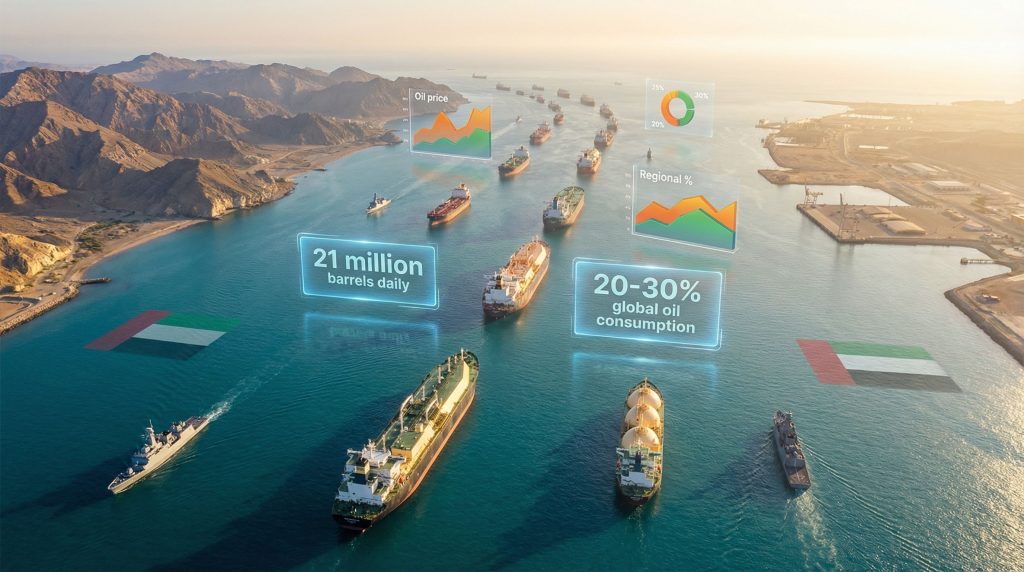
The narrow waterway connecting the Persian Gulf to the Arabian Sea represents one of the most strategically important maritime passages in the global energy system. Measuring approximately 21 miles at its narrowest point between Iran and Oman's Musandam Peninsula, this chokepoint facilitates the transit of roughly 20-21 million barrels per day of crude oil and petroleum products, accounting for approximately 20-30% of globally traded petroleum liquids.
The shipping channel's operational constraints create inherent vulnerabilities. With directional traffic flows requiring approximately 2 miles of width for each direction, over 1,000 vessel transits occur monthly under normal conditions. Recent disruptions have demonstrated the fragility of this system, with crude tanker transits falling from a daily average of 24 vessels in January 2026 to merely 4 vessels on March 1, 2026, representing an 83% reduction in traffic flow following regional hostilities.
Furthermore, the Strait of Hormuz closure scenario has become increasingly relevant as tensions escalate in the region.
Liquefied Natural Gas Transit Dependencies
Beyond crude oil, this maritime corridor facilitates the movement of over 10 billion cubic feet per day of liquefied natural gas, with Qatar alone accounting for approximately 20-25% of global LNG exports. The concentration of LNG infrastructure in the Persian Gulf creates additional supply vulnerabilities, as demonstrated when Qatar suspended operations at its liquefied natural gas facilities during recent regional tensions.
The absence of immediate alternative routing options amplifies these constraints. While crude oil can theoretically be rerouted via the Suez Canal or around the Cape of Good Hope, these alternatives require 2-6 weeks of additional transit time and substantially higher shipping costs, creating immediate supply tightening effects even before physical shortages materialise.
Market Transmission Mechanisms During Supply Disruptions
Immediate Price Response Patterns
Energy markets demonstrate remarkable sensitivity to chokepoint disruptions through multiple transmission channels. The March 2026 crisis illustrated these dynamics clearly, with Brent crude prices surging above US$83 per barrel, representing an 8% single-day increase and cumulative gains exceeding 15% from pre-crisis levels.
This price volatility directly influences broader market conditions, creating ripple effects that extend to the tariffs impact on markets as supply chain disruptions compound existing trade tensions.
| Market Indicator | Pre-Crisis | Crisis Peak | Percentage Change |
|---|---|---|---|
| Brent Crude | US$72/b | US$83/b | +15% |
| European Natural Gas | Baseline | +40% spike | +40% |
| Mexican Export Blend | US$63.46/b | US$66.63/b | +5% |
The price transmission occurs through two primary mechanisms identified by energy analysts. Direct production loss premiums reflect the immediate absence of 20 million barrels per day from global markets. Simultaneously, logistics friction premiums emerge from elevated war risk insurance, increased freight rates, and supply chain delays that tighten effective supply availability even when alternative routing remains theoretically possible.
Insurance Market Dynamics and Shipping Costs
War risk insurance premiums represent a critical but often overlooked component of supply disruption costs. Under normal conditions, Middle Eastern shipping typically incurs insurance rates of 0.05-0.15% of cargo value. During active disruptions, these premiums can escalate to 1-3% or higher, adding $200-600 per tanker load for standard 2-million-barrel shipments at $80 per barrel crude prices.
The Brent-Dubai spread, a key indicator of transportation costs and supply-demand imbalances, widens significantly during chokepoint stress. This differential reflects the additional time and cost required for rerouted crude to reach Asian buyers, creating temporary price premiums in Atlantic Basin markets while Gulf markets experience relative discounts.
Regional Vulnerability Assessment and Import Dependencies
Asian Market Exposure Analysis
Asian economies demonstrate the highest vulnerability to Strait of Hormuz closure disruptions due to their substantial import dependencies and limited alternative sourcing options:
- China: Imports approximately 10 million barrels daily, with 50-55% transiting through the chokepoint
- India: Sources 60-65% of its 4-5 million barrel daily imports from Persian Gulf regions
- Japan: Relies on the Middle East for over 90% of its 3.2 million barrel daily crude requirements
- South Korea: Depends on Persian Gulf supplies for 75-80% of its 3.0 million barrel daily consumption
These vulnerabilities are compounded by the OPEC production impact, which influences supply decisions across the Persian Gulf region.
Strategic Reserve Utilisation Timelines
National strategic petroleum reserves provide temporary buffers against supply disruptions, though their effectiveness varies significantly by country:
China's strategic reserve holds an estimated 600-700 million barrels, providing approximately 60-70 days of supply replacement at current consumption levels if Hormuz flows ceased entirely.
The European Union's combined strategic reserves total approximately 500-600 million barrels equivalent, offering roughly 25-30 days of supply replacement at current consumption rates. However, these calculations assume complete supply substitution rather than demand destruction or conservation measures that typically accompany severe price spikes.
Industrial Adaptation and Rationing Protocols
Supply disruptions trigger systematic industrial responses designed to manage scarce energy resources efficiently. India's experience during recent tensions illustrates these mechanisms:
- Load-shedding schedules prioritise essential sectors through rotating power cuts
- Natural gas allocation follows hierarchy: power generation > fertiliser > petrochemicals > other industrial uses
- Fuel substitution mandates reverse previous coal-to-gas transitions, prioritising coal or renewable alternatives
Geopolitical Escalation Scenarios and Military Responses
Naval Blockade Implementation Strategies
Military analysts identify several methods for implementing effective chokepoint closures, ranging from sophisticated mining operations to asymmetric warfare tactics using fast attack craft and drone swarms. The narrow geography creates tactical advantages for defensive forces while complicating international intervention efforts.
Historical precedents from the 1980s Tanker War provide insights into escalation patterns. During that conflict, approximately 540 ships faced attacks, with over 100 tanker vessels sunk or severely damaged. Despite this prolonged disruption spanning 1984-1988, global oil markets eventually adjusted through strategic reserve releases and alternative routing, though prices experienced significant volatility throughout the period.
The what happens when the Strait of Hormuz closes scenario demonstrates how such disruptions fundamentally alter global trade flows and energy security calculations.
International Response Framework Coordination
Modern naval response capabilities centre on US Fifth Fleet intervention protocols, supported by coalition escort missions designed to guarantee commercial shipping passage. The effectiveness of these protections directly influences insurance market calculations and shipping company willingness to attempt transit during active hostilities.
Diplomatic resolution pathways typically involve multiple leverage points, with importing nations like China potentially serving mediation roles given their substantial energy dependency. Regional allies often apply economic pressure through coordinated policy responses designed to incentivise conflict resolution.
Alternative Supply Route Development and Infrastructure Adaptation
Pipeline Capacity and Redirection Possibilities
Existing alternative infrastructure provides limited immediate relief during chokepoint closures. The Trans-Arabian Pipeline system offers some capacity for Saudi crude redirection via Red Sea terminals, but these facilities cannot accommodate the full volume typically transiting through the Persian Gulf chokepoint.
Russian oil producers may redirect Asian-bound shipments during Persian Gulf disruptions, though this requires complex logistical coordination and may face geopolitical constraints depending on international sanction regimes. North American shale production can theoretically accelerate, but typically requires 6-12 months for meaningful production increases due to drilling and completion timelines.
These challenges are particularly relevant for Australia, where energy exports challenges compound the impact of global supply disruptions on regional market dynamics.
Strategic Petroleum Reserve Coordination Mechanisms
International Energy Agency emergency response protocols provide frameworks for coordinated strategic reserve releases among member nations. These mechanisms proved effective during previous crises, including the 2011 Libyan production collapse and various Gulf War disruptions.
| Reserve System | Capacity (Million Barrels) | Daily Supply Equivalent | Duration at Full Replacement |
|---|---|---|---|
| US Strategic Petroleum Reserve | 350-380 | 20 MMb/d consumption | 17-19 days |
| China Strategic Reserves | 600-700 | 10 MMb/d consumption | 60-70 days |
| EU Combined Reserves | 500-600 | 6-7 MMb/d consumption | 70-85 days |
The next major ASX story will hit our subscribers first
Economic Threshold Analysis and Demand Destruction Patterns
Price Points for Industrial Shutdowns
Energy-intensive industries demonstrate predictable shutdown thresholds when crude oil prices exceed sustainable operational levels. Aluminium smelting, steel production, and petrochemical manufacturing typically reduce capacity when energy costs represent more than 25-30% of total production expenses.
Historical analysis suggests significant demand destruction begins when Brent crude exceeds $100-120 per barrel for sustained periods. The 2008 price spike to $147 per barrel triggered global recession conditions, illustrating how energy costs can cascade through entire economic systems beyond direct industrial impacts.
Such scenarios contribute to the oil price rally analysis, where supply disruptions combine with other market factors to drive sustained price increases.
Transportation Fuel Rationing Implementation
Government rationing systems activate based on predetermined price triggers and supply availability assessments. These typically prioritise:
- Emergency services and military operations
- Essential goods transportation and food distribution
- Public transportation systems
- Commercial and private vehicle usage
The effectiveness of rationing depends on alternative transportation infrastructure and public compliance mechanisms, varying significantly between developed and developing economies.
Long-Term Structural Market Transformations
Energy Infrastructure Investment Acceleration
Chokepoint crises typically accelerate long-term infrastructure investments designed to enhance supply security. Pipeline diversification projects receive elevated priority, with governments often providing financial incentives or regulatory streamlining to expedite construction timelines.
Renewable energy adoption may experience acceleration during extended fossil fuel disruptions, particularly in import-dependent economies seeking energy independence. However, the capital-intensive nature of renewable infrastructure limits immediate substitution capabilities during acute crises.
Maritime Security Framework Evolution
Extended chokepoint disruptions often result in permanent changes to international maritime security cooperation. Naval patrol arrangements, intelligence sharing protocols, and joint escort mission frameworks typically expand following major crises.
Insurance market structural changes may include mandatory war risk coverage, elevated baseline premiums for critical routes, and government-backed insurance programs for essential energy shipments.
Investment Strategy Implications and Portfolio Risk Management
Sector Exposure Optimisation During Geopolitical Stress
Energy sector investments demonstrate complex behaviour during chokepoint crises. While upstream oil producers benefit from elevated prices, downstream refiners may face margin compression due to crude cost increases and product demand destruction.
Transportation companies with energy-efficient fleets or alternative fuel capabilities may outperform during sustained high energy price environments. Conversely, energy-intensive manufacturing sectors typically underperform until prices stabilise or alternative supply arrangements emerge.
Additionally, the broader US-China trade war impact creates compounding effects when energy security concerns intersect with existing trade tensions.
Currency Impact Assessment for Oil-Importing Economies
Currency markets reflect energy trade balance changes rapidly during supply disruptions. Oil-importing nations typically experience currency weakness as import costs increase, while oil-exporting countries may see currency strengthening despite potential volume reductions.
These currency movements create additional complexity for international investors, as foreign exchange hedging becomes crucial for maintaining portfolio stability during extended energy crises.
Policy Framework Development and International Cooperation
National Energy Security Planning Components
Effective national energy security frameworks incorporate multiple elements designed to enhance resilience during supply disruptions:
- Diverse supply source arrangements reducing dependency on single regions or transport routes
- Strategic reserve management with predetermined release triggers and replenishment protocols
- Industrial priority systems ensuring essential sectors maintain energy access during shortages
- Alternative transportation infrastructure supporting economic continuity during fuel shortages
Early Warning System Development
Advanced monitoring systems track multiple indicators to provide early warning of potential chokepoint disruptions:
- Shipping traffic pattern analysis identifying unusual vessel concentrations or routing changes
- Insurance premium monitoring detecting war risk escalations before public awareness
- Diplomatic tension measurement through social media sentiment and official communications analysis
- Military asset positioning tracking naval deployments near critical passages
These systems enable proactive policy responses and market preparations that can mitigate disruption severity when implemented effectively.
Building Resilience Against Critical Infrastructure Vulnerabilities
Integrated Risk Management Approaches
Comprehensive energy security strategies require coordination across multiple dimensions, including diplomatic engagement, military deterrence, economic diversification, and technological innovation. The most effective approaches combine short-term crisis response capabilities with long-term structural adaptation measures.
Private sector partnerships play crucial roles in enhancing system resilience, particularly through information sharing arrangements and coordinated emergency response protocols. These partnerships prove especially valuable during rapidly evolving crisis situations where government responses alone may prove insufficient.
Technology Innovation for Crisis Mitigation
Emerging technologies offer potential solutions for reducing chokepoint vulnerabilities. Advanced shipping route optimisation, real-time cargo tracking, and automated vessel scheduling can enhance system efficiency during disruptions. Satellite monitoring capabilities provide improved early warning systems for detecting potential threats before they materialise.
Energy storage technologies, including large-scale battery systems and advanced pumped hydro storage, may provide additional buffers against supply interruptions. However, the scale required for meaningful impact during major chokepoint closures remains beyond current technological and economic feasibility for most applications.
The complex interdependencies revealed by Strait of Hormuz closure scenarios underscore the critical importance of comprehensive risk management approaches that address both immediate crisis response and long-term structural vulnerabilities. As global energy systems continue evolving, understanding these dynamics becomes essential for policymakers, investors, and industry participants navigating an increasingly interconnected but fragile energy landscape.
This analysis is based on publicly available data and expert commentary. Energy market conditions and geopolitical situations remain highly volatile and subject to rapid change. Readers should consult current sources and professional advisors for investment and policy decisions.
Want to Position Your Portfolio for Energy Market Volatility?
Energy infrastructure disruptions create immediate opportunities for astute investors tracking ASX-listed resource companies. Discovery Alert's proprietary Discovery IQ model instantly identifies significant mineral discoveries across critical commodities, helping subscribers capitalise on market-moving announcements before broader market recognition occurs. Start your 14-day free trial today to gain the market intelligence advantage needed during periods of heightened commodity volatility.