August 1, 2026
How Energy Infrastructure Vulnerabilities Shape European Chemical Manufacturing
The European chemical sector faces mounting operational pressures that extend far beyond typical market cycles. Industrial facilities across the continent grapple with fundamental cost structure disadvantages stemming from energy transition challenges, supply chain vulnerabilities, and competitive dynamics that favor manufacturing bases in other regions. These structural challenges create a complex web of risks that can rapidly transform viable operations into economically unviable facilities.
Recent facility closures in Germany's specialty chemical sector illustrate how quickly market conditions can deteriorate for smaller manufacturers. Germany's Kelheim Fibres closure, scheduled for March 31, 2026, demonstrates the vulnerability of energy-intensive operations facing elevated regional costs and import competition. This facility's closure, following unsuccessful attempts to secure private investment through self-administration proceedings, signals broader consolidation pressures across Europe's chemical manufacturing landscape.
When big ASX news breaks, our subscribers know first
The Energy-Intensive Reality of Viscose Fiber Production
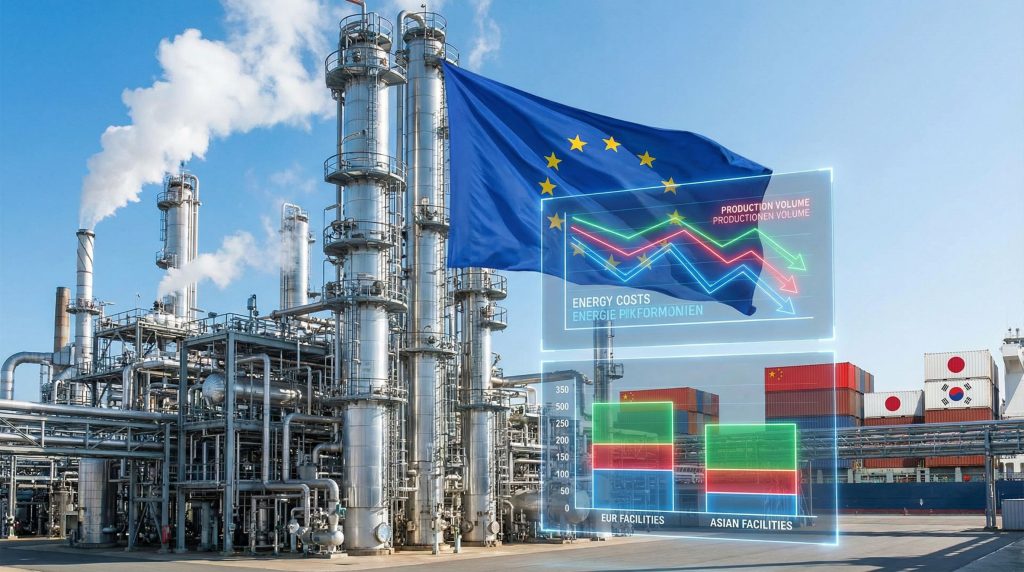
Viscose fiber manufacturing represents one of the most energy-intensive processes in specialty chemicals, requiring substantial electricity and thermal energy inputs throughout production. European facilities face energy costs that can be 40-60% higher than comparable operations in Asian manufacturing hubs, creating immediate disadvantages in global markets where price competition intensifies.
The production process demands continuous high-temperature operations for cellulose dissolution, spinning, and finishing processes. These energy requirements become particularly challenging when natural gas price trends experience volatility, as witnessed during 2022-2024 when European industrial consumers faced energy costs exceeding $30-40 per MWh compared to $12-15 per MWh in key Asian markets.
Regional Energy Policy Effects on Industrial Competitiveness
The European Green Deal's implementation creates additional cost burdens for chemical manufacturers through carbon pricing mechanisms and renewable energy transition requirements. The Carbon Border Adjustment Mechanism (CBAM), which became effective January 1, 2026, imposes additional compliance costs on importers while potentially disadvantaging European producers competing against non-CBAM covered imports.
German chemical facilities face particularly acute pressures due to the country's energy transition (Energiewende) policies, which have resulted in some of the highest industrial electricity rates globally. Manufacturing operations requiring 15,000-20,000 tonnes of sulphur annually, such as Kelheim Fibres, encounter escalating operational costs that erode margins when product pricing remains globally competitive.
What Makes Specialty Chemical Companies Vulnerable to Market Disruption?
Small to medium-scale chemical facilities face inherent structural vulnerabilities that larger, integrated operations can better withstand. Furthermore, these vulnerabilities become particularly acute during periods of raw material price volatility, energy cost increases, or shifts in customer purchasing patterns.
Customer Contract Dependencies in B2B Chemical Markets
Specialty chemical producers typically operate with concentrated customer bases, often serving specific industrial applications where switching costs and quality specifications create apparent barriers to entry. However, economic pressures on downstream customers can rapidly erode these relationships when cost differentials become significant, especially amid global trade tensions.
The hygiene and technical applications markets served by viscose fiber producers demonstrate particular sensitivity to cost considerations. When Asian imports offer 20-30% cost advantages, downstream manufacturers face pressure to qualify alternative suppliers despite potential quality trade-offs or supply chain complexity increases.
Key vulnerability factors include:
- Limited customer diversification across geographic markets
- Concentration in price-sensitive applications
- Long-term contracts that may not reflect current cost structures
- Dependency on customer volume commitments for facility viability
Raw Material Cost Pressures: The Sulphur Supply Chain Case Study
Kelheim Fibres' dependency on sulphur supplies from Bayernoil's Vohburg-Neustadt refinery illustrates the challenges facing standalone chemical facilities. With the refinery providing 97,000 tonnes per year of sulphur capacity, smaller consumers like Kelheim Fibres (consuming 15,000-20,000 tonnes annually) lack negotiating power for alternative sourcing arrangements.
This supply chain concentration creates multiple risk factors:
- Price discovery limitations: Smaller consumers accept posted prices rather than negotiating market-based pricing
- Supply security risks: Dependency on single regional suppliers limits operational flexibility
- Transportation cost optimization: Limited volumes prevent efficient logistics arrangements
- Quality specification constraints: Alternative suppliers may not meet technical requirements
Sulphur price volatility particularly impacts specialty chemical producers, as the raw material represents a significant cost component without corresponding pricing flexibility in downstream markets. In addition, price increases from $150-200 per tonne to $300-400 per tonne can eliminate operational margins for facilities already operating under competitive pressure.
Why Are Asian Imports Gaining Market Share in European Chemical Markets?
Asian chemical producers benefit from fundamental cost structure advantages that extend beyond labor cost differentials. These advantages create sustainable competitive positions that prove difficult for European facilities to counter through operational improvements alone, particularly when considering broader energy security dynamics.
Cost Structure Advantages of Asian Producers
Manufacturing cost advantages in Asian markets stem from multiple factors working in combination. Energy costs typically represent 30-40% of total production costs in chemical manufacturing, where Asian facilities access natural gas and electricity at substantially lower rates than European counterparts.
Comparative cost structures reveal:
| Cost Component | European Average | Asian Average | Advantage |
|---|---|---|---|
| Energy costs | $30-40/MWh | $12-18/MWh | 40-60% lower |
| Labor costs | €25-35/hour | €3-8/hour | 70-85% lower |
| Raw materials | Variable premium | Base pricing | 5-15% lower |
| Regulatory compliance | High | Moderate | 10-20% lower |
Government support mechanisms in major Asian chemical-producing countries provide additional competitive advantages through subsidized energy, export financing, and infrastructure investments. These policy supports create cost structures that private European facilities cannot match without similar governmental assistance.
Quality vs. Price Trade-offs in Industrial Applications
European chemical producers traditionally competed on quality, technical service, and supply chain reliability. However, Asian competitors have systematically improved quality standards while maintaining cost advantages, eroding traditional differentiation strategies.
In specialty fiber applications, quality requirements for hygiene products and technical textiles have become increasingly standardized. Consequently, Asian producers can meet these specifications while offering 15-25% cost savings, compelling downstream customers to evaluate supplier alternatives despite established relationships.
How Do Insolvency Proceedings Work in the German Chemical Sector?
German insolvency law provides mechanisms for facility restructuring that attempt to balance stakeholder interests while preserving viable operations. The self-administration process allows companies to maintain operational control while seeking restructuring solutions, though success rates remain limited in highly competitive industries.
Self-Administration vs. Traditional Insolvency Models
Germany's Kelheim Fibres closure experience illustrates both the potential and limitations of self-administration proceedings under German law. The company operated under self-administration while seeking private investment, providing stakeholders advance notice of potential closure while evaluating restructuring alternatives.
Self-administration advantages include:
- Management retention and operational continuity
- Enhanced investor due diligence opportunities
- Stakeholder consultation and orderly shutdown processes
- Potential preservation of customer relationships and technical capabilities
However, self-administration cannot overcome fundamental market economics when restructuring fails to address competitive disadvantages. For instance, despite investor interest and operational continuity, binding volume commitments from customers proved insufficient to attract viable capital given prevailing market conditions.
Strategic vs. Financial Investor Approaches
The evaluation process for distressed chemical facilities reveals different investor perspectives on restructuring viability. Financial investors typically require clear paths to operational profitability within 2-3 years, while strategic investors may accept longer payback periods if facilities provide integration benefits or market access advantages.
Germany's Kelheim Fibres closure attracted potential investor interest, suggesting that the facility's assets, customer relationships, or market position retained value despite operational challenges. Nevertheless, investor withdrawal indicates that projected returns failed to compensate for identified risks under current market conditions.
What Does This Signal for European Chemical Industry Consolidation?
The closure of facilities like Kelheim Fibres represents early indicators of broader industry restructuring that may accelerate across European chemical manufacturing. Furthermore, consolidation pressures disproportionately impact smaller, standalone operations lacking scale economies or integration advantages.
Facility Closure Patterns Across European Chemical Hubs
Southern Germany hosts numerous specialty chemical facilities facing similar competitive pressures to those experienced by Kelheim Fibres. The region's chemical cluster benefits from established infrastructure, skilled workforce, and proximity to downstream customers, yet these advantages prove insufficient when fundamental cost structures become uncompetitive.
Risk factors for additional facility closures include:
- Sub-50,000 tonne annual capacity operations
- Energy-intensive production processes
- Commodity or commodity-adjacent product portfolios
- Limited product differentiation capabilities
- High fixed cost structures
Chemical industry consolidation typically follows predictable patterns where larger, integrated producers acquire distressed facilities for strategic value while closing redundant capacity. This process creates regional supply gaps that remaining producers may struggle to fill efficiently.
Investment Flow Redirections in Global Chemical Markets
Capital allocation decisions increasingly favour manufacturing locations offering sustainable cost advantages and market growth potential. European chemical investment has declined relative to Asian and North American alternatives, reflecting investor assessments of long-term competitive positioning.
New facility investments in Europe now require exceptional circumstances such as proximity to specific customer applications, unique technology advantages, or regulatory requirements that prevent import substitution. For experienced investors seeking investment insights, specialty chemical producers face particular challenges justifying European investments when Asian alternatives offer equivalent capabilities at lower costs.
The next major ASX story will hit our subscribers first
Which Chemical Subsectors Face Similar Pressures?
Viscose fiber production represents one segment within broader specialty chemical categories experiencing intensifying competitive pressures. Other subsectors sharing similar vulnerability characteristics face comparable consolidation risks across European manufacturing.
Specialty Fiber and Technical Textile Manufacturing
Polyester fiber, advanced synthetic fibers, and technical textile materials experience similar competitive dynamics to viscose production. Asian manufacturers have developed capabilities across these product categories while maintaining substantial cost advantages over European producers.
Vulnerable subsector characteristics include:
- High energy intensity in production processes
- Standardized quality specifications enabling import substitution
- Limited product differentiation opportunities
- Price-sensitive downstream applications
- Concentration in mature market segments
The global specialty fiber market demonstrates clear shifts toward Asian production centres, with European market share declining from approximately 35% in 2020 to 28% in 2025, according to industry estimates.
Small-Scale Chemical Processing Operations
Facilities producing specialty chemicals in volumes below 50,000 tonnes annually face inherent disadvantages in raw material procurement, energy contracting, and overhead cost absorption. These operations cannot achieve economies of scale necessary to compete effectively with larger, integrated facilities.
Small-scale operations often serve niche markets where customer relationships and technical service capabilities provide competitive protection. However, economic pressures on customers eventually overcome these relationship advantages when cost differentials become substantial.
How Are Companies Adapting to Survive the Consolidation Wave?
Successful adaptation strategies require fundamental business model adjustments rather than incremental operational improvements. Companies surviving current consolidation pressures demonstrate capabilities to restructure operations, reposition market focus, or integrate with larger industry players.
Operational Efficiency Enhancement Strategies
Energy efficiency improvements represent critical adaptation requirements for European chemical facilities. Advanced process control systems, waste heat recovery, and renewable energy integration can reduce energy consumption by 15-25%, though these improvements require significant capital investment.
Proven adaptation strategies include:
- Automation investments reducing labour cost components
- Process intensification technologies improving energy efficiency
- Circular economy integration utilising waste streams as feedstocks
- Strategic partnerships sharing infrastructure costs
- Product portfolio optimisation focusing on higher-margin applications
Market Positioning and Customer Relationship Management
Long-term supply agreements with volume commitments provide operational stability during market volatility, though customers increasingly demand pricing flexibility reflecting market conditions. Successful producers negotiate contracts balancing price protection with volume security.
Service differentiation strategies focus on technical support, product customisation, and supply chain reliability rather than competing solely on price. These approaches prove most effective in applications where switching costs remain high or quality requirements exceed commodity specifications.
What Investment Opportunities Emerge from Industry Restructuring?
Chemical industry consolidation creates acquisition opportunities for strategic investors seeking integration benefits, market share expansion, or technology access. Distressed asset pricing may provide attractive entry points for investors with appropriate risk tolerance and operational capabilities.
Distressed Asset Acquisition Potential
Facility closures like Germany's Kelheim Fibres closure create availability of specialised equipment, trained workforce, and customer relationships at below-replacement cost valuations. Strategic acquirers may find value in relocating operations, integrating technologies, or accessing established market positions.
Investment evaluation criteria include:
- Asset condition and technological competitiveness
- Customer relationship transferability
- Environmental liability assessments
- Integration potential with existing operations
- Market position sustainability under current conditions
Acquisition pricing typically reflects distressed market conditions, with facility values ranging from 10-30% of replacement cost depending on age, condition, and strategic value to specific acquirers.
Alternative Business Model Development
Contract manufacturing arrangements allow specialised facilities to serve multiple customers while sharing fixed costs across broader production volumes. This model proves particularly attractive for companies possessing unique technologies or specialised capabilities.
Toll processing arrangements enable facilities to focus on manufacturing excellence while customers retain product marketing and distribution responsibilities. These models reduce market risk while providing predictable revenue streams based on processing volumes rather than product pricing volatility.
Frequently Asked Questions About European Chemical Industry Challenges
Why are European chemical companies struggling more than other regions?
European chemical facilities face multiple disadvantages including higher energy costs, stringent environmental regulations, elevated labour expenses, and limited access to competitively priced raw materials. These factors combine to create cost structures that prove challenging to maintain when competing against global alternatives.
How long will the consolidation trend continue?
Industry consolidation typically extends over 5-10 year periods, with acceleration during economic downturns or significant cost structure changes. Current pressures suggest continued facility rationalisation through 2028-2030, particularly affecting smaller, standalone operations lacking competitive advantages.
Which companies are best positioned to survive?
Integrated chemical companies with diversified product portfolios, large-scale operations, and strong balance sheets demonstrate highest survival probability. Facilities offering unique technologies, serving protected market niches, or maintaining essential regional supply functions also show resilience during consolidation periods.
What policy changes could help European chemical competitiveness?
Energy cost reductions through infrastructure investments, regulatory harmonisation reducing compliance burdens, and strategic trade policies protecting against unfair competition could improve European competitiveness. However, fundamental cost structure disadvantages may persist despite policy interventions.
Future Outlook: Navigating the New Chemical Industry Landscape
Scenario Planning for Continued Market Pressures
Base case projections suggest continued facility consolidation across European chemical manufacturing, with 15-25% capacity reduction in specialty chemicals over the next five years. This consolidation primarily affects smaller facilities lacking integration advantages or unique market positions.
Optimistic scenarios assume energy cost stabilisation, successful implementation of circular economy initiatives, and policy support maintaining European chemical production capabilities. Under these conditions, facility closures may moderate while surviving operations achieve improved profitability through reduced competitive pressure.
Pessimistic projections anticipate accelerated consolidation driven by continued energy cost disadvantages, increasing Asian competition, and customer migration to lower-cost supply sources. This scenario could result in 30-40% capacity reductions across affected subsectors.
Strategic Recommendations for Industry Stakeholders
Investors should focus due diligence on facilities demonstrating sustainable competitive advantages, strong customer relationships, and management teams capable of adapting to changing market conditions. Financial modelling must incorporate scenarios reflecting continued competitive pressures and potential energy cost volatility.
Customer diversification strategies become essential for surviving producers, with particular emphasis on applications offering pricing flexibility or technical differentiation opportunities. Geographic expansion into emerging markets may provide growth alternatives to mature European demand.
Policy advocacy priorities should emphasise energy infrastructure investments, regulatory efficiency improvements, and trade policy measures ensuring fair competition with international suppliers. Additionally, industry associations must coordinate efforts addressing structural competitiveness challenges rather than focusing solely on short-term market issues.
"The industry transformation we're witnessing reflects fundamental shifts in global manufacturing competitiveness that extend beyond cyclical market pressures," according to recent European industrial manufacturing analysis. "Companies must adapt business models to survive structural changes affecting the entire sector."
Disclaimer: This analysis contains forward-looking statements and projections based on current market conditions and industry trends. Actual outcomes may vary significantly due to factors including energy policy changes, economic conditions, technological developments, and competitive dynamics. Investors should conduct independent due diligence and consult qualified professionals before making investment decisions. The closure timeline and financial details regarding Germany's Kelheim Fibres closure are based on publicly available information as of January 2026 and may be subject to change.
Looking for Investment Opportunities in Chemical Industry Restructuring?
Discovery Alert's proprietary Discovery IQ model delivers real-time alerts on significant ASX mineral discoveries, helping investors identify opportunities in sectors experiencing major structural changes like the chemical industry. Understand why major mineral discoveries can lead to substantial market returns by visiting Discovery Alert's discoveries page, showcasing historic examples of exceptional outcomes, and begin your 30-day free trial today to position yourself ahead of the market.