August 25, 2026
Energy Infrastructure Vulnerability Reshapes African Industrial Strategy
The aluminum smelting industry faces unprecedented challenges as energy security insights emerge as the primary determinant of industrial viability across developing economies. Power-intensive manufacturing operations, requiring continuous electricity supply measured in hundreds of megawatts, have become barometers for broader infrastructure resilience in regions dependent on hydroelectric generation. Climate variability, utility pricing structures, and government policy coordination now dictate which industrial facilities can sustain operations in an era of increasing resource competition.
This transformation reflects deeper structural shifts within African industrial development, where energy access determines manufacturing competitiveness more than traditional factors like labour costs or raw material proximity. The continent's reliance on hydroelectric power generation creates systemic vulnerabilities when drought cycles disrupt generation capacity, forcing industrial operators to navigate between temporary shutdowns and permanent facility closures.
When big ASX news breaks, our subscribers know first
Understanding the Strategic Context Behind Mozambique's Industrial Shutdown
The Scale of Industrial Disruption
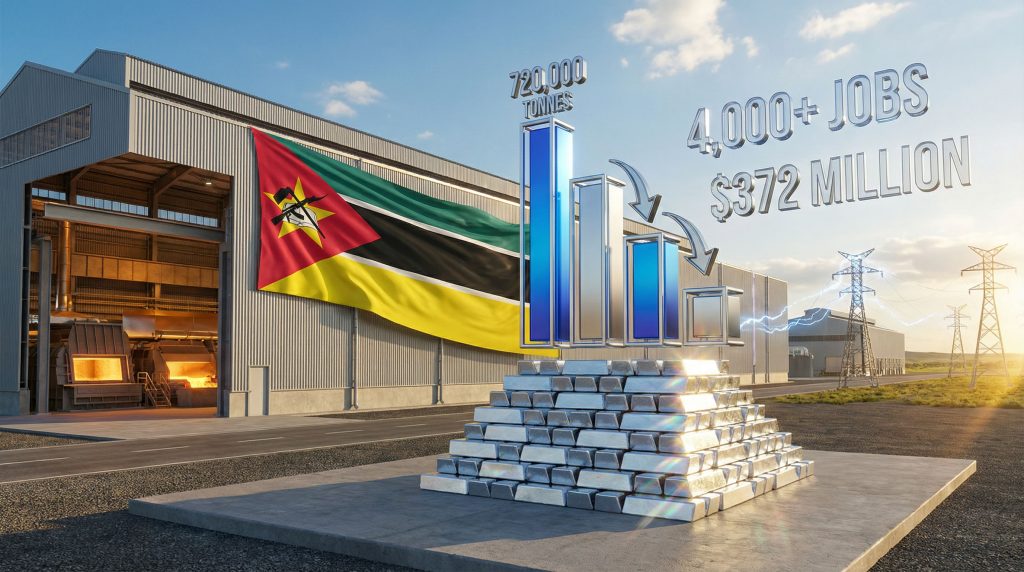
The South32 Mozal closure represents one of Africa's most significant manufacturing shutdowns, eliminating 720,000 tonnes of annual aluminium production capacity while directly affecting 4,000 workers. This workforce reduction constitutes approximately one-third of Mozambique's entire manufacturing employment base, indicating the facility's outsised role within the national industrial economy.
Economic modelling suggests the closure will generate ripple effects across 22,000 indirect positions throughout the regional supply chain, from transportation services to maintenance contractors. The facility's contribution to national economic output, estimated at 3% of Mozambique's GDP, underscores how single large-scale industrial operations can dominate smaller economies' manufacturing sectors.
The timing of the shutdown reflects critical supply chain constraints beyond power availability. Graham Kerr, South32's CEO, noted that industrial materials essential for smelter operations, specifically pitch and coke, were approaching depletion with supply timelines incompatible with ongoing power contract negotiations. This demonstrates how aluminium smelting operations require synchronised coordination across multiple input streams, where failure in any component can force immediate operational suspension.
Power Infrastructure Crisis as Market Driver
Mozambique's Cahora Bassa hydroelectric facility, the region's largest power generation source, experienced severe capacity reductions following extended drought conditions affecting southern Africa since 2008. The facility's generation capacity declined substantially as reservoir water levels dropped below operational thresholds, creating electricity shortages across the national grid.
The smelter's 940 MW continuous power requirement represents approximately half of Mozambique's total electricity generation capacity under normal conditions, highlighting the facility's disproportionate energy demand relative to national infrastructure. When Cahora Bassa's output decreased, Mozal effectively competed with residential and commercial users for limited electricity supply.
Alternative power sourcing negotiations with South Africa's Eskom proved unsuccessful, despite the utility's involvement in regional power trading arrangements. The failure to secure backup electricity demonstrates the complexity of cross-border industrial power contracts, particularly when utilities face their own capacity constraints and pricing pressures.
Furthermore, understanding these energy transition challenges reveals systematic underinvestment in power generation diversification across southern Africa, where hydroelectric facilities provide the majority of electricity without adequate backup capacity during drought periods.
How Will Global Aluminium Supply Chains Adapt to Production Losses?
Middle Eastern Capacity Absorption Strategy
The 720,000 tonnes of aluminium production capacity removed from global markets represents approximately 1.06% of worldwide primary aluminium production, based on 2024-2025 global output estimates of 68 million tonnes annually. While this proportion appears modest, the loss occurs during a period of supply chain optimisation where marginal capacity changes can influence commodity pricing dynamics.
South32's strategy involves redirecting alumina feedstock previously processed at Mozal towards Middle Eastern facilities, leveraging the Gulf region's competitive advantages in energy-intensive manufacturing. Middle Eastern aluminium producers benefit from:
- Lower energy costs through access to subsidised natural gas and oil-backed electricity generation
- Existing idle capacity within established smelting facilities
- Government industrial policies supporting metals processing as economic diversification strategy
- Maritime logistics advantages for global aluminium distribution
This feedstock redirection represents a shift from African-based processing towards Gulf region manufacturing, potentially accelerating Middle Eastern market share growth within global aluminium production.
Market Concentration Risks and Opportunities
The Mozal closure reduces global competition within the aluminium sector while concentrating production amongst fewer facilities worldwide. Remaining low-cost producers, particularly those with access to renewable energy sources or long-term power contracts, may experience improved margins as global supply tightens.
Price volatility scenarios following the capacity withdrawal depend largely on demand elasticity within key consumption sectors:
- Automotive manufacturing may absorb higher aluminium costs through vehicle price increases
- Construction applications could substitute alternative materials if aluminium premiums become excessive
- Packaging industries typically demonstrate price elasticity, potentially reducing aluminium consumption
Investment flows towards alternative production regions are likely to accelerate, with capital seeking jurisdictions offering energy security, regulatory stability, and long-term power cost predictability. Iceland, Canada, and Norway maintain competitive advantages through renewable hydroelectric capacity combined with political stability.
What Are the Broader Implications for African Industrial Development?
Energy Security as Manufacturing Constraint
The Mozal closure exemplifies a broader challenge facing African industrial development, where power infrastructure limitations constrain manufacturing growth regardless of other competitive advantages. Unlike traditional development economics focusing on labour costs, raw material access, or transportation infrastructure, energy security has emerged as the primary bottleneck for capital-intensive industries.
Regional power grid vulnerabilities extend beyond individual facilities, affecting entire industrial ecosystems. The Southern African Power Pool, designed to facilitate electricity trading amongst member countries, faces systemic constraints when multiple hydroelectric facilities experience simultaneous capacity reductions during widespread drought conditions.
Comparison with South32's Hillside aluminium smelter in South Africa reveals how energy policy differences create divergent facility outcomes. The Hillside operation benefits from several structural advantages:
| Factor | Hillside (South Africa) | Mozal (Mozambique) |
|---|---|---|
| Power Contract Duration | Expires 2031 (5-year runway) | Expired March 2026 |
| Utility Flexibility | Eskom demonstrates tariff negotiation flexibility | HCB maintained rigid pricing structures |
| Local Market Demand | 30% of production sold domestically | Minimal domestic aluminium consumption |
| Government Incentive | Eskom ownership creates policy alignment | Limited government leverage in negotiations |
| Infrastructure Development | Renewable and nuclear capacity additions planned | No announced generation expansion |
This comparison demonstrates how identical technologies can have vastly different viability trajectories based on utility policy, domestic market demand, and infrastructure investment commitments.
Government Response Mechanisms
Mozambique's last-minute intervention attempts, led by Minister Estevao Pale, illustrate the limited tools available to governments when industrial facilities face closure due to infrastructure constraints. Despite ministerial commitments to deliver viable electricity pricing, the physical reality of supply shortages and material depletion created operational deadlines beyond political negotiation timelines.
The government's response highlighted policy gaps in industrial retention strategies:
- Reactive intervention rather than proactive infrastructure investment
- Limited fiscal capacity to subsidise electricity pricing for industrial users
- Absence of alternative power generation projects to reduce dependency on single facilities
- Insufficient coordination between energy policy and industrial development strategies
However, lessons for other African nations hosting major industrial operations include the necessity of diversified power generation, contractual frameworks that accommodate utility cost fluctuations, and government policies that balance industrial competitiveness with broader economic development objectives.
Could Mozal Ever Resume Operations Under Different Conditions?
Care and Maintenance vs. Permanent Closure Analysis
South32's decision to place Mozal on care and maintenance rather than permanent closure preserves optionality for future restart when conditions improve. This strategic approach reflects management's assessment that current challenges are temporary rather than structural, with potential resolution through:
- Hydroelectric capacity restoration as rainfall patterns normalise
- Alternative power generation development within Mozambique's energy sector
- Commodity price appreciation improving restart economics
- Regional power market evolution creating new contract opportunities
Nevertheless, technical challenges associated with aluminium smelter restart operations create significant barriers. Unlike mining operations that can resume production relatively quickly after temporary suspension, aluminium smelters face unique restart constraints:
- Electrolytic cell integrity degradation during extended idle periods requiring substantial rehabilitation
- Refractory material deterioration necessitating complete replacement in some production units
- Specialised expertise requirements for pot restart procedures involving few global contractors
- Extended ramp-up periods before achieving full production capacity and efficiency levels
Industry analysis suggests smelter restart costs can range from $50-150 million depending on shutdown duration and facility condition, representing substantial capital commitment beyond normal operational expenses.
Future Market Scenarios for Restart Viability
Economic threshold analysis for viable restart scenarios depends on multiple converging factors creating sustainable operational conditions. Aluminium commodity prices would need to sustain levels significantly above current market rates to justify restart investment, particularly given higher electricity costs likely to persist even with improved supply availability.
Regional power infrastructure development projections suggest limited near-term capacity additions within Mozambique's generation portfolio. The Cahora Bassa facility requires substantial water level recovery for full operational restoration, depending on precipitation patterns across the Zambezi River basin extending into Zambia and Zimbabwe.
Alternative energy solutions, including renewable integration possibilities, face implementation timelines extending beyond near-term restart consideration. Solar and wind power development requires multi-year project cycles for utility-scale installations capable of supporting aluminium smelting operations.
Most probable restart scenarios involve:
- Aluminium prices exceeding $2,800 per tonne sustained over 12-month periods
- Regional drought cycle completion restoring hydroelectric capacity to 80%+ of design levels
- Government electricity subsidies reducing power costs to economically viable levels
- South32 portfolio optimisation creating strategic rationale for Mozambique re-entry
What Does This Signal for South32's Corporate Strategy?
Portfolio Optimisation Through Asset Rationalisation
The $372 million impairment decision reflects South32's systematic approach to portfolio optimisation, prioritising assets with sustainable competitive advantages over facilities requiring ongoing operational subsidies. This capital allocation strategy emphasises returns on invested capital rather than production volume maximisation across diverse geographic locations.
Management's focus shift towards higher-margin operations demonstrates disciplined capital deployment principles. The company's underlying earnings of $435 million exceeded analyst forecasts of $386.6 million, driven primarily by:
- Copper operations benefiting from strong commodity pricing and operational efficiency improvements
- Silver production capturing premium valuations during industrial demand growth
- Manganese division recovery generating $66 million profit versus $34 million loss in the prior period
Consequently, this performance diversity provides financial flexibility enabling South32 to absorb Mozal closure costs whilst maintaining shareholder returns through other portfolio components.
Dividend Policy and Shareholder Value Creation
Despite closure costs, South32 increased its interim dividend to 3.9 cents per share from 3.4 cents previously, signalling management confidence in underlying business performance excluding Mozambique operations. This dividend policy demonstrates the company's commitment to shareholder returns whilst managing portfolio transition costs.
The market's positive response, with shares rising 5% following earnings announcement, indicates investor support for the strategic decision to exit unprofitable operations rather than sustain ongoing losses through subsidised electricity contracts.
Capital allocation priorities following the Mozambique exit likely emphasise:
- Expansion at profitable existing operations rather than geographic diversification
- Technology investments improving operational efficiency and cost competitiveness
- Commodity price hedging strategies managing revenue volatility across copper and silver operations
- Balance sheet strengthening providing flexibility for opportunistic acquisitions during market downturns
The next major ASX story will hit our subscribers first
How Do Energy Costs Shape Global Aluminium Industry Competitiveness?
Regional Cost Structure Comparisons
Energy expenses typically represent 30-40% of total aluminium smelting operating costs, making electricity pricing the primary determinant of facility competitiveness within global markets. Regional variations in power costs create dramatic differences in production economics across geographic locations.
Moreover, these energy export challenges demonstrate how governments struggle to balance domestic industrial needs with export revenue generation.
Comparative regional electricity costs for aluminium smelting (estimated 2024-2026):
| Region | Power Cost (USD/MWh) | Annual Cost (720,000t facility) | Competitive Position |
|---|---|---|---|
| Middle East | $25-40 | $180-290 million | Highly competitive |
| Iceland | $30-45 | $215-325 million | Competitive |
| Canada (Quebec) | $35-50 | $250-360 million | Moderately competitive |
| Mozambique (pre-crisis) | $45-65 | $325-470 million | Previously competitive |
| Europe | $80-120 | $575-865 million | Marginally competitive |
These cost differentials explain capital migration patterns towards energy-secure jurisdictions with stable, low-cost electricity access. Gulf region producers benefit from government energy subsidies supporting industrial development policies, whilst Nordic countries leverage renewable hydroelectric capacity with minimal fuel cost exposure.
Investment Migration Patterns
Capital flows towards energy-secure jurisdictions accelerate as investors prioritise operational predictability over traditional location advantages. Recent investment patterns demonstrate preference for:
- Renewable energy integration providing long-term cost stability and ESG compliance
- Government policy support through industrial development incentives and infrastructure investment
- Grid reliability minimising production disruption risks during power system maintenance
- Contract flexibility accommodating commodity price volatility through tariff adjustment mechanisms
Technology upgrades required for efficiency improvements focus on reducing energy consumption per tonne of aluminium produced. Advanced smelting technologies can decrease electricity requirements by 10-15% compared to older facilities, improving competitiveness even in higher-cost power markets.
ESG considerations increasingly drive premium valuations for aluminium produced using renewable electricity sources. "Green aluminium" commands price premiums of $50-100 per tonne in automotive and consumer goods applications, creating additional revenue streams for environmentally sustainable operations.
What Lessons Does Mozal Offer for Resource Sector Risk Management?
Infrastructure Dependency Risk Assessment
The South32 Mozal closure demonstrates critical vulnerabilities inherent in single-point-of-failure utility relationships, where industrial operations depend entirely on individual power generation facilities without adequate backup alternatives. Risk assessment frameworks for energy-intensive industries must incorporate infrastructure resilience analysis extending beyond traditional financial metrics.
Key risk factors identified through the Mozal experience:
- Hydrological dependency where hydroelectric facilities face capacity reduction during extended drought cycles
- Limited transmission alternatives preventing power sourcing from diverse generation facilities
- Cross-border contract complexity complicating backup power arrangement negotiations
- Material supply coordination requiring synchronised logistics across multiple input streams
Diversification strategies for energy-intensive operations should incorporate:
- Multiple utility relationships reducing dependency on single power providers
- Geographic distribution across different climatic and regulatory environments
- Technology flexibility enabling fuel source substitution during supply disruptions
- Financial hedging mechanisms managing electricity cost volatility impacts
Climate Resilience in Industrial Planning
Drought impact modelling for hydroelectric-dependent operations requires sophisticated analysis incorporating climate change projections, precipitation pattern shifts, and reservoir capacity management. The Mozambique experience demonstrates how industrial planning must integrate multi-decade climate scenarios rather than relying on historical weather patterns.
In addition, the growing need for government intervention in mining sector planning reflects these increasing infrastructure vulnerabilities.
Climate resilience considerations include:
- Water basin analysis across entire river systems affecting hydroelectric generation
- Seasonal variation planning accommodating predictable capacity fluctuations
- Emergency response protocols for rapid facility shutdown during supply crises
- Alternative energy development reducing dependency on climate-sensitive power sources
Insurance and hedging mechanisms for weather-related disruptions remain underdeveloped within industrial risk management frameworks. Traditional business interruption insurance often excludes weather-related utility failures, creating coverage gaps for climate-sensitive industrial operations.
Future Implications for Strategic Resource Management
Learning from Strategic Asset Diversification
Companies implementing successful energy fuels strategy demonstrate how diversified energy portfolios provide operational resilience during supply disruptions. The South32 Mozal closure ultimately illustrates how global industrial competitiveness increasingly depends on energy security rather than traditional location advantages, fundamentally reshaping investment decision-making across capital-intensive manufacturing sectors.
This transformation requires industrial planners to prioritise energy infrastructure resilience alongside traditional cost considerations. Companies with exposure to single-utility dependencies face elevated operational risks as climate variability increases and mining sector analysis reveals broader industry vulnerabilities.
Technological Innovation Requirements
The transition towards energy-secure manufacturing locations necessitates technological innovation reducing power consumption intensity whilst maintaining production quality. Advanced smelting technologies incorporating AI-driven efficiency optimisation and renewable energy integration represent critical competitive differentiators for future facility development.
Investment priorities must balance immediate operational needs with long-term infrastructure resilience, requiring sophisticated capital allocation frameworks incorporating climate risk assessment, utility reliability analysis, and technological advancement potential.
Investment Outlook: The aluminium sector's structural evolution towards energy-secure production locations suggests continued market consolidation around facilities with sustainable, low-cost power access, potentially creating long-term supply constraints and price support for the commodity.
Disclaimer: This analysis contains forward-looking statements regarding commodity prices, industrial development patterns, and investment flows that involve inherent uncertainty. Market conditions, government policies, and technological developments may differ materially from projections presented. Readers should conduct independent research before making investment decisions based on this analysis.
Looking for Opportunities in Strategic Mineral Developments?
Discovery Alert provides instant notifications on significant ASX mineral discoveries, powered by its proprietary Discovery IQ model, enabling investors to identify strategic opportunities ahead of broader market awareness. Begin your 14-day free trial today to position yourself for critical minerals developments and energy transition opportunities reshaping global industrial competitiveness.