May 20, 2026
Modern energy infrastructure vulnerability presents unprecedented challenges for global supply chains, particularly when examining scenarios involving Iran targeting Qatar's Ras Laffan industrial city. The concentration of liquefied natural gas production within massive industrial complexes creates systemic risks that extend far beyond traditional military conflict scenarios, transforming energy facilities from supporting assets into primary strategic targets.
Furthermore, contemporary conflict dynamics increasingly demonstrate how economic infrastructure targeting can achieve strategic objectives that conventional military campaigns struggle to accomplish. These attacks create cascading effects through interconnected global supply chains that amplify initial disruptions exponentially across international markets and civilian populations.
Understanding Qatar's Critical Position in Global Energy Security Architecture
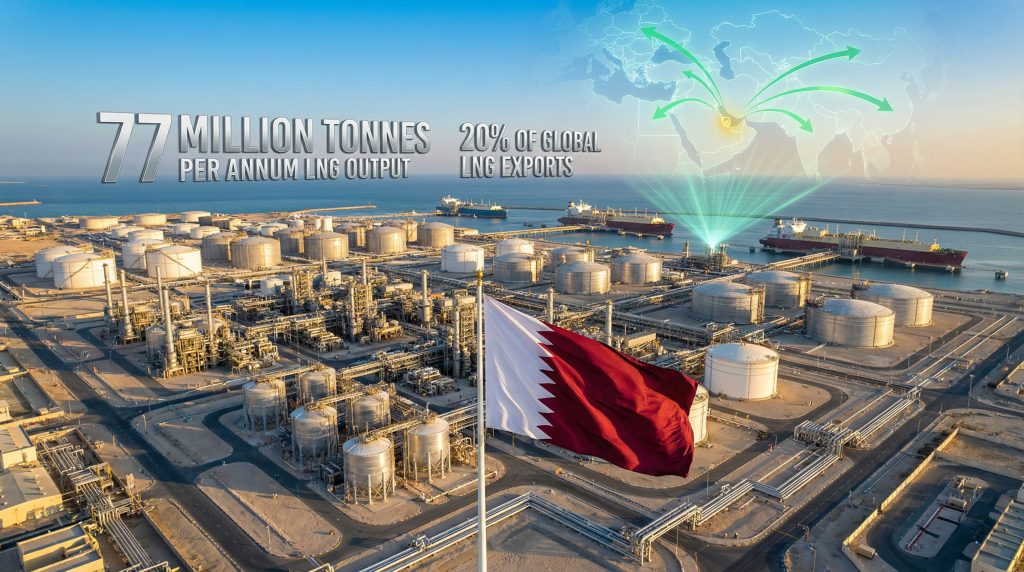
Qatar's dominance within international LNG markets stems from geological advantages combined with decades of infrastructure investment that created production capabilities unmatched in scale and strategic positioning. The nation controls approximately 20-21% of global LNG exports, making it the world's second-largest LNG exporter after Australia, with production concentrated primarily within the Ras Laffan Industrial City complex on the Persian Gulf coast.
In addition to its production capacity, Qatar's strategic positioning enables direct access to major Asian markets where energy demands continue to surge. However, recent natural gas trends suggest increasing volatility in global pricing mechanisms that affect long-term supply contracts.
Strategic Value Assessment of Concentrated Energy Production
The Ras Laffan Industrial City represents more than a production facility; it functions as a critical node within global energy supply networks serving over 1 billion people across Asian and European markets. The complex maintains a total LNG production capacity of approximately 77 million tonnes per annum (mtpa), distributed across multiple interconnected facilities.
Geographic positioning provides Qatar with unparalleled strategic advantages for energy exports, enabling direct access to major Asian markets. Chinese, Japanese, South Korean, and Indian markets collectively consume approximately 65% of globally-traded LNG. European markets receive roughly 40% of natural gas from LNG imports, with 15-20% originating specifically from Qatari facilities.
The economic significance of such concentrated production becomes evident when examining replacement costs and timelines. Major LNG facilities require $20-30 billion investments with construction periods spanning 5-10 years. Consequently, these facilities create irreplaceable strategic assets that cannot be rapidly reconstructed following significant damage.
Limited redundancy within global LNG production capacity means that major facility disruptions create immediate supply shortages. These shortages affect international markets and civilian populations dependent on natural gas for heating and electricity generation.
Technical Infrastructure Vulnerability Analysis
LNG production facilities present unique vulnerability profiles compared to traditional energy infrastructure due to complex technical requirements and safety protocols governing liquefied natural gas handling. Industrial control systems managing production processes rely on sophisticated automation networks that can be disrupted through multiple attack vectors.
Physical infrastructure requires precise engineering tolerances that become compromised through even limited structural damage. Historical incident data from industry databases indicates that major LNG terminal repairs typically require 6-18 months depending on damage severity.
For instance, Shell's Prelude FPSO experienced minor damage repairs requiring 6-8 months in 2016. Similarly, Malaysia LNG Terminal maintenance shutdowns typically last 3-4 months, demonstrating the extended timelines associated with complex LNG infrastructure restoration.
When big ASX news breaks, our subscribers know first
Economic Warfare Through Strategic Infrastructure Targeting
Contemporary conflict strategies increasingly prioritise economic infrastructure over traditional military targets, recognising that energy facility disruptions can achieve strategic objectives while avoiding direct military confrontation. This evolution reflects changing warfare dynamics where asymmetric actors can achieve disproportionate economic impact through precise targeting.
Moreover, scenarios involving Iran targeting Qatar's Ras Laffan industrial city illustrate how energy transition challenges create additional vulnerabilities as nations adapt their energy security frameworks.
Market Response Patterns to Energy Infrastructure Attacks
Historical precedent from regional conflicts demonstrates consistent market response patterns following energy infrastructure targeting. The September 2019 attack on Saudi Arabia's Aramco Abqaiq processing facility damaged 50% of Saudi crude processing capacity. This attack caused immediate oil price rally analysis scenarios, with prices surging from $60 to $75 per barrel.
| Impact Category | Historical Response | Recovery Timeline |
|---|---|---|
| Spot Pricing Surge | 15-35% premium increase | 2-4 weeks |
| Insurance Premiums | 200-400% war risk increases | 6-12 months |
| Shipping Route Modifications | 40-60% cost increases via alternate routes | 3-6 months |
| Production Capacity Loss | Complete facility shutdown | 6-18 months |
Ukraine's energy infrastructure targeting during 2022-2025 provides additional insights into sustained infrastructure warfare effects. Russia conducted over 2,000 strikes on Ukrainian energy facilities, destroying approximately 50% of thermal power generation capacity. These attacks created widespread civilian hardship during winter months.
Supply Chain Amplification Effects
Energy infrastructure attacks create cascading effects throughout interconnected global supply chains that amplify initial disruptions far beyond immediate production losses. Modern economies depend on just-in-time logistics networks that lack redundancy buffers. Therefore, single facility shutdowns can trigger widespread supply shortages across multiple industries and geographic regions.
European energy security demonstrates particular vulnerability during ongoing transitions away from traditional energy sources. Strategic Petroleum Reserve (SPR) capacity remains limited, with the United States maintaining approximately 430 million barrels. However, Europe lacks comparable strategic reserves for emergency allocation.
Activation thresholds typically occur at $80-100 per barrel crude prices or supply disruptions exceeding 30% of normal capacity. These thresholds highlight the fragility of current global energy security frameworks when faced with concentrated infrastructure targeting.
Regional Power Calculations in Infrastructure Warfare Scenarios
Modern regional conflicts increasingly involve sophisticated risk calculations regarding infrastructure targeting, where state and non-state actors evaluate potential gains against escalation risks. These calculations consider domestic political pressures, regional balance of power implications, and international legal constraints governing civilian infrastructure protection.
Escalation Management Through Economic Targeting
Infrastructure warfare allows regional powers to apply strategic pressure while maintaining plausible deniability and avoiding direct military confrontation with superior conventional forces. Economic targeting can achieve political objectives through civilian hardship and market disruption without crossing traditional red lines.
Iran's strategic positioning within regional conflicts illustrates how infrastructure targeting serves broader political objectives beyond immediate economic damage. Domestic political pressures often drive external aggression as leadership groups seek to demonstrate strength and deflect attention from internal challenges.
Consequently, regional balance of power considerations encourage limited escalation that avoids triggering overwhelming international responses. The threat of Iran targeting Qatar's Ras Laffan industrial city exemplifies this calculated approach to economic warfare.
Alliance Structure Testing Through Crisis Response
Energy infrastructure attacks serve as stress tests for regional alliance systems, revealing actual commitment levels versus formal agreement frameworks during crisis periods. The Gulf Cooperation Council's collective defence mechanisms face particular scrutiny when member states experience infrastructure targeting.
GCC defence cooperation frameworks include established protocols such as the Peninsula Shield Force multi-national military coordination mechanism. Additionally, joint defence agreements require mutual protection responses. However, actual implementation during crisis periods often reveals gaps between formal commitments and operational capabilities.
Market Psychology and Investment Risk Recalibration
Energy infrastructure targeting fundamentally alters investment risk calculations across regional markets, as investors recognise that sophisticated facilities previously considered secure can become primary targets. This recognition triggers capital reallocation patterns that extend far beyond immediate target areas.
Furthermore, these patterns affect sovereign wealth fund strategies and international investment flows throughout conflict-prone regions. The psychological impact of potential attacks on facilities like Ras Laffan creates lasting changes in investor behaviour.
Foreign Direct Investment Pattern Shifts
Historical data from previous regional conflicts shows consistent patterns in foreign direct investment responses to infrastructure targeting. During the Yemen conflict (2015-2025), GCC sovereign wealth funds reduced Middle East energy sector allocations by 15-25% during peak conflict periods.
Conflict zone infrastructure projects experienced 30-50% cost increases due to elevated war risk insurance premiums. Portfolio rebalancing effects extend beyond immediate conflict zones as investors seek to reduce exposure to regional risks through geographic diversification.
Currency stability implications for Gulf economies become significant when infrastructure targeting threatens energy export revenues. These revenues underpin fiscal frameworks and exchange rate stability mechanisms throughout the region.
Insurance Market Adaptations
War risk insurance markets respond rapidly to infrastructure targeting incidents, with premium increases reflecting elevated threat perceptions. Lloyd's of London war risk insurance databases document premium increases of 200-400% following major infrastructure attacks.
Hull insurance rates typically double during sustained conflict periods affecting shipping routes and port facilities. These insurance market responses create additional economic pressures beyond direct infrastructure damage.
Elevated premiums affect operating costs for energy companies and shipping operations serving regional markets. The combination of higher insurance costs and reduced coverage availability can effectively shut down operations even at undamaged facilities.
Infrastructure Protection Strategies and Defence Technologies
Critical energy infrastructure protection requires multi-layered defence strategies combining technological solutions, diplomatic frameworks, and operational redundancy planning. Modern missile defence systems offer partial protection capabilities, while cyber security protocols address growing digital infrastructure vulnerabilities.
Furthermore, these vulnerabilities can be exploited without physical attacks, creating new threat vectors that traditional defence systems cannot address.
Advanced Defence System Capabilities
Current missile defence technologies deployed across Gulf regions demonstrate varying effectiveness rates against different threat vectors. Saudi Arabia's THAAD and Patriot PAC-3 systems report 90%+ kill rates in documented engagements.
However, individual interceptor costs range from $3-5 million per unit, creating significant operational expenses for comprehensive facility protection. Complete coverage of major facilities like Ras Laffan would require 4-6 battery systems at initial investment costs of $500-750 million.
Annual operating expenses of $50-100 million for maintenance, training, and munitions replacement add substantial ongoing costs. UAE's Al-Dhafra Air Base PATRIOT systems have documented successful interceptions during March 2024 regional incidents.
Cyber Security Infrastructure Requirements
Industrial Control System (ICS) protection represents a critical vulnerability component that cannot be addressed through traditional physical defence measures. LNG facilities depend on sophisticated automation networks governed by international standards including NIST Cybersecurity Framework and IEC 62443 protocols.
Comprehensive hardening implementations require $15-30 million investments for major facilities. Modern cyber threats targeting energy infrastructure have demonstrated capability to cause physical damage equivalent to conventional attacks.
Stuxnet and similar sophisticated malware demonstrate how cyber operations can damage industrial equipment and disrupt production processes without physical presence. These attacks maintain plausible deniability while avoiding traditional military responses.
International Legal Frameworks and Response Mechanisms
Energy infrastructure targeting operates within complex international legal frameworks that provide limited protection for civilian facilities. These frameworks allow significant interpretation flexibility regarding dual-use infrastructure serving both civilian and military purposes.
Geneva Convention protocols offer baseline protections, but enforcement mechanisms remain constrained by geopolitical realities. Limited international consensus on response strategies further complicates protection frameworks.
Geneva Convention Applications to Energy Facilities
Protocol I to the Geneva Conventions (1977), Articles 52-56, establishes protection standards for civilian objects from military attack. Specific provisions protect installations "indispensable to the survival of the civilian population."
LNG terminals serving purely civilian and commercial purposes receive formal protection under these frameworks. However, facilities with dual civilian-military applications face ambiguous protection status that complicates legal interpretations.
Deliberate attacks on protected civilian infrastructure constitute war crimes under International Criminal Court jurisdiction. Prosecution depends on state cooperation and evidence collection capabilities that prove challenging during active conflict periods.
UN Security Council Response Mechanisms
United Nations Security Council procedures for addressing infrastructure attacks depend on member state consensus that rarely emerges during regional conflicts involving major power interests. Resolution frameworks exist for condemning attacks on civilian infrastructure.
Implementation measures including sanctions and peacekeeping deployments require unanimous agreement among permanent members who often maintain competing regional interests. These limitations mean that legal frameworks provide minimal deterrent effect against state actors.
International Court of Justice procedures offer additional legal recourse for infrastructure targeting, but jurisdiction requires state consent. Enforcement depends on voluntary compliance with court decisions, limiting practical effectiveness.
The next major ASX story will hit our subscribers first
Long-term Strategic Implications for Regional Energy Security
Infrastructure vulnerability exposure through targeting incidents accelerates fundamental shifts in regional energy security strategies. These shifts drive investments in distributed production systems, alternative supply routes, and enhanced defence capabilities.
These adaptations create permanent changes to energy market structures that extend far beyond immediate conflict resolution. Consequently, they reshape international trade patterns and investment flows across entire regions, affecting how nations approach energy export challenges.
Accelerated Energy Transition Dynamics
Infrastructure attacks create powerful incentives for accelerated renewable energy adoption as regions seek to reduce dependencies on vulnerable centralised facilities. Distributed energy systems including solar installations, wind farms, and battery storage networks offer inherent resilience advantages.
Large-scale LNG terminals or oil processing facilities present concentrated targets for sophisticated attacks, unlike distributed renewable systems. Qatar's North Field expansion projects partially address vulnerability concerns through offshore facility development.
However, these expansions still concentrate production within geographic areas subject to maritime threats. They maintain dependencies on centralised processing and export infrastructure that remain vulnerable to targeting.
Geopolitical Realignment Patterns
Regional power balances shift fundamentally following infrastructure vulnerability exposure, as states recognise that economic assets previously considered secure can become primary targets during conflicts. These realisations drive new alliance formations around energy security guarantees.
Traditional partnerships may weaken if protection capabilities prove inadequate during crisis periods. International partnership structures evolve to address infrastructure protection requirements.
Energy-importing nations potentially accept higher costs for supply diversification that reduces dependency on high-risk production zones. China's strategic petroleum reserve implications become significant as major LNG importers seek buffer capacity against supply disruption scenarios.
Future Scenarios and Risk Assessment Frameworks
Infrastructure targeting precedents establish patterns that inform risk assessment frameworks for future conflict scenarios. These frameworks help investors, policymakers, and energy companies develop contingency planning and resource allocation strategies.
Probability assessments for escalation scenarios must consider technological capabilities, regional tensions, and international response mechanisms. These factors could either contain or amplify initial infrastructure attacks, particularly those involving critical raw materials.
What Are the Implications of Sustained Infrastructure Campaigns?
Historical analysis of Ukraine energy infrastructure targeting provides frameworks for assessing potential impacts from sustained infrastructure warfare campaigns. Economic modelling suggests that 50% production capacity losses sustained over multiple months create civilian hardship levels.
These hardship levels generate significant political pressure for conflict resolution, while also triggering international intervention mechanisms through humanitarian concerns. Alternative supply chain development becomes critical during extended infrastructure targeting campaigns.
Markets adapt through emergency allocation mechanisms and temporary capacity increases at undamaged facilities. However, these adaptations often prove insufficient to fully compensate for major production losses.
International Cooperation Framework Development
Future energy security architecture increasingly requires international cooperation frameworks that address infrastructure vulnerability through shared defence capabilities. Emergency response protocols and coordinated market stabilisation mechanisms become essential components.
Multilateral insurance schemes for critical infrastructure protection could provide financial incentives for enhanced security measures. These schemes distribute risk across international stakeholder networks, reducing individual nation exposure.
Emerging patterns in energy infrastructure vulnerability demonstrate the need for adaptive governance frameworks. These frameworks must respond rapidly to evolving threat environments while maintaining international legal standards and civilian protection principles.
How Will Markets Adapt to Infrastructure Threats?
Global energy markets increasingly price in infrastructure vulnerability premiums as investors recognise the strategic targeting potential of concentrated production facilities. Risk-adjusted returns for energy investments in conflict-prone regions reflect elevated threat perceptions and potential business interruption scenarios.
Shipping insurance rates for vessels transiting high-risk areas have increased by 200-400% during periods of elevated regional tensions. These increases affect the economics of LNG trade routes and destination market pricing structures.
International energy companies adjust capital allocation strategies to favour distributed production systems and geographic diversification. These strategies reduce exposure to single-point-of-failure scenarios that could eliminate substantial production capacity through coordinated attacks.
Furthermore, strategic petroleum reserves and emergency allocation mechanisms receive enhanced investment as governments seek to buffer civilian populations from supply disruption scenarios. The BBC reports on evolving international cooperation frameworks designed to address these infrastructure protection challenges.
Critical Assessment: Iran targeting Qatar's Ras Laffan industrial city represents a strategic inflection point where concentrated energy infrastructure becomes weaponised in asymmetric conflicts, fundamentally altering risk calculations for global energy markets and accelerating development of distributed supply chain architectures designed to minimise single-point-of-failure vulnerabilities.
Important Disclaimer: This analysis presents theoretical frameworks for understanding energy infrastructure vulnerability in regional conflicts. Investment decisions should incorporate comprehensive risk assessments and professional financial advice. Geopolitical scenarios involve significant uncertainty, and actual outcomes may vary substantially from analytical projections based on historical precedents and current threat assessments.
This content is provided for educational and analytical purposes only and does not constitute investment advice, political guidance, or predictions of future events. Readers should consult qualified professionals for specific investment, legal, or policy decisions related to regional energy security and infrastructure protection strategies.
Could Your Portfolio Benefit From Early Discovery Intelligence?
Discovery Alert's proprietary Discovery IQ model delivers instant notifications on significant ASX mineral discoveries, transforming complex geological data into actionable investment insights ahead of broader market awareness. With global supply chains increasingly vulnerable to infrastructure disruptions—as demonstrated by energy facility targeting scenarios—diversified commodity exposure through early-stage discoveries becomes essential for portfolio resilience against geopolitical risks.