June 22, 2026
The global energy landscape faces unprecedented volatility as military-industrial complex dynamics reshape regional security frameworks. Historical patterns of conflict duration suggest that extended military engagements create cascading effects across interconnected energy infrastructure, shipping networks, and commodity pricing mechanisms. Modern warfare's precision targeting capabilities combined with asymmetric retaliation strategies present unique risk assessment challenges for energy market participants, particularly when considering oil price rally analysis patterns during geopolitical tensions.
Energy Market Disruption Vectors During Extended Military Operations
Crude Oil Price Volatility Mechanisms
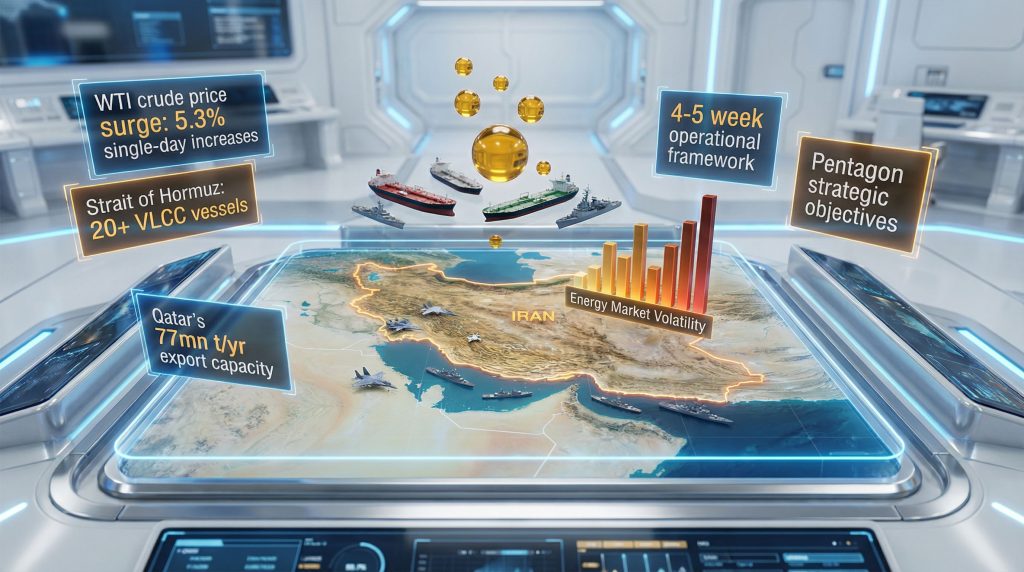
Market participants witnessed significant crude oil price movements following the initiation of the US military operation against Iran, with WTI & Brent futures surging by 5.3 percent in a single trading session. The front month Nymex WTI contract climbed to $70.60 per barrel, representing a $3.58 increase from the February 27 settlement price. Peak pricing reached $75.33 per barrel on March 1, marking a 12 percent cumulative increase before experiencing subsequent retracement patterns.
The energy security analyst Clayton Seigle from the Center for Strategic and International Studies highlighted a critical disconnect between market expectations and actual risk exposure. Market participants may be underestimating the potential for supply disruption cascades, with triple-digit oil prices becoming increasingly probable if current conflict escalation patterns continue. This assessment suggests that either traders possess non-public information indicating reduced risk, or markets are systematically underpricing geopolitical supply disruption potential.
War risk insurance premiums provide another indicator of market stress, surging to approximately 1 percent of hull and machinery value across Middle East Gulf operations. Major Protection and Indemnity insurance clubs have cancelled war risk coverage for vessels operating in active conflict zones, indicating that underwriters assess current risk levels as exceeding acceptable premium thresholds.
Strait of Hormuz Shipping Disruption Analysis
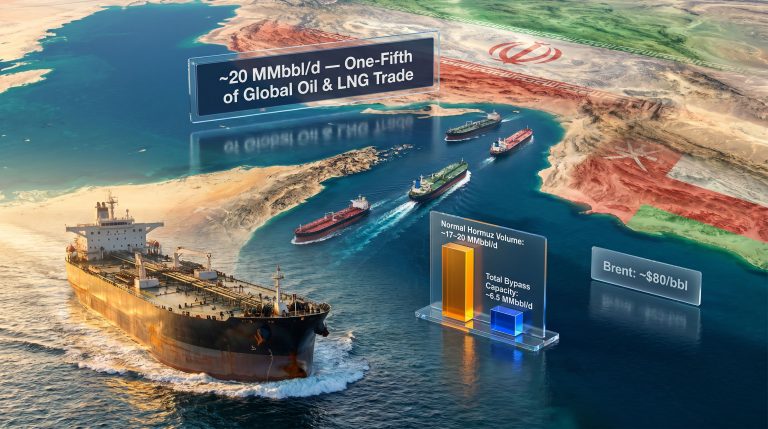
The Strait of Hormuz serves as a critical chokepoint for global energy flows, with regional producers maintaining substantial export dependencies through this transit route. Saudi Arabia ships approximately 6.5 million barrels per day from Strait of Hormuz ports, Iraq exports roughly 3.3 million barrels daily, and the UAE maintains export volumes exceeding 1 million barrels per day through the same route.
Vessel positioning data reveals approximately 20 unladen Very Large Crude Carriers (VLCCs) maintaining holding patterns southeast of the strait, reflecting shipowners' reluctance to transit active conflict zones. Booking cancellations appear likely for vessels unable to meet scheduled loading dates, creating supply chain timing disruptions beyond immediate transit delays.
The Joint Maritime Information Center elevated the threat level in the Strait of Hormuz to "critical" status following multiple attacks on commercial vessels. According to recent reports from CNN, at least three commercial vessels sustained damage from explosive projectiles near the strait since conflict initiation, demonstrating Iran's capability to target maritime infrastructure within critical transit corridors.
LNG Supply Chain Vulnerability Assessment
Qatar's state-owned QatarEnergy implemented production halts across liquefied natural gas facilities following drone attacks on operating infrastructure in Ras Laffan and Mesaieed Industrial City. Qatar's Ras Laffan complex operates the world's largest LNG export terminal with capacity reaching 77 million tons per year, supplying critical term volumes to buyers across Asia-Pacific and European markets.
The production suspension creates immediate LNG market implications for global gas supply availability, particularly given constrained vessel movements through the Strait of Hormuz. Shiptracking data indicated three LNG carriers remained berthed at Ras Laffan during the initial conflict period, suggesting export logistics face severe operational constraints.
Any prolonged disruption at Ras Laffan would tighten prompt supply availability across global markets, especially if alternative supply routes cannot compensate for Qatar's substantial export capacity. The facility also supports LPG, ethane, sulphur, and natural gas liquids production, creating broader petrochemical supply chain implications beyond LNG markets.
Regional Refinery Infrastructure Impact
Saudi Aramco's 550,000 barrel-per-day Ras Tanura refinery experienced operational shutdown after sustaining debris damage from intercepted Iranian drones. This facility closure represents significant regional refining capacity reduction, creating processing gaps that cannot be immediately filled by alternative infrastructure given similar vulnerability exposure across Gulf state refineries.
The targeting of refinery infrastructure demonstrates Iran's strategic approach to disrupting regional energy processing capabilities rather than limiting attacks to crude production facilities. This pattern suggests deliberate efforts to maximise economic disruption across integrated energy supply chains rather than focusing solely on upstream production assets.
Port infrastructure damage extends beyond individual facilities, with commercial ports in Duqm, Oman also sustaining impact. The US-flagged tanker Stena Imperative caught fire after being struck by projectiles whilst berthed in Bahrain, indicating Iran's demonstrated capacity to target commercial shipping within critical port facilities across the region.
When big ASX news breaks, our subscribers know first
Military Campaign Timeline Analysis and Regional Stability Implications
Operational Duration Framework Assessment
President Trump established explicit timeline parameters for the US military operation against Iran, stating preparedness for campaigns lasting four to five weeks whilst maintaining capability for extended engagements beyond this timeframe. This temporal commitment represents a departure from previous open-ended engagement models, suggesting strategic confidence in achieving defined objectives within specified periods.
Defense Secretary Pete Hegseth outlined comprehensive strategic objectives including destruction of Iranian offensive missiles, elimination of missile production capabilities, neutralisation of naval assets, and prevention of nuclear weapons development. The Pentagon's prioritisation framework focuses initially on long-range missile capacity elimination, according to Joint Chiefs of Staff Chairman General Dan Caine.
The administration's messaging emphasises scoped objectives rather than regime change or indefinite occupation. Furthermore, Hegseth explicitly stated this represents neither Iraq-style intervention nor endless engagement, whilst leaving operational flexibility for ground force deployment if strategic conditions require expanded operations.
Iranian Retaliation Capacity and Multi-Vector Response Patterns
Iran's retaliation strategy demonstrated coordination across naval, aviation, and critical infrastructure targeting domains. Iranian forces targeted shipping, port infrastructure, airports, and energy installations throughout the Middle East Gulf region, in addition to direct attacks against US military bases. However, this multi-vector approach exceeded initial US expectations according to Trump administration officials.
The scope of Iranian retaliation against neighbouring Gulf Arab states came as a surprise to US leadership, suggesting intelligence assessments may have underestimated Iran's willingness to expand conflict beyond direct US-Israeli military targets. Consequently, this pattern indicates Iran's strategic calculation that regional economic disruption serves as effective asymmetric warfare against superior conventional forces.
Qatar's air force successfully intercepted and destroyed two Iranian fighter jets on March 2, demonstrating both Iran's capability to project air power across Gulf waters and regional air defence system effectiveness. This engagement pattern suggests Iranian forces maintain operational capacity for sustained multi-domain conflict despite initial US-Israeli targeting success.
Coalition Formation and Regional Alignment Dynamics
Gulf Arab states demonstrated active military support for US-Israeli operations despite traditional diplomatic relationships with Iran. Qatar's participation in air defence operations represents particularly significant strategic realignment given the country's historical maintenance of diplomatic channels with Tehran.
Trump administration officials argue that Iran's attacks against Gulf Arab states prompted regional leaders to offer military support for joint operations. In addition, this coalition formation dynamic suggests Iranian retaliation strategy may have accelerated regional alignment against Tehran rather than deterring escalation as potentially intended.
The willingness of Gulf Arab states to provide active military support indicates confidence in US-Israeli operational success and long-term regional security benefits. This alignment pattern creates potential for sustained regional security architecture changes extending beyond immediate conflict resolution.
Geopolitical Realignment and Strategic Rebalancing Implications
Regional Power Structure Reconfiguration
Extended military operations against Iran create potential for fundamental regional power balance restructuring. Successful degradation of Iranian military capabilities would reduce Tehran's influence projection capacity across Middle Eastern proxy networks and maritime domains. This development could strengthen Gulf Arab state security positions whilst enhancing Israeli strategic positioning within the broader regional theatre.
The coalition support demonstrated by Gulf states suggests appetite for more robust security partnerships with US and Israeli forces. Qatar's active air defence participation, despite traditional Iranian diplomatic ties, indicates potential for expanded defence cooperation frameworks beyond immediate conflict resolution.
Regional realignment patterns may extend to economic relationships, with Gulf state energy export security becoming increasingly dependent on US military protection capabilities. This dependency relationship could reinforce strategic partnerships whilst potentially creating longer-term alliance obligations for US forces.
Energy Market Structural Transformation Potential
Current conflict dynamics may accelerate permanent structural changes within global energy markets. Sustained Strait of Hormuz transit risks could drive shipping route diversification away from traditional Gulf export pathways, potentially benefiting alternative suppliers and transit corridors. Moreover, the global trade war impact on energy flows becomes increasingly relevant as supply chains adapt to new security realities.
Strategic petroleum reserve utilisation policies across consuming nations face reconsideration given demonstrated vulnerability of Gulf supply chains. Governments may expand reserve capacities and diversify storage locations to reduce dependence on Middle Eastern supply consistency.
LNG market concentration risks become apparent through Qatar's production suspension, potentially driving accelerated supplier diversification strategies among major importing nations. Long-term supply contract structures may incorporate enhanced force majeure provisions and alternative supply guarantees.
Market Psychology and Risk Assessment Model Applications
Commodity Trading Behaviour Pattern Analysis
Initial crude oil price surges followed by retracement patterns reflect typical market responses to geopolitical shock events. The 12 percent peak increase followed by subsequent decline toward $70 per barrel levels suggests markets initially overreacted before incorporating more nuanced supply disruption assessments. Nevertheless, oil price stagnation factors continue to influence long-term market dynamics.
Risk premium incorporation across the energy commodity complex extends beyond crude oil to include refined products, natural gas, and petrochemical feedstocks. War risk premiums became embedded in forward pricing curves, reflecting sustained conflict duration expectations rather than brief shock event pricing.
Speculative positioning versus fundamental supply disruption pricing creates ongoing tension within commodity markets. Professional traders must distinguish between genuine supply availability constraints and speculative premium additions when developing position strategies.
Shipping Insurance Market Adjustment Mechanisms
War risk coverage cancellations by major Protection and Indemnity clubs reflect actuarial assessments that current conflict risk exceeds acceptable premium thresholds. This market-driven risk assessment provides independent validation of conflict severity beyond government or media reporting.
Insurance premium adjustments create additional cost layers for energy transportation, effectively functioning as conflict taxes on global energy flows. These cost increases become embedded in delivered energy prices regardless of actual supply disruption occurrence.
Coverage area restrictions force shipping companies to evaluate alternative route economics, potentially making longer transit routes commercially viable despite increased time and fuel consumption. These routing decisions have lasting implications for global shipping pattern optimisation.
How Long Will the US Military Operation Against Iran Continue?
The establishment of specific four-to-five week timeline commitments contrasts with previous open-ended engagement models used in Iraq and Afghanistan. This temporal framework suggests confidence in rapid objective achievement whilst maintaining operational flexibility for extended campaigns if circumstances require.
Multi-national coalition coordination demonstrates enhanced integration capabilities compared to earlier Middle East conflicts. Advanced missile defence system integration across the regional theatre provides coalition forces with layered defensive capabilities not available during previous engagements.
Precision targeting technology reduces civilian infrastructure impact whilst maintaining military effectiveness. Modern weapons systems allow for selective targeting of military assets whilst minimising collateral damage to civilian populations and non-military infrastructure.
What Are the Economic Implications of Extended Conflict?
Historical conflict duration impact analysis suggests commodity price sustainability depends on actual supply disruption magnitude rather than conflict timeline alone. Markets tend to price immediate disruption risk more accurately than long-term infrastructure damage implications.
Supply disruption versus strategic reserve release effectiveness creates ongoing pricing tension. Government strategic reserve releases can temporarily suppress prices but may create future vulnerability if conflict duration exceeds reserve capacity to compensate for lost production. As NPR analysis indicates, the US military operation against Iran requires careful resource management to maintain operational effectiveness over extended periods.
Alternative supplier capacity activation timelines vary significantly across different energy commodities. Crude oil markets can typically absorb supply disruptions more effectively than specialised refined products or LNG markets with limited supplier flexibility.
The next major ASX story will hit our subscribers first
Strategic Risk Mitigation Frameworks for Market Participants
Corporate Risk Management Protocol Development
Supply chain diversification acceleration becomes essential for energy-dependent industries facing Middle Eastern supply uncertainty. Companies must evaluate alternative supplier relationships and logistics pathways before supply disruptions necessitate emergency procurement strategies.
Currency hedging strategies gain importance during extended geopolitical uncertainty periods. Energy price volatility combined with exchange rate instability creates compound risk exposure requiring sophisticated financial risk management approaches.
Emergency operational continuity planning activation helps companies maintain business operations despite supply chain disruptions. Alternative energy sourcing, modified production schedules, and inventory management strategies provide operational flexibility during supply uncertainty.
Government Strategic Response Coordination Mechanisms
International diplomatic engagement focuses on containing conflict scope rather than conflict resolution, recognising that military objectives may require completion before negotiated settlements become viable. Diplomatic efforts concentrate on preventing regional escalation beyond current participants.
Strategic reserve utilisation timing and replenishment planning require careful balance between market price stabilisation and long-term energy security maintenance. Premature reserve releases may provide minimal price relief whilst reducing future crisis response capability.
Allied burden-sharing arrangements for extended operations help distribute financial and military costs across coalition partners. Coordinated defence spending and logistics support agreements strengthen coalition sustainability whilst reducing individual nation resource requirements.
This analysis is based on publicly available information and expert assessments. The US military operation against Iran involves inherent uncertainties, and actual outcomes may differ from scenario projections. Investment and business decisions should incorporate comprehensive risk assessments beyond geopolitical factors alone.
Could the Next Major Discovery Transform Your Investment Portfolio?
Discovery Alert's proprietary Discovery IQ model delivers instant notifications on significant ASX mineral discoveries, turning complex geological data into actionable trading opportunities before broader market recognition occurs. Explore how historic mineral discoveries can generate exceptional returns and begin your 14-day free trial today to position yourself ahead of market movements.