August 5, 2026
Energy Market Dynamics Under Critical Infrastructure Stress
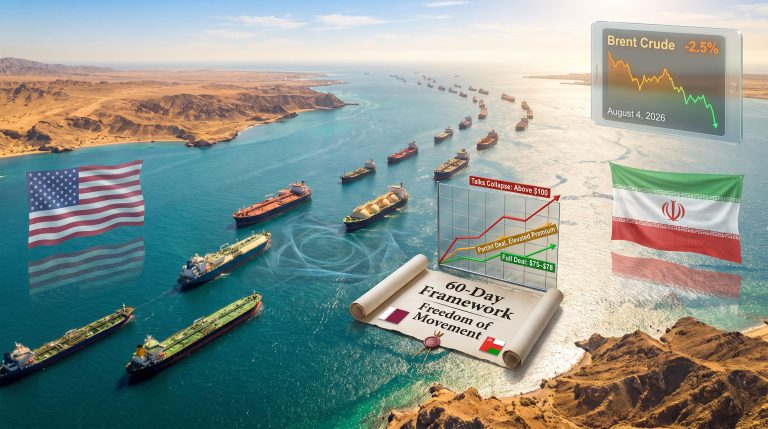
Global energy systems face their most significant stress test in decades as critical maritime chokepoints determine the flow of resources that power modern economies. The Strait of Hormuz closure and Iran ceasefire negotiations have created unprecedented disruptions in international petroleum markets, forcing market participants to reassess fundamental assumptions about supply security and pricing mechanisms.
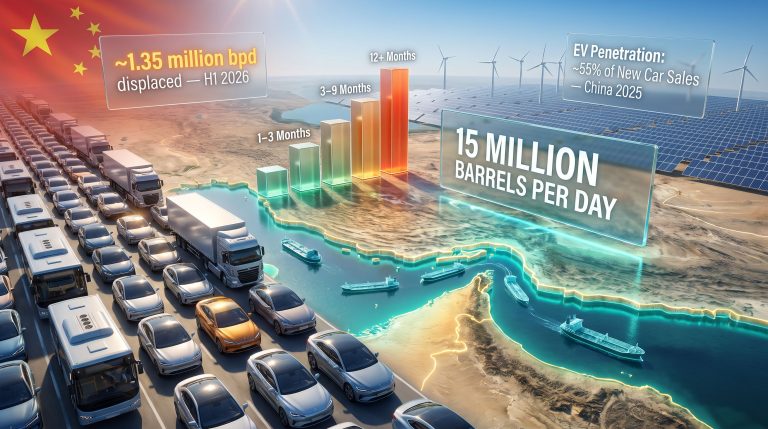
When approximately one-fifth of the world's seaborne petroleum depends on passage through a single 21-mile corridor, the vulnerability of global energy architecture becomes starkly apparent. This concentration risk has transformed from a theoretical concern into a practical reality, demonstrating how geographic bottlenecks can evolve into leverage points that reshape international economic relationships.
When big ASX news breaks, our subscribers know first
Immediate Market Response Patterns and Price Structure Evolution
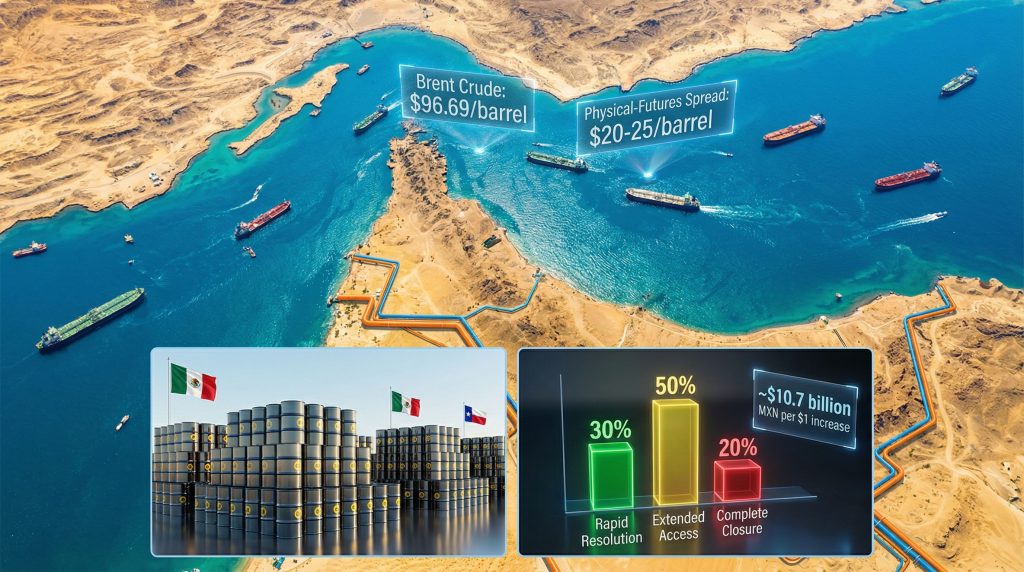
Current crude oil benchmarks reflect unprecedented structural changes in how energy markets price risk and scarcity. Brent crude trading near $96.69 per barrel and WTI at $97.87 per barrel represent increases of approximately 34% and 44% respectively from pre-crisis levels. However, these headline figures mask more dramatic underlying shifts in market mechanics.
The most revealing indicator of actual supply stress appears in the divergence between futures contracts and physical oil markets. While paper markets price based on expectations and risk premiums, dated Brent has traded as high as $144.42 during peak stress periods. This gap reflects genuine scarcity in available barrels rather than speculative positioning.
Furthermore, oil price movements have been amplified by geopolitical tensions. The Strait of Hormuz closure and Iran ceasefire discussions have created additional volatility layers beyond traditional supply-demand fundamentals.
Key Market Stress Indicators:
- Physical-futures spreads reaching 700% above normal levels
- Maritime insurance rates adding $2-5 per barrel to transportation costs
- Tanker charter rates surging as vessel operators demand premium compensation
- War risk premiums escalating exponentially for Middle Eastern routes
These cost increases compound throughout the supply chain, creating inflationary pressures that extend well beyond energy sectors. The insurance component alone demonstrates how geopolitical risk translates directly into measurable financial costs.
Infrastructure Vulnerability and Alternative Route Limitations
Critical infrastructure damage has eliminated key alternatives precisely when markets need maximum flexibility. Saudi Arabia's East-West Pipeline, connecting eastern oil fields to Red Sea export terminals at Yanbu, has experienced capacity reductions of approximately 700,000 barrels per day due to recent attacks.
This pipeline represented the region's primary bypass route for avoiding Hormuz transit. Its impairment becomes particularly significant during current restrictions, highlighting the interconnected vulnerabilities within regional energy infrastructure networks.
The strategic importance of alternative infrastructure becomes clear when considering the mathematical constraints facing global oil flows. With approximately 20% of seaborne petroleum typically transiting through the affected region, any sustained closure forces this volume through alternative routes.
Alternative Route Capacity Constraints:
- East-West Pipeline: Reduced by 700,000 bpd from optimal capacity
- Suez Canal: Already operating near maximum throughput for large tankers
- Cape of Good Hope: Adds 15-20 days transit time and substantial shipping costs
- Overland Routes: Limited pipeline capacity and geographic constraints
In addition, OPEC production impact assessments reveal how regional infrastructure limitations compound supply management challenges.
Strait of Hormuz Closure Scenarios and Economic Implications
Market participants must prepare for scenarios ranging from rapid diplomatic resolution to extended infrastructure disruption. Each pathway carries distinct implications for energy pricing, supply chain management, and broader economic stability.
Scenario Analysis Framework:
| Scenario | Probability | Timeline | Price Impact | Economic Effect |
|---|---|---|---|---|
| Rapid Resolution | 30% | 2-4 weeks | Decline to $80-85/barrel | Temporary inflation spike |
| Extended Restrictions | 50% | 3-6 months | Sustained $90-100/barrel | Supply chain restructuring |
| Complete Closure | 20% | 6+ months | Potential $120-150/barrel | Global recession risk |
The extended restrictions scenario carries the highest probability based on the complexity of diplomatic negotiations. This scenario assumes partial access with coordination requirements that slow transit and increase costs. Furthermore, the Strait of Hormuz closure and Iran ceasefire framework suggests that any resolution must address multiple stakeholder concerns.
Under extended restrictions, markets would likely settle into a new equilibrium with permanently elevated risk premiums. Energy-importing economies would face sustained inflation pressures, while exporting nations would benefit from higher revenues but potentially lose long-term market share.
Regional Energy Exporters and Strategic Adaptations
Mexico's position as both an energy exporter and importer creates complex dynamics during periods of elevated global pricing. Every additional dollar in annual crude price averages generates approximately MX$10.7 billion in additional petroleum revenues for the federal budget.
However, Mexico's energy sovereignty strategy under the current administration has reduced the country's exposure to pure export revenue benefits. As PEMEX scales up domestic refining capacity through facilities like the Olmeca refinery at Dos Bocas, fewer barrels are available for export to traditional markets.
Moreover, Australia faces similar challenges with energy export challenges affecting regional competitiveness during global supply disruptions.
Mexico's Energy Balance Sheet Complexity:
- Revenue Enhancement: Higher crude prices boost export income
- Cost Pressures: Elevated natural gas import bills linked to global LNG markets
- Fiscal Policy: IEPS subsidies maintaining gasoline near MX$24/L despite global price spikes
- Infrastructure: Deer Park refinery in Texas recovering from operational challenges
The subsidy mechanisms demonstrate how energy-producing countries must balance export revenue benefits against domestic cost management. Diesel subsidies have reportedly reached over 70% of the IEPS component to prevent prices from exceeding MX$28-30/L.
Iran Ceasefire Negotiations and Diplomatic Complexity
The fragility of current diplomatic arrangements reflects the multiple layers of issues that extend beyond simple navigation rights. Iran has insisted that vessels must coordinate passage with its armed forces, a requirement that maritime industry participants view as incompatible with normal commercial operations.
Current negotiations face structural challenges that complicate rapid resolution. According to recent analysis, Iran's parliamentary representatives have identified multiple alleged breaches of ceasefire provisions. These include continued Israeli operations in Lebanon, airspace incidents, and disagreements over uranium enrichment rights.
The Strait of Hormuz closure and Iran ceasefire discussions have become linked to wider regional security arrangements that require more comprehensive diplomatic solutions. This interconnection suggests that navigation rights cannot be resolved in isolation from broader Middle Eastern security concerns.
Diplomatic Framework Challenges:
- Multiple Stakeholder Coordination: US, Iran, Israel, regional allies all must agree
- Linked Issues: Navigation rights connected to broader regional security concerns
- Commercial vs. Security: Tension between normal shipping operations and military oversight
- International Law: Questions about freedom of navigation vs. sovereign security rights
The involvement of US Vice President JD Vance in direct talks in Islamabad indicates the priority level assigned to resolving the crisis. However, it also suggests that solutions require high-level political commitments rather than technical arrangements.
Additionally, detailed reporting indicates that commercial shipping concerns remain paramount despite political progress in negotiations.
The next major ASX story will hit our subscribers first
Long-term Infrastructure Investment and Supply Security
Extended disruption would likely accelerate strategic infrastructure investments designed to reduce dependence on single chokepoints. These investments require significant capital commitments and multi-year development timelines, but current events demonstrate their strategic value.
Priority Infrastructure Development Areas:
- Pipeline Diversification: New routes connecting production areas to alternative export terminals
- Strategic Storage Expansion: Increased petroleum reserve capacity in consuming nations
- Port Infrastructure: Enhanced capacity at terminals outside traditional chokepoint routes
- Renewable Energy: Accelerated deployment to reduce petroleum import dependence
The economic case for such investments has strengthened considerably as current events demonstrate the costs of supply chain vulnerability. Insurance markets are likely to maintain elevated premiums for Middle Eastern transit routes even after diplomatic resolution.
Investment in strategic petroleum reserves represents one of the most immediate responses available to consuming nations. However, sustained drawdowns risk depleting buffers needed for longer-term energy security, particularly if diplomatic resolution proves elusive.
Market Psychology and Risk Management Evolution
Current events are reshaping how energy market participants approach risk management and portfolio construction. The speed and magnitude of price movements during recent weeks have demonstrated that traditional hedging mechanisms may prove inadequate.
Companies implementing market volatility hedging strategies have found that physical versus paper market behaviour during the crisis highlights the limitations of purely financial hedging approaches.
Risk Management Adaptations:
- Diversified Supply Contracts: Reducing concentration risk through multiple supplier relationships
- Enhanced Financial Hedging: Expanded use of derivatives to manage price volatility exposure
- Strategic Inventory: Optimised stockpiling during lower-price periods
- Geographic Diversification: Preference for suppliers with multiple export route options
The behaviour of physical versus paper markets during the crisis has highlighted the limitations of purely financial hedging when underlying supply availability becomes constrained. Companies with actual petroleum requirements have faced situations where financial hedges provided price protection but securing physical barrels required significant premiums.
This experience is likely to influence future risk management approaches, with greater emphasis on supply security alongside price risk management. Energy-intensive industries may prioritise suppliers offering guaranteed delivery commitments even at premium pricing rather than relying solely on spot market availability.
Geopolitical Realignment and Trade Relationship Evolution
Extended supply disruptions could fundamentally alter established energy trade relationships and accelerate geopolitical realignments. Non-Gulf oil producers including Norway, Brazil, and Canada are experiencing unprecedented demand for their crude grades, creating opportunities to capture market share through premium pricing.
The trade war impact on oil markets compounds these dynamics, as traditional supply relationships face additional pressure from broader geopolitical tensions.
These market share shifts, if sustained over extended periods, could permanently alter global energy trade flows. Consuming nations may prioritise supply security over cost optimisation, leading to longer-term contracts with suppliers offering more reliable delivery capabilities.
Potential Trade Relationship Changes:
- Supplier Diversification: Reduced dependence on Middle Eastern production over medium term
- Regional Integration: Enhanced energy cooperation within geographic regions
- Infrastructure Investment: New pipeline and export terminal development outside Gulf region
- Strategic Partnerships: Bilateral agreements prioritising supply security over pricing
The experience of supply uncertainty during current events provides a practical demonstration of the strategic value of diversified energy relationships. This lesson is likely to influence policy decisions in major consuming nations for years beyond immediate crisis resolution.
Investment Implications and Sector Valuations
The crisis highlights the strategic value of energy infrastructure investments, particularly those that enhance supply chain resilience or provide alternative transportation capabilities. Companies with diversified geographic exposure or alternative transportation capabilities may command valuation premiums during extended uncertainty periods.
Traditional energy sector valuation models may require adjustment to account for the demonstrated strategic value of supply security and infrastructure resilience. Assets that previously appeared economically marginal may warrant higher valuations based on their contribution to supply chain diversification.
Investment Theme Evolution:
- Infrastructure Resilience: Premium valuations for assets reducing chokepoint dependence
- Supply Security: Value assigned to guaranteed delivery capabilities
- Geographic Diversification: Preference for globally distributed asset portfolios
- Alternative Energy: Accelerated investment timelines due to supply security concerns
The energy transition timeline may accelerate as supply security concerns combine with existing climate and economic drivers. Countries experiencing petroleum import cost increases during the current crisis may prioritise domestic renewable capacity as both an economic and security measure.
This prioritisation reflects how the Strait of Hormuz closure and Iran ceasefire situation has demonstrated the strategic vulnerability of petroleum-dependent economies. Consequently, renewable energy infrastructure investments may receive enhanced policy support and financing availability.
Disclaimer: This analysis contains forward-looking statements and scenarios based on current information. Energy markets are subject to significant volatility and uncertainty. Investment decisions should consider multiple factors and professional guidance. Market conditions and geopolitical situations can change rapidly, affecting the relevance of projections and analysis.
Want to Capitalise on Energy Market Volatility?
Discovery Alert's proprietary Discovery IQ model delivers real-time alerts on significant ASX mineral discoveries, helping investors identify actionable opportunities as global energy dynamics reshape resource markets. Begin your 14-day free trial at Discovery Alert today to position yourself ahead of market movements and secure your investment advantage.